Attention!
Cette vidéo est disponible en anglais seulement.
Description
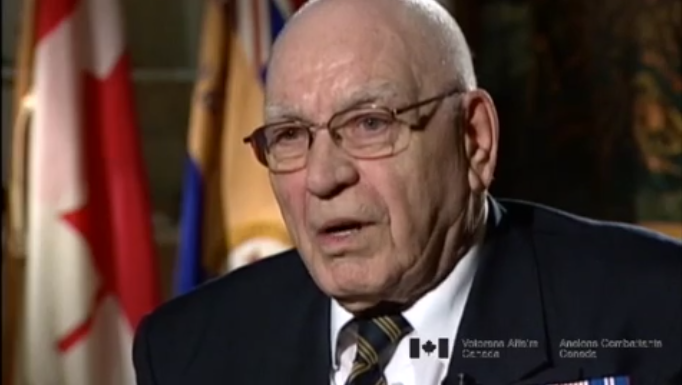
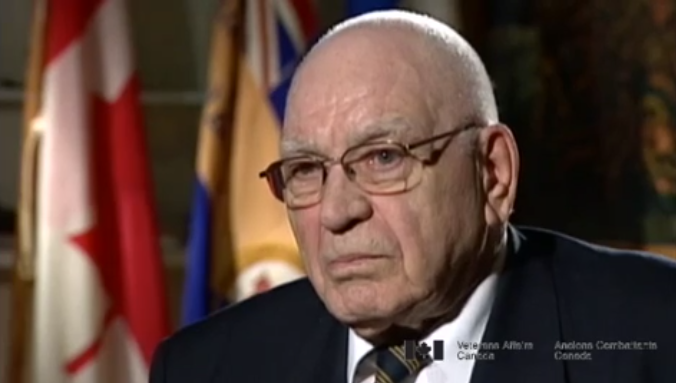
Thomas Spear
Thomas Spear est né le 22 octobre 1896 en Alberta. Son père était le révérend David Spear, un missionnaire pionnier dans les Territoires du Nord-Ouest. Lorsqu’il était jeune, Thomas a souvent accompagné son père, voyageant en hiver en traîneau tiré par un cheval. <br /><br /> Lorsque la Première Guerre mondiale a été déclarée, M. Spear vivait à Emerson (Manitoba) et il travaillait pour le Chemin de fer Canadien Pacifique comme télégraphiste. En janvier 1916, il s’enrôla dans le Canadian Signal Corps et en avril de la même année, il partit en mer pour l’Angleterre sur le <em>Baltic</em>. <br /><br /> Avant de se rendre sur les champs de combat de la France, M. Spear a dû recevoir de la formation supplémentaire. Il y a appris le code continental ou sémaphore, composé d’un certain nombre de caractères différents du code Morse. M. Spear a été un des premiers à apprendre comment utiliser la communication sans fil et par la suite, il a été chargé du camion des communications sans fil près du front.
Transcription
First of all is that we didn't finish the job. There were those in the United States, you know that were very, very, very, very sure that we should have gone further in the First World War. But I think we had had enough of it. But that didn't hinder the recruiting in the Second World War. Every town had a battalion or part of a battalion or company, platoon or, recruited. And ah, it was very high, very high emotionally.
Interviewer: What did you do?
In the Second World War?
Interviewer: Yes Sir
I was recruited for signals in the Second World War and I was offered a commission in the Royal Canadian Air Force which I accepted but found that the technology had changed so much from the First World War, that my capacity should be turned in another direction, which it was, into the administrative branch.
Interviewer: You were in your early forties by then?
Yes
Interviewer: And you are now back in the service?
Back in the service, as a pilot officer. That's the lowest commissioned rank you could get. But I'm quite proud of myself. I went into the administrative branch and was posted quite frequently. I finished up in 1946, in a Wing Commanders post.
Interviewer: That's a long way from being a private soldier in World War One to a Wing Commander in World War Two.
I should say. Wing Commanders position in World War Two, that's correct. And ah, I was proud and I got a tremendously fine letter from the Air Vice Marshal asking me to remain in the service. But I had two months to tell the CPR, the Canadian Pacific whether I was coming back to work or not and I think my wife decided for me. But anyway, she made the right decision and I came back to Canadian Pacific with a very, very happy heart, back home again.
Interviewer: And home was where?
Winnipeg.