Attention!
Cette vidéo est disponible en anglais seulement.
Attention!
Cette vidéo contient des scènes au contenu graphique qui pourraient choquer, et est réservée à un auditoire averti.
Description
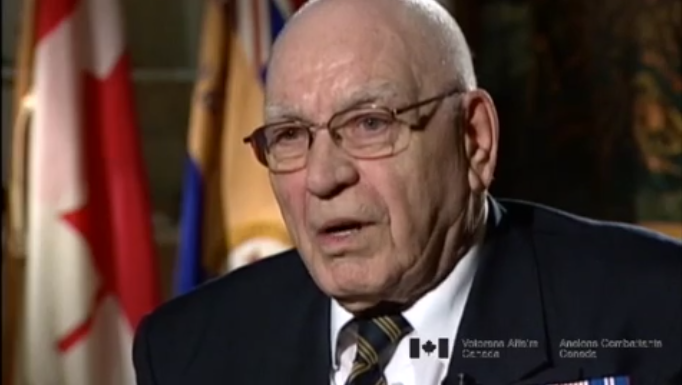
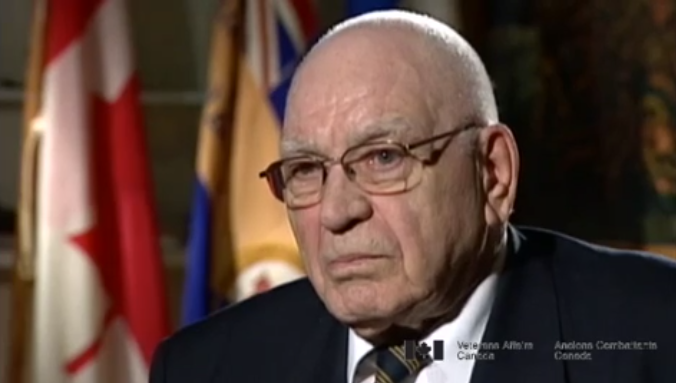
Dr. Theal describes the more common wounds which he treated at the outpost level, and describes a bizarre close call.
Transcription
I saw lots of wounds of mines, but the bigger mines that were anti-tank, of course, they usually killed everybody in the neighbourhood. But there were, oh, rifle shots, mostly, and machine gun shots, and two inch mortars, which is a little short, looks like a cannon, a baby cannon, and they put the shell in and it goes up and lobs up and comes down fairly nearby. And they do a lot of damage. It causes shrapnel wounds anywhere on the body. These wounds have to be cleaned out and bandaged, and sent back, or put a clip on it if there’s a bleeder that won’t ... that doesn’t stop with pressure, or a tourniquet if you’ve blown off a hand. These are the sort of things you see. Quite a few casualties came in with injured feet, broken ankles, broken feet, from “shoe” mines. These mines are made of some casing that’s not metal, so that the mine detector depends on picking up metal, so it’s very hard to find these “shoe” mines. And they did a lot of damage. A lot my casualties that came in were feet and legs. One interesting thing happened. We were in a defile between two hills, and it was particularly wet and muddy. And the fellows were in slit trenches there and the tanks came through, and a tank ran over a slit trench and squashed the occupant in the slit trench. His companions jumped out and gathered him, and cleaned him, cleaned his mouth out, and got him back to me, and he was OK by the time he got back to me. He was breathing, but if his friends hadn’t been right there, you know. That was very interesting. And I put the thing on this … I sent him back anyway, but he didn’t seem to have any other injuries, it was so muddy.
Catégories
Run Over By A Tank!
Médium
Video
Propriétaire
Veterans Affairs Canada
Guerre ou mission
Seconde Guerre mondiale
Emplacement géographique
Normandie
Campagne
Jour-J
Personne interviewée
Dr. Gordon Irvine Theal
Branche
Armée
Unité ou navire
Corps médical militaire royal du Canada
Military Rank
Capitaine
Occupation
Doctor
Durée
3:17