Attention!
Cette vidéo est disponible en anglais seulement.
Description
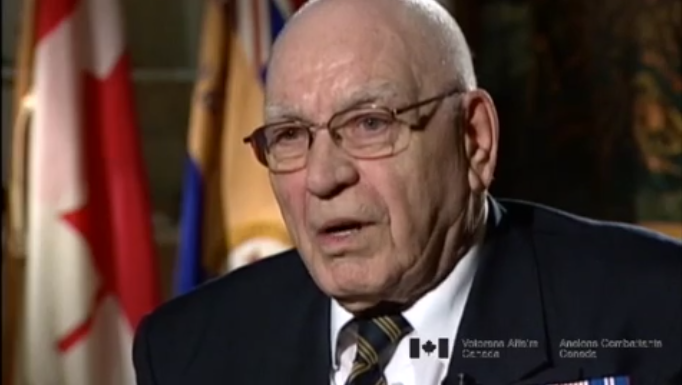
Mr. Barrie explains how he ended up in the Far East with the RAF, the responsibilities of Canadian radar technicians there, and the crucial role of radar in the war against the Japanese.
Transcription
How did I get to the Far East? I was tired of being at a radar school. It was too quiet, so they did something you should never do in the service - I volunteered. Next thing I know, I was in the Far East. There were a total of 723 Canadians in the Far East. Canadian radar people were responsible for a large proportion of the radar sites and the facilities in the Far East … looking for protection against the Japanese, looking for escorting convoys up the Persian Gulf up to Iraq, and watching as we were doing at the beginning of 1942, watching for the Japanese who might be expanding from where they were in the Dutch East Indies. And sure enough, a very famous Canadian on a radar equipped flying boat saw the Japanese landing craft, assault craft, aircraft carriers and destroyers, that were heading for Ceylon. Detected them early enough to disperse the British navy that was located there. And to make a long story short, it was what Churchill called, ‘the Saviour of Ceylon,’ this detection of the Japanese assault force. And had they not been stopped, we could have lost again. The Japanese, the way they were advancing, swept up through Burma and into the, at the edge of India. And they would have come up through Ceylon the same way about the same time as that very famous battle in North Africa was being fought by Montgomery at Alamein. Had they joined together, we wouldn’t be talking to you today.
Catégories
Volunteering for the Far East
Médium
Video
Propriétaire
Veterans Affairs Canada
Guerre ou mission
Seconde Guerre mondiale
Emplacement géographique
Sud-Est Asiatique
Personne interviewée
William “Bill” Barrie
Branche
Aviation
Unité ou navire
212 Flying Squadron
Military Rank
Aviateur-chef
Occupation
Méchanicien de radar
Durée
2:21