Attention!
Cette vidéo est disponible en anglais seulement.
Description
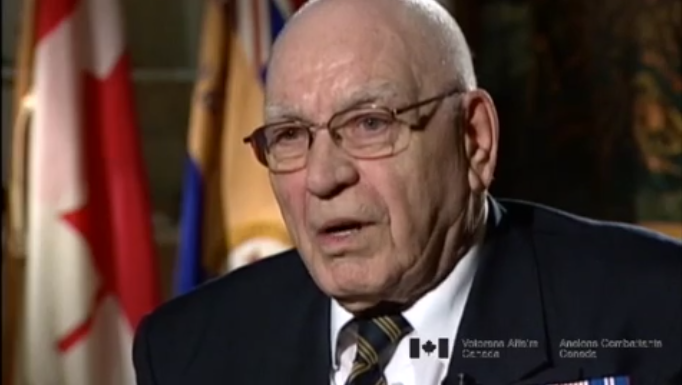
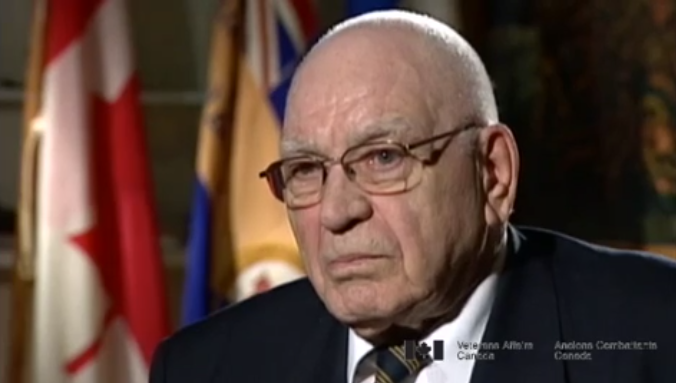
Even when the war ended, things were still somewhat dangerous in POW camps but some guards were good to the prisoners.
Transcription
The War Ends in Japan
Interviewer: Did you always have confidence that you were going to survive the war and return to Canada?
Yes, I had that confidence. I, as I mentioned very early on that I had decided that if anybody was going to get back I would, so. I knew, mind you, I knew there was a very good chance that I wouldn't but I never, I didn't give up thinking, thinking that I was going to get home.
Interviewer: After the Emperor's speech and you had the opportunity of observing the Japanese who appeared to be down hearted and crying over the result, how long after that was it before an Alied soldier appeared?
Well, we were probably among the first to, to be released or to see an American soldier. The, the, Omori, the headquarters camp, was only about I guess about, I never, I was never there, but I think it was about five kilometres away, and the Americans came into there first and then this American Brigadier General with one escort, one soldier escorting him, walked the four or five miles and, and into our camp. And that was the first American and that was probably, probably around the 20th or 21st of, of August, not very long after hostilities had ceased altogether.
Interviewer: How long did you stay in Shinegawa?
A day or two. The Americans, after, after the announcement of the end of the war, the Americans had come over with bombers and, and, different kinds of fighter, and torpedo planes and dropped all sorts of stuff in the camp. In fact for a, for a little while, it was more dangerous there then, then it would of been in the battlefield, I think. The boxes coming down from everywhere and B-29s coming over and dropping loads of, of canned goods and stuff in, in barrels, you know, 45 gallon drums welded end to end and it would often break, break their, their, their bonds and crash down. So, but eventually we got them to dump the stuff in the canal right beside the camp and swim out, and we'd swim out and drag it in.
Interviewer: Where did you, where did the Japanese guards go?
Well, they stayed around for, some of them at least stayed around for a little while. In fact, we had one or two that were very good and, and loaded up with American supplies and sent them off with a, with a note saying, "This Japanese was a soldier, was a guard in our camp and, and treated us fairly and, and whatever you can do to help him, you know, would be appreciated." Words to that effect.
Interviewer: Were there other guards that you would liked to have run into?
Not too, none comes to mind. There is one other, though, it was a Sergeant Major who lost, I think, ten of his family in, in the fire, fire bombing and yet was fair and, and did what he could for, for prisoners. So, but he had, I think he had gone before.
Interviewer: Did you always have confidence that you were going to survive the war and return to Canada?
Yes, I had that confidence. I, as I mentioned very early on that I had decided that if anybody was going to get back I would, so. I knew, mind you, I knew there was a very good chance that I wouldn't but I never, I didn't give up thinking, thinking that I was going to get home.
Interviewer: After the Emperor's speech and you had the opportunity of observing the Japanese who appeared to be down hearted and crying over the result, how long after that was it before an Alied soldier appeared?
Well, we were probably among the first to, to be released or to see an American soldier. The, the, Omori, the headquarters camp, was only about I guess about, I never, I was never there, but I think it was about five kilometres away, and the Americans came into there first and then this American Brigadier General with one escort, one soldier escorting him, walked the four or five miles and, and into our camp. And that was the first American and that was probably, probably around the 20th or 21st of, of August, not very long after hostilities had ceased altogether.
Interviewer: How long did you stay in Shinegawa?
A day or two. The Americans, after, after the announcement of the end of the war, the Americans had come over with bombers and, and, different kinds of fighter, and torpedo planes and dropped all sorts of stuff in the camp. In fact for a, for a little while, it was more dangerous there then, then it would of been in the battlefield, I think. The boxes coming down from everywhere and B-29s coming over and dropping loads of, of canned goods and stuff in, in barrels, you know, 45 gallon drums welded end to end and it would often break, break their, their, their bonds and crash down. So, but eventually we got them to dump the stuff in the canal right beside the camp and swim out, and we'd swim out and drag it in.
Interviewer: Where did you, where did the Japanese guards go?
Well, they stayed around for, some of them at least stayed around for a little while. In fact, we had one or two that were very good and, and loaded up with American supplies and sent them off with a, with a note saying, "This Japanese was a soldier, was a guard in our camp and, and treated us fairly and, and whatever you can do to help him, you know, would be appreciated." Words to that effect.
Interviewer: Were there other guards that you would liked to have run into?
Not too, none comes to mind. There is one other, though, it was a Sergeant Major who lost, I think, ten of his family in, in the fire, fire bombing and yet was fair and, and did what he could for, for prisoners. So, but he had, I think he had gone before.
Catégories
The War Ends in Japan
Médium
Video
Propriétaire
Veterans Affairs Canada
Guerre ou mission
Seconde Guerre mondiale
Emplacement géographique
Japon
Campagne
Hong Kong
Personne interviewée
Kenneth Alexander Ewing
Branche
Armée
Unité ou navire
<em>Royal Rifles of Canada</em>
Military Rank
Private
Occupation
Carabinier
Durée
04:08