Attention!
Cette vidéo est disponible en anglais seulement.
Description
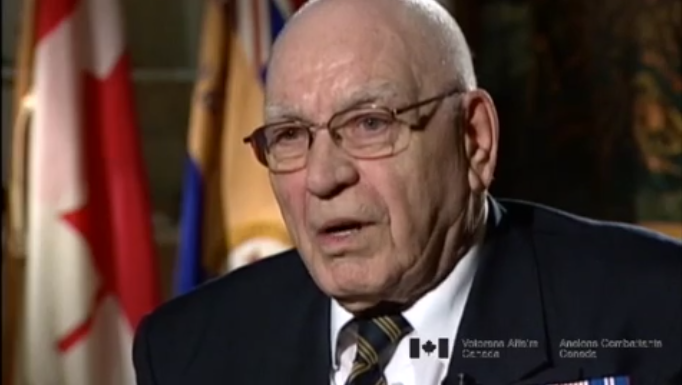
Mr. MacKenzie gives a general description of aircraft recovery.
Transcription
To me this was an area that wasn't . . . I talk about it today. I've talked to a couple of clubs about it, and they didn't know what was going on. We would have five or six crews going steady, picking up downed aircraft all over Ontario and Quebec. And that was just steady, steady going. They were . . . I don't know if you want me to get into this now or not. They were, they were, they would be categorized before we got there. An A crash was a shovel job, a B was repairable with contractors, and a C we could do it ourselves. Very few you could fly out. Some, some you could fly out, but not very many, I'll tell you. Because these guys were, they were pushing them so fast from elementary trainers into Harvards that you were, they were, just . . . you know, they had retractable undercarriage, variable pitch props. And a Harvard was only good for about three hours, three hours and a half in the air, so . . . And they held about 95 gallons of fuel, so they were burning up 30 gallons an hour. So, if they got lost, at all, you know . . . There was so many, so many of them. And they were a lot of them that were mechanical faults, a few. But there were a lot of them that . . .A few were nonsense, as well, you know. People playing chicken and things like that. I can show you a couple of those. And they, but some would get lost in the bush up north, and they wouldn't be found ‘til spring maybe. Some hit the lakes. They were just, just oodles of them.
Catégories
An 'A' crash was a shovel job
Médium
Video
Propriétaire
Veterans Affairs Canada
Guerre ou mission
Seconde Guerre mondiale
Emplacement géographique
Canada
Personne interviewée
Grant MacKenzie
Branche
Aviation
Unité ou navire
6<sup>e</sup> Dépôt de réparation
Military Rank
Aviateur-chef
Occupation
Aero Engine Mechanic
Durée
01:49