Attention!
Cette vidéo est disponible en anglais seulement.
Description
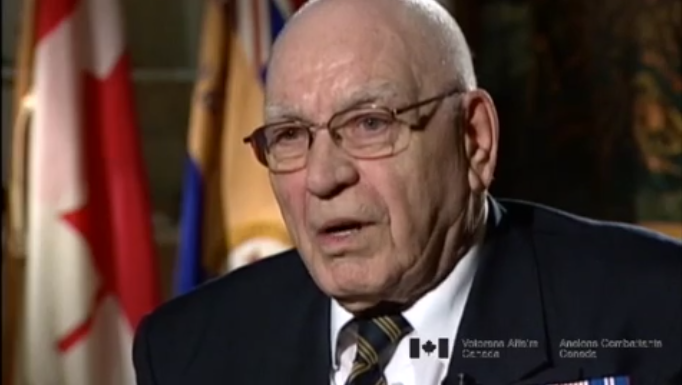
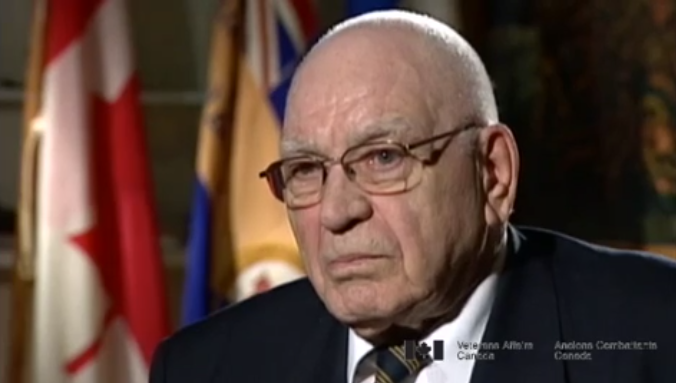
Mr. Murray describes rising to the rank of Squadron Commander and generalizes about Canadian theatres of operation.
Transcription
Yeah, no I joined, and I was part of what was called then the Regular Officer Training Plan. I went to a civilian university but trained with the naval reserve in the winter. Here actually, in Ottawa, at HMCS Carleton and then in the summer trained with the, with the regular navy on both coasts. And when I graduated, I did basic pre-fleet training and then joined HMCS Fraser as a, as a junior officer. Did my initial training in Fraser, specialized in navigation and then went back for a second tour in Fraser, as a ship's navigation officer. And spent my, most of my sea time before becoming qualified for command, as a navigating officer and combat control officer. When I came back as the combat officer of Algonquin, I was the combat officer, in other words, responsible for, for all the ship's operations and weapons system. As executive officer of Athabascan, I was the second in command, and then in Iroquois, I was the commanding officer. And as squadron, destroyer squadron commander of the first Canadian destroyer squadron, I was, I was the squadron commander. So the role, the role . . . my personal role changed as I . . . as, as time went on. But the nature of the operation until 1989 was fundamentally and primarily focussed largely on, kind of cold war activities. I was on the west coast in, in smaller minesweepers. The focus there was more on coastal patrol, search and rescue and training junior officers. But in a period of time, as the OPS officer and combat officer of Provider on the west coast. I would say it was a similar focus to the east coast. It's just that NATO didn't exist there, so it tended to be more of a, of a Canada, US, Australia, New Zealand focus. But again, major, major operations would have fundamentally a cold war, Warsaw Pact, NATO flavour. And, and in those situations, we tended to either operate off Hawaii, off Japan, or, or sometimes down to Australia.
Catégories
In Iroquois I was the Commanding Officer
Médium
Video
Propriétaire
Veterans Affairs Canada
Guerre ou mission
Amériques
Emplacement géographique
Océan Atlantique Nord
Campagne
OTAN et patrouille des pêches
Personne interviewée
Lawrence Edward Murray
Branche
Marine
Unité ou navire
NCSM <em>Iroquois</em>
Military Rank
Escadron Commander
Occupation
2nd Vice Admiral
Durée
2:21