Attention!
Cette vidéo est disponible en anglais seulement.
Description
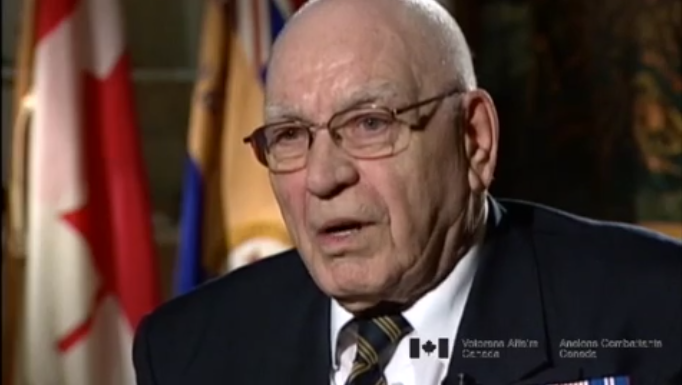
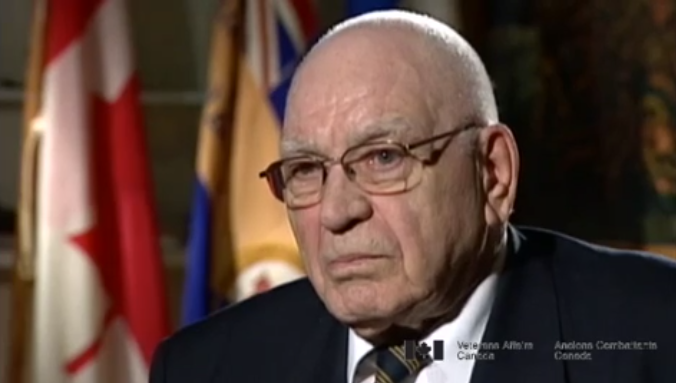
Bernard Castonguay
Bernard Castonguay est né à Montréal, au Québec, le 9 février 1921. Il était le quatrième d'une famille de 11 enfants. Son père était monteur de tuyaux à vapeur pour la Canadian Pacific Railway. M. Castonguay a quitté la maison à l'âge de 16 ans, à la recherche d'aventure. Il a travaillé comme bûcheron et à la construction des chemins de fer. En 1940, incapable de trouver du travail, M. Castonguay s'est rendu à Québec pour s'enrôler dans le Royal Rifles of Canada. Il fut envoyé à Gander, à Terre-Neuve, où il fut signaleur et sentinelle. On l'envoya ensuite à Saint John, au Nouveau-Brunswick. À Hong Kong, M. Castonguay fut fait prisonnier par les Japonais et envoyé au camp de prisonniers de guerre (Omeni) de Nagasaki, au Japon, pour travailler dans une mine de charbon. Après son service, M. Castonguay a travaillé pour l'Institut national canadien pour les aveugles (INCA). Il devint par la suite directeur régional de l'INCA. Il fut également bénévole pour le Conseil canadien des aveugles.