Attention!
Cette vidéo est disponible en anglais seulement.
Description
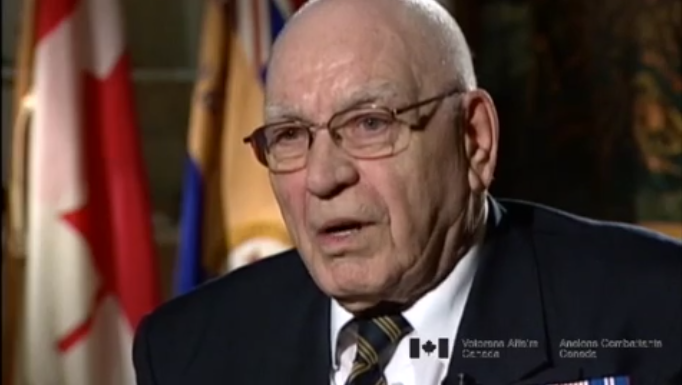
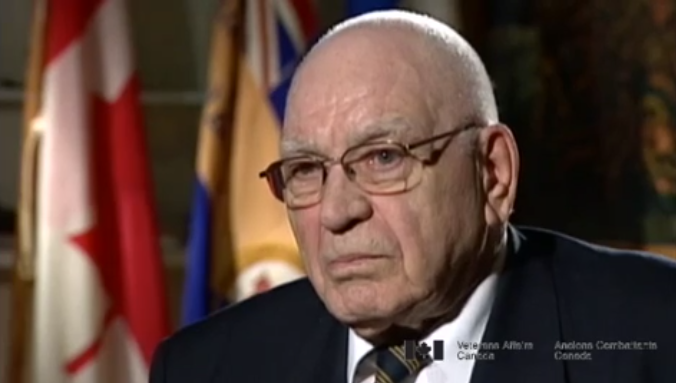
Hugh Victor Letendre
M. Letendre est né le 4 mars 1925 dans le petit village de Lac Ste-Anne (Alberta). Comme Métis, il a appris à parler cri, français et anglais. Il faisait partie d’une grande famille : il avait un frère et huit soeurs. Son père était trappeur et faisait une pêche commerciale importante. M. Letendre a appris à chasser et à pêcher de son père. <br><br> À l’âge de 11 ans, il est devenu concierge de l’école à classe unique où il était également élève. Il balayait les planchers, préparait le feu le matin et transportait l’eau et le charbon. Pour tous ses efforts, on le payait quatre dollars par mois, qu’il remettait à ses parents puisqu’ils avaient très peu d’argent à l’époque. <br><br> Il s’enrôla à l’âge de 18 ans et il servit pendant la Seconde Guerre mondiale comme carabinier dans les Calgary Highlanders. Pendant son déploiement outre-mer, il a servi dans la campagne de Normandie après le jour J. Après la guerre, il devint le chef de l’Association nationale des anciens combattants autochtones.
Transcription
Well that was in May when they sent me home. I went to the, they sent me to the Colonel Belcher Hospital in Calgary. I stayed there til July 15th. And I elected to take my discharge there and then I asked to go to Pacific and he says, "No, you can't go to Pacific." he says, "Your health won't allow you to go, front line duty anymore." But he says, "You want to stay in the service? " he says, "Well you are a good soldier, we'll keep you." But I elected to get out.
Interviewer: Tell me Mr. Letendre, what do you remember about your reunion with your mother and father?
Well I went out to the lake to visit my mom and father where they lived, out in the country. Oh mom said, she cried, she says "I'm glad you're home". You know, and I was glad I was home to you know. I guess she prayed hard for me, it was quite religious person. And I think I got a little bit of it from her too. I think I did, in fact I did.
Interviewer: And what about your father?
He gave me a big hug. He didn't say too much, he was just happy. He had tears in his eyes. He was happy and proud of me. He was always proud of me. That's one thing I say about my father, he was always proud of me.