Description
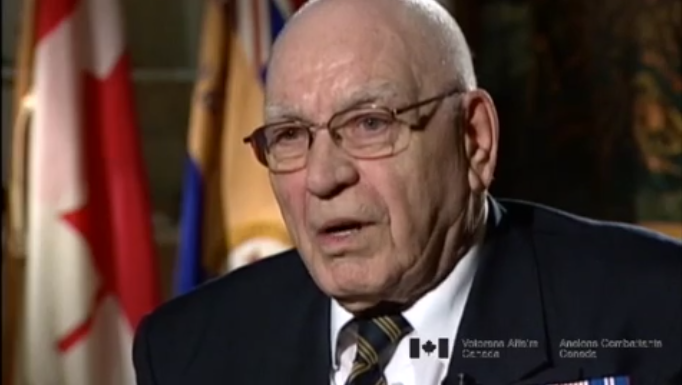
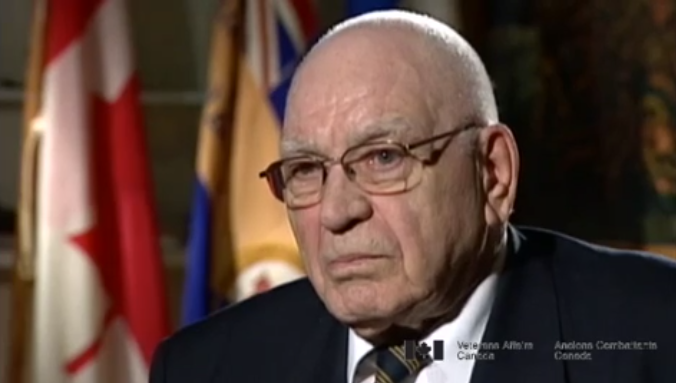
Colonel Ethell shares his feelings about what Remembrance Day means to him.
Donald Stewart Ethell
Donald Stewart Ethell est né en juillet 1937 et a grandi à Victoria (Colombie-Britannique). Son père était un ancien combattant de la Première Guerre mondiale et de la Seconde Guerre mondiale. Sa mère était infirmière. Sa soeur et lui ont étudié dans un pensionnat en raison des emplois qu’occupaient ses parents et ils retournaient à la maison seulement à Noël et pendant les vacances d’été. La mère de M. Ethell est décédée lorsque ce dernier n’avait que 10 ans.
<br><br>
Lorsqu’il s’est enrôlé, M. Ethell a joint les Queen's Own Rifles à Calgary. Après plusieurs années de service comme soldat d’infanterie, on l’a recommandé pour qu’il reçoive la formation d’officier. M. Ethell réussit le programme et s’éleva au rand de colonel. Plus tard, il a commandé des troupes canadiennes et des troupes des Nations Unies au cours de divers missions partout dans le monde. Au milieu des années 1990, Col. Ethell a pris sa retraite après plus de trente-cinq ans de services distingués.
Transcription
Well I could come out with the cliches of you know remembering the fallen and so forth, we will always do that, it is a day when we stop and meditate. First of all, it's not a holiday, I take that term, Remembrance Day holiday, I'm of the school that Remembrance Day parade is in the morning at 11 o'clock, you're all on the parade square regardless of how cold it is and once you finish that then you go back to work, same with the schools. Because it's not a holiday, it's a day when you can pause for a few minutes and recognize the sacrifices of our past. Regardless of what war, or peace support mission, or incident in Canada, the individual died for, death is a death, is a death, and you put a uniform on, first of all nobody said it was safe, secondly you've got to understand at a certain point somebody may order you to kill, or somebody may order you to die. And that's sometimes what I think when I think about the terrible loss of life in World War One, "cannon fodder" is a good term, where we lost ten's of thousands, 120, 000's, where we lost similar amounts throughout the war, throughout the Second World War and to a certain extent in Korean. It's a different world now and I don't think, I'd like to think, we won't go back that way. But those are the things I think of and I think of my own colleagues that we've lost in the peace support operation arena.