Attention!
Cette vidéo est disponible en anglais seulement.
Description
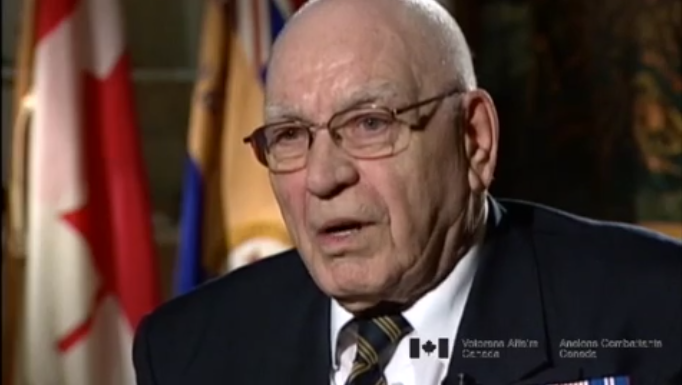
Mr. Meiklejohn recalls being assigned to a field surgical unit, describing their purpose and how the medical units were grouped.
Transcription
I went overseas with the 16th Field Ambulance as part of the 4th Armoured Division. And in England we were broken up. The officers, (inaudible) officers was broken up. And I was . . . had a very fortunate break in that a friend of mine had been given the command of what was called a "field surgical unit." Now a field surgical unit was quite new in both British and Canadian Army but the British had started using them in the war in the desert and it was a means of bringing surgical help much, much closer to the wounded individual than they ever really could before. Because a field surgical unit could function within a few miles of the line and so that the chaps wounded could be evacuated very quickly. Whereas previously they were taken to casualty clearing stations which were somewhat farther back you see. A field surgical unit was a small army unit . . . army medical unit. The unit was self-operating in that we could function on our own. We had three vehicles and in our three vehicles we could pack our equipment including tents and the surgical supplies necessary for operating and sterilizing and one extra unit for carrying personnel. And the way a field surgical unit worked was in conjunction with at least one or two or three others. They would or we would be attached to what was called a field dressing station. A field dressing station was like a small field ambulance but its job was to provide space and rations for attached units. But the main job was to provide stretchers or cots for wounded that were being operated on. So if you can picture this small unit, that supplied the beds and so on and then sprouting out from it would be one field surgical unit or two, if the going was tough and a lot of casualties, a third one. And in addition a field transfusion unit. So now that group was known as an advanced surgical centre. Now the nice thing about that was that an advanced surgical centre could be set up within two or three miles of where the fighting was taking place. The fighting goes on like out in the Liri Valley and no longer are the field surgical units necessary but they send up, start another advanced surgical centre and the one field dressing stations remain as it was, looking after the wounded and evacuating them as they became unable to withstand the jolts in the ambulance. And the field surgical units, the transfusion unit are then fastened onto another field ambulance, field dressing station that was brought up from behind. And there you have another. And this leap-frogging would go on. That was an arrangement that worked very, very well and I think that it could be credited with saving a lot of lives.
Catégories
Field Surgical Unit
Médium
Video
Propriétaire
Veterans Affairs Canada
Guerre ou mission
Seconde Guerre mondiale
Emplacement géographique
Italy
Personne interviewée
Dr. Robert Meiklejohn
Branche
Armée
Unité ou navire
Royal Canadian Army Medical Corp / 4th Armoured Division
Military Rank
Major
Occupation
Physician
Durée
5:18