Attention!
Cette vidéo est disponible en anglais seulement.
Description
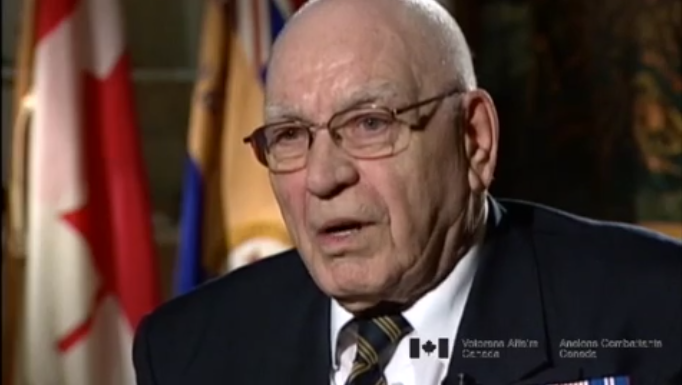
Mr. Campbell discusses the practise of photographing bomb drops over enemy targets, and how the danger from adjacent aircraft was often evident in the photos.
Transcription
If you have 400 or 1200 air craft in a very narrow corridor, somebody is bound to get too close to somebody else, but I don’t know, I don’t believe there was ever any tally made. But sometimes we probably injured as many of our own people as we did of the enemy. In dropping your bomb loads, there is an automatic connection between the bomb site and a special camera that was in the air craft. And when the bomb aimer dropped his bombs, he exposed a frame in this other little camera and then at the time that his bombs were supposed to be dropping and be hitting the ground, there was another contact and they took another exposure. So you had two pictures, one of when the bombs left the air craft and the other when the bomb should have struck and where they should have struck on the target. Well on several, I have the photo somewhere at home, but I’ve never been able to find them for the five or more years, there are six or eight bomb loads visible in that picture. Now that camera only has a limited range. So to be able to see six or eight other bomb loads, not just yours, yours are there, but then there’s a half dozen others around and you never saw any of those air craft. They could have been above you, beside you, they weren’t below you cause you’d have seen the aircraft. But those bombs also went by you, and how they got by you, I don’t know. Again, you know, somebody else was looking after you.
Catégories
Photographic Evidence
Médium
Video
Propriétaire
Veterans Affairs Canada
Guerre ou mission
Seconde Guerre mondiale
Personne interviewée
John Campbell
Branche
Aviation
Unité ou navire
626<sup>e</sup> Escadron
Military Rank
Flying Officer
Occupation
Pilote
Durée
1:49