Attention!
Cette vidéo est disponible en anglais seulement.
Description
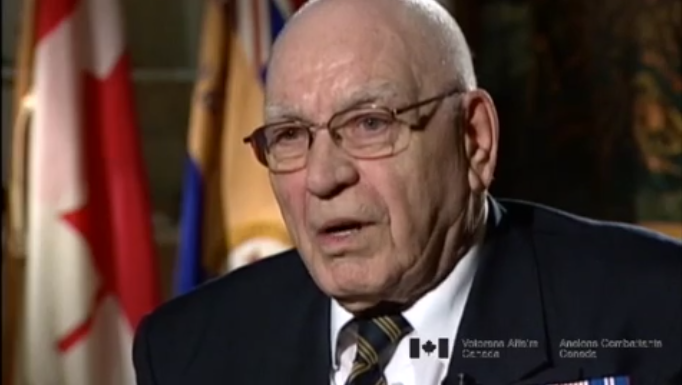
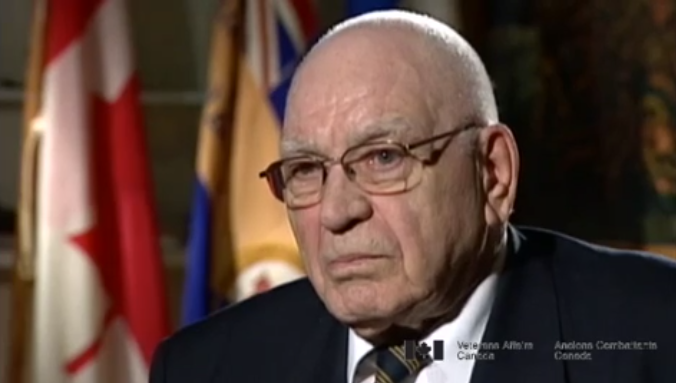
Mr. Bower-Binns describes the various checks and procedures performed by the air crew prior to takeoff.
Transcription
We’d be told we were going on an operation, some hours beforehand, and from then on a navigator started preparing, you know, we started... we had a briefing of what the target was going to be, everybody had their jobs to do, a bomb aimer had to know what his bomb night was going to be, the gunners went out and cleaned the perspex on their gun, or turrets because they didn’t want a spot of dirt on them or anything. At night in the dark a spot of dirt might look like an airplane out there so... they did all that kind of thing. Pilot went out and did a few engine tests and that, and then we... we had a full crew briefing and we’d prepare for a take off and about an hour before, we had to go to the crew room and if it was in the wintertime we’d have to put on winter underwear kind of thing and a heavy sweater and flying boots and parachute harness and a Mae West which was the life... you know, in case you came down in the sea, all that kind of clothing. And then we’d be moved, get into trucks or buses and taken out to the aircraft which was around dispersals. In the Halifax, the navigator’s position was in front of the pilot, down on the lower deck under his feet - the wireless operator, the navigator and the bomb aimer’s position right up in the nose. Well, those three positions aren’t filled in take off because that’s kind of a dangerous place to be if you don’t get off, you hit something or, so we’d be in the rest position back behind.
Catégories
Pre-flight protocol
Médium
Video
Propriétaire
Veterans Affairs Canada
Guerre ou mission
Seconde Guerre mondiale
Emplacement géographique
Angleterre
Personne interviewée
John Bower-Binns
Branche
Aviation
Unité ou navire
<em>#1 Bomber Command</em>
Military Rank
Capitaine d'aviation
Occupation
Navigator
Durée
1:56