Attention!
Cette vidéo est disponible en anglais seulement.
Description
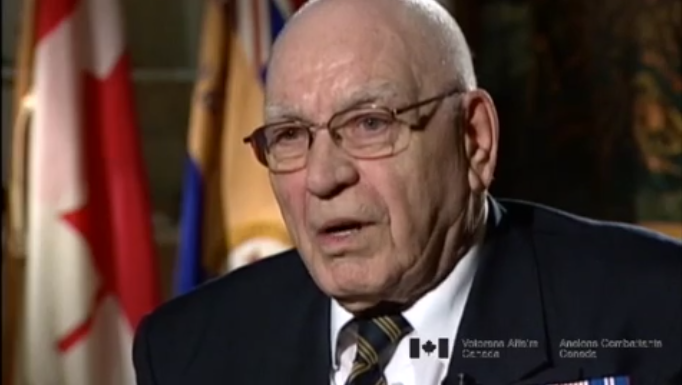
Mr. Carney provides detail of his responsibilities as a signalman and how he maintained the communication lines.
Transcription
We were in headquarters behind the lines and being attached to the artillery they had observations posts that they kept a look on the enemy lines and so we had to maintain communications between headquarters and also the guns, the 105 millimetres that they used. We had to have lines to them and from them up to the front lines. So if the observation officers spotted a target, they’d call back by phone because the wireless, too many hills, by phone and they’d call for the artillery to fire so many rounds on the North Koreans. So we had to maintain those lines 24 hours a day. Just thinking about lines there, one of the big problems with our lines was especially in the dry weather they’d be just laying on the ground and quite occasionally the grass would be set on fire for some reason and that would ruin our lines so we’d have to start... I guess the part was, a lot of the other countries they had lines. They’re just a small little black telephone. They’d have them on the ground, course they’d all be mixed up and we’d have to go to a central post and try to sort out, you know, our lines and get communications back again.
Catégories
The Role of a Signalman
Médium
Video
Propriétaire
Veterans Affairs Canada
Guerre ou mission
Guerre de Corée
Emplacement géographique
Corée
Campagne
Corée
Personne interviewée
Cy Carney
Branche
Armée
Unité ou navire
<em>Royal Canadian Signals Corps</em>
Occupation
Signaleur/Signaleuse
Durée
1:33