Attention!
Cette vidéo est disponible en anglais seulement.
Description
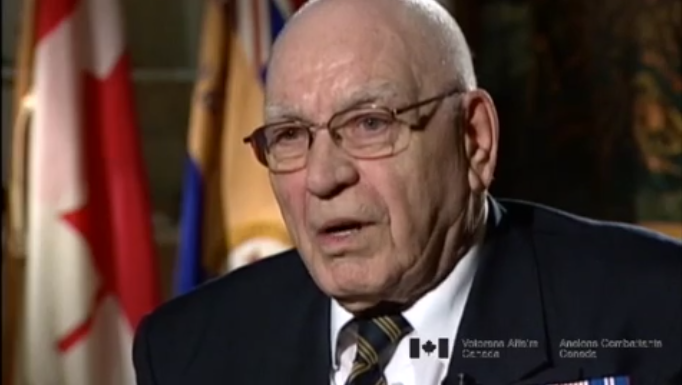
Mr. Warren describes several of his combat tasks; sweeps (searching for targets of opportunity), dogfighting and bomber escort. The length of these missions was short due to the Spitfire's small fuel capacity and high consumption rate.
Transcription
We had sweeps, we had dogfights. We were escorting bombers. I was on one of the first big raids of the B-17’s. I think there were 12 aircraft. Twelve aircraft and it was... got a lot of publicity. Later on I was on raids where there were a thousand bombers. There was just a big white path in the sky of contrails. The Germans didn’t need radar, they could just sort of see them coming and, of course, everybody was up there going hammer and tongs at it. By the time I was really getting into the sweeps, if we escorted bombers why the German fighters would hang back until we had to leave them. A lot of people perhaps don’t realize how short of fuel a Spitfire might be if, particularly if you were engaged. And you carried 85 gallons in the aircraft. We didn’t use overload tanks at that time, they weren’t available to us. And if you used the throttle wide open you were using a hundred gallons an hour. But you only started with 85 and you would use some gas to get over France and you hoped you had enough gas to get back so sometimes, the fuel was always very critical.
Catégories
Fuel was Critical
Médium
Video
Propriétaire
Veterans Affairs Canada
Guerre ou mission
Seconde Guerre mondiale
Emplacement géographique
Europe occidentale
Personne interviewée
Douglas Warren
Branche
Aviation
Unité ou navire
166 Squadron
Military Rank
Wing Commander
Occupation
Pilote
Date d’enregistrement
Durée
1:26