
Animals in War Dedication

Ottawa, Ontario
Type
Other

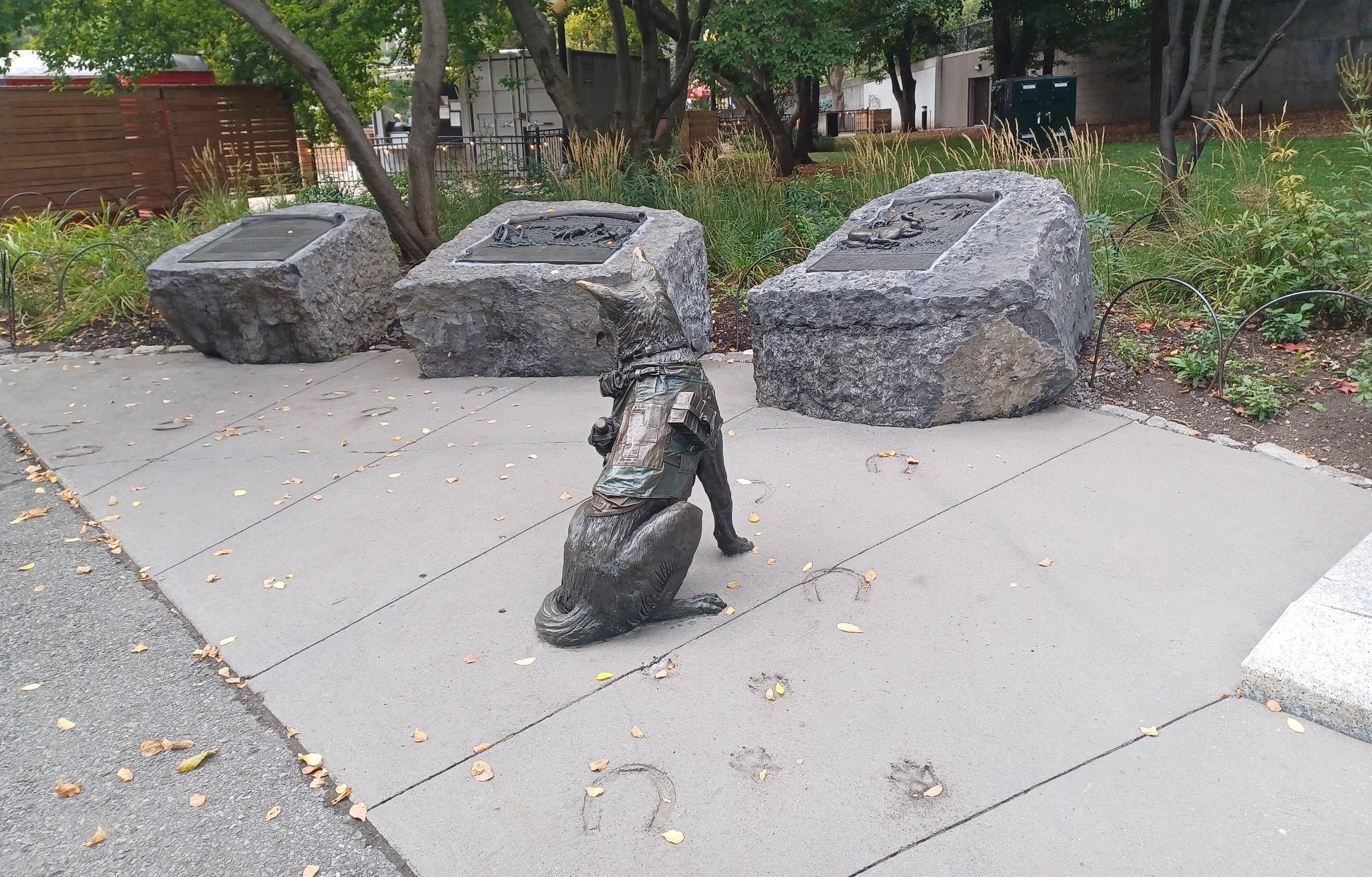
The Animals in War Dedication honours animals that served alongside their human comrades in war. It is symbolically set next to the South African War Memorial, a battle for which Canada supplied 50,000 horses for mounted troops. The footprints of dogs, horses and mules are stamped into the concrete of the Animals in War Dedication, representing the marks they left on the battlefield.

A bronze, life-sized statue of a medical service dog stands guard over the dedication. It is wearing an authentic replica of a medical backpack that war dogs used during the First World War. Canada’s military still employs dogs to this day. The Animals in War Dedication was created in 2012 by Canadian artist and sculptor David Clendining.

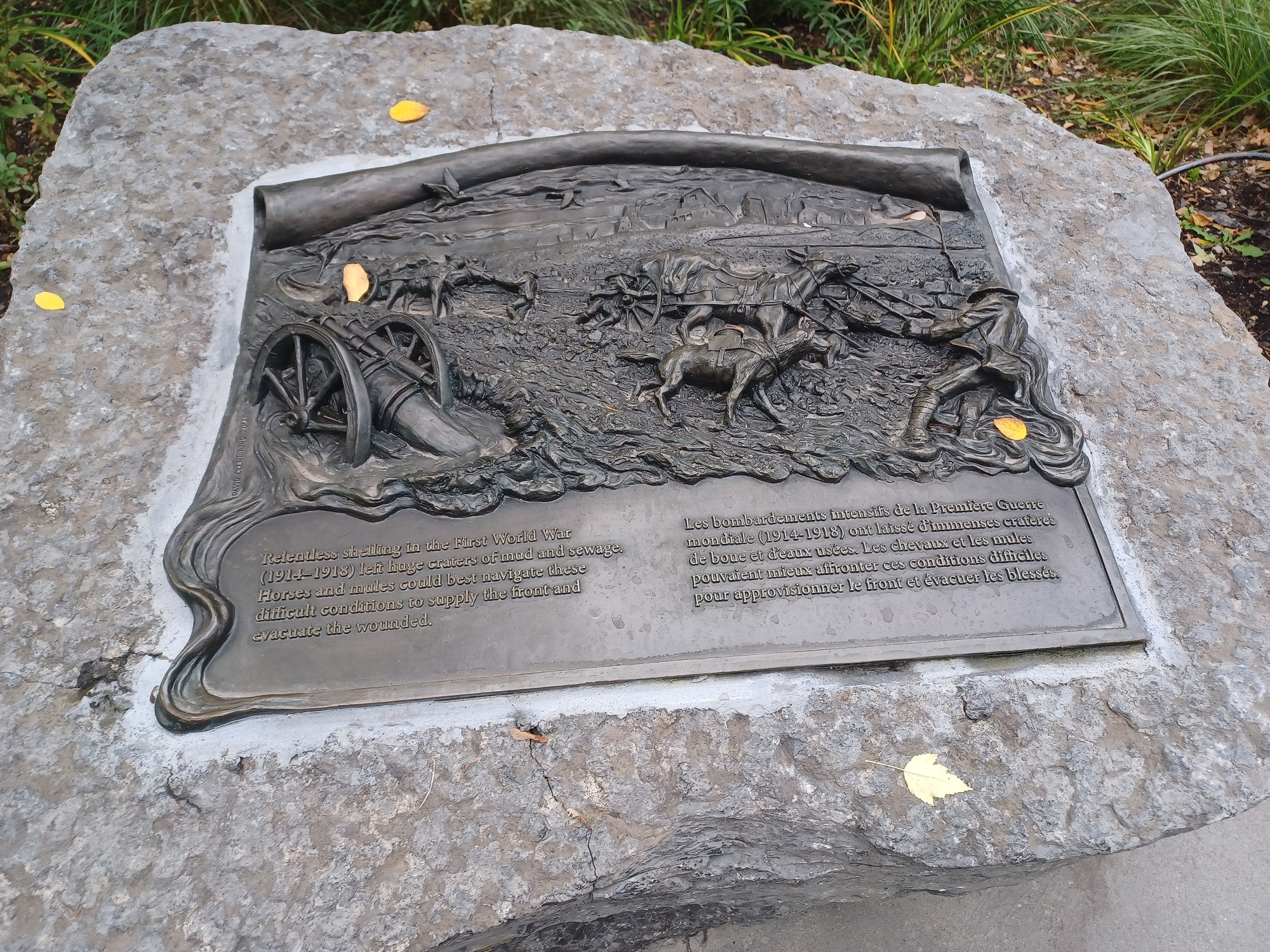
Three bronze plaques depict animals in war and provide interesting facts about their roles, their sacrifices, and their unwavering loyalty. Among the roles animals have played in war:

  • Mules: carried panniers and artillery.
  • Horses: carried mounted troops and hauled field guns.
  • Carrier pigeons: delivered messages to specific destinations.
  • Dogs: used as messengers, medical assistants, bomb detectors, and search and rescue workers.

Inscription

[left plaque/plaque gauche]
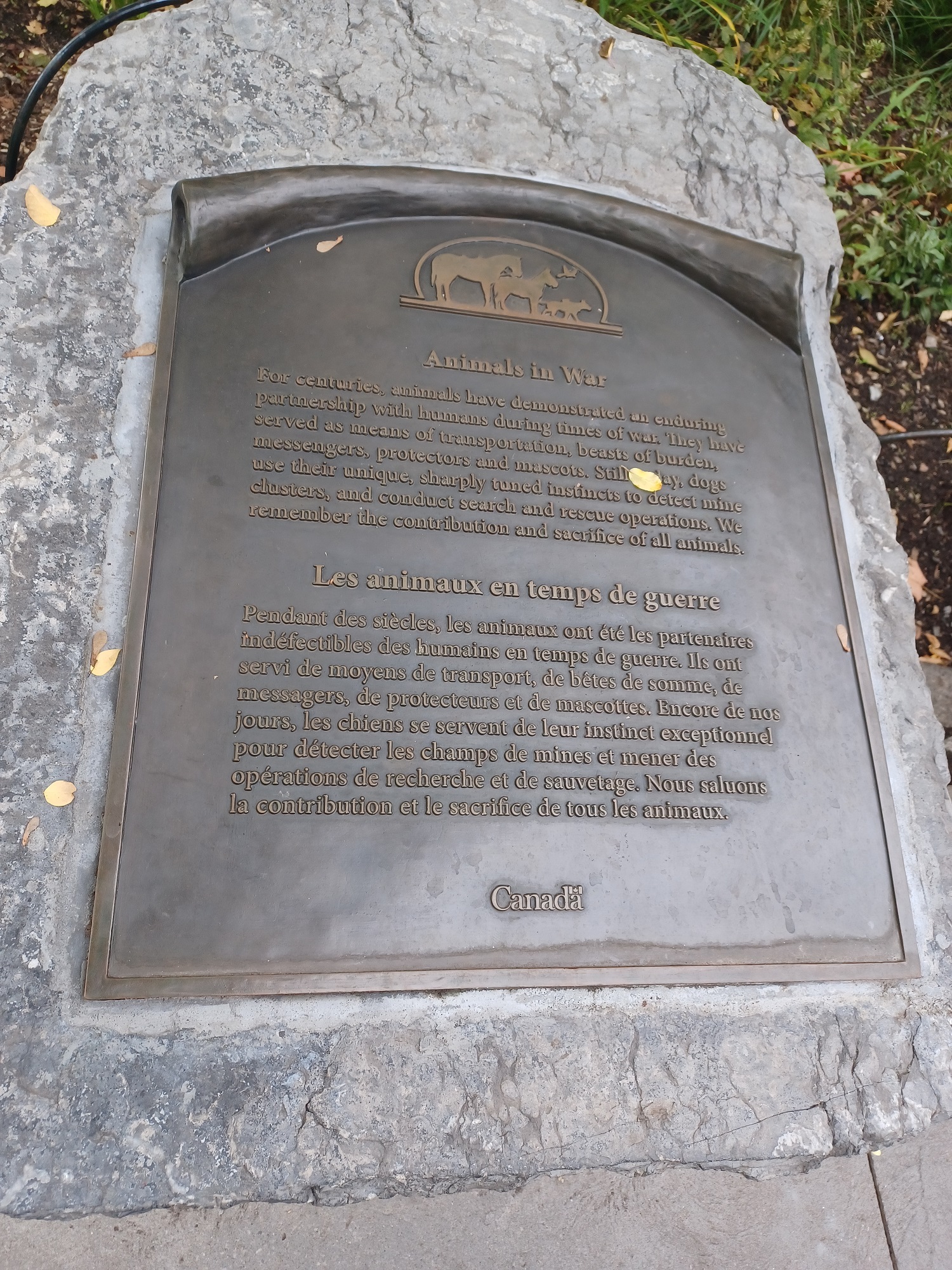
Animals in War

For centuries, animals have demonstrated an enduring partnership with humans during times of war. They have served as means of transportation, beasts of burden, messengers, protectors and mascots. Still today, dogs use their unique, sharply tuned instincts to detect mine clusters, and conduct search and rescue operations. We remember the contribution and sacrifice of all animals.

Les animaux en temps de guerre

Pendant des siècles, les animaux ont été les partenaires indéfectibles des humains en temps de guerre. Ils ont servi de moyens de transport, de bêtes de somme, de messagers, de protecteurs et de mascottes. Encore de nos jours, les chiens se servent de leur instinct exceptionnel pour détecter les champs de mines et mener des opérations de recherche et de sauvetage. Nous saluons la contribution et le sacrifice de tous les animaux.

[center plaque/plaque centre]
Relentless shelling in the First World War (1914 – 1918) left huge craters of mud and sewage. Horses and mules could best navigate these difficult conditions to supply the front and evacuate the wounded.

Les bombardements intensifs de la Première Guerre mondiale (1914 – 1918) ont laissé d’immenses cratères de boue at d’eaux usées. Les chevaux et les mules pouvaient mieux affronter ces conditions difficiles pour approvisionner le front et évacuer les blessés.

[right plaque/plaque droit]
Horse carried soldiers, and pulled gun carriages, supply wagons and ambulances. Many paid the ultimate price and their loss was mourned by those they served.

Les chevaux ont transporté les soldats, et tire les affûts de canon, les chariots d’approvisionnement et les ambulances. Beaucoup ont péri et ceux qu’ils servaient ont pleuré leur perte.

[stone plaque/plaque sur la pierre]

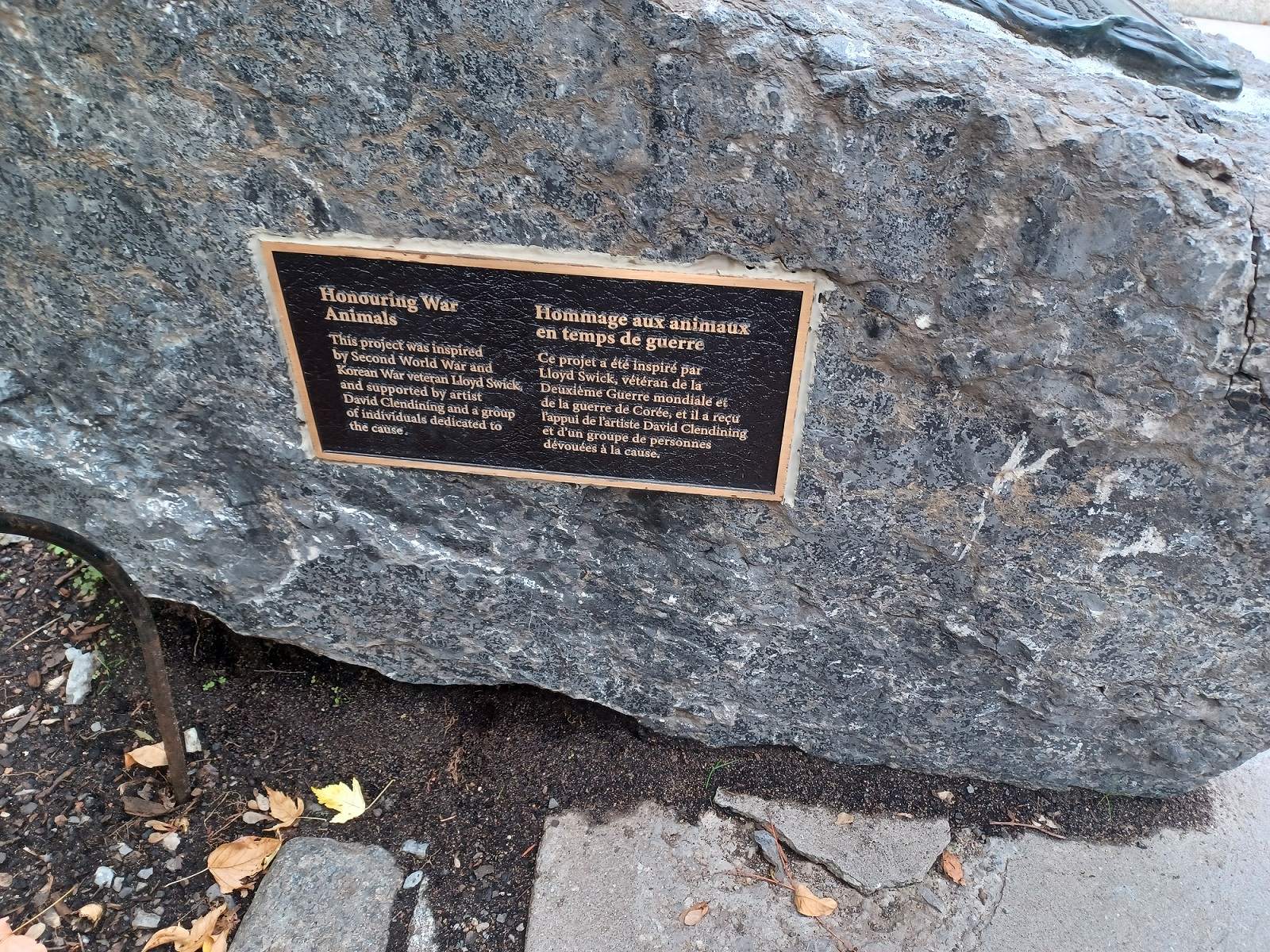
  • Honouring War
    Animals
  • This project was inspired
    by Second World War and
    Korean War veteran Lloyd Swick,
    and supported by artist
    David Glendining and a group
    of individuals dedicated to
    the cause.
  • Hommage aux animaux
    en temps de guerre
  • Ce projet a été inspiré par
    Lloyd Swick, vétéran de la
    Deuxième Guerre mondiale et
    de la guerre de Corée, et il a reçu
    l'appui de l'artiste David Glendining
    et d'un groupe de personnes
    dévouées à la cause.
Location
Animals in War Dedication

Elgin Street and Laurier Avenue
Ottawa
Ontario
GPS Coordinates
Lat. 45.4218011
Long. -75.6923819

Bronze, life-sized statue of a medical service dog.

1 of 6 images

center plaque

1 of 6 images

right plaque

1 of 6 images

left plaque

1 of 6 images

Honouring war animals plaque

1 of 6 images

Animals in War Dedication

1 of 6 images
Table of contents