

Service militaire
Lieu de l’enterrement/commemoration
Fils du Mook Fong et Chow-Shee Fong de Montréal, Québec. Frère de Jacques, Gimmy et Mae Fong.
Commémoré sur le Mur du souvenir.
Galerie numérique de Soldat Willie Fong
-

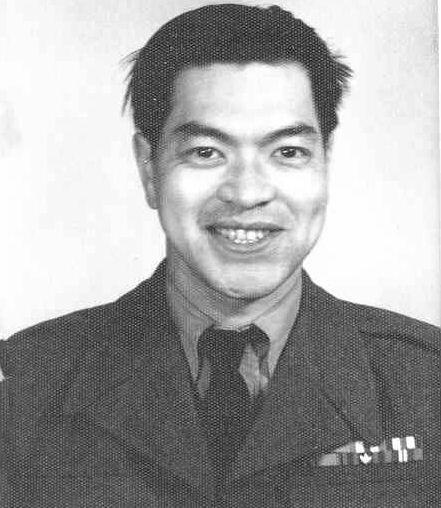
Photo of Willie Fong
-

Willie Fong and friends
-

Newspaper clipping
-
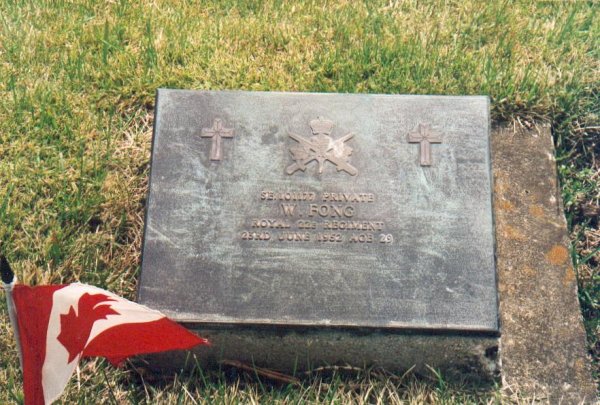
Grave marker
Galerie numérique de
Soldat Willie Fong
Galerie numérique de
Soldat Willie Fong
Galerie numérique de
Soldat Willie Fong
Galerie numérique de
Soldat Willie Fong
Dans les livres du souvenir
Inscription commémorative sur la :
Page 24 du Livre du Souvenir de la Guerre de Corée.
Commander cette page
Télécharger cette page

CIMETIÈRE COMMÉMORATIF DES NATIONS UNIES (BUSAN) Corée du Sud
Pour plus d’informations, visitez la Commission des sépultures de guerre du Commonwealth (site disponible en anglais seulement).
L’image du coquelicot est une marque déposée de la Légion royale canadienne (Direction nationale) et est utilisée avec sa permission. Cliquez ici pour en savoir plus sur le coquelicot.
Avons-nous oublié quelque chose ?
Contribuer à cette page commémorative
Avez-vous des photos, des informations ou une correction concernant la page commémorative de cet individu? Apprenez-en plus sur le MVGC et les informations que nous collectons.