Attention!
Cette vidéo est disponible en anglais seulement.
Description
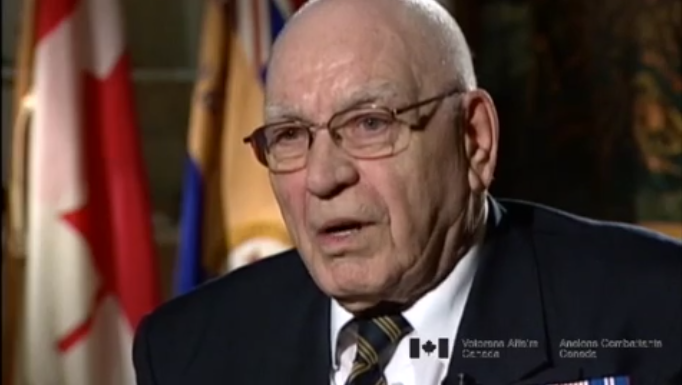
Mr. Laxton describes proving the value of terrain analysis and volunteering for Bosnia.
Transcription
That's how I got to Bosnia. We had been . . . the terrain analysis section was put together and we were advising the Canadian military and, and the government as well, on the terrain and weather, and weather effects on how they were going to work in foreign countries, and UN missions, and NATO missions and that. And the, the aspect of what is the terrain and weather going, how is it going to effect the Canadian troops and their mission, but also the warring factions, how are they going to be affected, what are they going to be able to do, and how can we anticipate what they're going to do. So we had different methodologies of finding and detecting mine fields. Not only finding them on the ground, the hard way by blowing them up, but anticipating where these things might be and where the warring factions might be, to put something up. So, we would exercise with Canadian troops at various levels, brigade levels and that. But we were doing a lot of strategic work . . . country, writing country reports and studies. This was all at the beginning. We were, we were making this up as we went along. Did a drug introduction into Saint-Pierre de Miquelon, for the RCMP, where would planes of this size be able to land and how were the ships coming in and where, where possibly could these things be found and that, so what was happening. Then it . . . had an opportunity. It was the director of cartography, had gone overseas too, as an engineering officer, as an Engineering Co . . . Colonel, and he had met up and worked with Colonel Woloschuk, who was a Strathcona at the time, an armoured officer, Lieutenant Colonel, and we were working together. And the engineer was telling the armoured corps about this great wonderful thing called terrain analysis and how it could help save lives, have his troops give him better information and anticipatory information and that. So, there was great interest and then the Strathconas, my old unit, was tasked to go back. They were . . . the Strathconas were tasked to go to Bosnia. And the Colonel was going over as the CO of the Strathconas, Colonel Woloschuk, and he came down and visited and had a look at what we were proposing to do. Not at a strategic level, but the service we could provide to them at the technical level, in the field, on the ground, with the people there. And he liked it, so he gave up two riflemen, and myself and Master Corporal Dowling, or Downing, Dowling, Master Corporal Dowling went over. But it was, it was quite different because we didn’t have the . . . we knew what the task was, was support the battle group, but there was no definition of how to do that. No, no product that we were systematically producing or anything else, so we were, we were forging through on new ground. And I specifically asked for that task. I'd been offered an exchange posting with the Americans in Germany for three years, and a one year posting with the United Nations to Zagreb, and a possible six month posting with the Strathconas at the tactical level in Bosnia. So I turned down the other two, which were career movers, to do the one that hadn't been done. The other two had been done before, people had been there and the, and the tactical level had never been done. So, we were the first ones to do it.
Catégories
Support the battle group
Médium
Video
Propriétaire
Veterans Affairs Canada
Guerre ou mission
Forces armées canadiennes
Emplacement géographique
Bosnie
Campagne
Bosnia
Personne interviewée
David Laxton
Branche
Armée
Unité ou navire
<em>Lord Strathcona's Horse</em>
Military Rank
Sergent
Occupation
Armoured Crewman Terrain Analyst / Topographical Surveyor
Durée
4:01