Attention!
Cette vidéo est disponible en anglais seulement.
Description
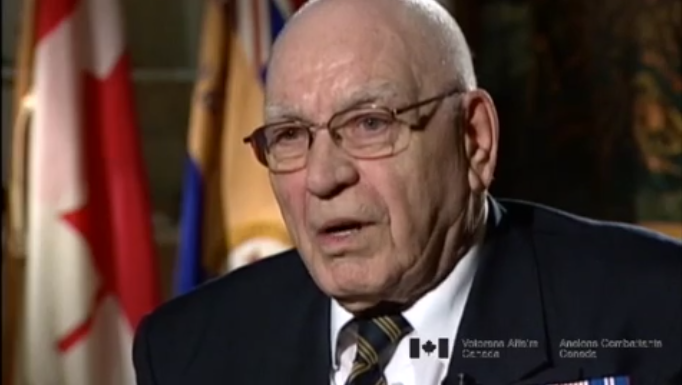
Mr. Yeomans discusses his general impressions of training.
Transcription
At that time you trained to be a navigator. You weren't training for any particular role, but generally speaking, the way the RAF was developing back in U.K., where they were building up the bomber force, it appeared pretty likely, that you were going to wind up on bombers. Of course you could have wound up, as many people did, on other types of air crafts. But you were training to operate on aircraft with a crew. And generally speaking, you would be on bombers or transport or coastal command aircraft. You didn't know at that time, where you would wind up. But the chances were, with the way that the bomber force was developing, it would be on bombers. You were excited to a certain extent. You were nervous to a certain extent, but there was nothing sort of special about it, because so many people had done it before and appeared to have come out of it alright. You looked forward to it. And when it happened that you wondered, am I going to be airsick? And those sort of thoughts were in your mind, but there was nothing very difficult about it, I suppose anymore than going on the swings and roundabouts at the fair ground. But at least you were know, somewhat above the ground and it was, it was fun. By mid '43, we had gone to the what was called, the Operational Training Unit. And there we were flying Wellington Bombers. And these were a twin engined bomber with a crew of five. And they could carry quite a good bomb load, fly at a good height and for a good duration. So then these were aircraft that would have been used and were still being used, in the bombing raids against Germany. And they carried, as I say, a crew of five, they'd carry a bomb load of 8,000 pounds, fly at 20,000 feet and could go on a mission that lasted six hours. So this was different from the training aircraft that we had been flying in South Africa, which were generally speaking, Anson Air craft which were slower and didn't carry bomb, bombs at all. So now we, we've entered a different stage of training. And you now realize that when I finish this stage of training, I will be going onto a bomber squadron and I will then be flying against the enemy. And that's altogether different, because whereas during training, you're flying where there is nobody attacking you. But once you get onto bomber operations of course, you're flying in, into a situation where someone is trying to stop you. And the Germans were damn good at it.
Catégories
Someone is trying to stop you
Médium
Video
Propriétaire
Veterans Affairs Canada
Guerre ou mission
Seconde Guerre mondiale
Emplacement géographique
Europe
Campagne
Allemagne, Série de raids de B
Personne interviewée
John Yeomans
Branche
Aviation
Unité ou navire
156<sup>e</sup> Escadron <em>Pathfinder</em>
Military Rank
Wing Commander
Occupation
Navigator
Durée
4:04