Attention!
Cette vidéo est disponible en anglais seulement.
Description
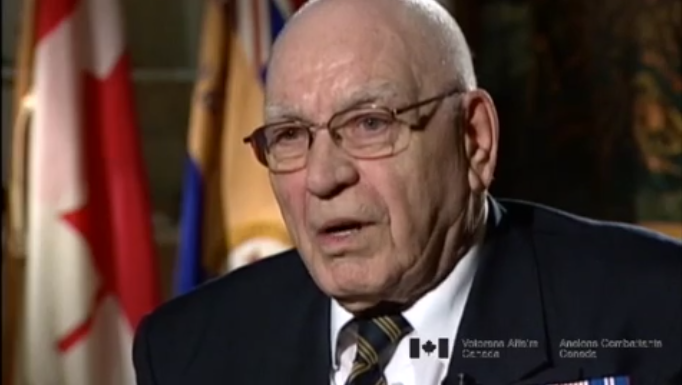
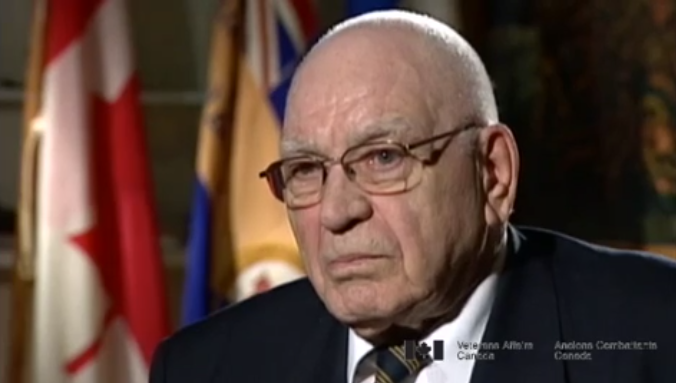
Mr. Mercer recounts some of the tactics and scenarios used when firing artillery towards the enemy.
Transcription
One of our guns got a, the bunker got a direct hit one night. It wasn’t a heavy shell, it was a light one. But as it happened it wasn’t the gun I was on, it was the next one. None of the fellows, shall we say, shocked but they weren’t wounded too much because they had that much more clay and sods and rocks and everything on the top of their bunker but it blew the top right off the bunker. So like I say, the next morning there was no trouble to see every gun crew was out then making the top of their bunker that much thicker. Artillery don’t usually come under small arms fire not like machine gun will, their biggest worry is the shells coming or getting bombarded shall we say. The most action was about dusk. That’s when things happened. The China man had to sleep in the night time by the same token we had to sleep but it was doing about dusk, anything going to take place it was around dusk. Once they fired at you well they would move then and you couldn’t see them moving see. But every four guns, they got what you call a command post. A command post is a troop command post and a battery command post and brigade command post. Well, the brigade command post, he knows, shall we say, we’re holding down, shall we say ten miles of the front, well the brigade command post, he knows the position of every gun on that brigade and if he wants, shall we say, the Canadians to fire which would be us, Fox battery, well we just get orders, “Fox battery.” By the same token if they wanted to fire themselves well they’d use the brigade headquarters. In the artillery, you don’t see what you are shooting at. You know they are over the hill but all you do, you get, shall we say, an aiming point by figures and you got a dial set on your gun and you put down so many degrees north, 33 degrees west and so many east and then the barrel would be moving all the time. And then when you line up these figures and everything and the bubbles on your gun and you waited then and the observation officer if he wanted to have a shell fired, he’d say, “Fire” and that would come down through command, “Boom” and then he’d say, he could see then, the observation officer would see where that shell landed. Well, then if the shell landed a bit short or over the target, then he’d make a correction on his reference, shall we say. I wouldn’t know what I’m shooting at, I just take the figures, put them on a dial sight and check our aiming post and the (inaudible) he’d pat his leg like that, “He’s ready.” Then I just press the button on the thing and say “I’m ready,” and the command post would say he’s ready, then you’d wait and the officer would say, “Fire,” again. Well, then if he was a bit still off target well he’d make another correction but he usually hit the target whatever he was shooting at on his third shell.
Catégories
Artillery Fire Towards the Enemy
Médium
Video
Propriétaire
Veterans Affairs Canada
Guerre ou mission
Guerre de Corée
Emplacement géographique
Corée
Campagne
Corée
Personne interviewée
Leslie Mercer
Branche
Armée
Unité ou navire
<em>Royal Canadian Horse Artillery</em>
Military Rank
Bombardier
Date d’enregistrement
Durée
3:51