Attention!
Cette vidéo est disponible en anglais seulement.
Description
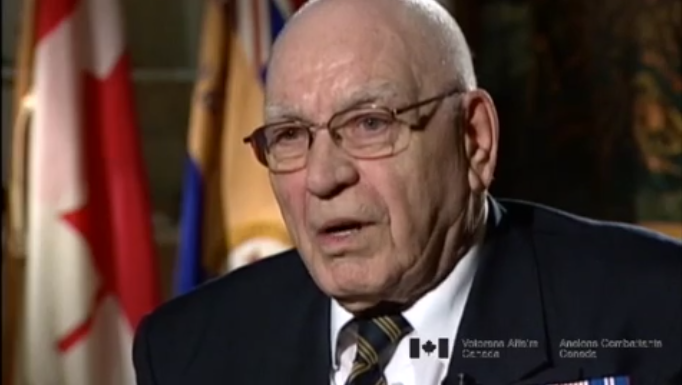
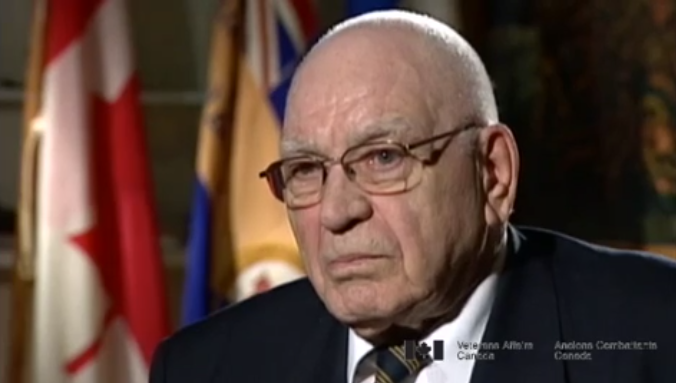
With all the circumstances our Canadian soldiers experience, Mr. McCue expresses his opinions on quality and value for life after witnessing Bosnian culture.
Transcription
Our first month in theatre in Bosnia my platoon was selected for guard duty in the Banja Luka Metal factory which was a different area of operations than where the Canadians were operating. It was the British main base and they wanted a guard platoon. And it was Canada contingents turn to provide a guard so we were there to begin with. That first month was very much in the army side of things fairly boring, fairly blasé guard duty. Someone has to do it, it has to be done but it was not, we were all itching to get out and start patrols and it was when we started patrolling that we realized, you know, that guard duty wasn’t so bad. When you’re going down roads and you have to make sure there’s no mines; having to see that destruction, to see the rampant decay of the country. The core was rotten and it had been and people were taking advantage of the local Bosnians and there were companies coming in from Europe that were using them to build furniture. They would have these guys hand carve wood and then they would sell them for ten times the cost back in Europe but they would pay the workers pennies to do it there. And you had to see this infrastructure. The mafia was making big inroads in to taking over the economy and driving the politics of the place. And there was a vacuum of power obviously when the country fell apart. With that, you can’t imagine just the amount of things that happened. There was a celebratory gunfire one night, we got called out because of the gunfire going off. There was a wedding, everyone had drinks and they started shooting AKA 47’s in the air. Well, what goes up must come down and we ended up getting an injured lady we had to take to the hospital, the local government hospital which is very underfed, under provided with medicines, with trained personnel. The families would have to go in and look after their kin in the hospital, bring them medicine if they needed it, bring them, you know, wash their hair, wash them in the hospital bed, there was no infrastructure in place to do any of that. And one of the interpreters had been involved in a roll over. A Canadian vehicle had rolled off a mountain side. She was injured, she had to be looked after by her own family in the hospital because there was no provisions for care. And you kind of think about that and you know, you’re worried about accidents, you’re worried about vehicle problems. You’re driving down very narrow roads where the rule of law is very much missing. There is no traffic regulations. There is no insurance. There is no nothing so people see people dying all the time. Life becomes cheap and it doesn’t have the same impact where in Canada we live fairly long lives, we have a pretty rich life. You can make it through all of those things but when you see things return to more primal state you can’t help but be affected by it.
Coming home and having to deal with the mundane after is very difficult. An example, after coming home from Bosnia I went to work in Crosstown Chrysler in Edmonton, it was a dealership there. And I was working with the service manager, a friend of mine and I was helping organize the tower, making sure the vehicles coming in and out of the shop were being looked at. And this guy came in and he made a big fuss over his a/c wasn’t working all the time and for me it was so hard not to say anything because you’re a/c doesn’t work, at least you got running water. You’ve got all those things. For him it was the end of the world, for me it was a very minor inconvenience but your perception changes when you’re over there and when you experience these things and I think the biggest gift we can get from these deployments is that perception change where people just realize how lucky we are here in Canada.
Coming home and having to deal with the mundane after is very difficult. An example, after coming home from Bosnia I went to work in Crosstown Chrysler in Edmonton, it was a dealership there. And I was working with the service manager, a friend of mine and I was helping organize the tower, making sure the vehicles coming in and out of the shop were being looked at. And this guy came in and he made a big fuss over his a/c wasn’t working all the time and for me it was so hard not to say anything because you’re a/c doesn’t work, at least you got running water. You’ve got all those things. For him it was the end of the world, for me it was a very minor inconvenience but your perception changes when you’re over there and when you experience these things and I think the biggest gift we can get from these deployments is that perception change where people just realize how lucky we are here in Canada.
Catégories
Situations in Bosnia Leave a Mark
Médium
Video
Propriétaire
Veterans Affairs Canada
Guerre ou mission
Forces armées canadiennes
Emplacement géographique
Bosnie
Campagne
Bosnia
Personne interviewée
Robert McCue
Branche
Armée
Unité ou navire
Princess Patricia's Canadian Light Infantry (PPCLI)
Military Rank
Sergent
Date d’enregistrement
Durée
4:25