
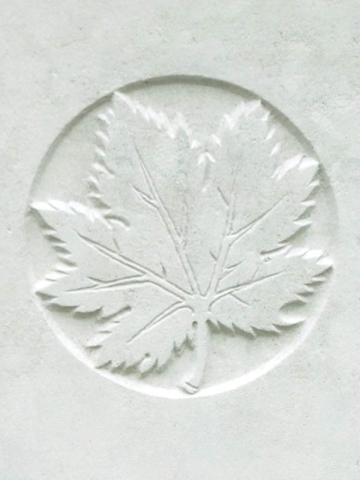

Service militaire
Lieu de l’enterrement/commemoration
Fils de Leon and Mae Dyer de Sutton, Québec. Frère du soldat Charles Edward Dyer, décédé pendant qu’il servait dans le Canadian Infantry (Quebec Regiment).
Cousin du lieutenant d'aviation Maurice Ballard Dyer, décédé le 26 juillet 1944 pendant qu’il servait dans le Royal Canadian Air Force.
(Extrait de l’annuaire du Collège de Stanstead, juillet 1919)
Le capitaine Royce Dyer, DCM, MM avec barrette, s’est enrôlé au début de la guerre à Winnipeg comme soldat dans le 90 th Winnipeg Rifles, connu sous le nom de « Little Black Devils ». Après un entraînement à Valcartier, son bataillon s’est embarqué pour l’Angleterre, en octobre 1914. Il est arrivé en France en janvier 1915 et a servi comme estafette pour le général Loomis. Lors de la première bataille d’Ypres, Royce a reçu la Médaille militaire pour « bravoure sous le feu des obus ». C’est là que les Allemands ont utilisé pour la première fois le gaz, et le 90 th Battalion a perdu tous ses hommes, sauf cent soixante, sur un total de mille.
Peu de temps après, Royce est recommandé pour la médaille de conduite distinguée (DCM), pour avoir ramené un officier blessé entre les lignes britanniques et françaises, au péril de sa vie. Pour une raison inconnue, la recommandation n’a pas été exécutée à ce moment-là. Lors de la bataille de la Somme, il a été de nouveau recommandé pour la DCM pour « bravoure sous le feu des obus », mais a reçu à la place une barrette à sa médaille militaire.
En juin 1917, alors qu’il portait une dépêche et descendait une colline rocheuse sur sa bicyclette, il a été éjecté de sa monture et a été gravement blessé au poumon gauche. Il a été envoyé à Londres pour être soigné à l’hôpital Potter. Après sa guérison, il a suivi un cours à Shorncliffe et a été chargé de travailler en Angleterre, de former les recrues canadiennes et a été promu sergent. Alors qu’il se trouvait à Seaford en mai 1918, il s’est porté volontaire pour servir en Russie et est parti pour ce pays le 15 juin 1918.
Peu de temps après son arrivée en Russie, Royce a été promu lieutenant et a reçu la DCM, pour avoir infligé de lourdes pertes à l’ennemi, avoir débordé l’ennemi et avoir tenu une position contre des troupes plus nombreuses et mieux armées jusqu’à l’arrivée des renforts. Il a ensuite été transféré dans l’armée impériale et nommé officier commandant du bataillon disciplinaire. Son travail consistait alors à former des prisonniers bolcheviques et des Russes pour en faire des soldats. Peu de temps après, il a été promu capitaine.
Mais les nombreuses épreuves traversées par Royce l’ont affaibli physiquement, et lorsqu’il a contracté la grippe en décembre 1918, celle-ci s’est transformée en pneumonie, et un télégramme est parvenu à son domicile le 30 décembre, indiquant qu’il était décédé à Bak, Waritza, dans le nord de la Russie.
Galerie numérique de Capitaine Royce Coleman Dyer
-
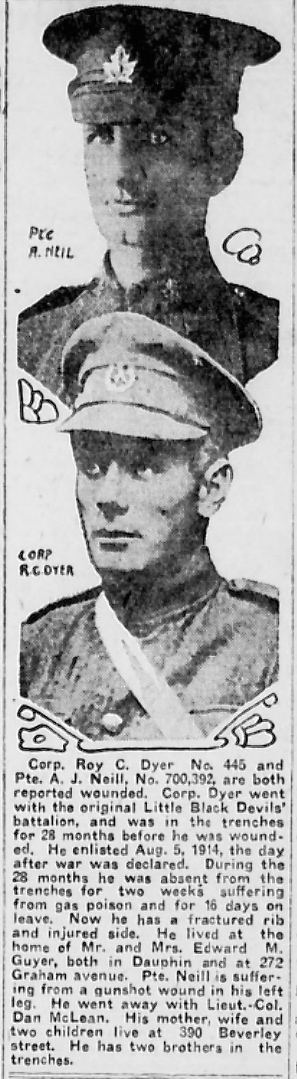
Newspaper Clipping
-

Photo of Royce Dyer
-
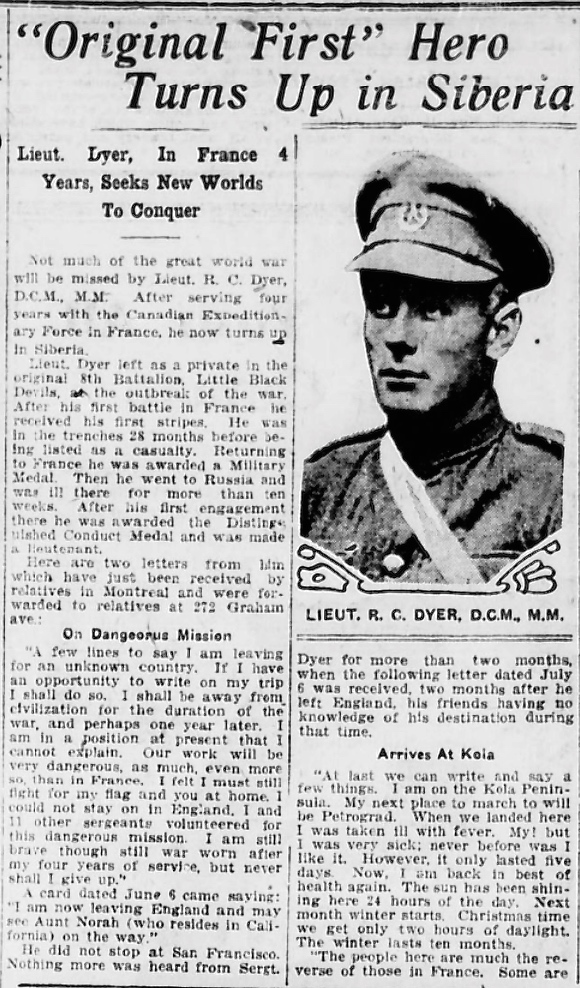
Newspaper Clipping
-
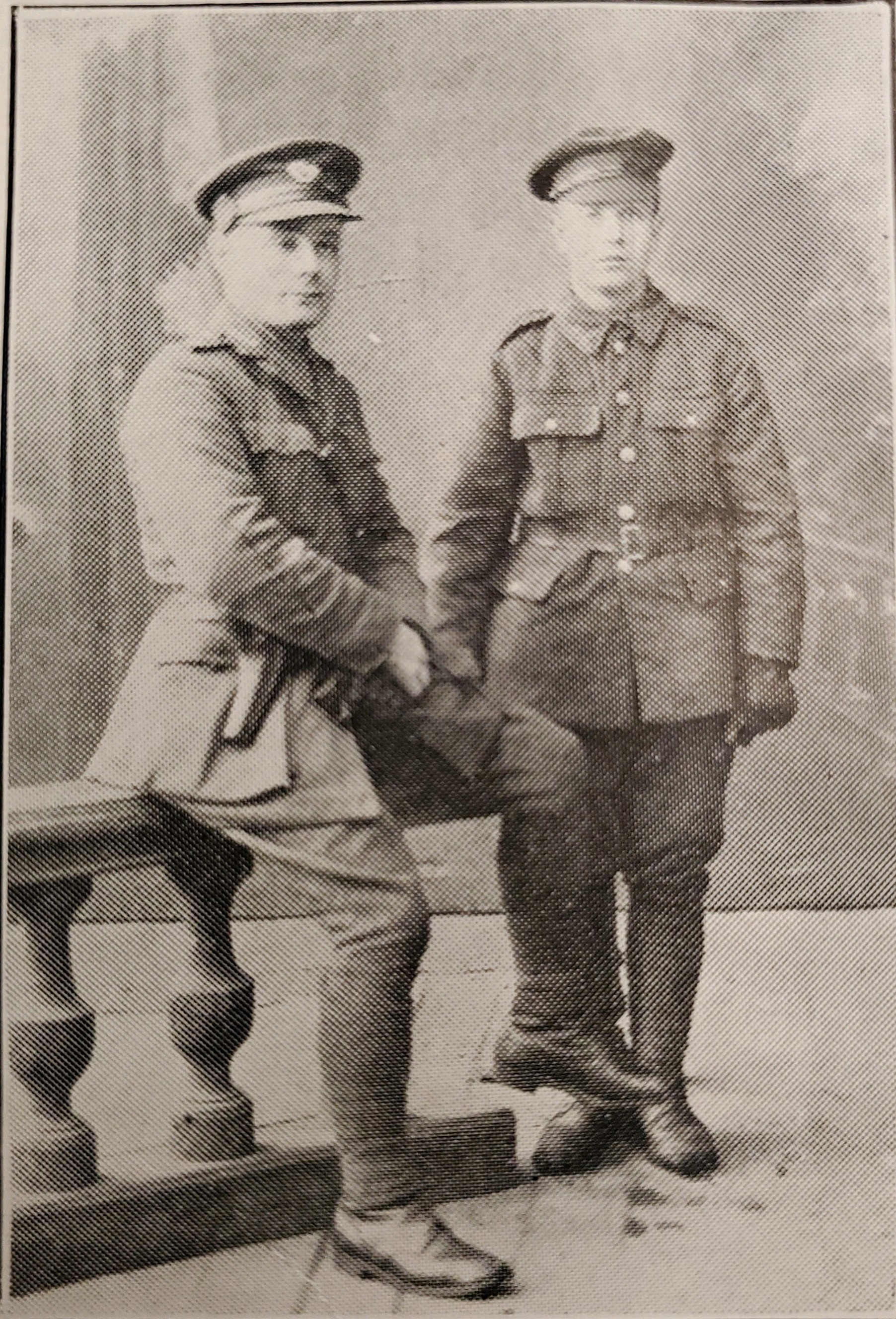
Group Photo
-

Memorial
Galerie numérique de
Capitaine Royce Coleman Dyer
Galerie numérique de
Capitaine Royce Coleman Dyer
Galerie numérique de
Capitaine Royce Coleman Dyer
Galerie numérique de
Capitaine Royce Coleman Dyer
Galerie numérique de
Capitaine Royce Coleman Dyer
Dans les livres du souvenir
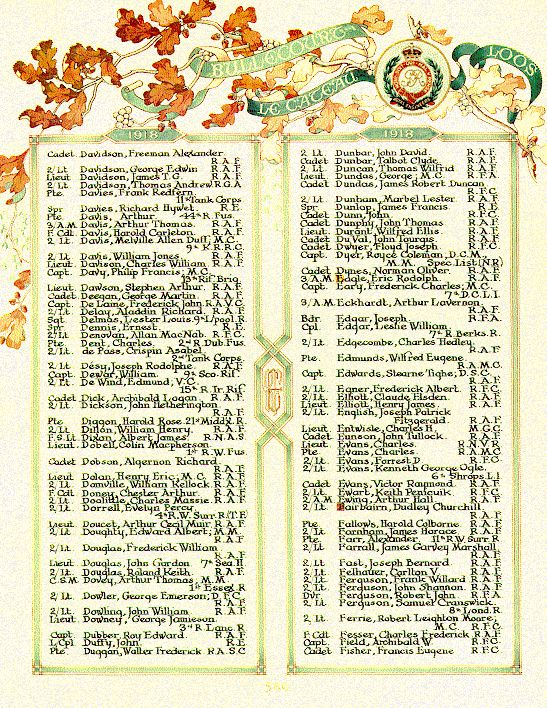
Inscription commémorative sur la :
Page 586 du Livre du Souvenir de la Première Guerre mondiale.
Commander cette page
Télécharger cette page
L’image du coquelicot est une marque déposée de la Légion royale canadienne (Direction nationale) et est utilisée avec sa permission. Cliquez ici pour en savoir plus sur le coquelicot.
Avons-nous oublié quelque chose ?
Contribuer à cette page commémorative
Avez-vous des photos, des informations ou une correction concernant la page commémorative de cet individu? Apprenez-en plus sur le MVGC et les informations que nous collectons.