
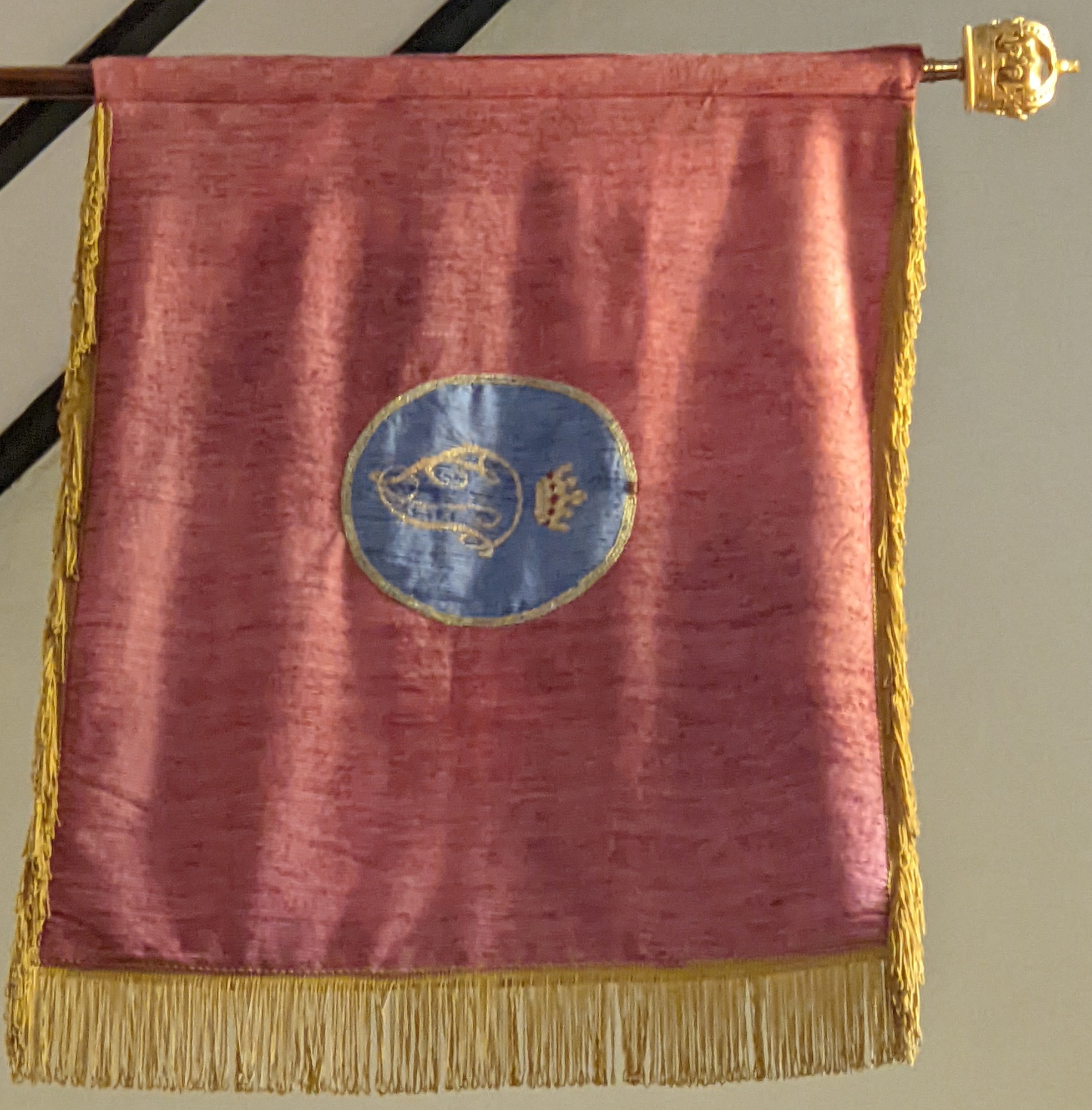
Regiments can be given permission to decorate their Colours with Battle Honours—the names of notable battles or campaigns in which they fought. The original Princess Patricia’s Canadian Light Infantry Colour, known as the Ric-A-Dam-Doo, was handsewn by Princess Patricia two weeks before mobilization and was the last Canadian Colour to actually be carried to the front line. Beneath a coloured coronet, the initials VP in gold were entwined upon a blue centre against a crimson ground. The staff was cut from a tree on the grounds of Government House. The Colour was presented as a Camp Colour only, and taken to the front without infringing Army Standing Orders. Its adoption as a Regimental Colour came two months after the Armistice and a few days before the Patricias left Europe for home.
In the engagement of 8 May 1915, the Colour was hit by bullet and shrapnel. It was buried by a direct hit on the Battalion Head Quarters dug-out in the melee at Santuary Wood on 2 June 1916. On 12 August 1918, during the battle of Amiens, the staff was damaged by artillery fire. The Colour headed the march to Mons on 11 November 1918, and on 21 February 1919, was crowned with a laurel wreath of honour by Princess Patricia at her farewell parade in England. The Colour returned to Canada with the regiment.
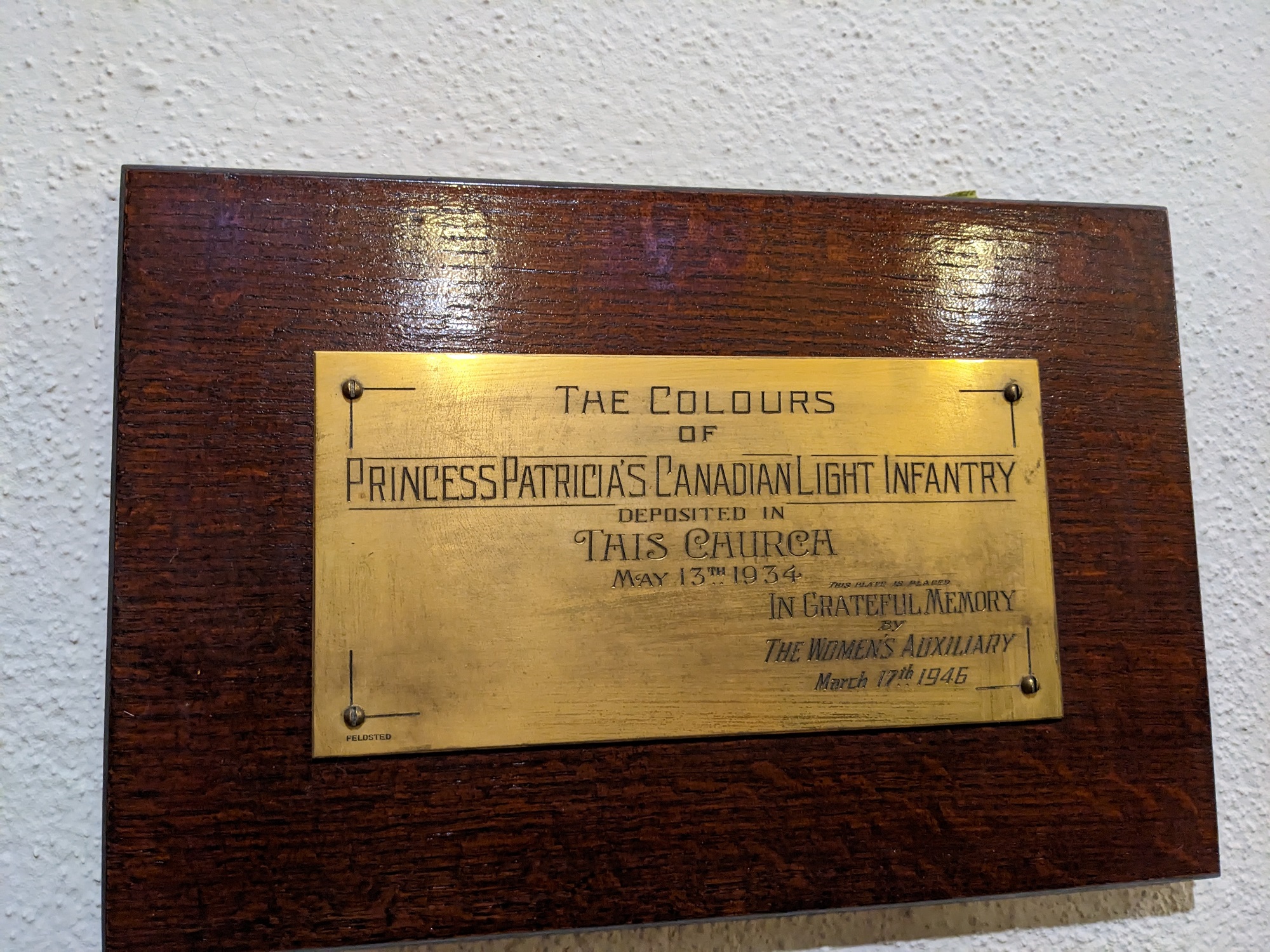
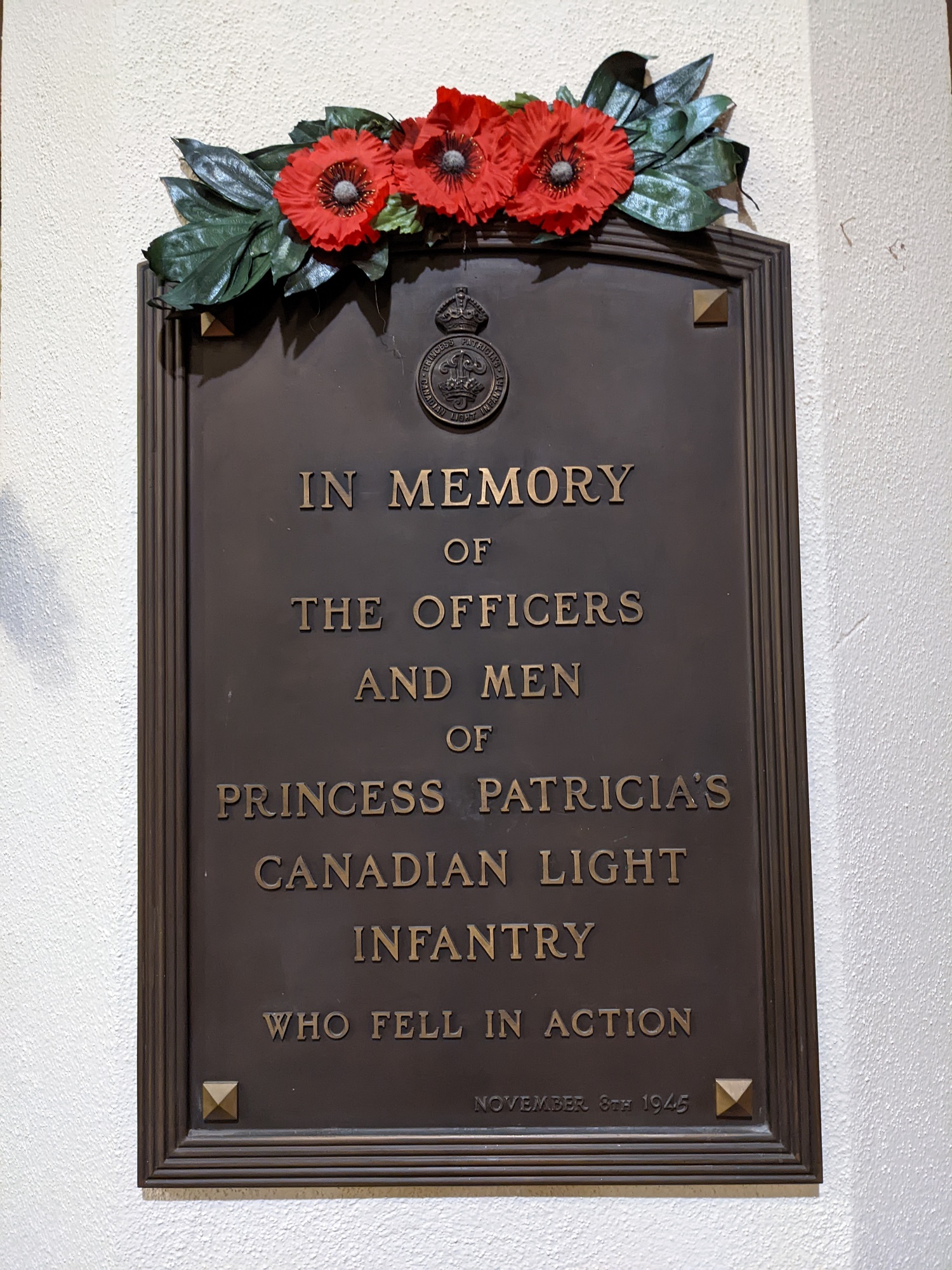
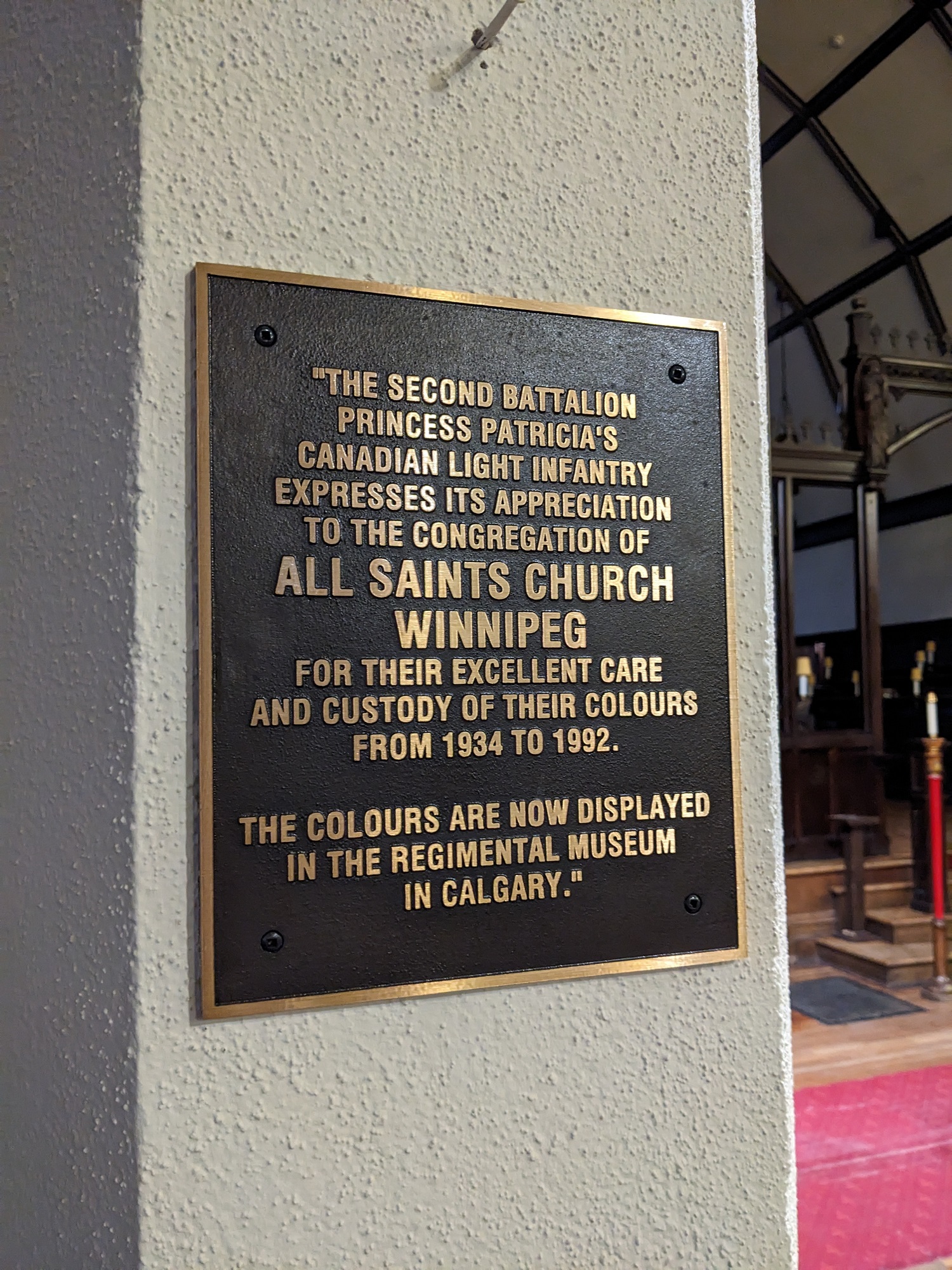
Due to All Saints Anglican Church's proximity to Fort Osborne, in their early years they were known as "the military church" and had many military personnel as parishioners. On 13 May 1934, the Princess Patricia’s Canadian Light Infantry Colours were deposited in All Saints Anglican Church upon presentation of the first stand of official Colours. In 1992, the Colours were moved to the Princess Patricia’s Canadian Light Infantry Museum in Calgary. A replica of the original Princess Patricia’s Canadian Light Infantry Regimental Colour was made to hang in the church and a new Union Jack was laid up. A plaque was erected by the Princess Patricia’s Canadian Light Infantry in appreciation to the church for taking care of their Colours. On 17 March 1946, the Ladies Auxiliary erected a plaque on the pillar under the Union Jack in memory of the Colours being deposited in the church in 1934. A plaque honouring the fallen Patricias was dedicated on 8 November 1945.
In earlier times, Colours played a prominent part in many battles. They served to identify units in battle, often marking the focal point of a struggle. Captured Colours were a prized trophy and attracted enemy attention and inspired much gallantry. By the late 19th and 20th Century, however, they were no longer carried in battle, but their status as the heart and soul of a Regiment continued, and the laying up of Colours signifies and helps keep holy the memories of the men who sacrificed their lives.
Princess Patricia’s Canadian Light Infantry was founded for service in the First World War on August 10, 1914, and paraded for the first time at Lansdowne Park, Ottawa, Ontario, on August 23, 1914. Hamilton Gault, a prominent Montreal businessman, raised the regiment out of his own funds, making the Princess Patricia’s Canadian Light Infantry the last privately raised regiment in Canada.
The regiment was named after Princess Patricia of Connaught, the daughter of the Governor General at the time. Princess Patricia maintained close ties with the regiment throughout her life, and her handsewn original Regimental Colour, the Ric-a-Dam-Doo, was carried into the frontline on almost every occasion the Patricias were engaged in battle.