
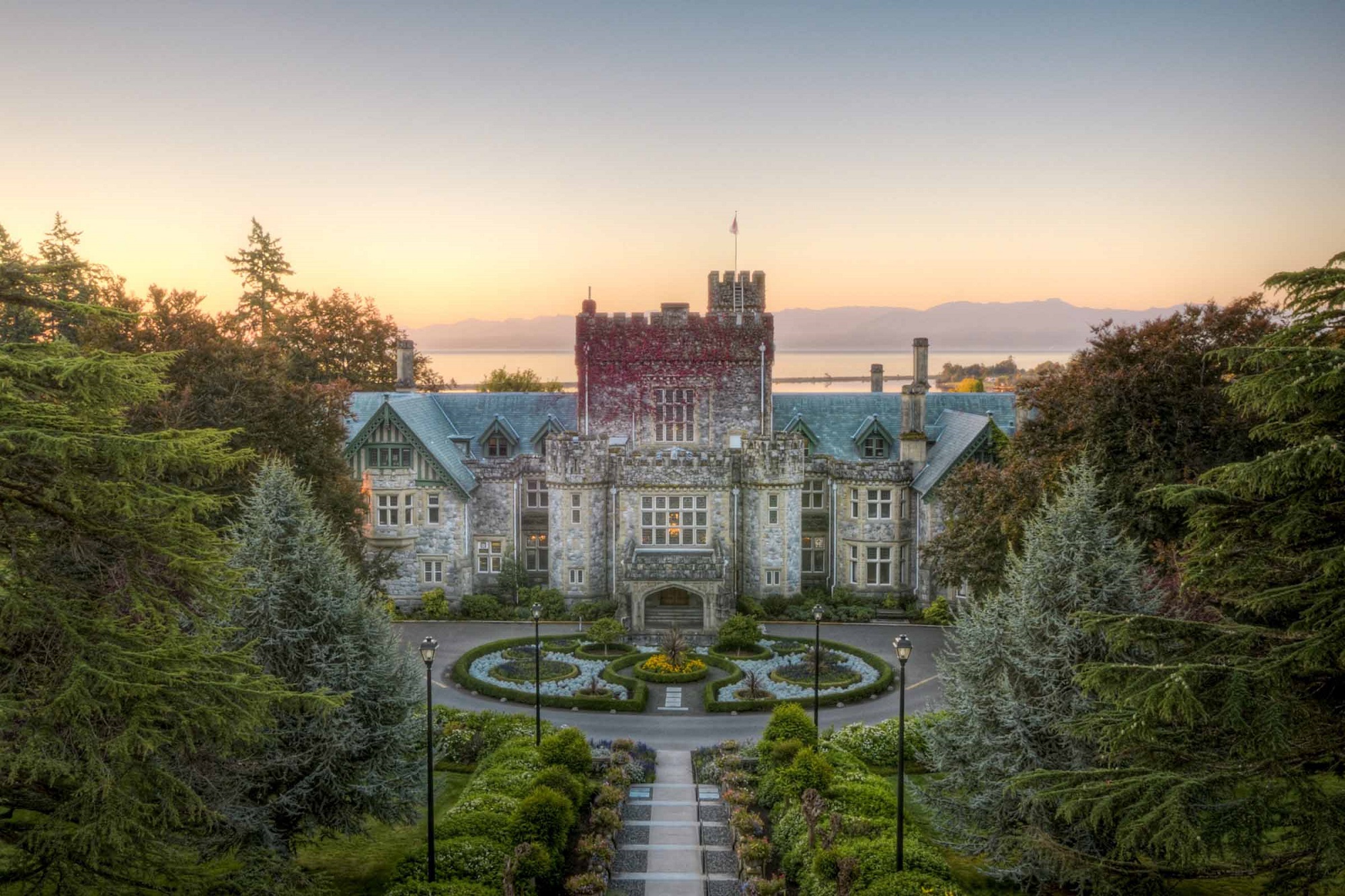
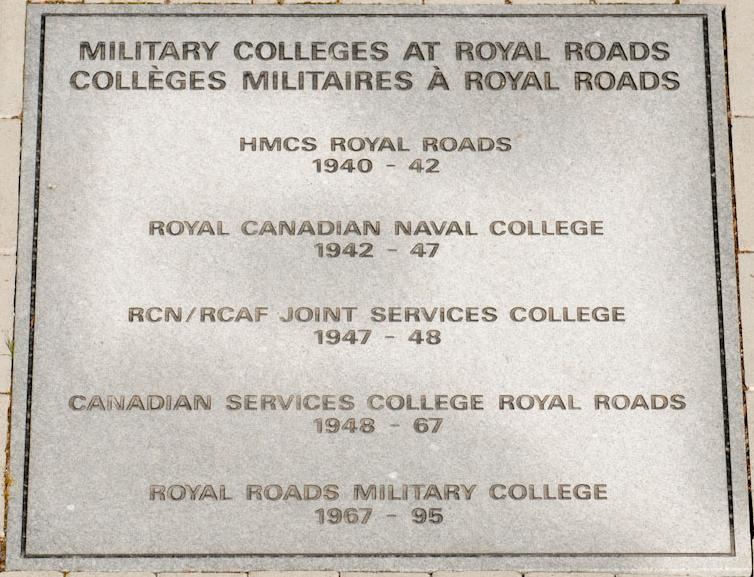
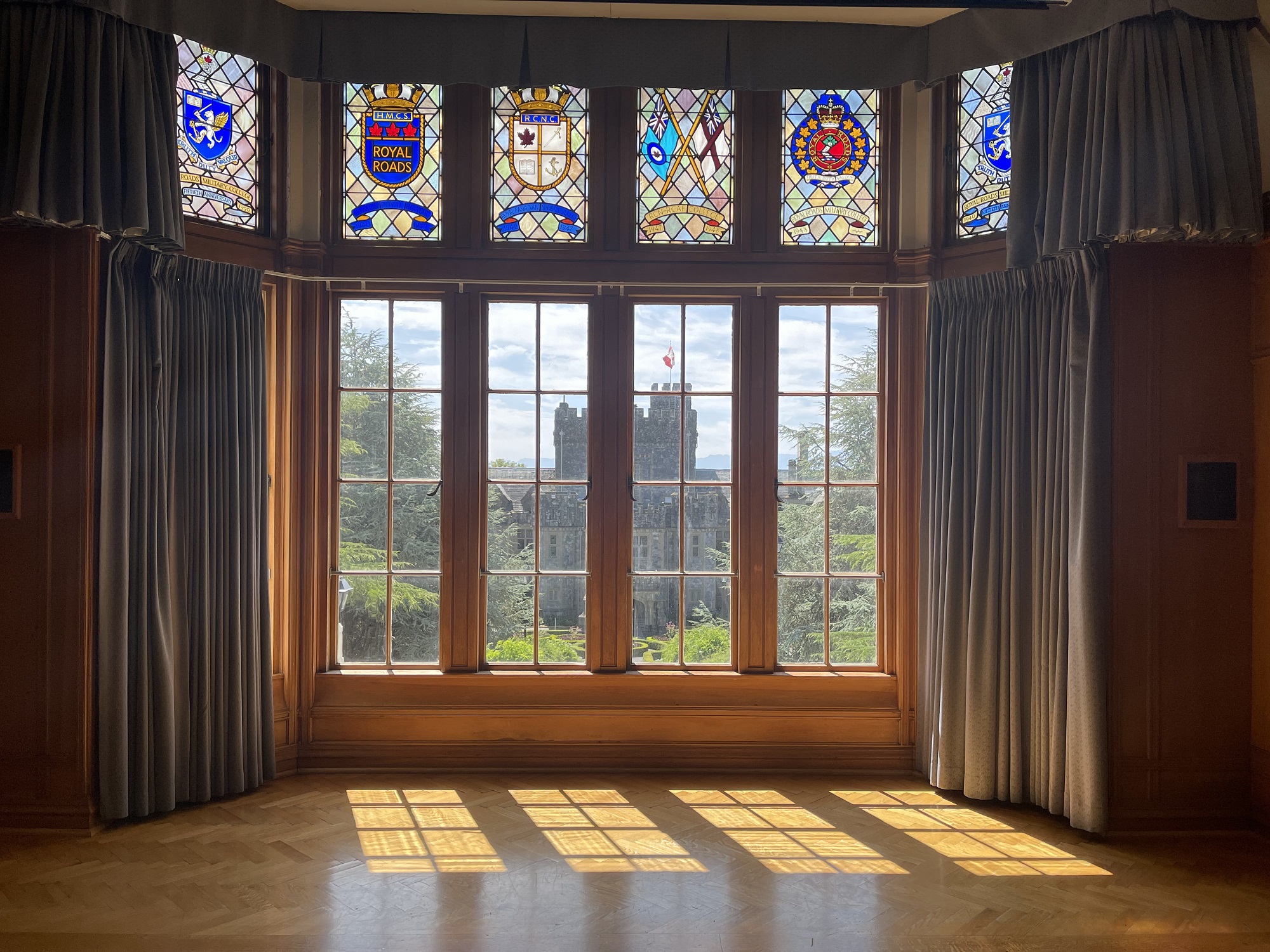
Now Royal Roads University, this campus, which includes Hatley Castle, has been home to HMCS Royal Roads, Royal Canadian Naval College, Royal Canadian Naval-Royal Canadian Air Force Joint Services College, Canadian Services College Royal Roads and Royal Roads Military College. Architects John Young McCarter and with Robert W. Chadney constructed the Royal Canadian Naval College buildings 1942–43. In 1995, Hatley Park and the former Royal Roads Military College were declared a National Historic Site of Canada.
The Government of Canada purchased Hatley Park in 1940. The ‘ship on land’ HMCS Royal Roads was initially a training establishment for naval sub-lieutenants who received a truncated 90 day training course to meet the shortage of junior officers in the Canadian Navy. The training consisted of courses in signals, torpedo, gunnery, navigation, seamanship, and asdic. Asdic was an early form of sonar used to detect submarines and was a new addition to the skills of seamanship. In all, 600 sub-lieutenants were trained at HMCS Royal Roads.
In October of 1942, the shortage of officers in the Canadian Navy having been addressed, HMCS Royal Roads was decommissioned and became the new Royal Canadian Naval College. The Cadet (Grant) Block was built to accommodate the growing number of cadets. The stables and mews had been converted to eight classrooms and a gunnery school. The parade ground, gym, and a larger boathouse were also added.
In 1947, the Royal Canadian Airforce joined with the Naval College to create Royal Canadian Navy-Royal Canadian Air Force Joint Service College. After one year, the army joined, creating the tri-service Canadian Services College Royal Roads. Nixon Block was opened in 1955, and Millward Block in 1991, to accommodate the increased number of cadets. In 1967, as the Royal Roads Military College, Royal Canadian Air Force and Navy officers were able to complete the first two years of university programs, and in 1977 the school offered a four-year degree program. Women weren’t eligible to attend the college until 1983. In February of 1994 the department of National Defense announced its decision to close the college with the final class graduating in 1995.
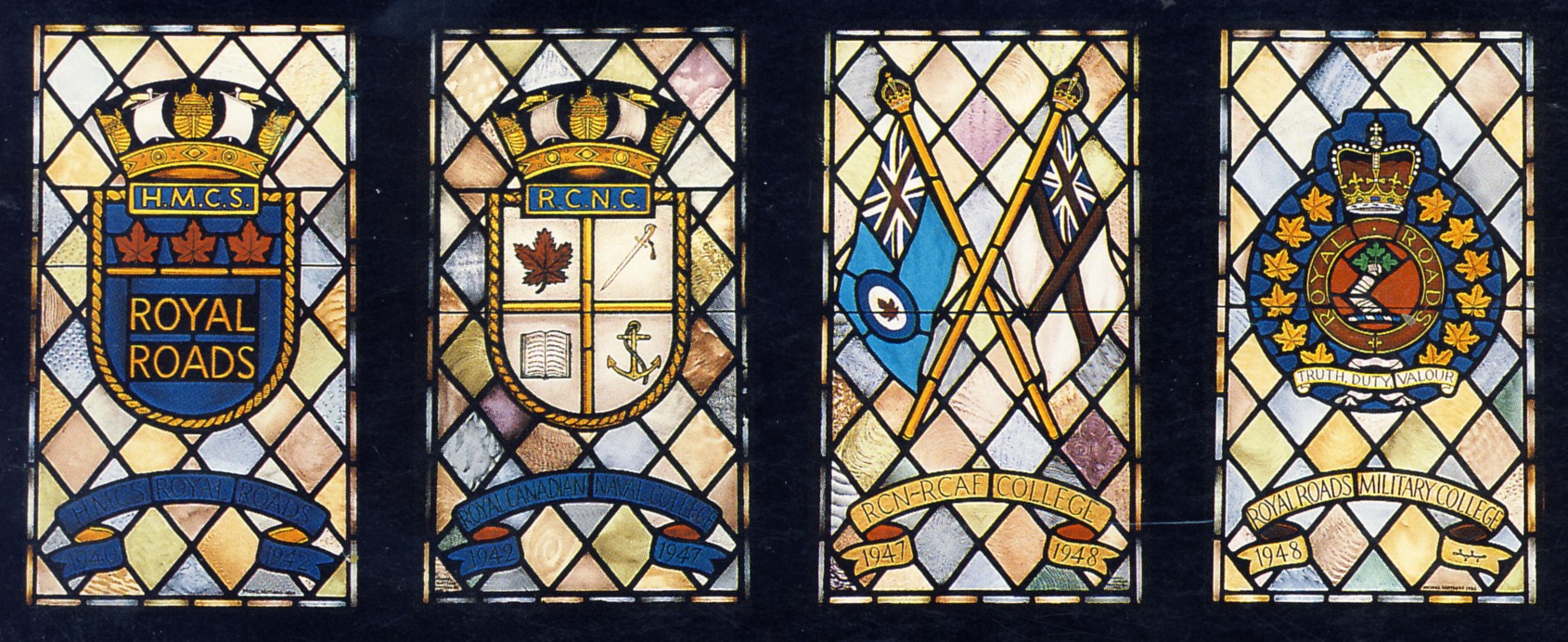
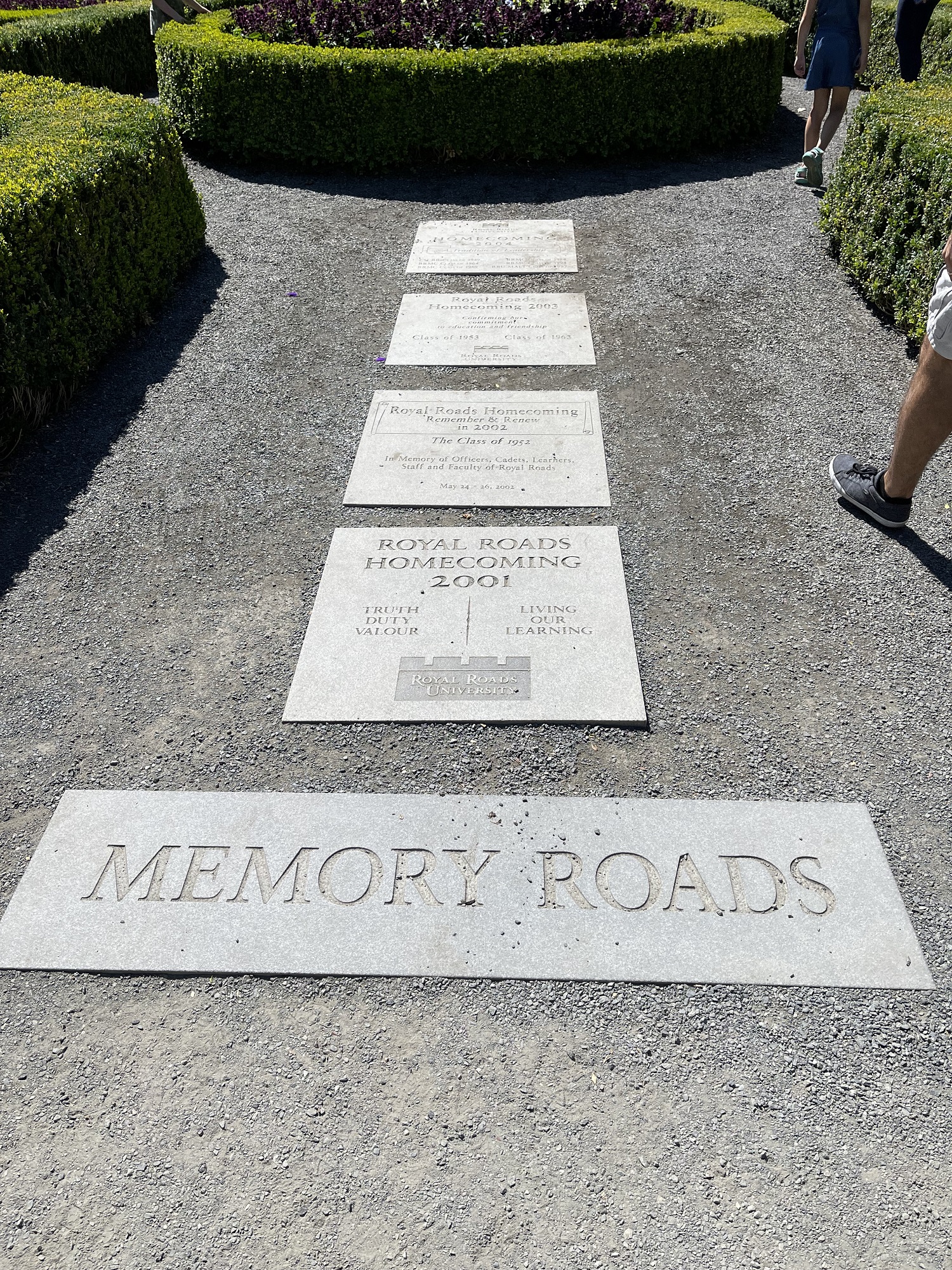
Memorials to the college include paverstones inscribed with the names of students and former staff, a stone listing each of the colleges, and stained glass windows. The first two windows were installed in October 1982 to mark the 40th anniversary of the re-establishment of the Royal Canadian Naval College and was donated by former students. Two more windows were later donated by the Royal Military Colleges Club to honour HMCS Royal Roads and Royal Roads Military College. In 1990, another two identical windows were added to mark the 50th anniversary, featuring the new college crest. Also in 1990, Prometheous and the Vulture, an abstract stone sculpture was created by Jay Unwin for the 50th anniversary of Royal Roads Military College.
Since 2001, each year during homecoming, memorial stones are placed along a path between Hatley Castle and the Grant Building commemorating the history of the colleges.
The Royal Roads Cenotaph is also located here.