
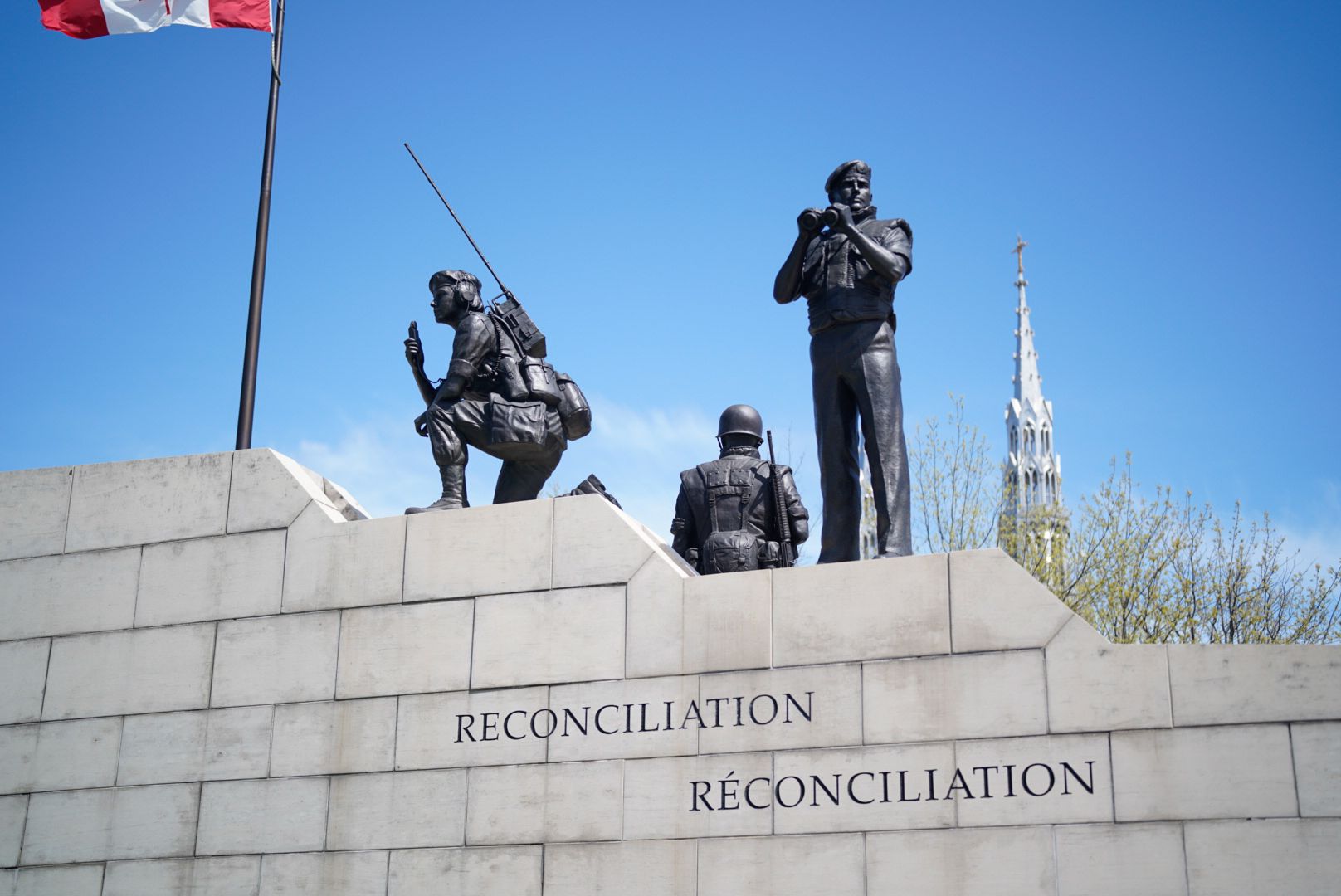
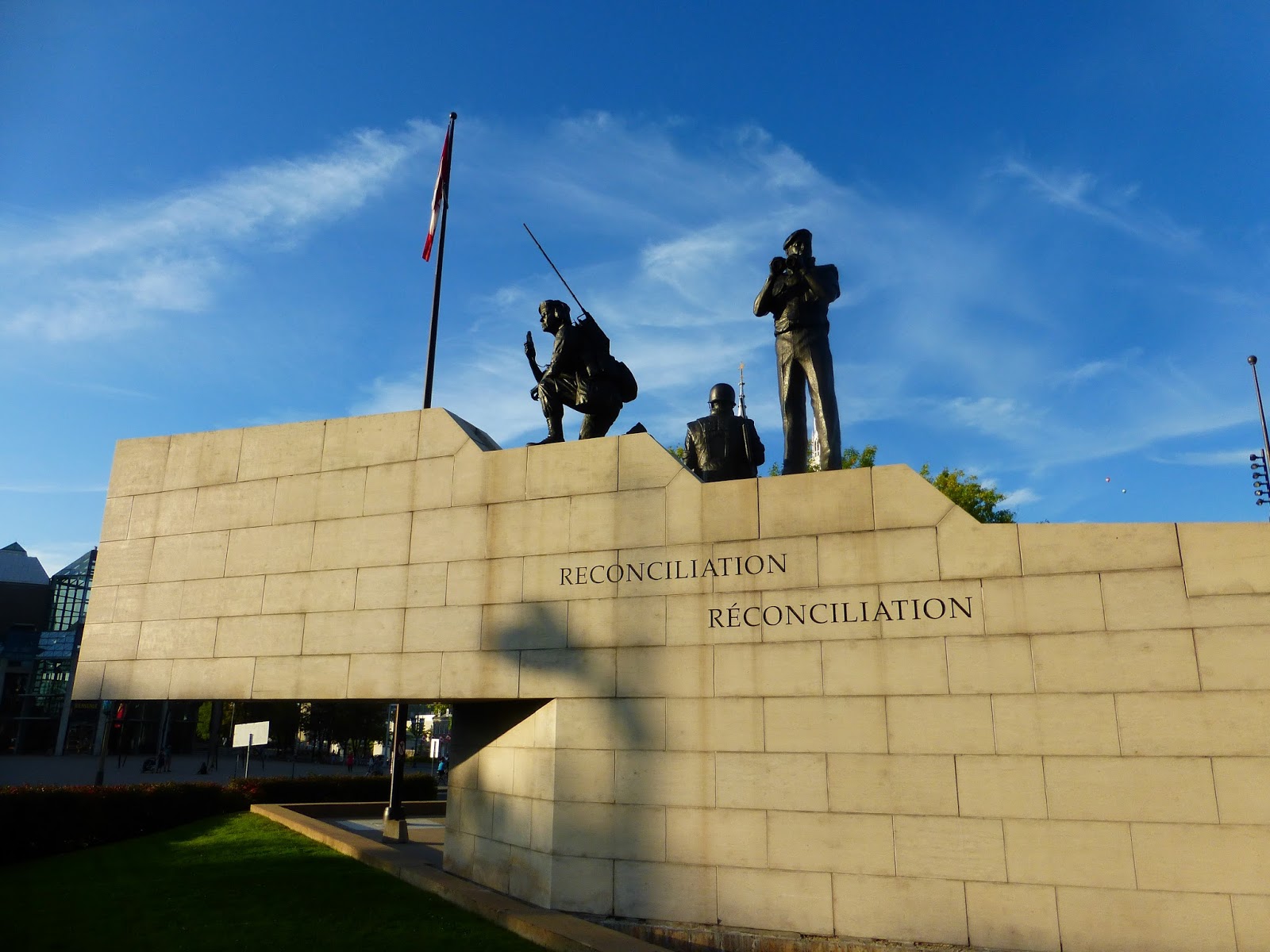
The Peacekeeping Monument was a joint venture between the Department of National Defence and the National Capital Commission. In 1990, the Department of National Defence launched the Peacekeepers Monument competition, managed by a committee consisting of representatives from the Department of National Defence, National Capital Commission, and Public Works Canada. The winning submission was entitled The Reconciliation, though many people know it as the Peacekeeping monument. Reconciliation means that the warring sides have settled their differences peacefully and are ready to get along again.
Members of the winning design team from British Columbia were: Jack Kenneth Harman, sculptor; Richard G. Henriquez, architect and urban designer; and Cornelia H. Oberlander, landscape architect. The team also included Gabriel Design, lighting design, and J.L. Richards and Associates, engineering services, both of Ottawa. V.K. Mason Construction Ltd. built the monument. Their design includes a corridor of concrete and steel debris inside two solid granite walls. The corridor is best viewed from the south-east, where the eye is drawn into the narrow opening by a pattern of floor tiles that was modelled on the Green Line bisecting Nicosia, the capital of Cyprus. The tiles curve around chunks of sawn and drilled concrete littering the corridor floor.
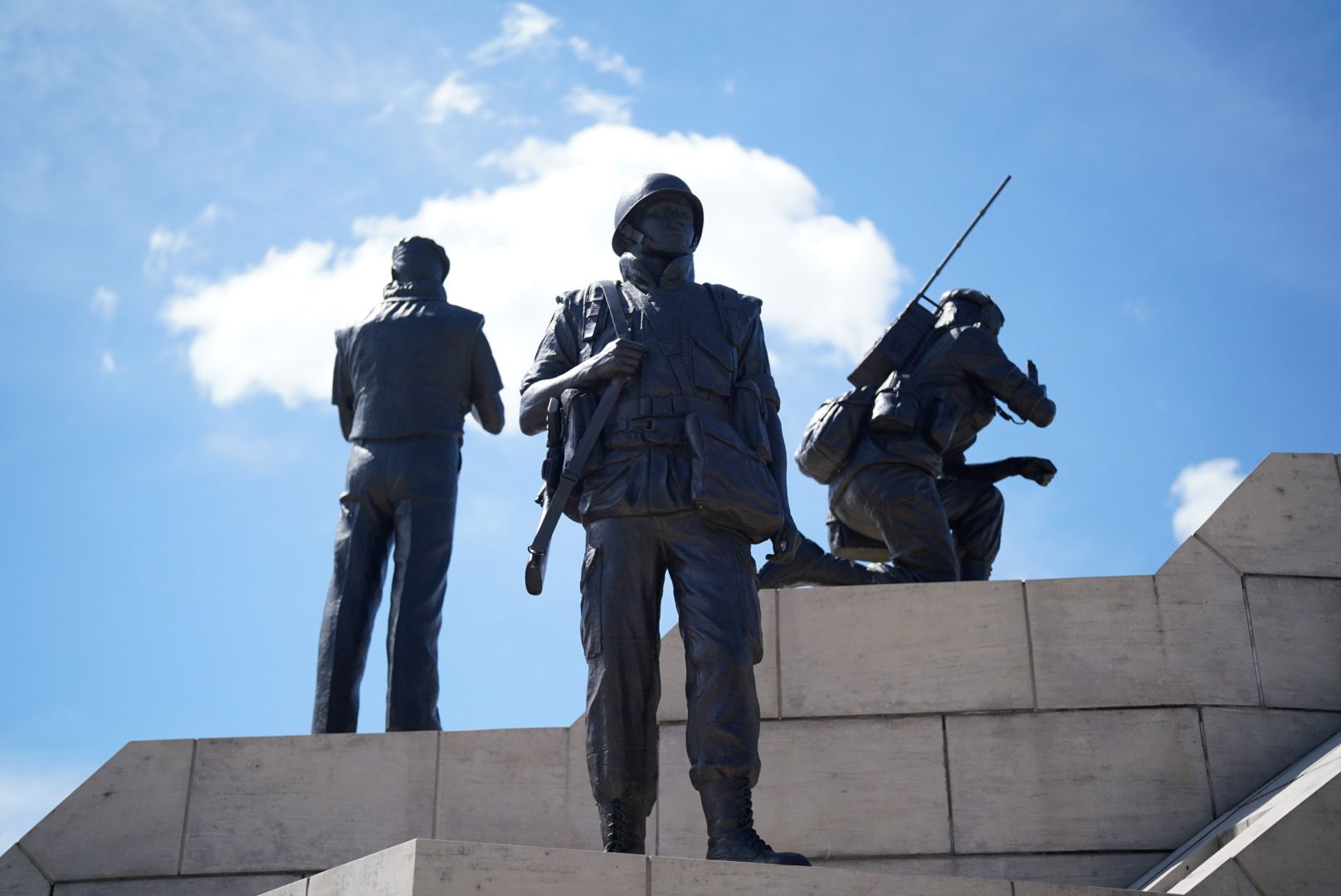
Artist Jack Harman, created a model out of wood and wax representing members of the Canadian Armed Forces. Harman depicted three uniformed figures in alert, active stances to stress that peacekeeping is dangerous. These three figures were later cast in bronze and stand on top of the walls. Two peacekeepers look into the distance, watching what the soldiers on each side are doing. The third peacekeeper crouches beside a Canadian flag, holding a radio to update headquarters with the situation and ensure people are safe.
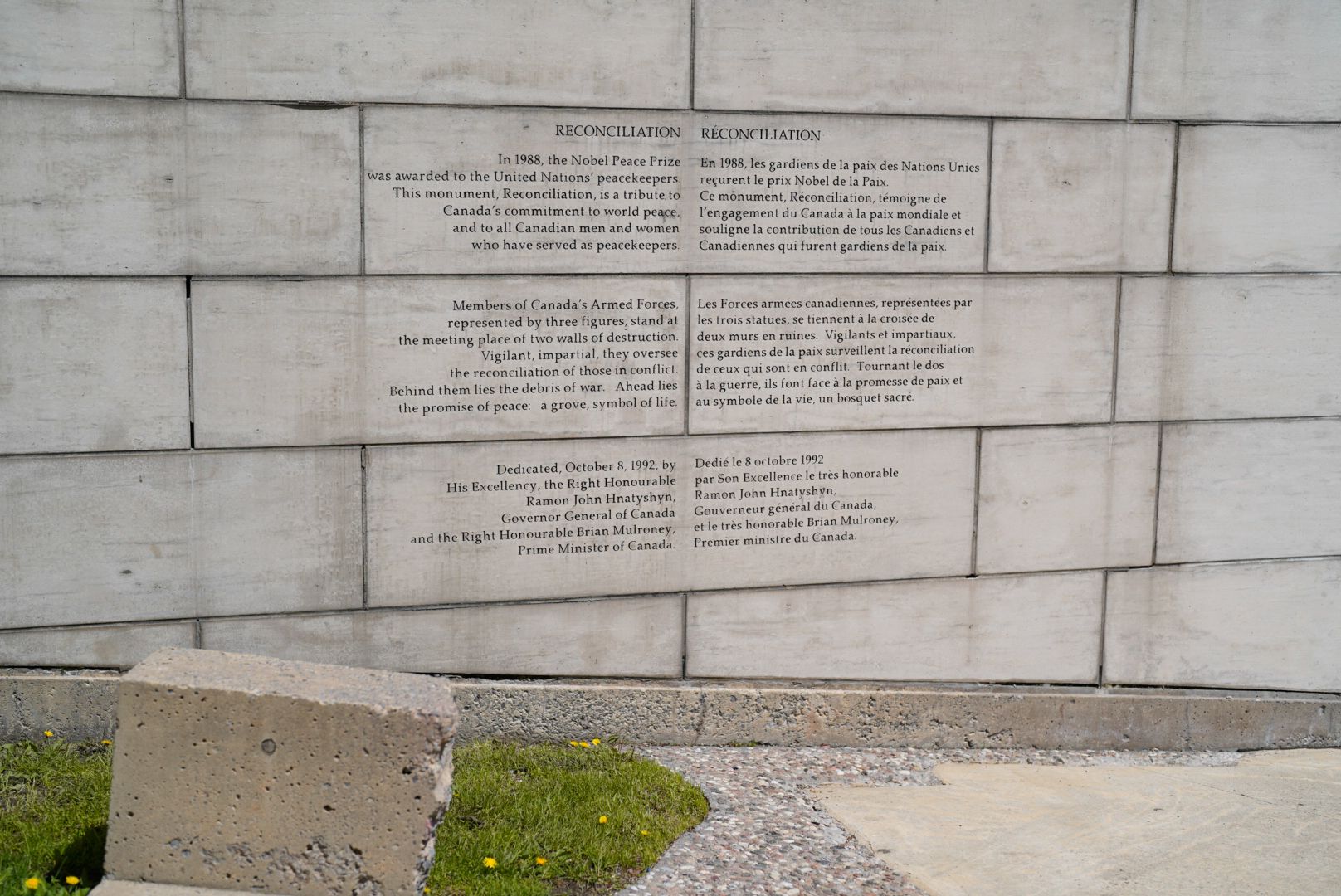
Broken-up concrete below the walls represent the destruction caused by wars. The walls rise and form a point to symbolize pointing toward the future, when the war is over and there is peace again. Over to one side of the monument are 12 Oak trees in a circle. The number of trees represents the 10 provinces and two territories that comprised Canada when the monument was created in 1992. Oak trees represent the promise of peace; a grove, symbol of life. Adjacent to the trees is a semi-circular ceremonial space.
The Reconciliation was dedicated on 8 October 1992. This special monument commemorates Canada's role in international peacekeeping and the soldiers, both living and dead, who have participated or are currently participating in peacekeeping operations. Since 1947, Canadian peacekeepers have served overseas in a variety of United Nations peacekeeping and peace support missions. Canada played a leading role in the peacekeeping movement from the outset. Canadian Lester B. Pearson won the 1957 Nobel Peace Prize for his pioneering vision in helping establish a United Nations force during the Suez Crisis of the 1950s. Since then, Canada's commitment to international peace efforts and other overseas military actions has continued.