


Service militaire
Lieu de l’enterrement/commemoration
John McCrae était le deuxième fils du lieutenant-colonel David McCrae et de Janet Simpson Eckford McCrae. Il avait une soeur, Geills, ainsi qu'un frère, Tom.
John McCrae a commencé à écrire des poèmes pendant qu'il était étudiant au Guelph Collegiate Institute. Dès l'adolescence, il s'est aussi intéressé à la vie militaire. À 14 ans, il se joignait au Highland Cadet Corps et à 17 ans, il s'enrôlait dans la batterie de campagne de la milice commandée par son père.
La veille de la composition de son illustre poème, il perdit au cours des combats un de ses meilleurs amis qui fut inhumé dans une tombe de fortune marquée d'une simple croix de bois. Les coquelicots sauvages commençaient déjà à fleurir à travers les croix de bois placées sur les tombes. Incapable de porter secours à cet ami ni à aucun autre soldat tombé au champ, John McCrae se fit leur porte-parole dans son poème. Ce fut l'avant-dernier poème qu'il écrivit.
Le 28 janvier, après avoir été malade durant cinq jours, il rendit l'âme des suites d'une pneumonie et d'une méningite. Le jour où il est tombé malade, il apprit qu'il avait été nommé consultant médical de la Première armée britannique, le premier Canadien à recevoir un tel honneur.
Commémoré à l'École secondaire John-McCrae.
Galerie numérique de Lieutenant-colonel John McCrae
-

Photo of John McCrae
-

Statue
-
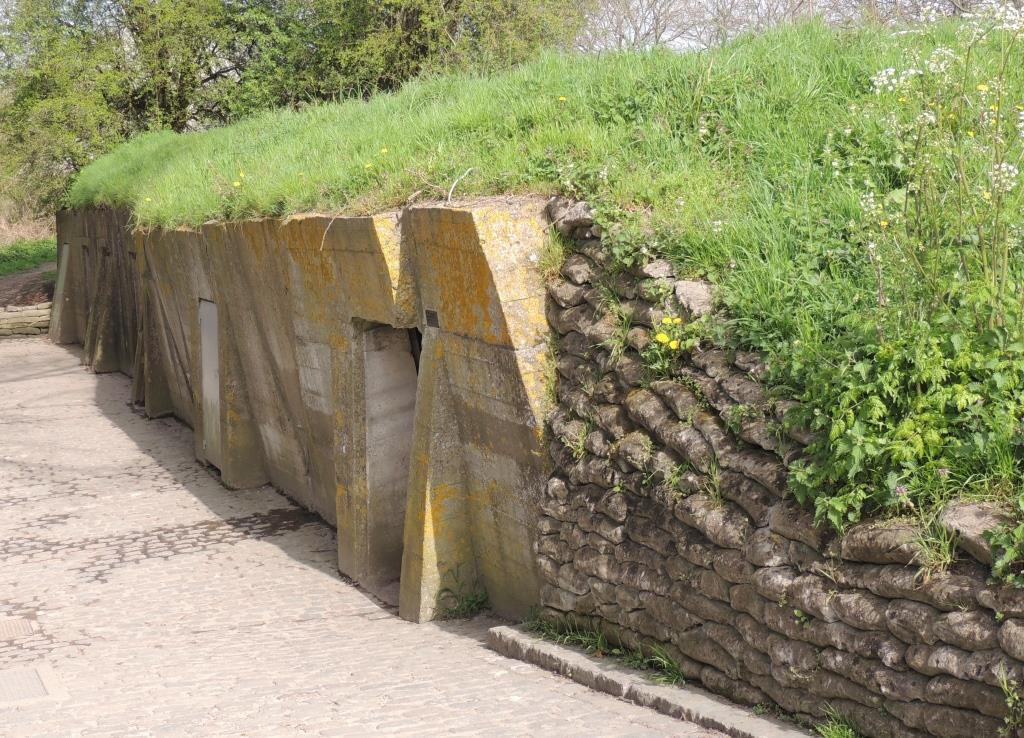
Advanced Dressing Station
-
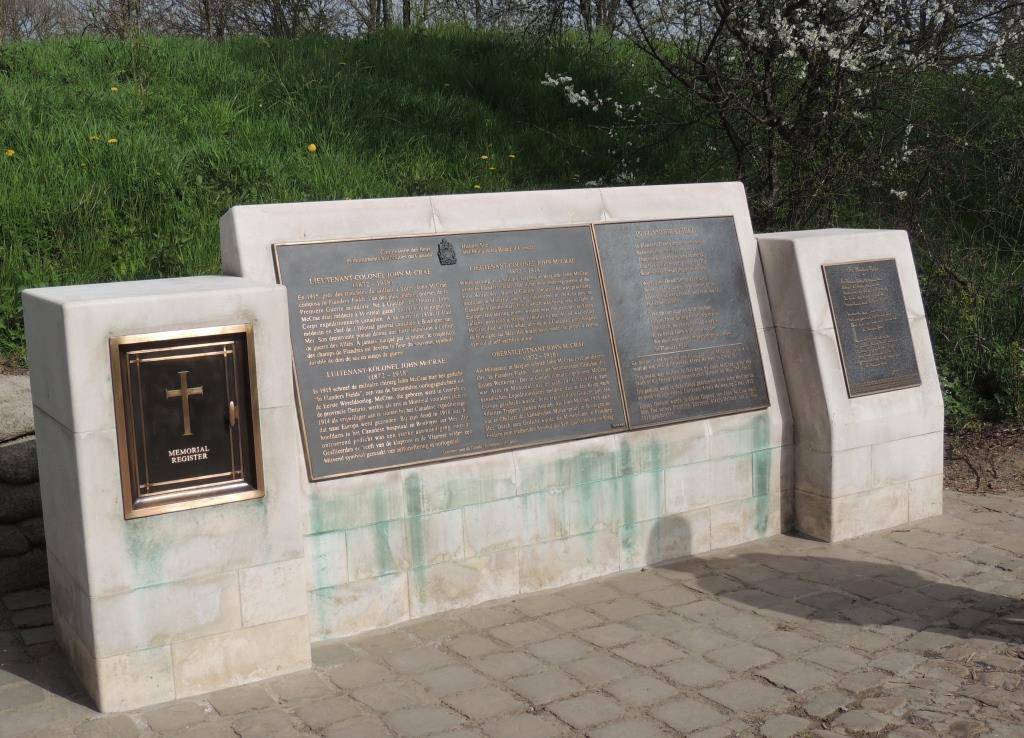
Advanced Dressing Station Memorial
-
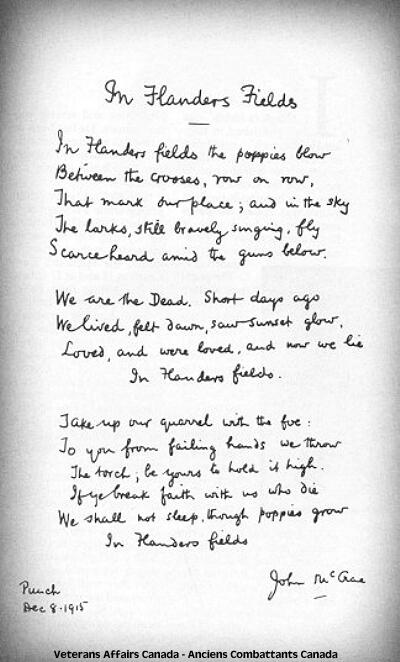
In Flanders Fields
In Flanders Fields the poppies blow<br> Between the crosses, row on row,<br> That mark our place; and in the sky<br> The larks, still bravely singing, fly<br> Scarce heard amid the guns below.<p> We are the Dead. Short days ago<br> We lived, felt dawn, saw sunset glow,<br> Loved, and were loved, and now we lie<br> In Flanders fields.<p> Take up our quarrel with the foe:<br> To you from failing hands we throw<br> The torch, be yours to hold it high.<br> If ye break faith with us who die<br> We shall not sleep, though poppies grow<br> In Flanders fields<p> "In Flanders Fields" was first published in England's "Punch" magazine in December, 1915. Within months, this poem came to symbolize the sacrifices of all who were fighting in the First World War. Today, the poem continues to be a part of Remembrance Day ceremonies in Canada and other countries. -
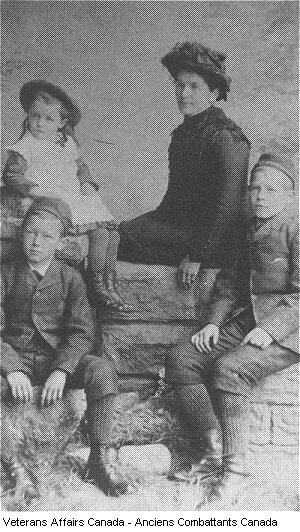
McCrae Family Photo
John McCrae à gauche, avec sa mère, son frère Tom et sa soeur Geills (photo : Maison McCrae) -
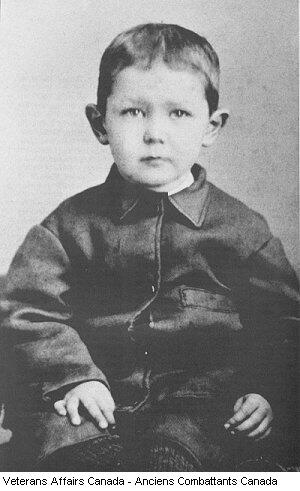
John McCrae
Né à Guelph, en Ontario, le 30 novembre 1872, John McCrae était le deuxième fils du lieutenant-colonel David McCrae et de Janet Simpson Eckford McCrae. -
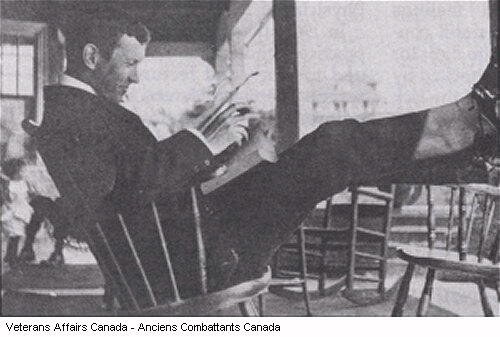
Reading
La lecture était l'un des passe-temps préférés de John McCrae. (photo : Maison McCrae) -
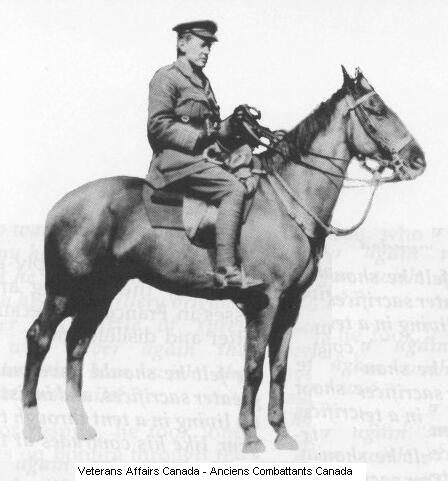
Bonfire
John McCrae en France avec son cheval, Bonfire, (photo : Maison McCrae). Il a emmené avec lui un cheval nommé Bonfire, un cadeau d'un ami. Plus tard, John McCrae a envoyé à ses jeunes neveux et nièces des lettres qu'il prétendait être écrites par Bonfire et signées avec l'empreinte d'un sabot. -

Bonneau
John McCrae et son chien Bonneau en France (photo : Archives nationales du Canada, C46284). Bonneau était un autre de ses compagnons et avait aussi été victime de guerre, qui avait adopté John McCrae comme son meilleur ami. -

The Flower of Remembrance
John McCrae a au moins eu la satisfaction de savoir de son vivant que son poème avait connu du succès. Peu après sa publication, il est rapidement devenu le poème le plus populaire de la Première Guerre mondiale. On l'a même traduit dans plusieurs langues et on s'en est servi sur d'immenses panneaux-réclame pour faire la promotion des premières Obligations de la victoire en 1917. Les objectifs de cette campagne d'achat d'obligations, qui visait à recueillir 150 millions de dollars, ont été largement dépasses car elle a recueilli 400 millions de dollars.<br> Vu la popularité du poème, on a adopté le coquelicot comme fleur du souvenir aux morts de guerre en Grande-Bretagne, au Canada, en France, aux États-Unis et dans d'autres pays du Commonwealth. -
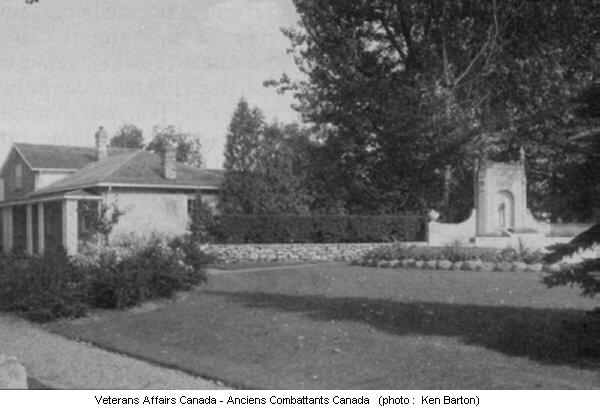
McCrae museum and memorial cenotaph
La maison de John MCCrae et de sa famille à Guelph (Ontario) a été conservée et est maintenant un musée. Un jardin souvenir où se trouve un monument commémoratif est ouvert au public (photo : Ken Barton). -
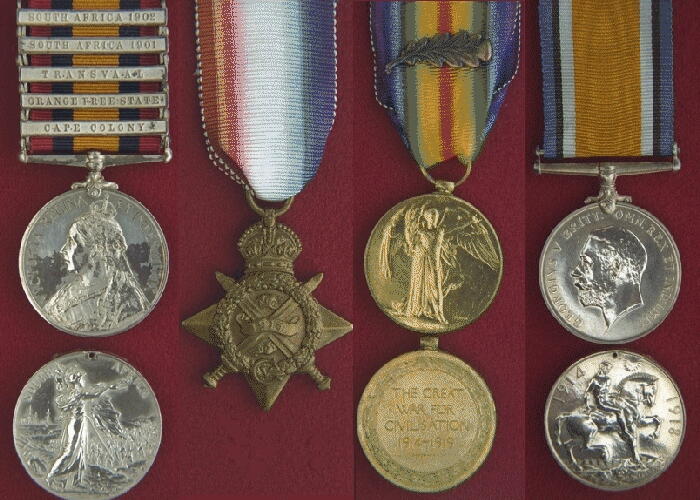
Medals
Gauche á droit : Médaille de la Reine pour L'Afrique du Sud, Étoile de 1914-1915, Médaille de la Victoire, Médaille de guerre britannique. Les médailles dans ce photo font part de la collection des médailles militaires Canadiennes et Décorations dans le site Web d'Anciens Combattants Canada. -
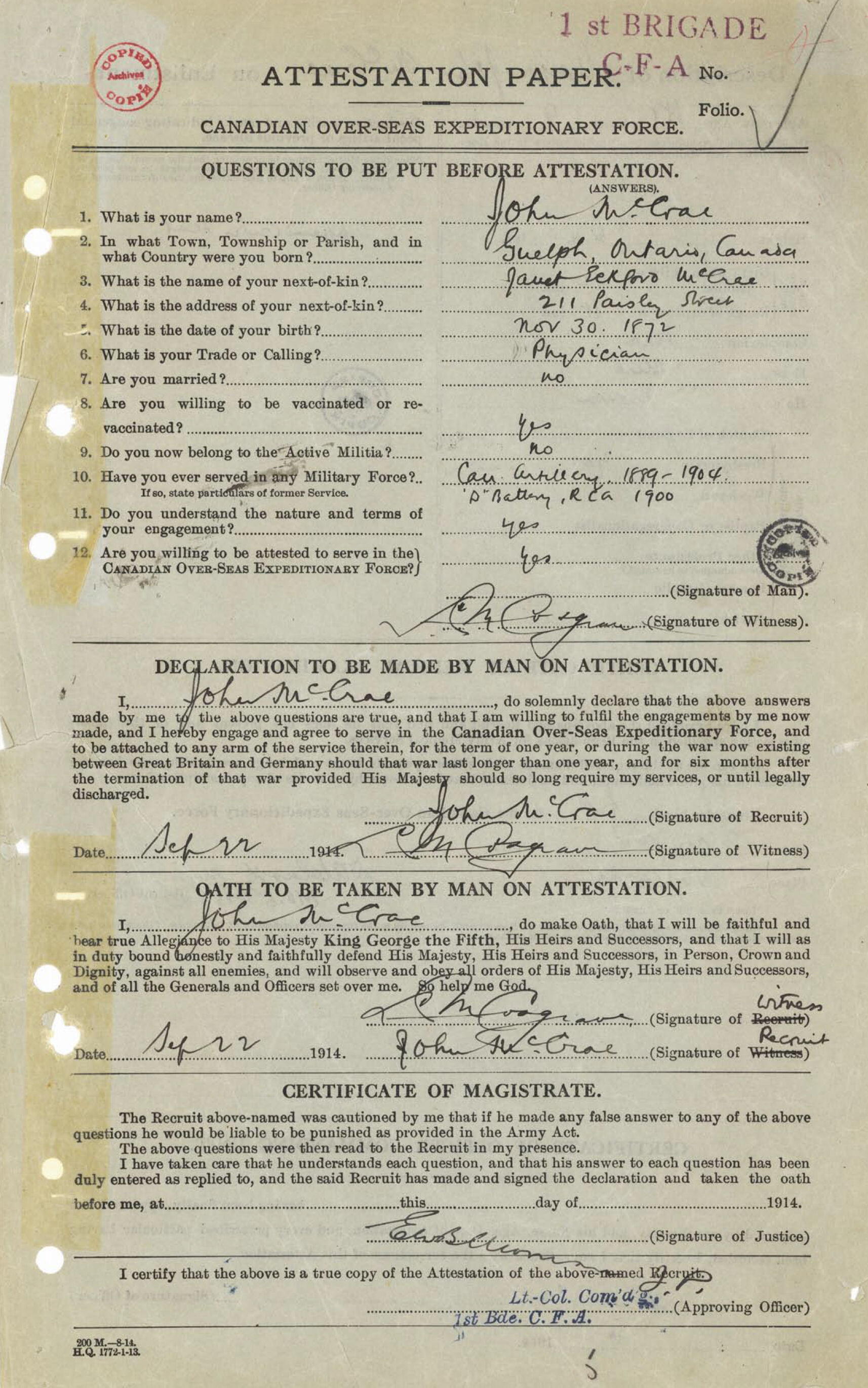
Attestation Paper (front)
Lieutenant Colonel John McCrae est né à Guelph, Ontario, le 30 novembre, 1872. -

Attestation Paper (back)
-
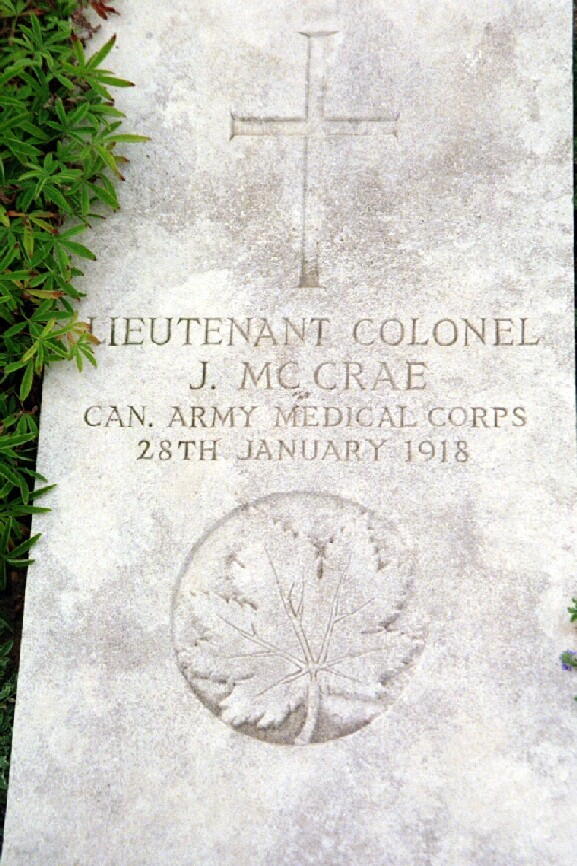
Grave marker
Sépulture de John McCrae en France. -
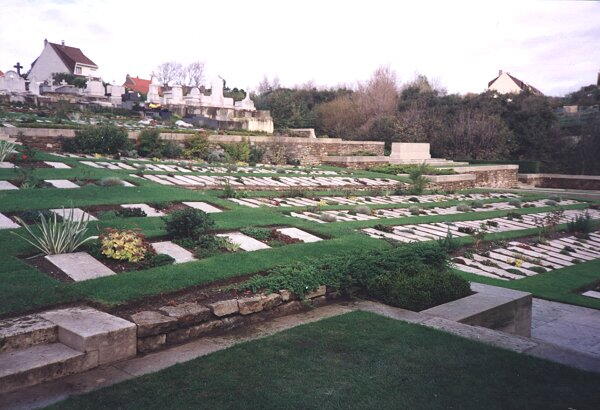
Wimereux Communal Cemetery
-
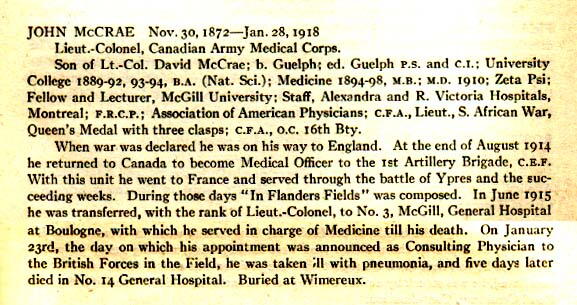
Honour Roll
-
Photo of John McCrae
-
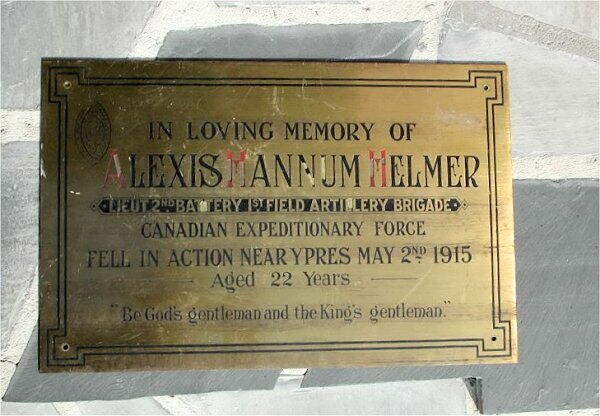
Commemorative plaque
Cette plaque est dédiée au lieutenant Alexis Helmer, dont le décès a inspiré le poème « Au champ d'honneur ». -
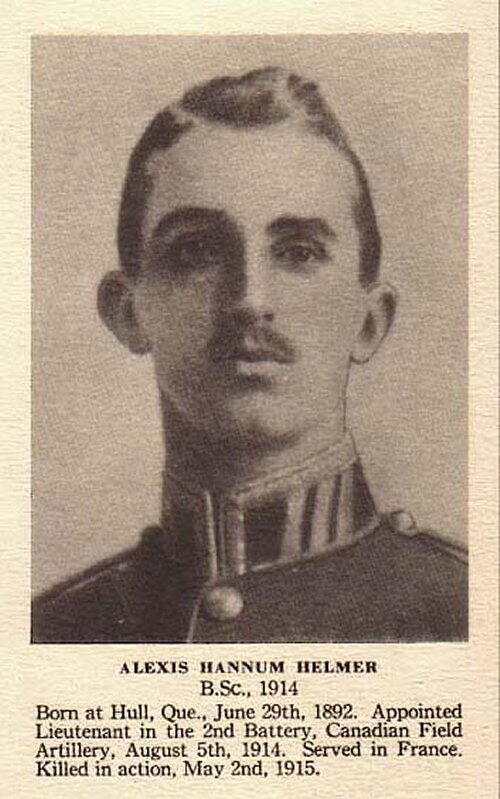
Newspaper Clipping
-
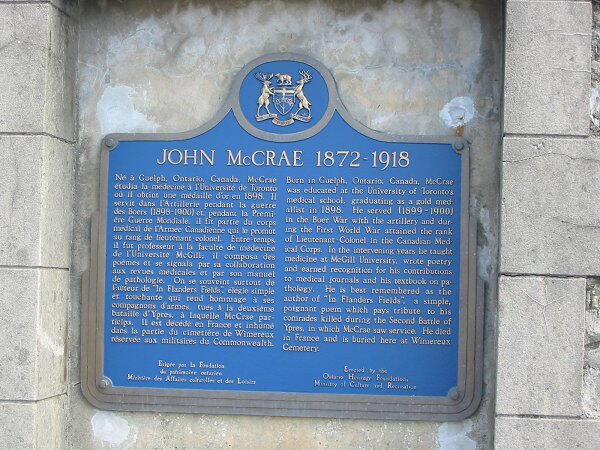
Memorial Plaque
-
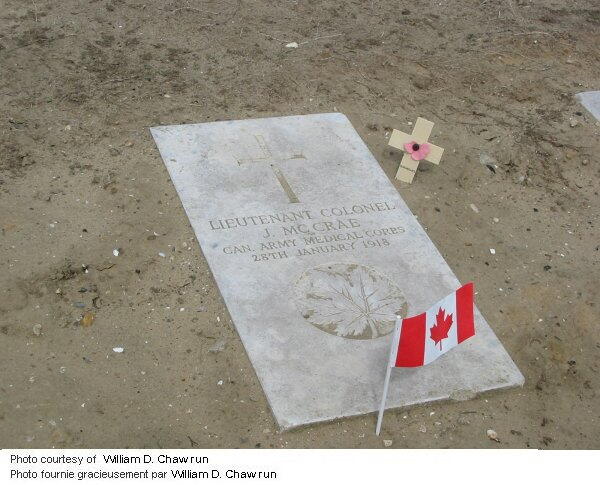
Gravemarker
-
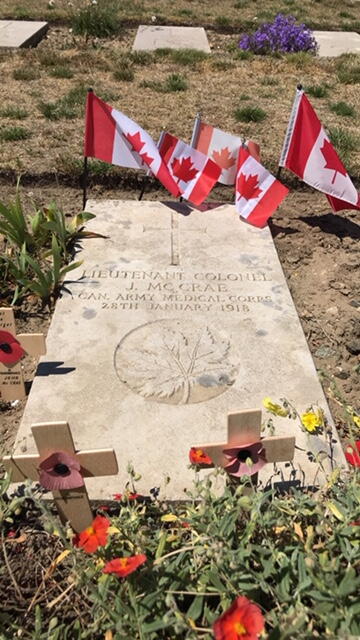
Grave Marker
-
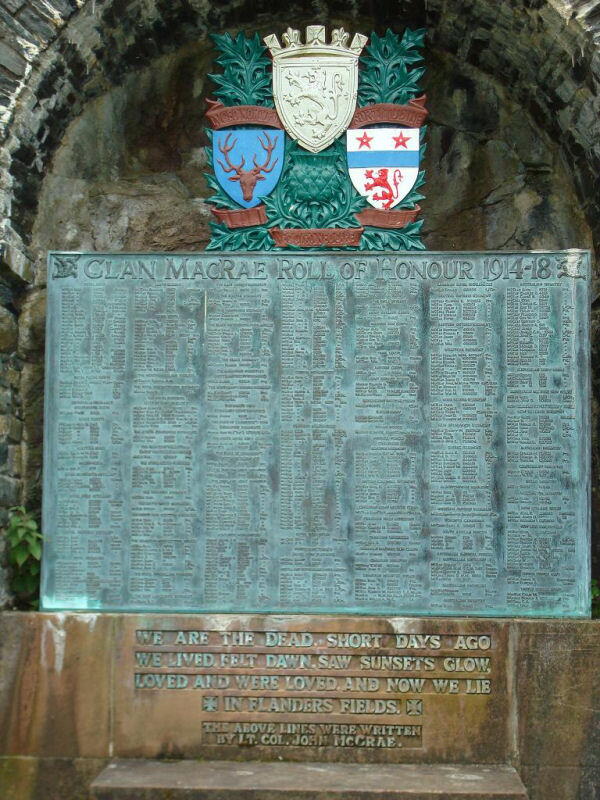
Memorial
-
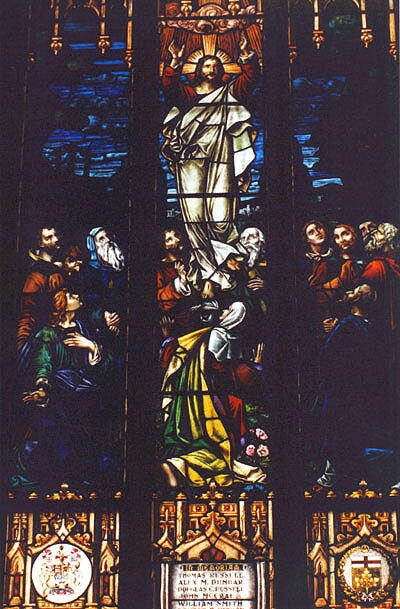
Stained Glass Window
-

Plaque
-

Newspaper Clipping
-
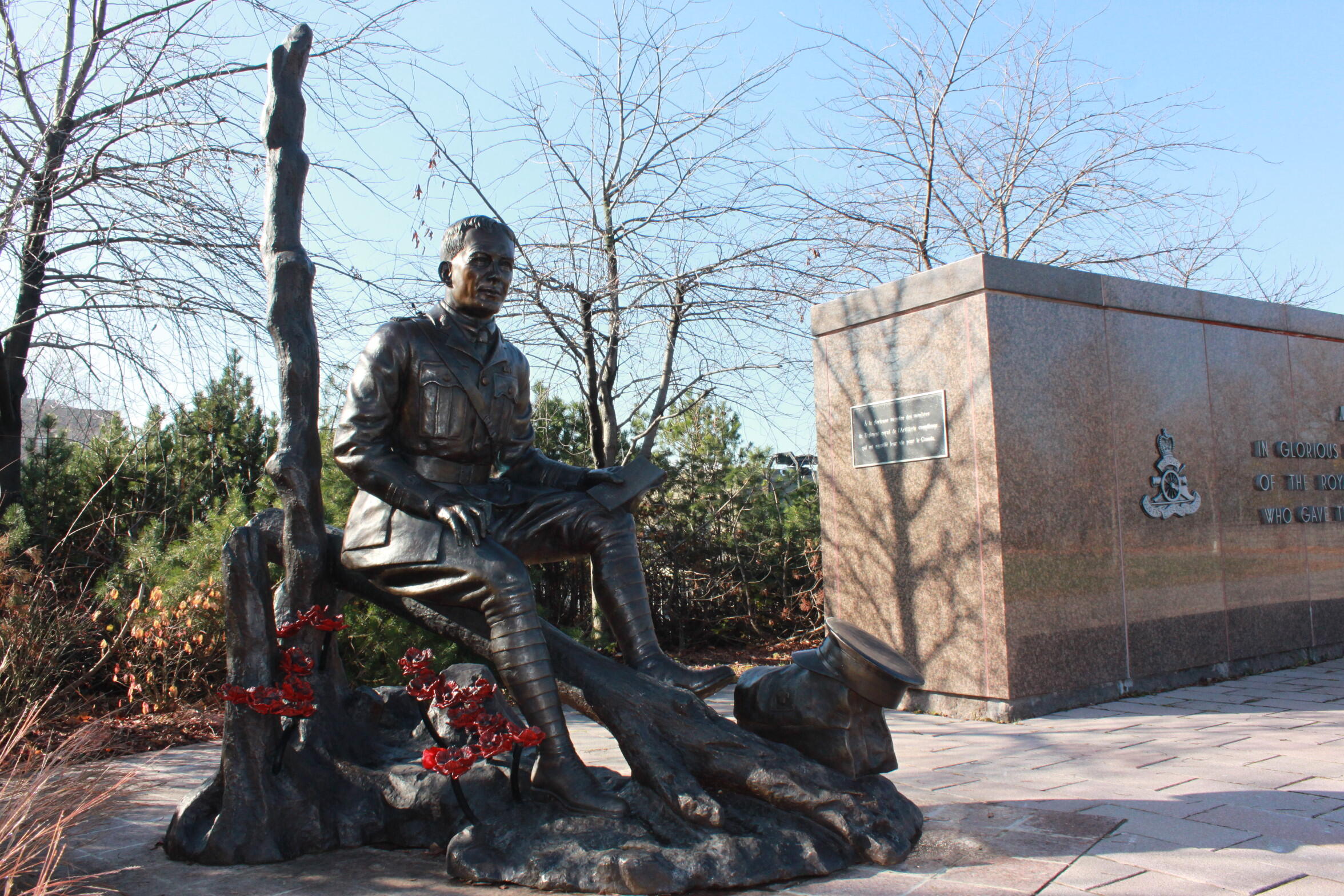
Memorial
Cette statue est située sur l'île Green, le long de la Promenade Sussex, à Ottawa, en Ontario. -

Memorial
-

Grave marker
-
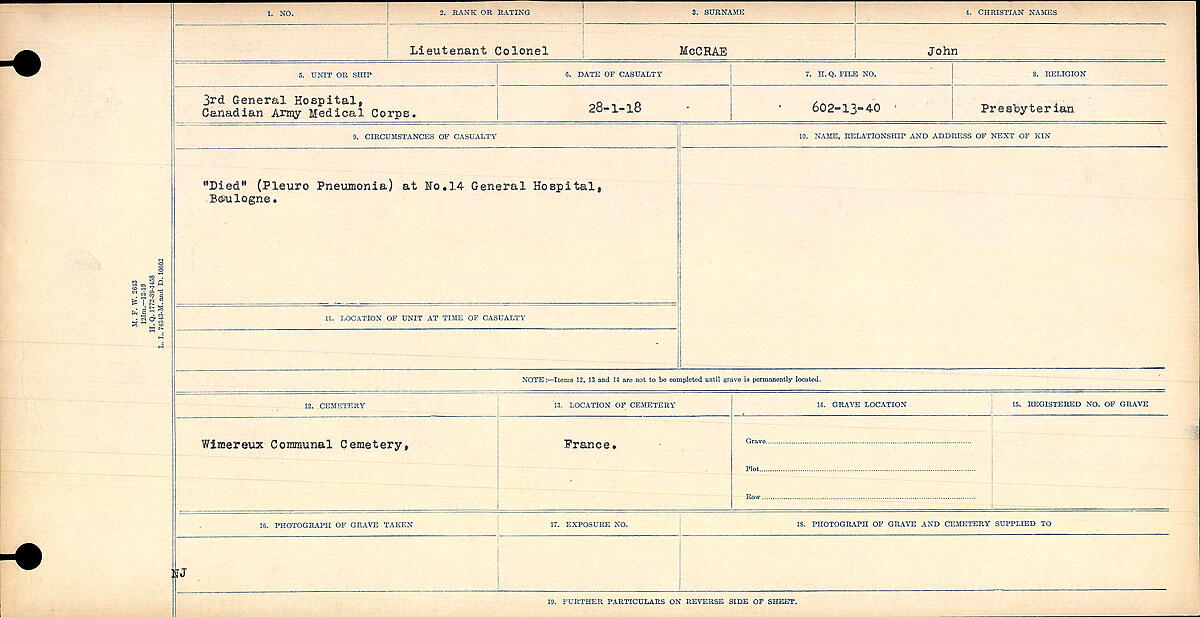
Circumstances of Death Registers
-

Memorial
-
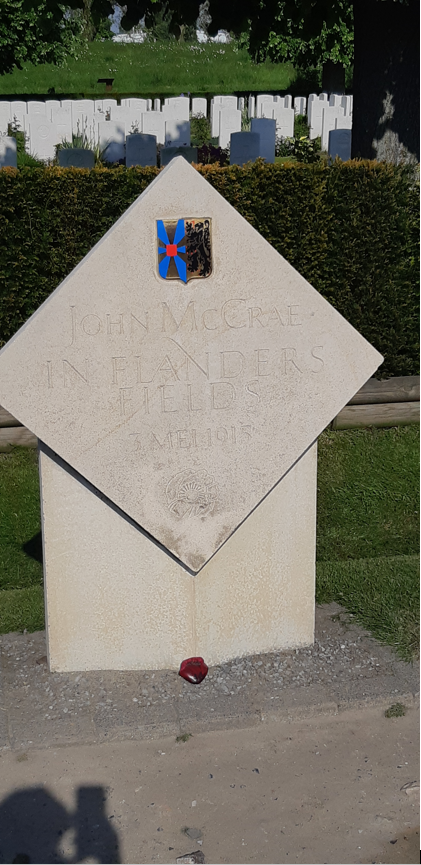
Aid Station Monument
-
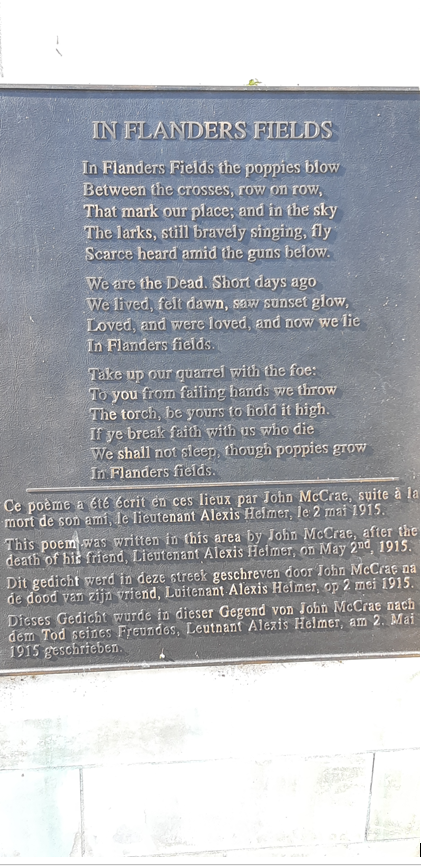
Plaque
Poème sur le Monument au poste de secours -

Aid Station
-
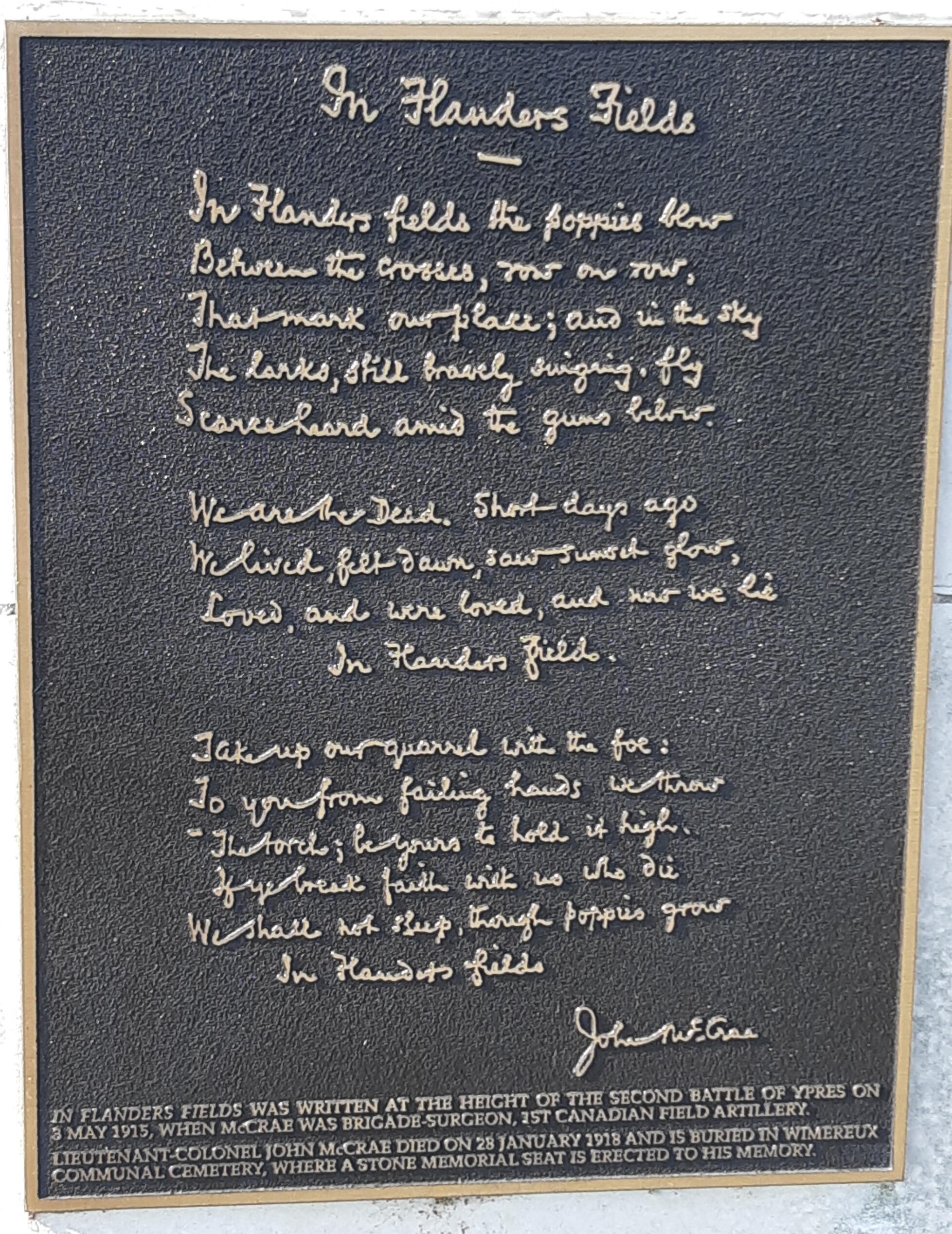
Plaque
-
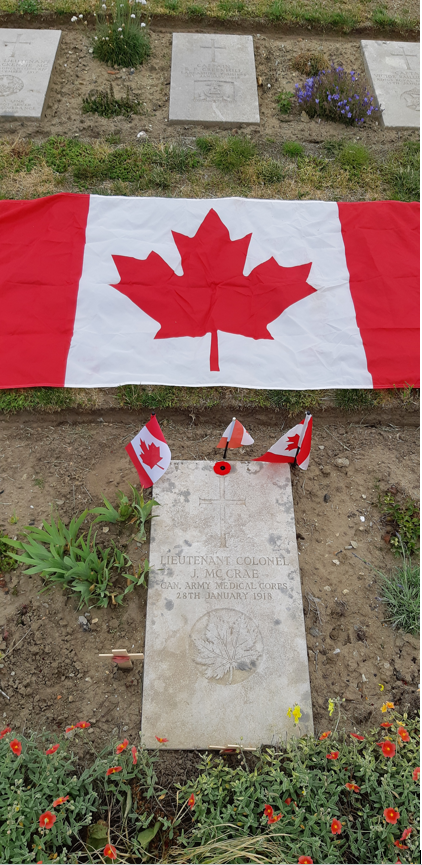
Grave Marker
-

Grave marker
-

Honour roll
-
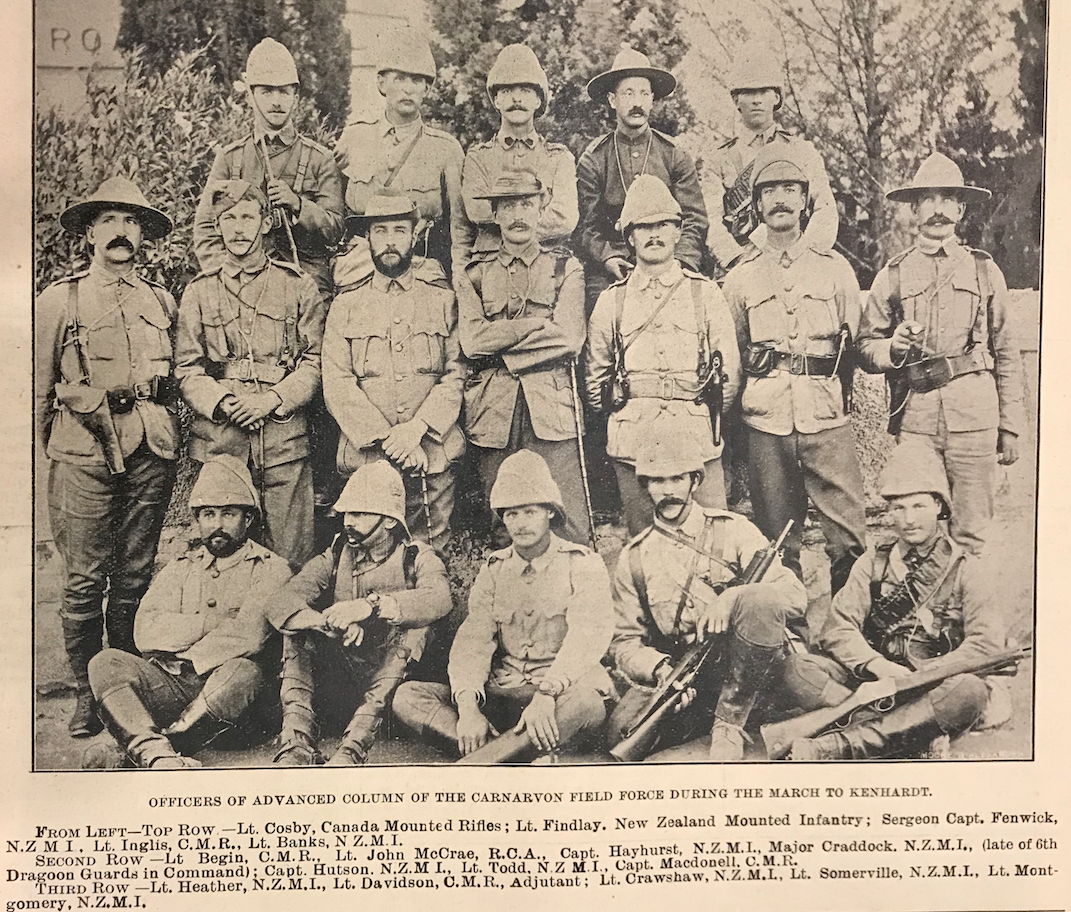
Newspaper clipping
Rang du milieu, deuxième de la gauche. Du Globe (journal de Toronto vers 1902) Soumis dans le cadre du projet Operation Picture Me -
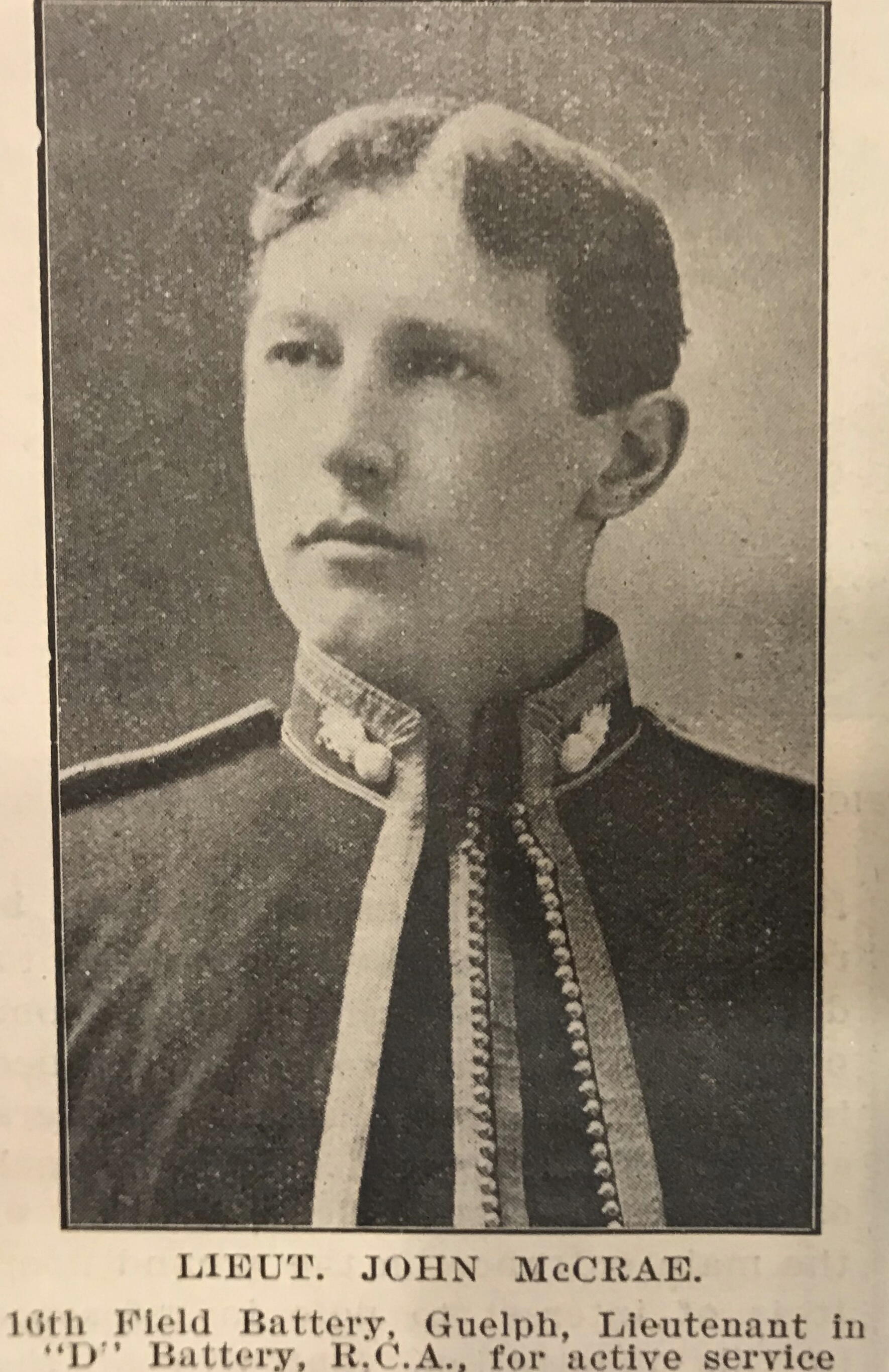
Newspaper clipping
Du Globe (journal de Toronto vers 1902) Soumis dans le cadre du projet Operation Picture Me -
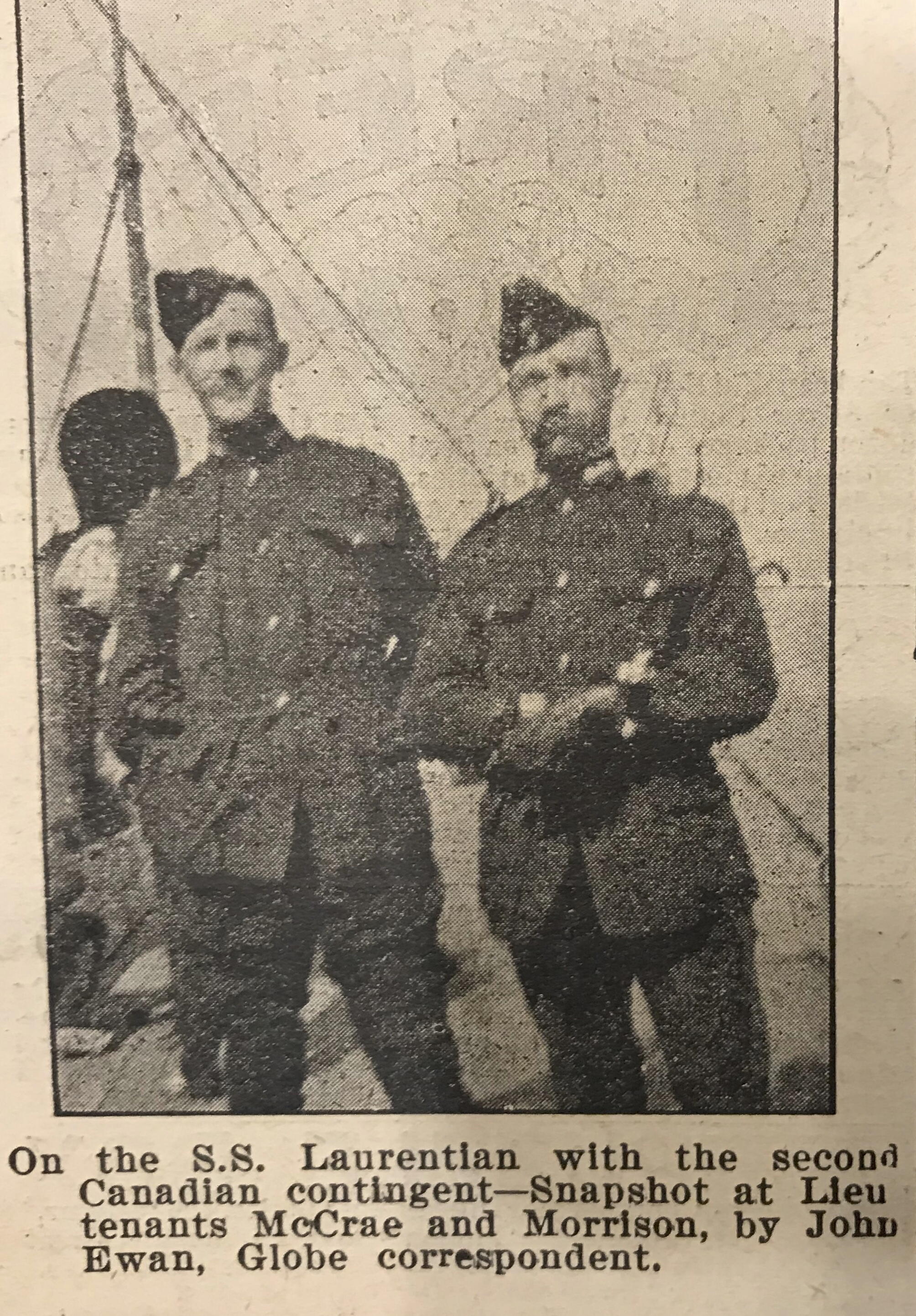
Newspaper clipping
Du Globe (journal de Toronto vers 1902) Soumis dans le cadre du projet Operation Picture Me -
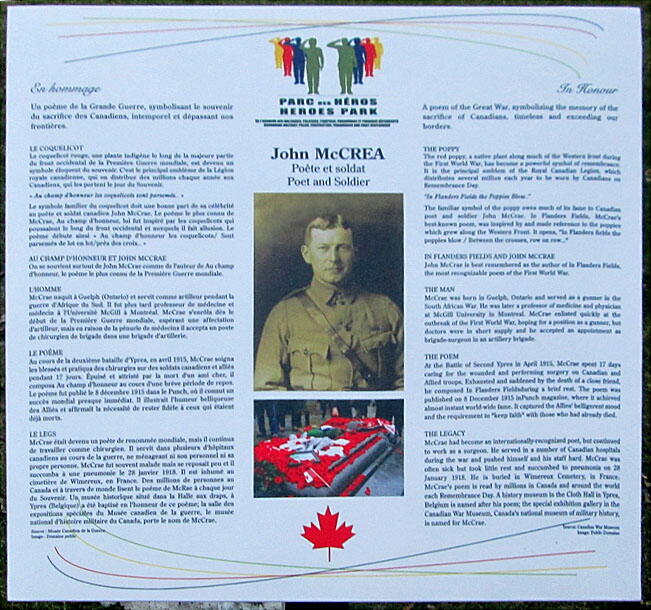
Photo of John McCrae
Ce mémorial situé à Beaconsfield, au Québec, est dédié à la mémoire du lieutenant-colonel John McCrae, mieux connu comme l'auteur du poème "In Flanders Fields" (Au champ d'honneur). -
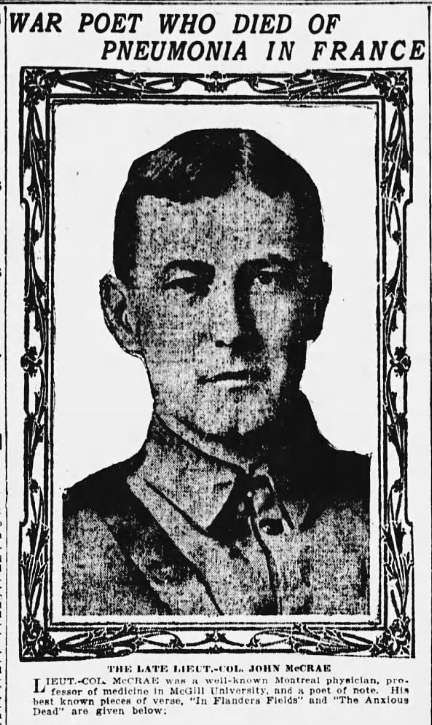
Newspaper clipping
Tiré du Vancouver Daily Province, février 1918. Soumis pour le projet Operation Picture Me -

Newspaper clipping
Tiré du Vancouver Daily Province, février 1918. Soumis pour le projet Operation Picture Me -
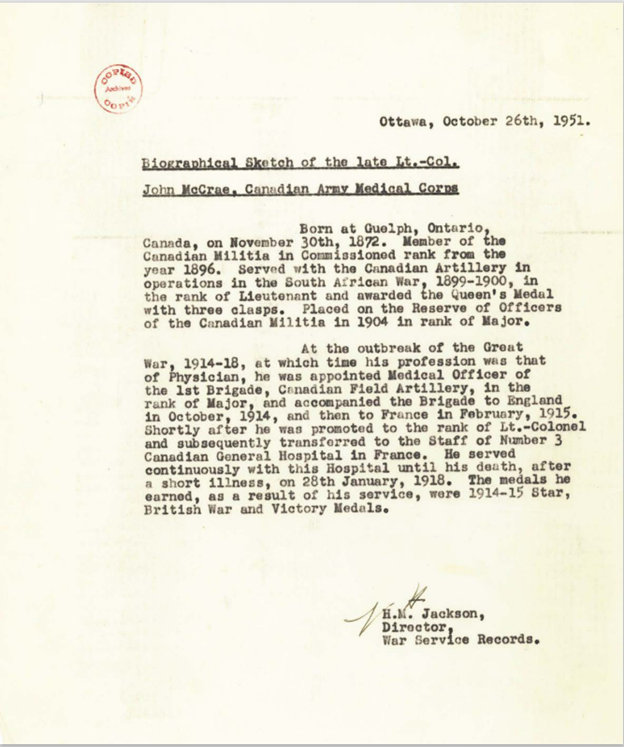
Biography
-
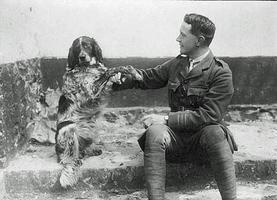
Photo of John McCrae
-
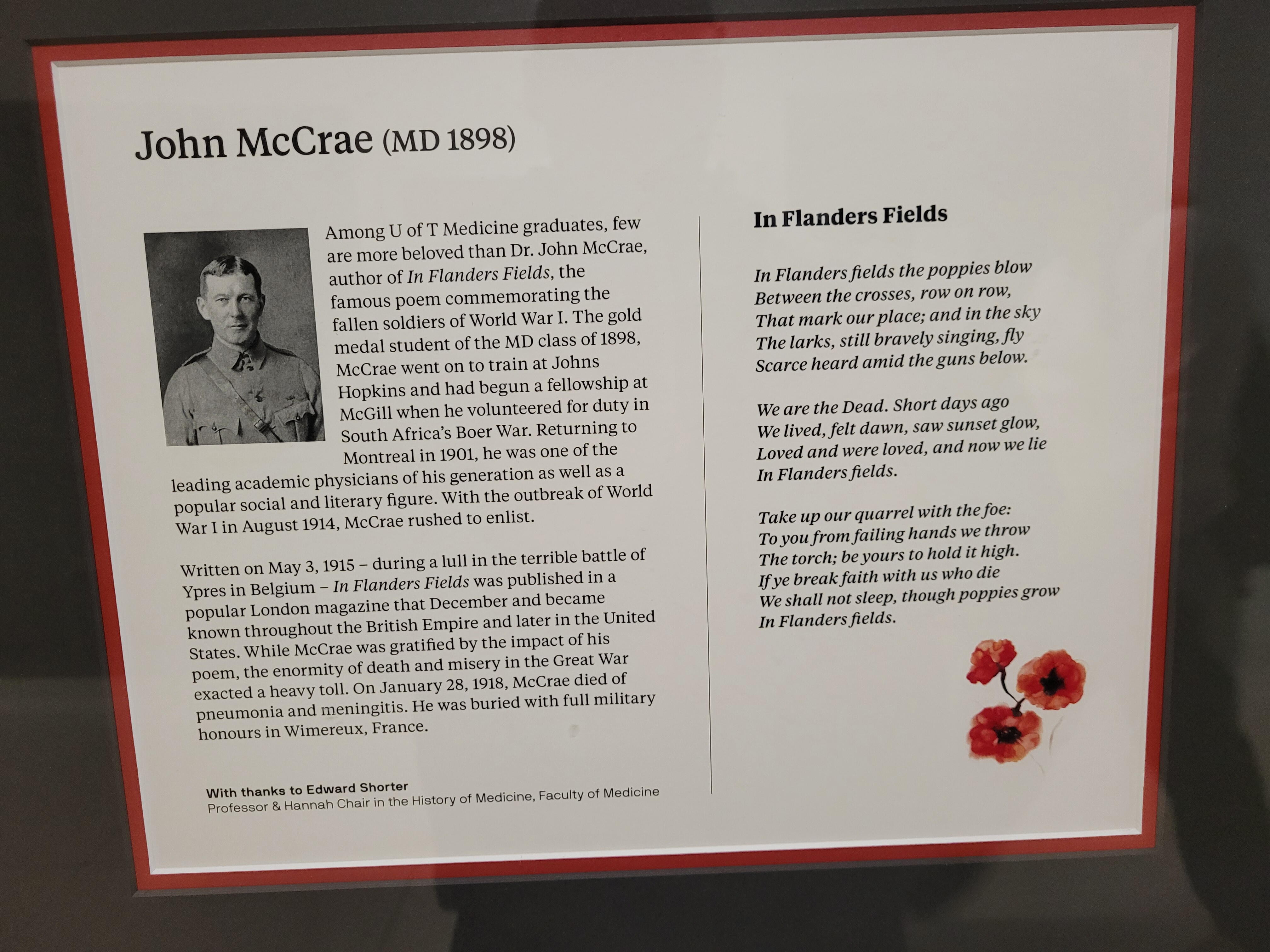
Memorial
-
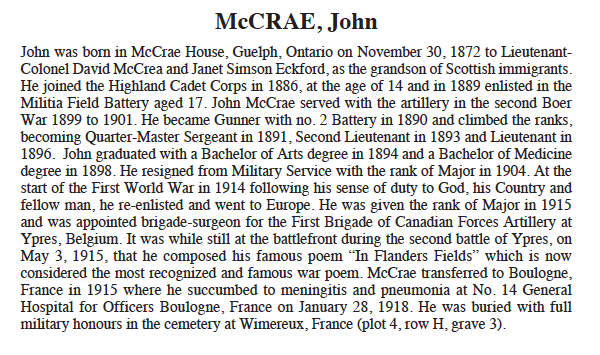
Bio
From Vol. 4 of the Ontario Canadian Legion Military Service Recognition Book. Submitted for the project Operation Picture Me -
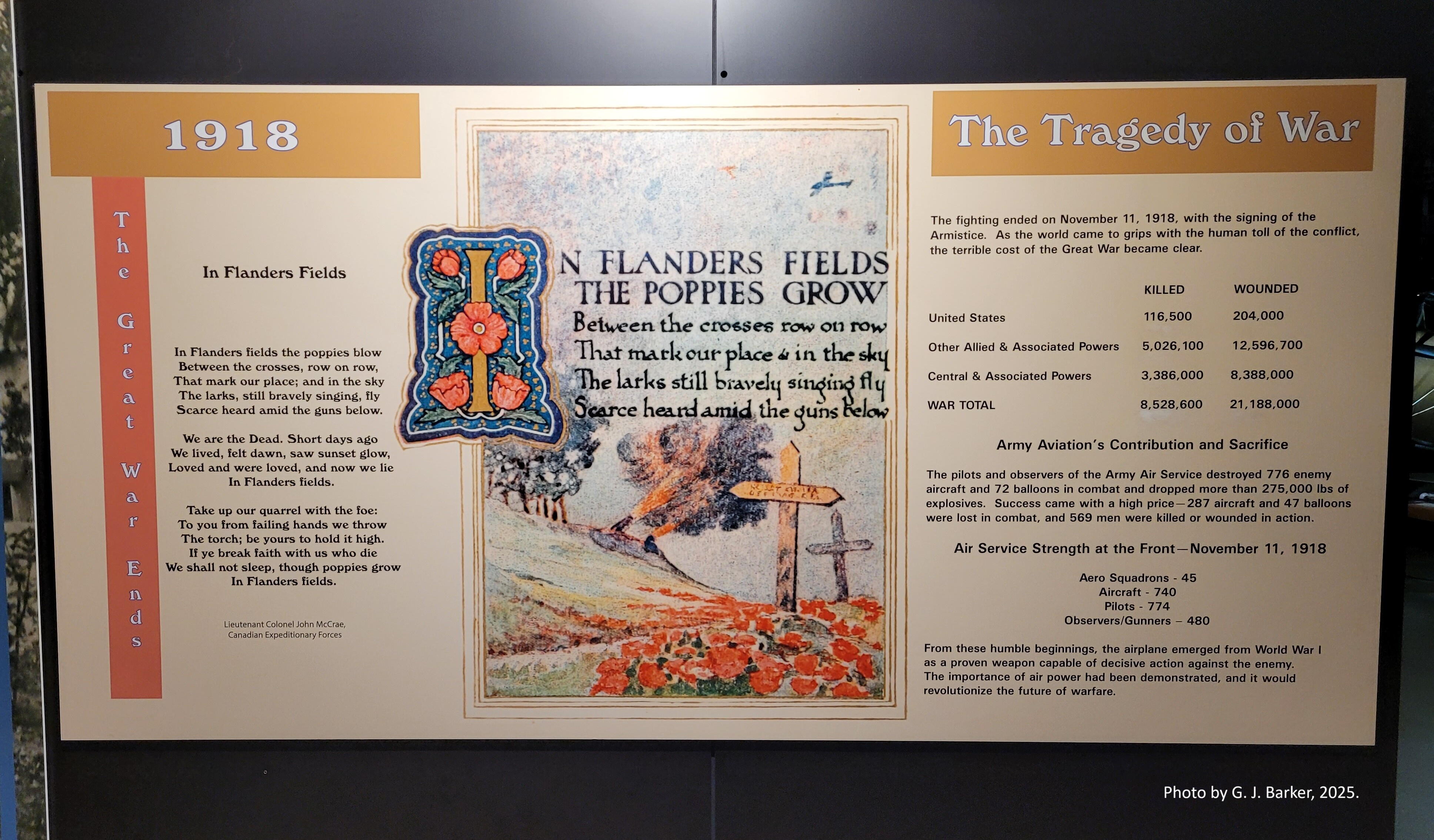
Poem
Lieutenant Colonel McCrae’s renown poem forms a prominent part of this display at the National Museum of the United States Air Force, Wright-Patterson AFB, Ohio, USA. (Image taken by Gregory J. Barker of Barrie, Ontario, in 2025.) -
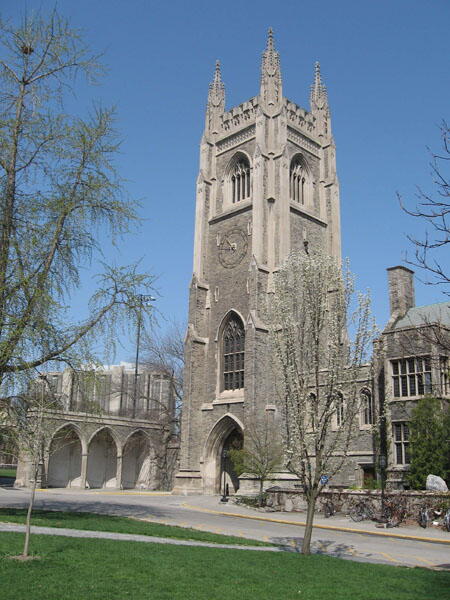
Memorial
The Soldiers’ Tower was built by the University of Toronto Alumni Association in 1924 as a memorial to the Great War of 1914-1918. The names of those who died in that conflict were inscribed on the Memorial Screen at photo left. After the Second World War, names were added in the Memorial Arch at the Tower’s base. In total, almost 1,200 names are inscribed. A Memorial Room inside the Tower contains mementoes and artifacts, and a 51-bell carillon serves as the audio element of the living memorial to the alumni, students, faculty and staff who died in the World Wars. The Soldiers’ Tower is the site of an annual Service of Remembrance. Photo: K. Parks, 2008, Alumni Relations. -
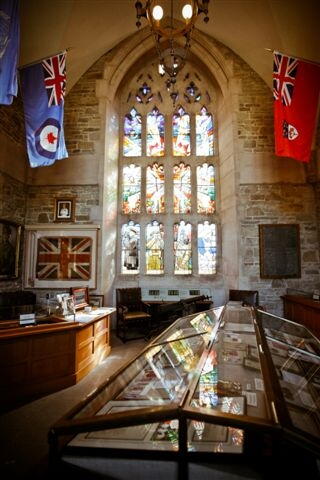
Memorial
Memorial Room, Soldiers’ Tower, University of Toronto. Photo: David Pike, 2010, courtesy of Alumni Relations.
Galerie numérique de
Lieutenant-colonel John McCrae
Galerie numérique de
Lieutenant-colonel John McCrae
Galerie numérique de
Lieutenant-colonel John McCrae
Galerie numérique de
Lieutenant-colonel John McCrae
Galerie numérique de
Lieutenant-colonel John McCrae
Galerie numérique de
Lieutenant-colonel John McCrae
Galerie numérique de
Lieutenant-colonel John McCrae
Galerie numérique de
Lieutenant-colonel John McCrae
Galerie numérique de
Lieutenant-colonel John McCrae
Monuments commémoratifs
Lieu de commémoration:
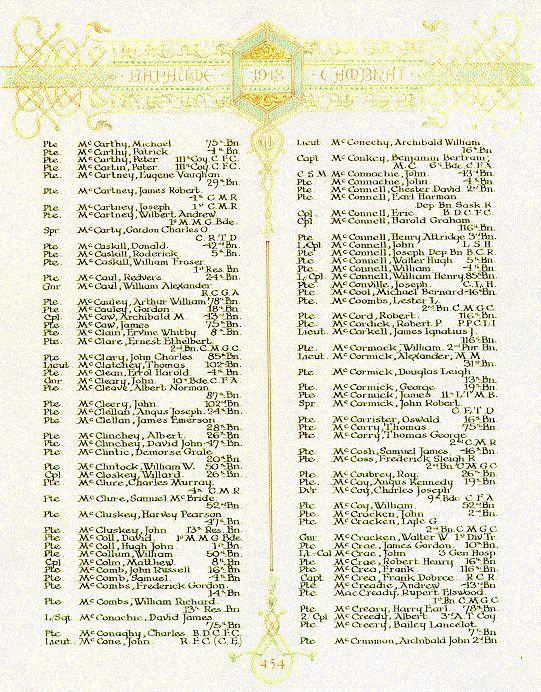
Dans les livres du souvenir
Inscription commémorative sur la :
Page 454 du Livre du Souvenir de la Première Guerre mondiale.
Commander cette page
Télécharger cette page
CIMETIÈRE COMMUNAL DE WIMEREUX Pas de Calais, France
Pour plus d’informations, visitez la Commission des sépultures de guerre du Commonwealth (site disponible en anglais seulement).
L’image du coquelicot est une marque déposée de la Légion royale canadienne (Direction nationale) et est utilisée avec sa permission. Cliquez ici pour en savoir plus sur le coquelicot.
Avons-nous oublié quelque chose ?
Contribuer à cette page commémorative
Avez-vous des photos, des informations ou une correction concernant la page commémorative de cet individu? Apprenez-en plus sur le MVGC et les informations que nous collectons.