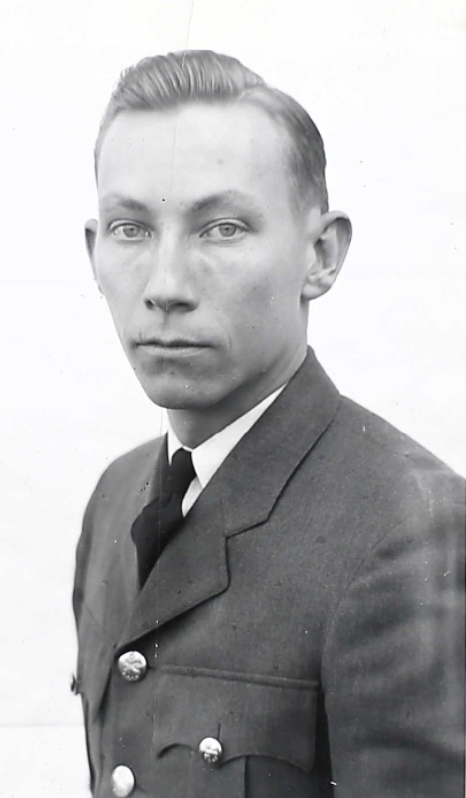
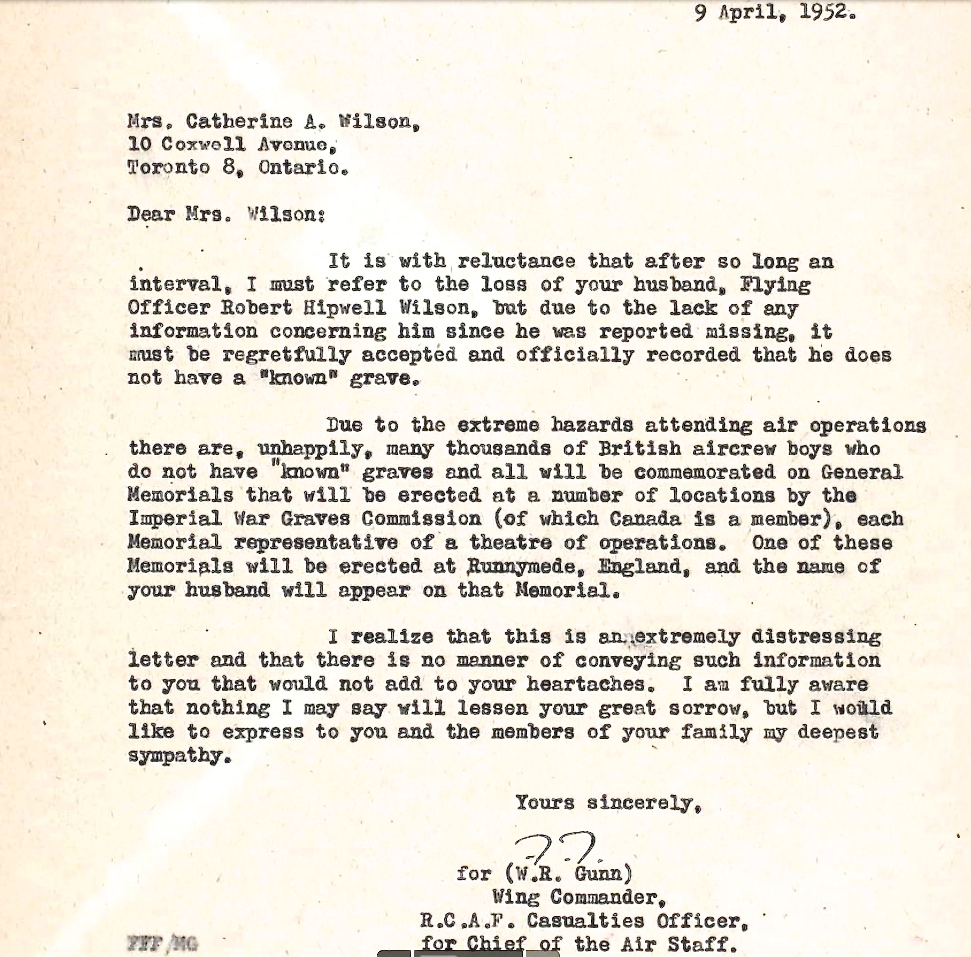
Service militaire
Lieu de l’enterrement/commemoration
Fils de Cecil Hubert et Mary Ellen Wilson, de Orillia, Ontario, Canada; époux de Catherine Wilson.
Galerie numérique de Capitaine d'aviation Robert Hipwell Wilson
- Onglets 1
- Onglets 2
- Onglets 3
- Onglets 4
- Onglets 5
- Onglets 6
- Onglets 7
- Onglets 8
- Onglets 9
- Onglets 10
- Onglets 11
- Onglets 12
- Onglets 13
- Onglets 14
- Onglets 15
- Onglets 16
- Onglets 17
- Onglets 18
- Onglets 19
- Onglets 20
- Onglets 21
Galerie numérique de
Capitaine d'aviation Robert Hipwell Wilson
The Soldiers’ Tower – The Soldiers’ Tower was built by the University of Toronto Alumni Association in 1924 as a memorial to the Great War of 1914-1918. The names of those who died in that conflict are carved on the Memorial Screen at photo left. After the Second World War, more names were carved in the Memorial Arch at the Tower’s base. In total, almost 1200 names are inscribed. A Memorial Room inside the Tower contains mementoes and artifacts, and a 51-bell carillon serves as the audio element of the living memorial to the alumni, students, faculty and staff who died in the World Wars. The Soldiers’ Tower is the site of an annual Service of Remembrance. Photo: Kathy Parks, Alumni Relations.
Galerie numérique de
Capitaine d'aviation Robert Hipwell Wilson
Galerie numérique de
Capitaine d'aviation Robert Hipwell Wilson
This framed display of photos, part of a multi-component display to the men from Forestry who died in the First and Second World Wars, is located at the Earth Sciences Centre, Faculty of Forestry, University of Toronto. The photo of “F/O R. H. WILSON, R.C.A.F. Class ‘41” is third from the left. Photo: Cody Gagnon, courtesy of Alumni Relations.
Galerie d'images
-
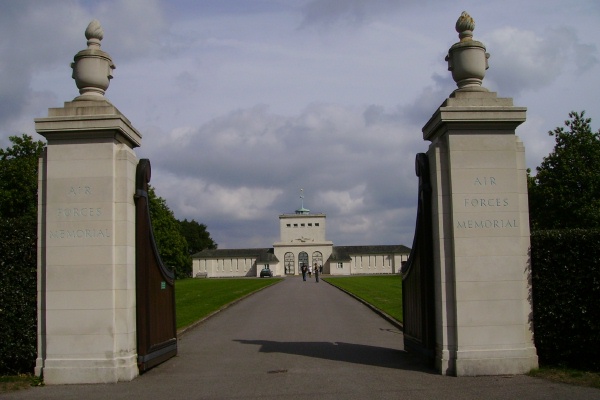
Runnymede Memorial - September 2010 … photo courtesy of Marg Liessens
-
Stone of Remembrance - Runnymede Memorial - September 2010 … photo courtesy of Marg Liessens
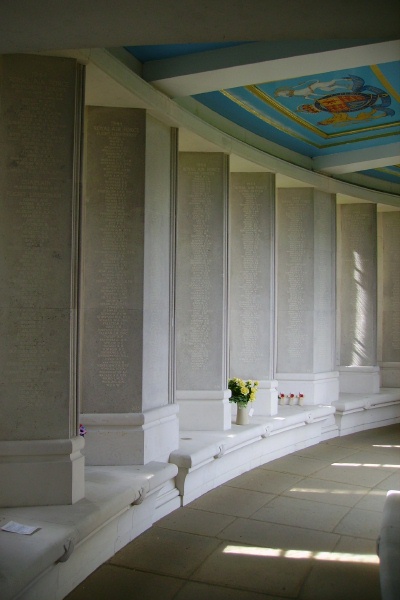
-
Runnymede Memorial - September 2010 … photo courtesy of Marg Liessens
-
Panels - Runnymede Memorial - September 2010 … photo courtesy of Marg Liessens
-
Entrance - Runnymede Memorial - September 2010 … photo courtesy of Marg Liessens
-
The Soldiers’ Tower – The Soldiers’ Tower was built by the University of Toronto Alumni Association in 1924 as a memorial to the Great War of 1914-1918. The names of those who died in that conflict are carved on the Memorial Screen at photo left. After the Second World War, more names were carved in the Memorial Arch at the Tower’s base. In total, almost 1200 names are inscribed. A Memorial Room inside the Tower contains mementoes and artifacts, and a 51-bell carillon serves as the audio element of the living memorial to the alumni, students, faculty and staff who died in the World Wars. The Soldiers’ Tower is the site of an annual Service of Remembrance. Photo: Kathy Parks, Alumni Relations.
-
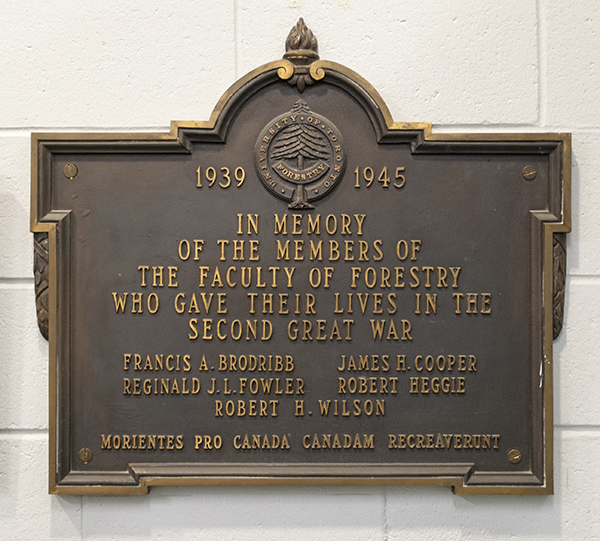
This plaque, part of a multi-component display to the men from Forestry who died in the First and Second World Wars, is located at the Earth Sciences Centre, Faculty of Forestry, University of Toronto. Photo: Cody Gagnon, courtesy of Alumni Relations.
-
The names of those who died in the Second World War were added to the archway beneath the Soldiers’ Tower in 1949. Photo: courtesy of Alumni Relations, University of Toronto.
-
This framed display of photos, part of a multi-component display to the men from Forestry who died in the First and Second World Wars, is located at the Earth Sciences Centre, Faculty of Forestry, University of Toronto. The photo of “F/O R. H. WILSON, R.C.A.F. Class ‘41” is third from the left. Photo: Cody Gagnon, courtesy of Alumni Relations.
-
Soldiers’ Tower, University of Toronto. Photo: David Pike, courtesy of Alumni Relations.
-
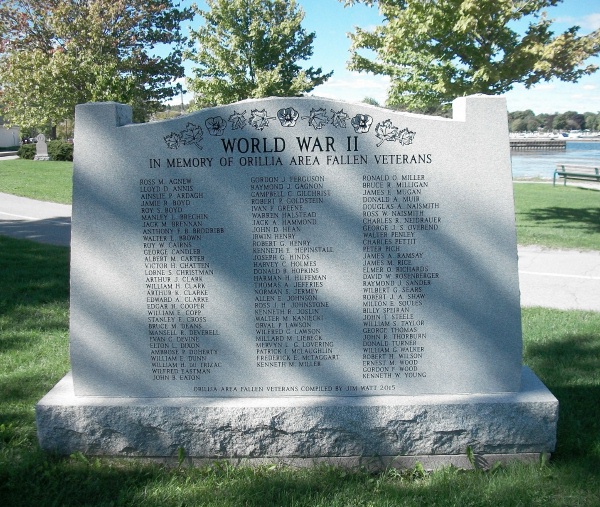
Flight Lieutenant Robert Hipwell Wilson is also commemorated on the WWII Memorial in Orillia, ON … photo courtesy of Marg Liessens
-
Flight Lieutenant Robert Hipwell Wilson is also commemorated on the WWII Memorial in Orillia, ON … photo courtesy of Marg Liessens
-
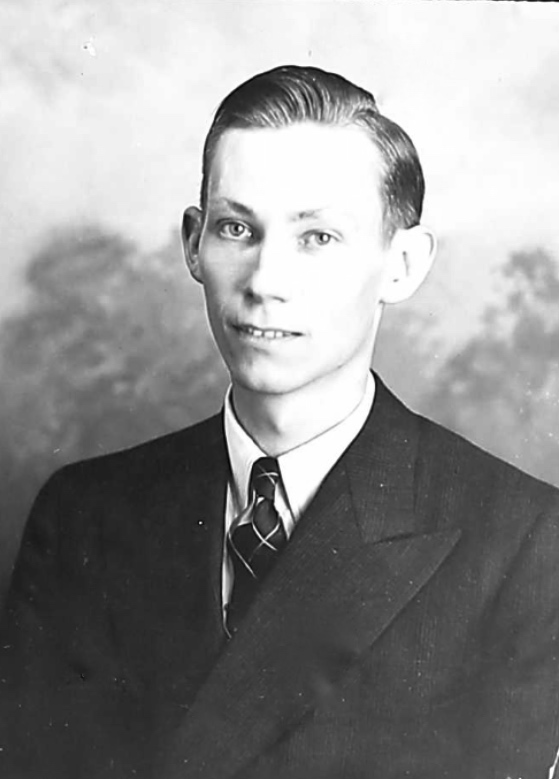
Submitted for the project, Operation Picture Me
-
Submitted for the project, Operation Picture Me
-
Submitted for the project, Operation Picture Me
-
Submitted for the project, Operation Picture Me
-
Submitted for the project, Operation Picture Me
-
Submitted for the project, Operation Picture Me
-
Submitted for the project, Operation Picture Me
-
Submitted for the project, Operation Picture Me
-
Submitted for the project, Operation Picture Me
Dans les livres du souvenir
Inscription commémorative sur la :
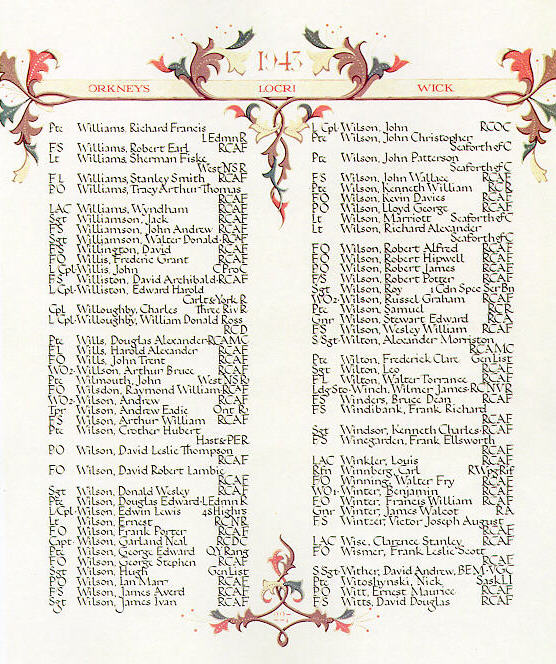
Page 227 du Livre du Souvenir de la Seconde Guerre mondiale.
Commander cette page
Télécharger cette page
MÉMORIAL DE RUNNYMEDE Surrey, Royaume-Uni
Au cours de la Seconde Guerre mondiale, plus de cent seize mille hommes et femmes des forces aériennes du Commonwealth britannique sont morts au champ d'honneur. Plus de dix-sept mille d'entre eux étaient membres de l'Aviation royale canadienne ou des Canadiens qui servaient dans la Royal Air Force. Presque un tiers des morts n'ont pas de sépulture connue. De ce total, vingt mille quatre cent cinquante sont commémorés par nom au Mémorial de Runnymede situé à Englefield Green, près d'Egham, à trente-deux kilomètres à l'ouest de Londres.
L'architecture du Mémorial de Runnymede est originale et impressionnante. La pierre du Souvenir repose au centre d'un cloître qui domine une tour carrée perchée sur le sommet de la colline de Cooper qui surplombe la Tamise. Les allées du cloître aboutissent à deux observatoires, l'un donnant sur Windsor, l'autre sur l'aéroport de Londres à Heathrow. Les trois mille cinquante aviateurs canadiens tués au combat sont parmi ceux dont les noms sont gravés sur les revers de pierre des fenêtres étroites des allées cloîtrées et des observatoires.
Au-dessus de l'entrée à trois arches qui conduit au cloître, trône un aigle de pierre surmonté de la devise de la Royal Air Force «Per Ardua ad Astra». De chaque côté, figure une inscription en anglais dont voici la traduction :
« CE CLOÎTRE HONORE LES NOMS DE 20 000 AVIATEURS SANS SÉPULTURE CONNUE QUI SONT MORTS POUR LA LIBERTÉ LORS DES OPÉRATIONS AÉRIENNES AU-DESSUS DES ÎLES BRITANNIQUES, ET DES TERRES ET MERS DU NORD ET DE L'OUEST DE L'EUROPE. »
Dans la tour se trouve un sanctuaire voûté, paisible et propice à la méditation. On peut y lire, orné d'enluminures, un extrait d'un poème anglais de Paul H. Scott.
Pour plus d’informations, visitez la Commission des sépultures de guerre du Commonwealth (site disponible en anglais seulement).
L’image du coquelicot est une marque déposée de la Légion royale canadienne (Direction nationale) et est utilisée avec sa permission. Cliquez ici pour en savoir plus sur le coquelicot.
Avons-nous oublié quelque chose ?
Contribuer à cette page commémorative
Avez-vous des photos, des informations ou une correction concernant la page commémorative de cet individu? Apprenez-en plus sur le MVGC et les informations que nous collectons.