Service militaire
Lieu de l’enterrement/commemoration
Fils de Daniel Alexander et Martha MacInnis, de Georgeville, comté de Antigonish, Nouvelle-Écosse. Frère de Alexander, Lauchlin, Leo, Gilles, Angus et Donald Cyril, et ses soeurs Sally et Isabel.
Galerie numérique de Soldat Hugh Alphonse MacInnis
- Onglets 1
- Onglets 2
- Onglets 3
- Onglets 4
- Onglets 5
- Onglets 6
- Onglets 7
- Onglets 8
- Onglets 9
- Onglets 10
- Onglets 11
- Onglets 12
- Onglets 13
- Onglets 14
- Onglets 15
Galerie numérique de
Soldat Hugh Alphonse MacInnis
The Battle of Verrières Ridge, was part of Operation Atlantic (July 18-20) and Operation Spring (July 25-27).<P>
Hughie was part of a Reinforcement group created to be placed where needed. His units, the Royal Regiment of Canada and the Black Watch (Royal Highland Regiment) were both involved in Operation Atlantic and Operation Spring.<P>
Angie, (Hughie's younger brother and a member of the R.C.A.F. at this time), reported that the family was informed Hughie was hit by a mortar shell in his trench at Verrières Ridge.
Galerie numérique de
Soldat Hugh Alphonse MacInnis
Hughie remained in England for three weeks, doing additional training until he was deployed to Normandy, France , landing on July 25, 1944. This was seven weeks after D-Day (June 6, 1944). This is a letter to his brother "Hooks" (Alex) during his stay in England as part of the Canadian Infantry Reinforcement Unit. This letter was written three weeks before Hughie died.
Galerie d'images
-
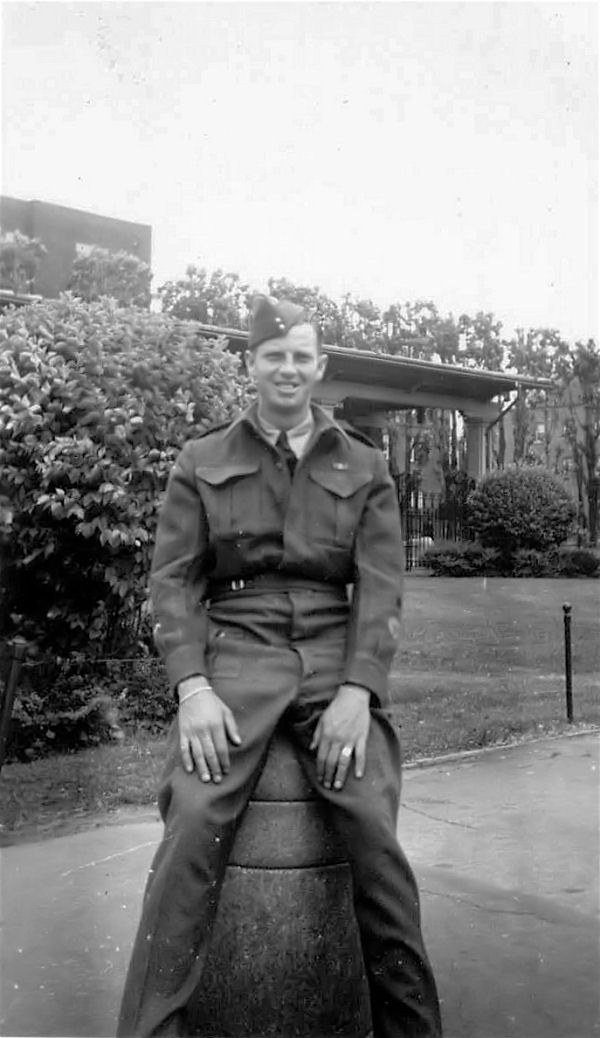
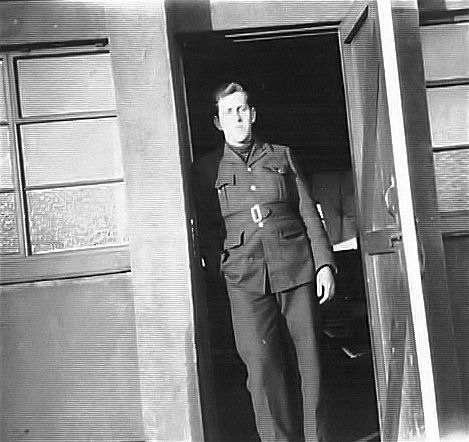
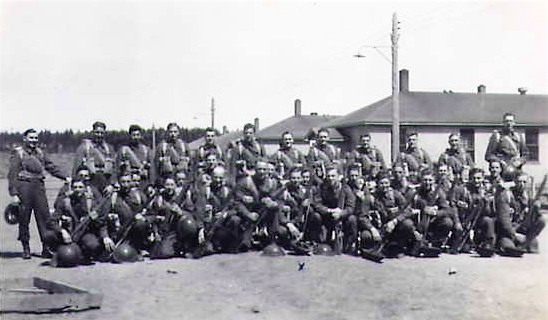
Hugh and his regiment at Training Camp at Aldershot, N.S.
-
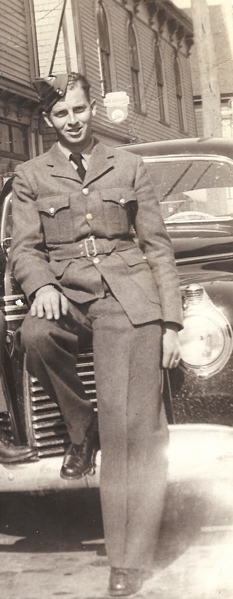
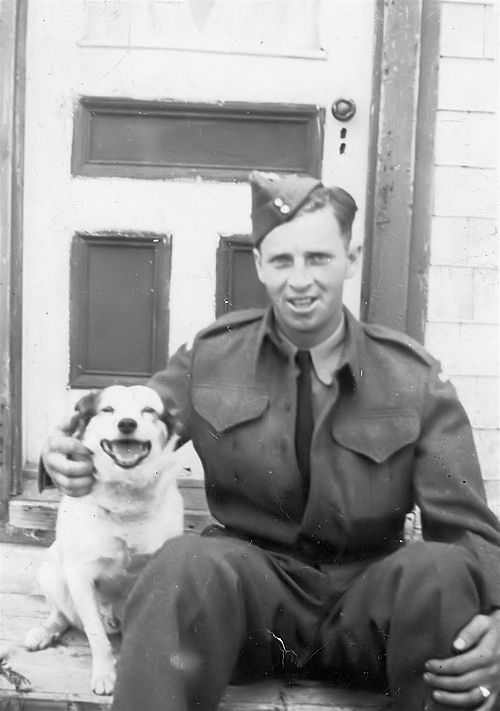
Private Hugh MacInnis in Antigonish N.S. before his deployment overseas.
-
In September 1943 Hughie was promoted from the rank of Private to the rank of Lance Bombardier with the Royal Canadian Artillery but possibly was restless 'to see more action' and in December 1943 transferred to the Infantry division.
-
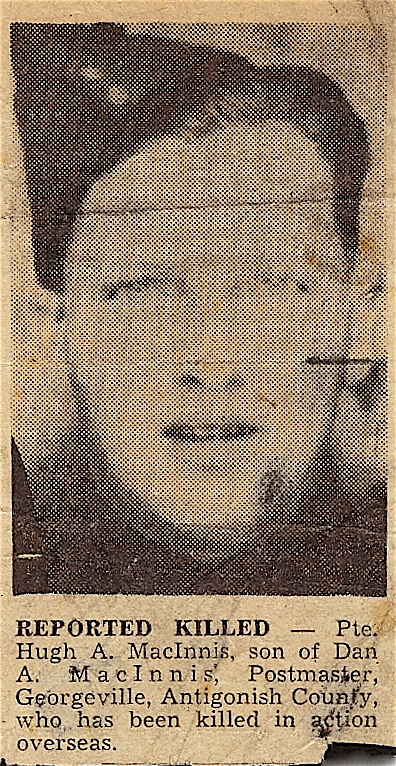
The Battle of Verrières Ridge, was part of Operation Atlantic (July 18-20) and Operation Spring (July 25-27).<P> Hughie was part of a Reinforcement group created to be placed where needed. His units, the Royal Regiment of Canada and the Black Watch (Royal Highland Regiment) were both involved in Operation Atlantic and Operation Spring.<P> Angie, (Hughie's younger brother and a member of the R.C.A.F. at this time), reported that the family was informed Hughie was hit by a mortar shell in his trench at Verrières Ridge.
-
Hughie remained in England for three weeks, doing additional training until he was deployed to Normandy, France , landing on July 25, 1944. This was seven weeks after D-Day (June 6, 1944). This is a letter to his brother "Hooks" (Alex) during his stay in England as part of the Canadian Infantry Reinforcement Unit. This letter was written three weeks before Hughie died.
-
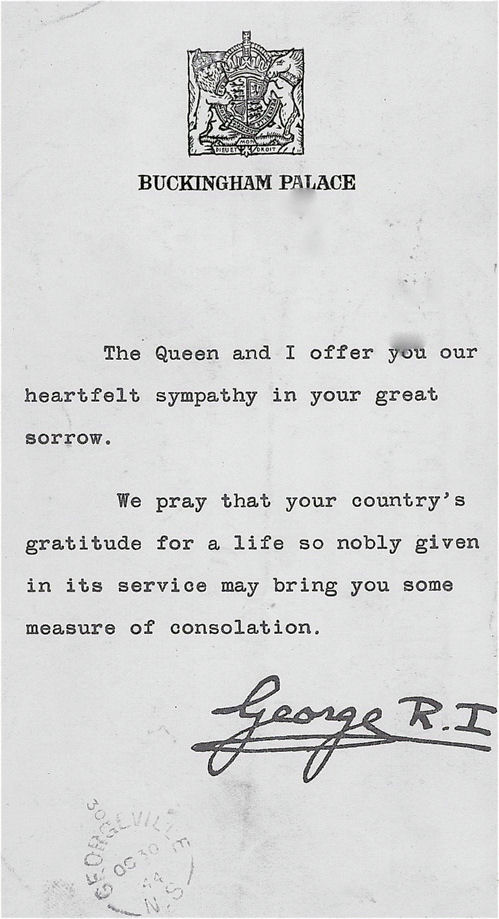
Letter of consolation from King George VI October, 1944
-
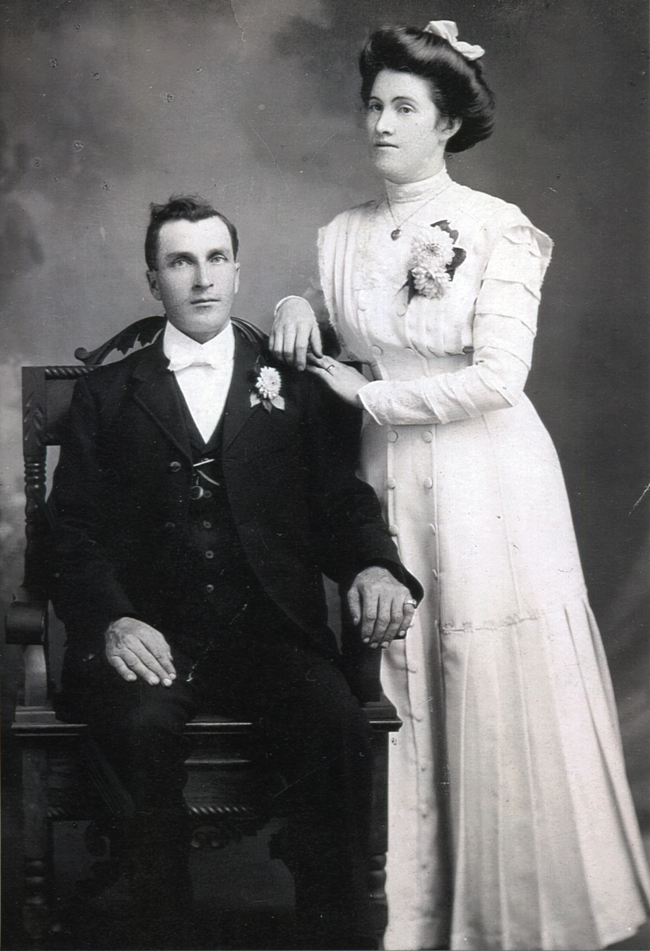
Daniel Alexander (D.A.) and Martha (MacEachern), Hughie's parents, married at Holy Rosary Church, Ballantyne's Cove, Antigonish County - October 19, 1909
-
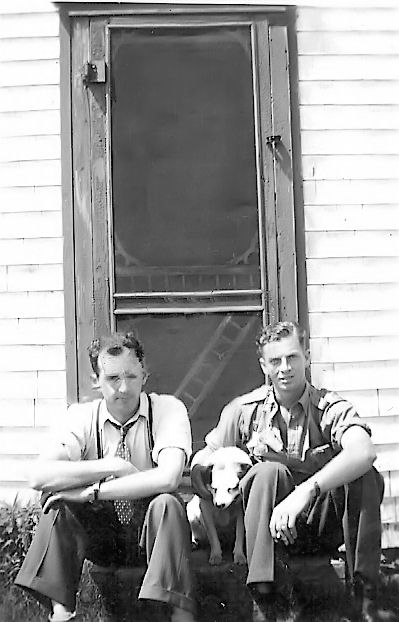
Lauchie (Hughie's older brother) and Hughie in Georgeville, Antigonish County, Nova Scotia.
-
Angie (Hughie's younger brother) in North Africa with the R.C.A.F.
-
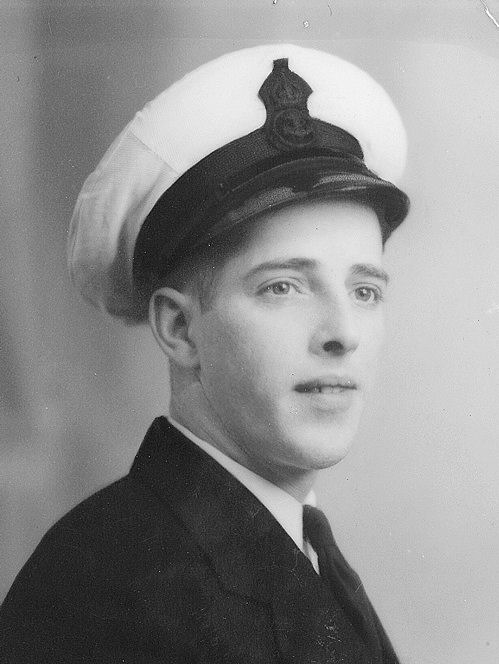
Donald (Hughie's youngest brother) with the Royal Canadian Navy.
-
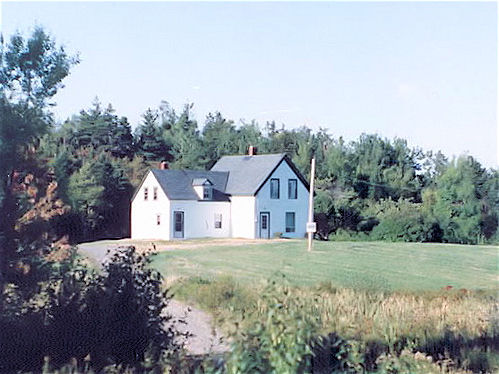
The MacInnis family farm built ca. 1880
-
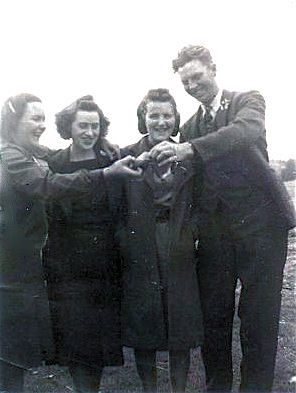
Apple blossom time in Ohio, Antigonish with Kay MacLean, Isabel (sister of Hughie), Catherine (wife of brother Gillis), and Hughie May 1941
-
Hughie's family.<BR> Front row: Alex, Isabel, Sally and Lauchie<P> Back row: Angie, Gillis and Leo
-
Hugh A. MacInnis 1917 - 1944
-
Dans les livres du souvenir
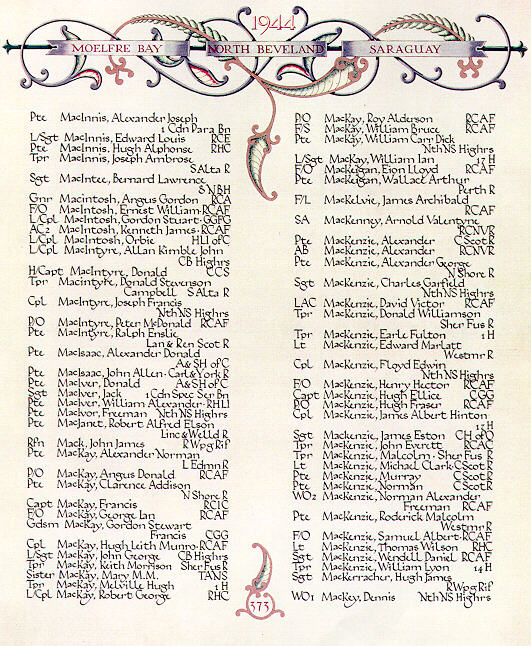
Inscription commémorative sur la :
Page 373 du Livre du Souvenir de la Seconde Guerre mondiale.
Commander cette page
Télécharger cette page
CIMETIÈRE DE GUERRE CANADIEN DE BRETTEVILLE-SUR-LAIZE Calvados, France
Le cimetière se trouve du côté ouest de la route principale entre Caen et Falaise (N158) au nord du village de Cintheaux. Bretteville-sur-Laize, village et commune du Calvados, est à environ 16 km au sud de Caen. Le village de Bretteville est à 3 km au sud-ouest du cimetière. Les personnes inhumées ici sont mortes au cours des derniers assauts en Normandie, de la capture de Caen et de l'offensive vers le sud (menée d'abord par la 4e Division blindée canadienne et la 1re Division blindée polonaise) en vue de fermer la trouée de Falaise et d'encercler ainsi les divisions allemandes qui menaient une lutte désespérée pour éviter d'être coincées à l'ouest de la Seine. La plupart des unités du 2e Corps d'armée canadien sont représentées dans le cimetière. Environ 3000 victimes de la guerre de 1939-1945 sont commémorées ici.
Pour plus d’informations, visitez la Commission des sépultures de guerre du Commonwealth (site disponible en anglais seulement).
L’image du coquelicot est une marque déposée de la Légion royale canadienne (Direction nationale) et est utilisée avec sa permission. Cliquez ici pour en savoir plus sur le coquelicot.
Avons-nous oublié quelque chose ?
Contribuer à cette page commémorative
Avez-vous des photos, des informations ou une correction concernant la page commémorative de cet individu? Apprenez-en plus sur le MVGC et les informations que nous collectons.