Service militaire
Lieu de l’enterrement/commemoration
Époux de Helen Sands Macpherson, de Edmonton, Alberta.
Galerie numérique de Major Wallace Spence MacPherson
Galerie numérique de
Major Wallace Spence MacPherson
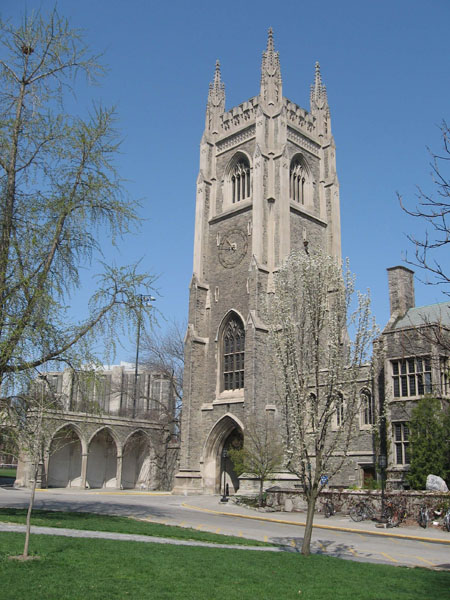
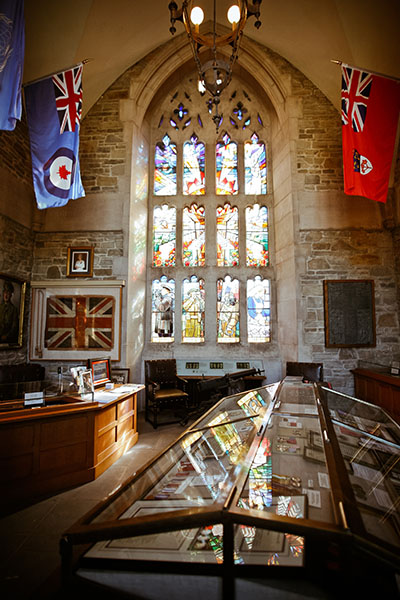
The Soldiers’ Tower was built by the University of Toronto Alumni Association in 1924 as a memorial to the Great War of 1914-1918. The names of those who died in that conflict are carved on the Memorial Screen at photo left. After the Second World War, more names were carved in the Memorial Arch at the Tower’s base. In total, almost 1200 names are inscribed. A Memorial Room inside the Tower contains mementoes and artifacts, and a 51-bell carillon serves as the audio element of the living memorial to the alumni, students, faculty and staff who died in the World Wars. The Soldiers’ Tower is the site of an annual Service of Remembrance. Photo: Kathy Parks, Alumni Relations.
Galerie numérique de
Major Wallace Spence MacPherson
University of Toronto Memorial Book, Second World War 1939-1945. Published by the Soldiers’ Tower Committee, 1993. Entry on page 40 reads: “Major Wallace Spence MacPHERSON The Algonquin Regiment. University College, BA 1932. Killed in action in North-West Europe, 10 August 1944. Buried in Bretteville-sur-Laize Canadian War Cemetery, France.”
Galerie d'images
-
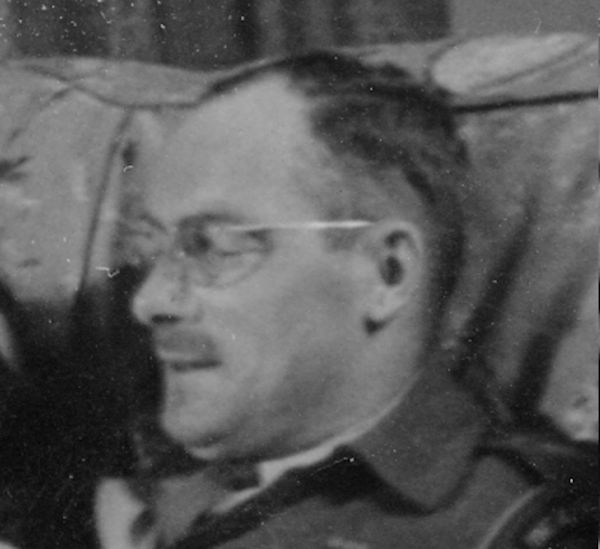
Major W S MacPherson - picture taken by Capt. C A Conway Algonquin Regiment in Sussex, England 1943
-
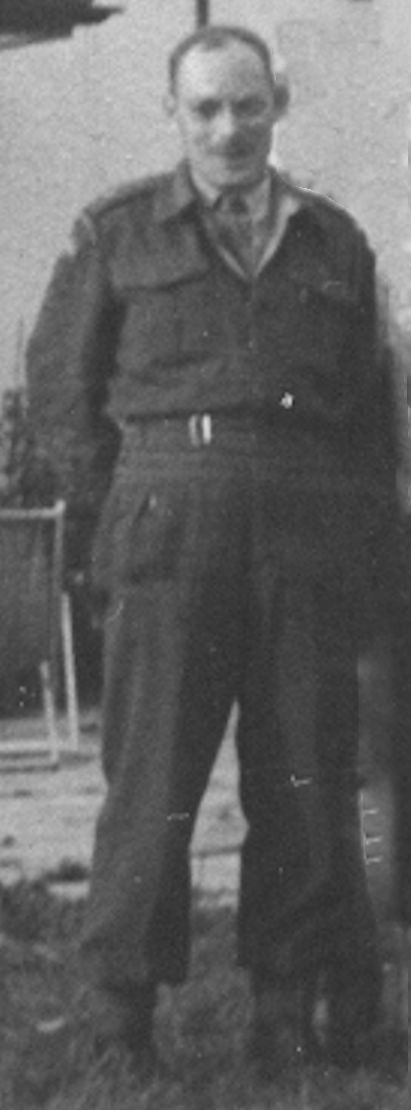
Major W. Macpherson while in England taken by Capt. CA Conway - both officers in Canadian Algonquin Regiment.
-
The Soldiers’ Tower was built by the University of Toronto Alumni Association in 1924 as a memorial to the Great War of 1914-1918. The names of those who died in that conflict are carved on the Memorial Screen at photo left. After the Second World War, more names were carved in the Memorial Arch at the Tower’s base. In total, almost 1200 names are inscribed. A Memorial Room inside the Tower contains mementoes and artifacts, and a 51-bell carillon serves as the audio element of the living memorial to the alumni, students, faculty and staff who died in the World Wars. The Soldiers’ Tower is the site of an annual Service of Remembrance. Photo: Kathy Parks, Alumni Relations.
-
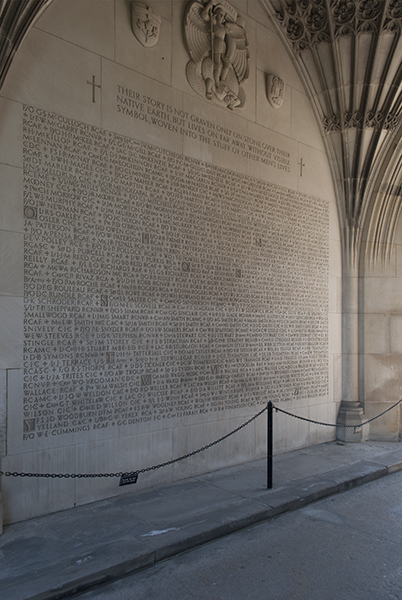
The names of those who died in the Second World War were added to the archway beneath the Soldiers’ Tower in 1949. The name of “Maj W. S. MACPHERSON C.I.C.” is among the names inscribed. Photo: Cody Gagnon, courtesy of Alumni Relations.
-
University of Toronto Memorial Book, Second World War 1939-1945. Published by the Soldiers’ Tower Committee, 1993. Entry on page 40 reads: “Major Wallace Spence MacPHERSON The Algonquin Regiment. University College, BA 1932. Killed in action in North-West Europe, 10 August 1944. Buried in Bretteville-sur-Laize Canadian War Cemetery, France.”
-
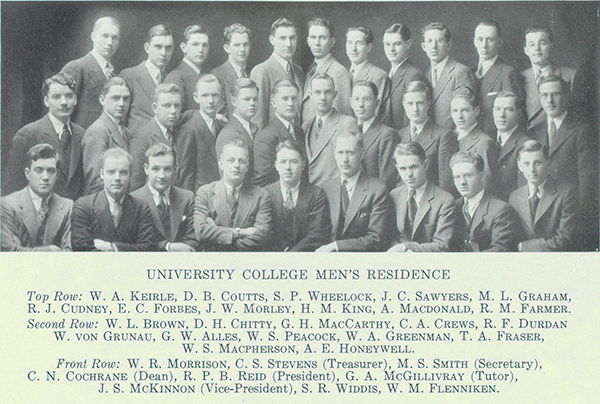
Group photograph from Torontonensis, University of Toronto's yearbook in 1932 shows the University College Men's Residence members. MacPherson is in the second row.
-
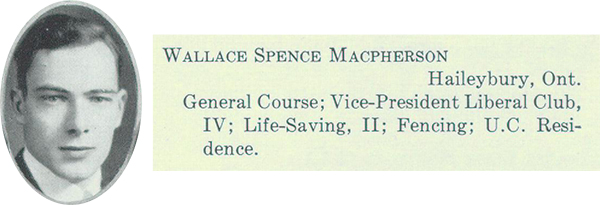
Photograph of MacPherson from Torontonensis, University of Toronto's yearbook in 1932
Dans les livres du souvenir
Inscription commémorative sur la :
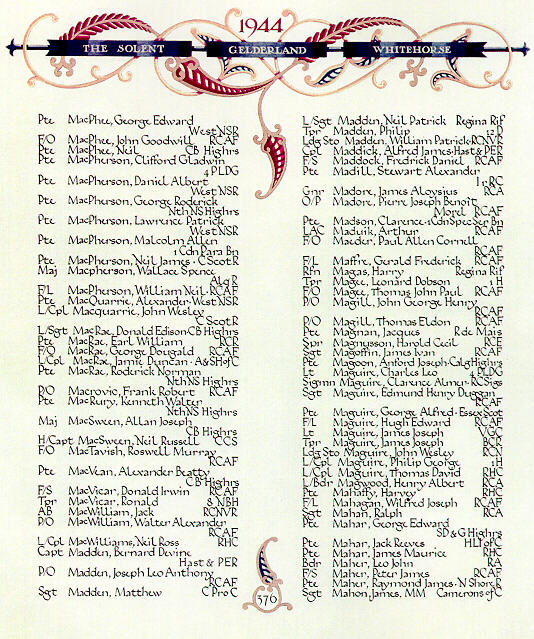
Page 376 du Livre du Souvenir de la Seconde Guerre mondiale.
Commander cette page
Télécharger cette page
CIMETIÈRE DE GUERRE CANADIEN DE BRETTEVILLE-SUR-LAIZE Calvados, France
Le cimetière se trouve du côté ouest de la route principale entre Caen et Falaise (N158) au nord du village de Cintheaux. Bretteville-sur-Laize, village et commune du Calvados, est à environ 16 km au sud de Caen. Le village de Bretteville est à 3 km au sud-ouest du cimetière. Les personnes inhumées ici sont mortes au cours des derniers assauts en Normandie, de la capture de Caen et de l'offensive vers le sud (menée d'abord par la 4e Division blindée canadienne et la 1re Division blindée polonaise) en vue de fermer la trouée de Falaise et d'encercler ainsi les divisions allemandes qui menaient une lutte désespérée pour éviter d'être coincées à l'ouest de la Seine. La plupart des unités du 2e Corps d'armée canadien sont représentées dans le cimetière. Environ 3000 victimes de la guerre de 1939-1945 sont commémorées ici.
Pour plus d’informations, visitez la Commission des sépultures de guerre du Commonwealth (site disponible en anglais seulement).
L’image du coquelicot est une marque déposée de la Légion royale canadienne (Direction nationale) et est utilisée avec sa permission. Cliquez ici pour en savoir plus sur le coquelicot.
Avons-nous oublié quelque chose ?
Contribuer à cette page commémorative
Avez-vous des photos, des informations ou une correction concernant la page commémorative de cet individu? Apprenez-en plus sur le MVGC et les informations que nous collectons.