
Profile image

Service militaire
Numéro de service :
R/78172
Âge :
20
Grade :
Sergent
Force :
Aviation militaire
Unité/Régiment :
Royal Canadian Air Force
Division :
#19 Operational Training Unit
Décès :
12 septembre 1941
Lieu de l’enterrement/commemoration
Référence funéraire :
Panel 60.
Informations Complémentaires
Fils de Elizabeth et William Batchen de Roulea (Saskatchewan). Son frère Sergeant Ronald Tait Batchen a servi dans le Royal Air Force Volunteer Reserve et il est décédé le 11 mai 1942 à l'âge de 21 ans.
Galerie numérique de Sergent Alexander George Batchen
-
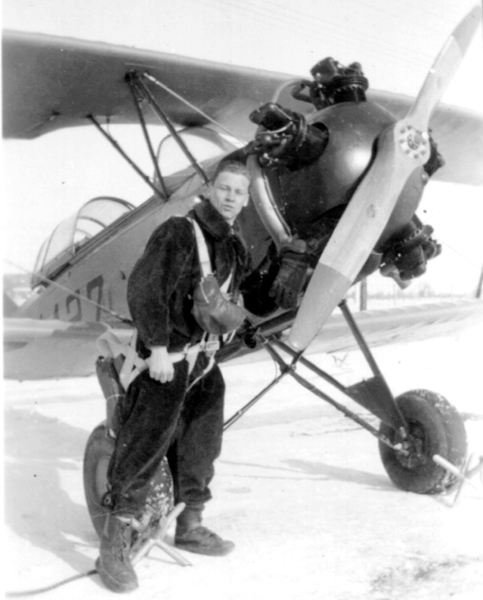
Photo of Alex Batchen
Alex Batchen en formation en Canada. Alex était le fils de William et Elizabeth Batchen de Roulea (Saskatchewan). Son frère Ronald est décédé au cours de son service au RAF. -
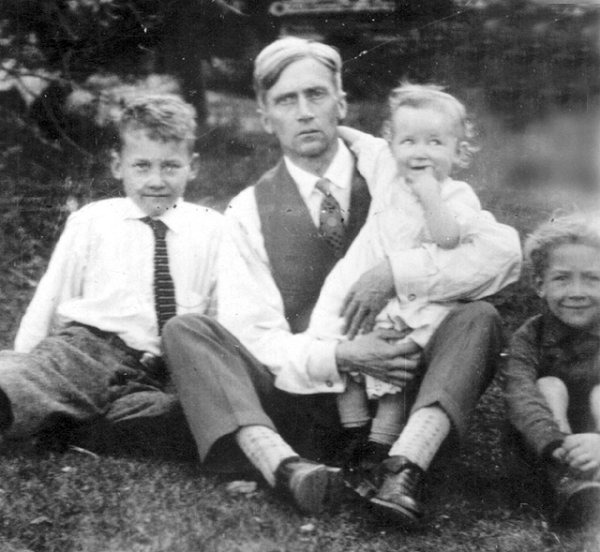
Family photo
Alexander George Batchen et Ronald Tait Batchen étaient des frères. Leur père William Batchen a quitté Peebles, en Écosse, et a épousé Elizabeth dans le district de Prince Albert, en Saskatchewan. Leur mère Elizabeth (née Bushman) était la soeur de ma mère (Patricia Pope, née Bushman). Ils ont déménagé à Rouleau, en Saskatchewan, où William Batchen a ouvert un cabinet d¿avocat. Ils ont eu trois enfants, les deux frères et une soeur, Frances, qui a fait une carrière de pianiste de concert à New York. Ils sont tous nés dans le district de Rouleau. William et Elizabeth sont décédés au début des années 30. La photo montre les trois enfants Batchen avec leur père. Alex est le frère aîné. -

Biography
-

Newspaper Clipping
-
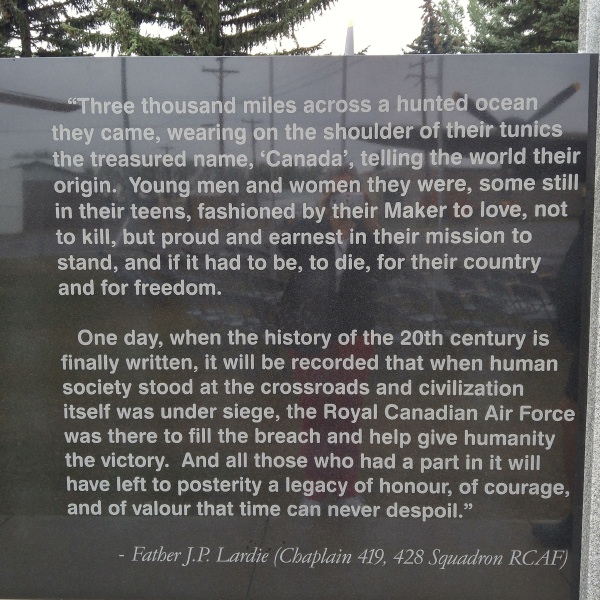
Memorial
-
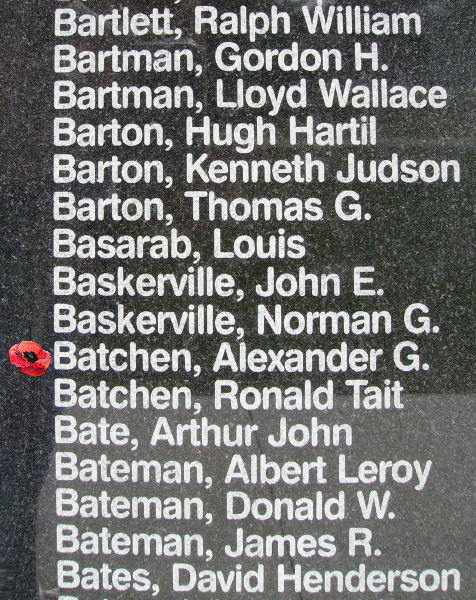
Memorial
-
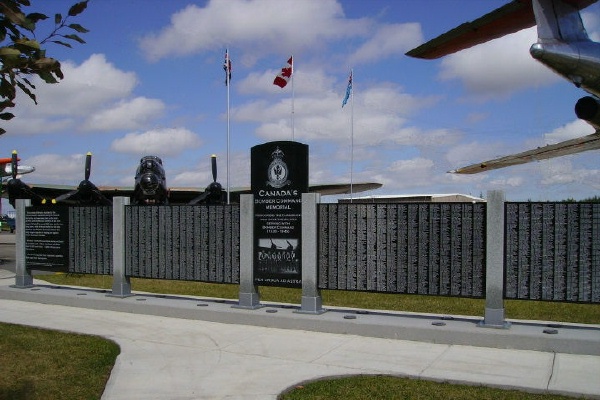
Memorial
-

Group Photo
-
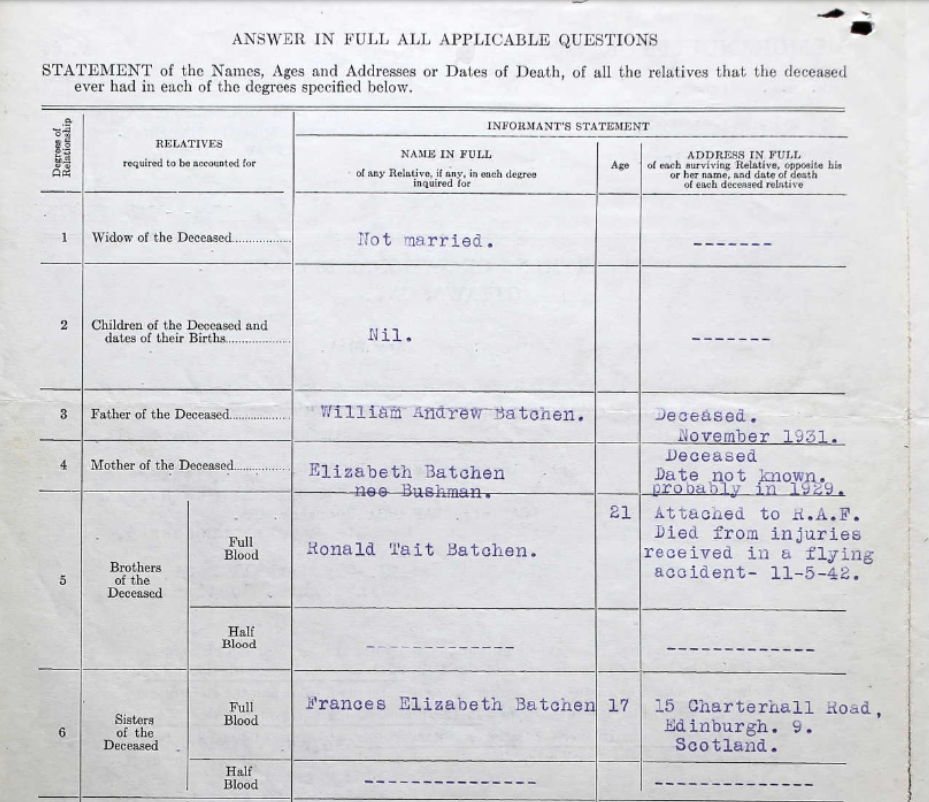
Document
-
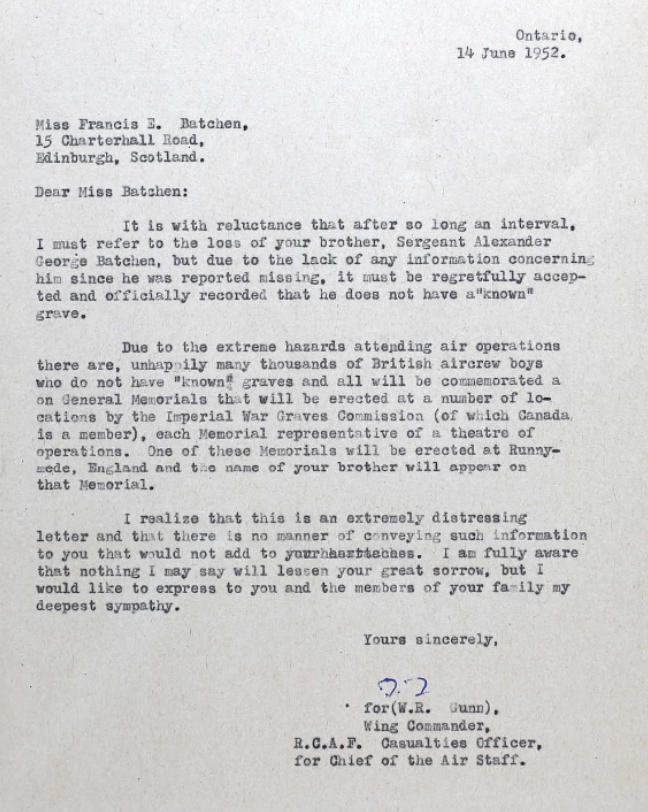
Letter
-
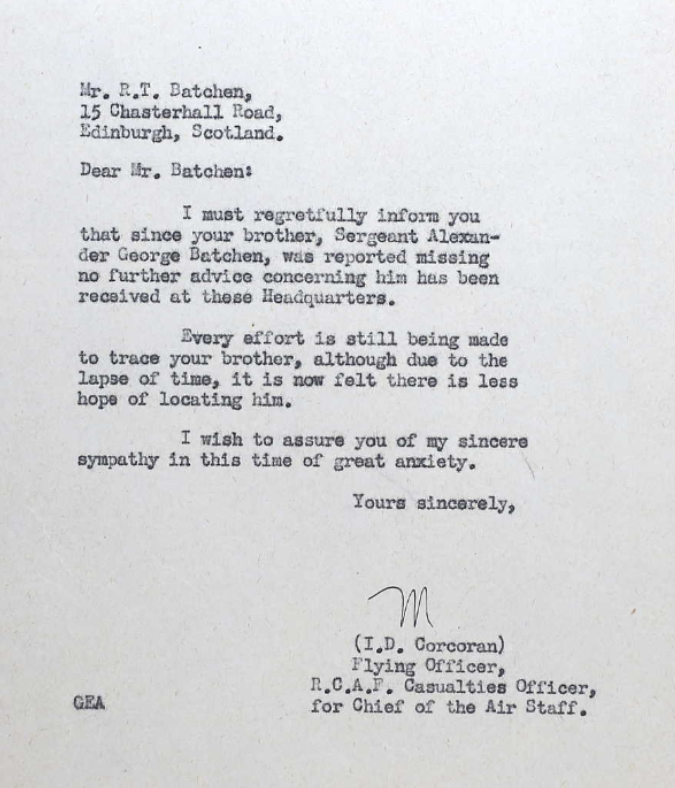
Letter
-
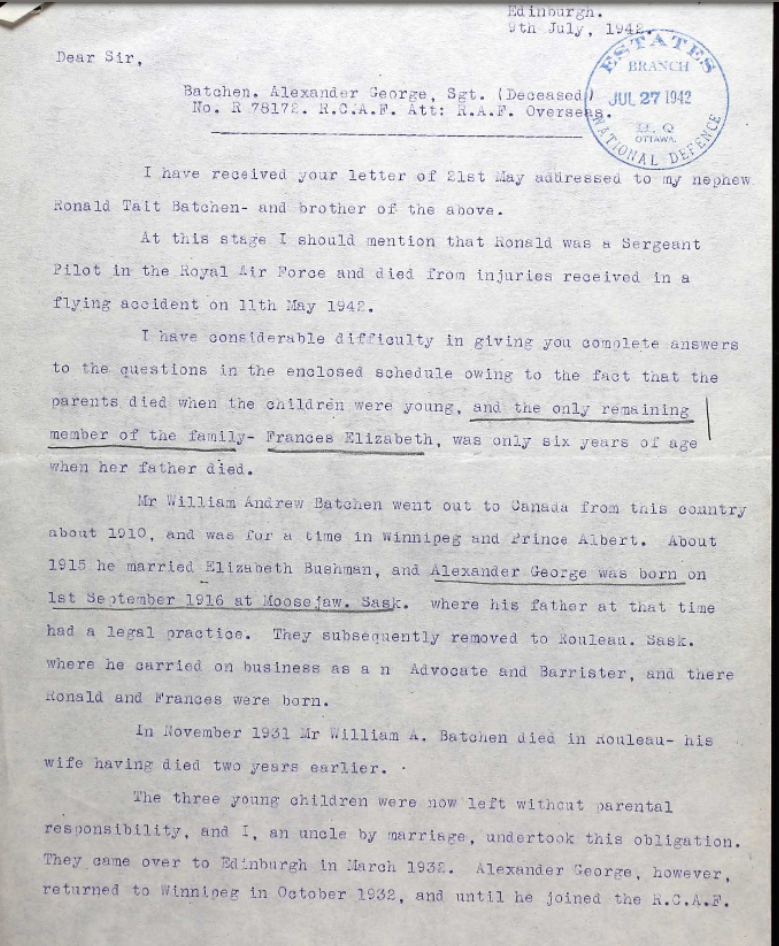
Letter
-
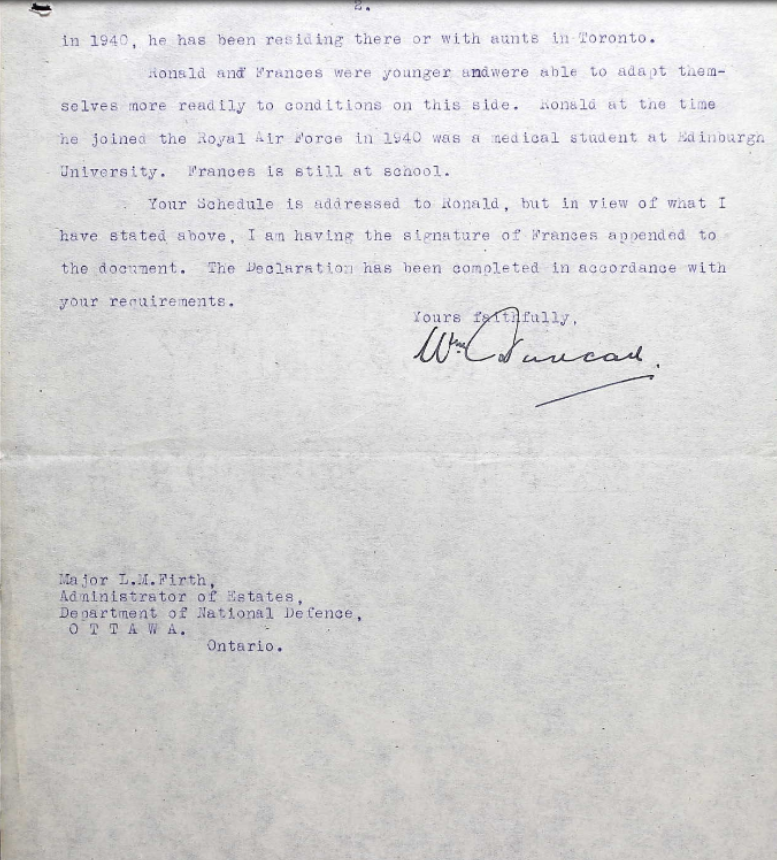
Letter
-
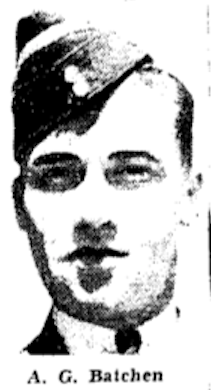
Newspaper clipping
De le Toronto Star, Mai 1941. Soumis pour le projet Opération Photo Moi -
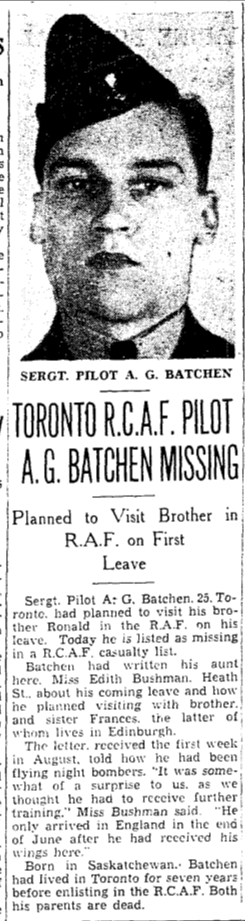
Newspaper clipping
De le Toronto Star, Septembre 1941. Soumis pour le projet Opération Photo Moi -
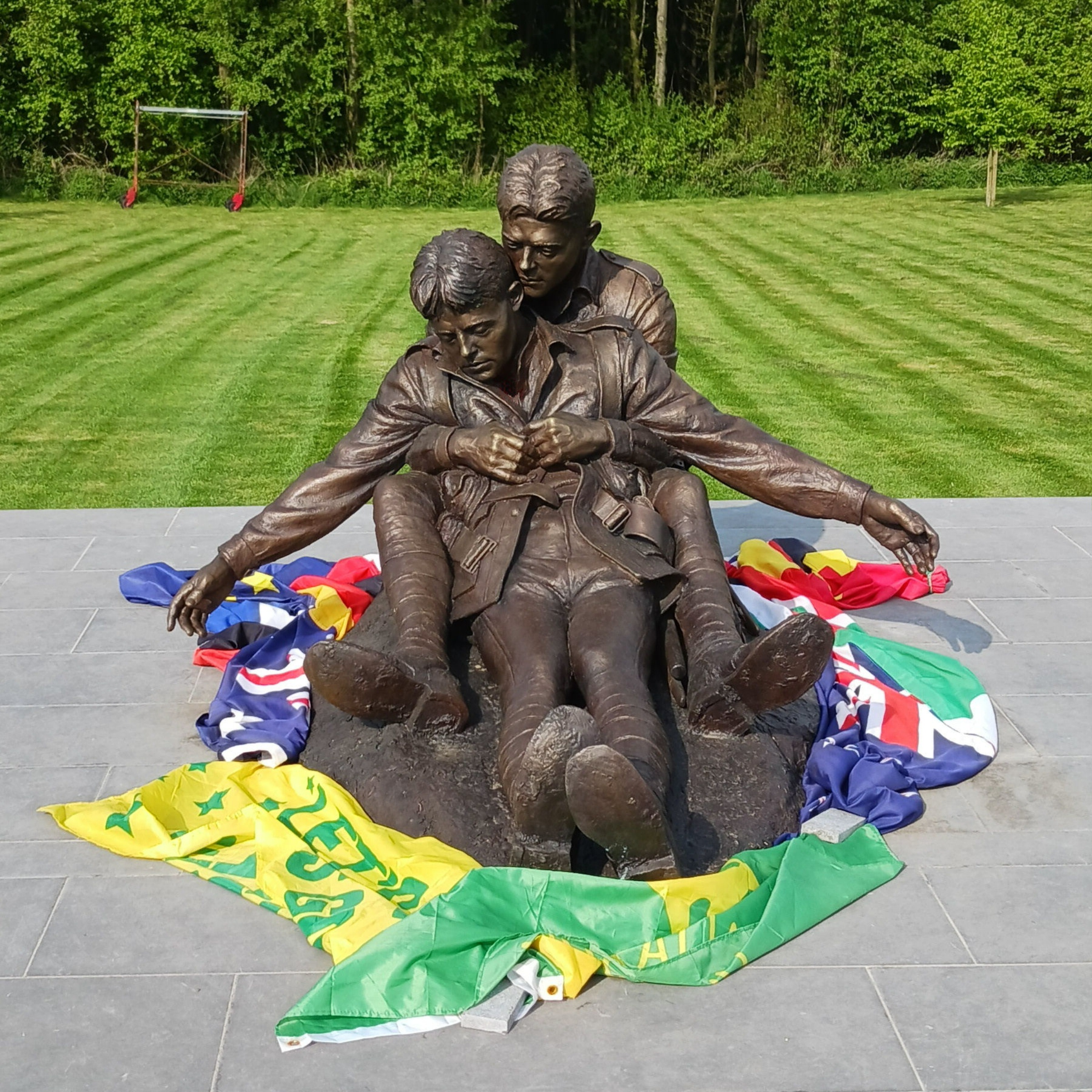
Memorial
Galerie numérique de
Sergent Alexander George Batchen
Galerie numérique de
Sergent Alexander George Batchen
Galerie numérique de
Sergent Alexander George Batchen
Galerie numérique de
Sergent Alexander George Batchen
Galerie numérique de
Sergent Alexander George Batchen
Galerie numérique de
Sergent Alexander George Batchen
Galerie numérique de
Sergent Alexander George Batchen
Galerie numérique de
Sergent Alexander George Batchen
Galerie numérique de
Sergent Alexander George Batchen
Dans les livres du souvenir
Inscription commémorative sur la :
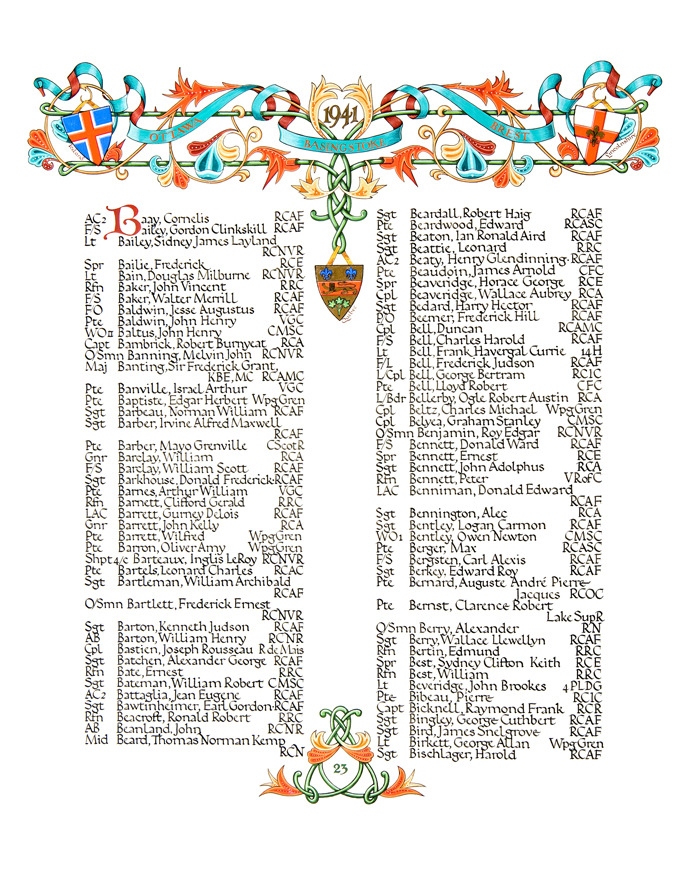
Page 23 du Livre du Souvenir de la Seconde Guerre mondiale.
Commander cette page
Télécharger cette page
L’image du coquelicot est une marque déposée de la Légion royale canadienne (Direction nationale) et est utilisée avec sa permission. Cliquez ici pour en savoir plus sur le coquelicot.
Avons-nous oublié quelque chose ?
Contribuer à cette page commémorative
Avez-vous des photos, des informations ou une correction concernant la page commémorative de cet individu? Apprenez-en plus sur le MVGC et les informations que nous collectons.