
Profile image
Service militaire
Numéro de service :
1001066
Grade :
Soldat
Force :
Armée
Unité/Régiment :
Canadian Infantry (Manitoba Regiment)
Division :
16th Bn.
Décès :
6 novembre 1917
Lieu de l’enterrement/commemoration
Référence funéraire :
Panel 24 - 26 - 28 - 30
Galerie numérique de Soldat George Alexandre Jeannotte
-
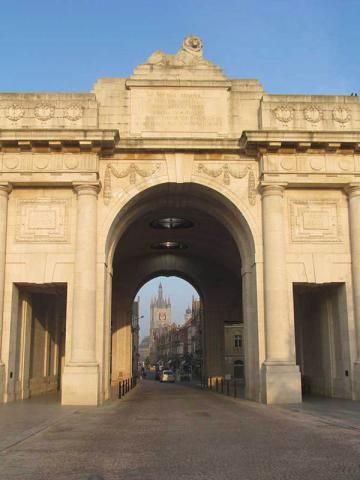
George Alexander Jeannotte Mémorial de La Porte de Menin (Ypres)
-
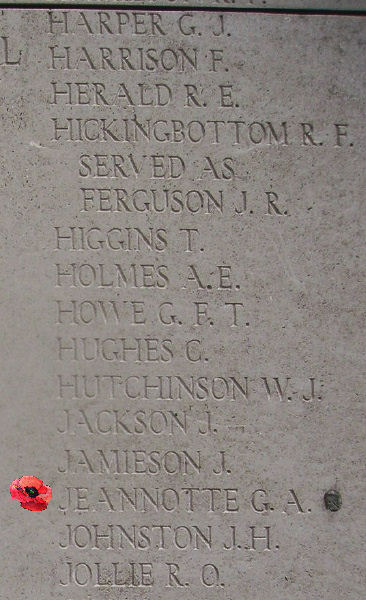
Memorial
-
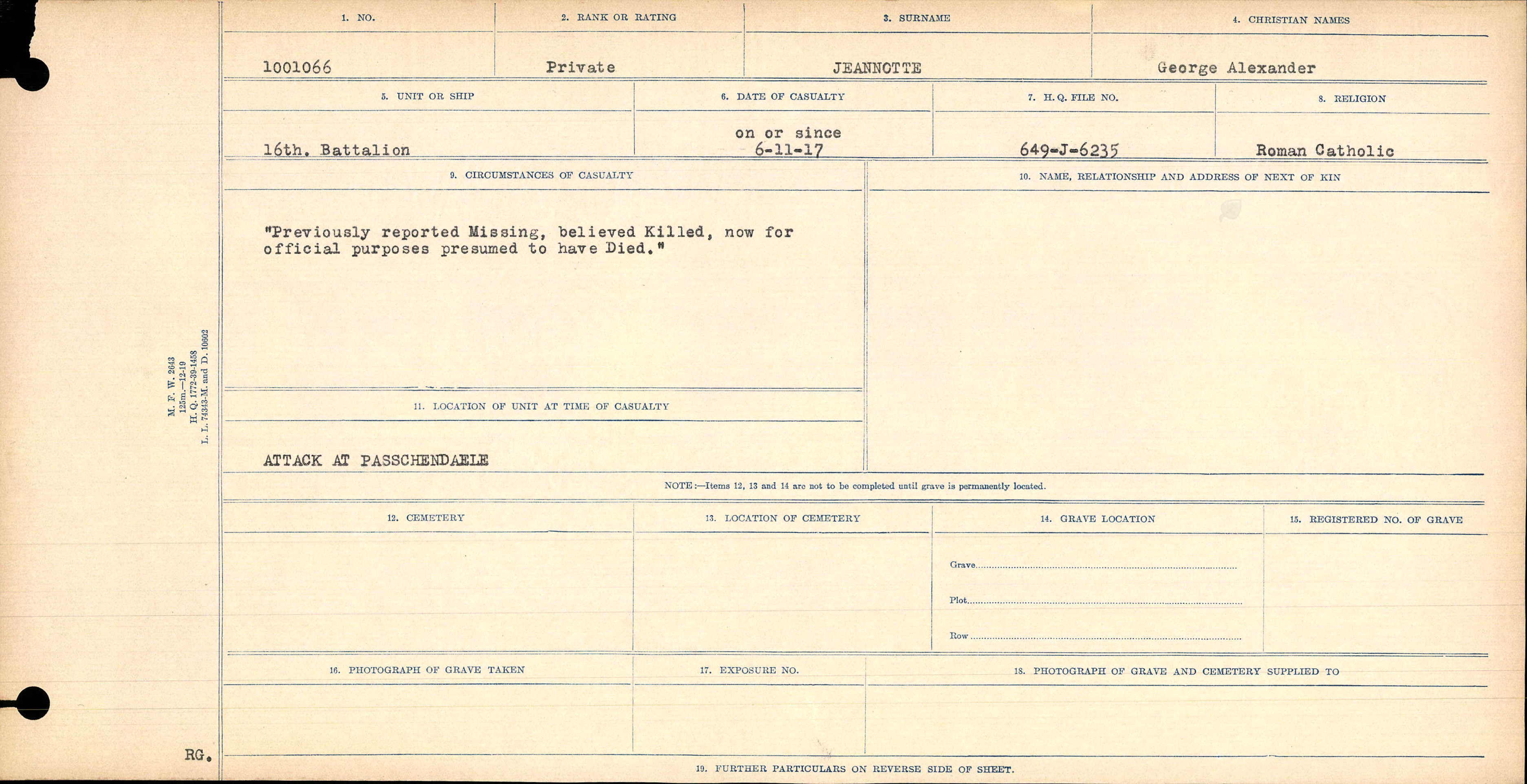
Circumstances of death registers
Le registre de circonstances du décès du Soldat Jeannotte souligne qu'il était auparavant porté disparu avant qu'on suppose qu'il soit décédé pour des raisons officiels. Le document note que la disparition a eu lieu lors de l'offensive à Passchendaele, la bataille majeur de ce temps-là. Le soldat Jeannotte travaillait dans une équipe de construction lorsqu'il fut tué par un bombardement ennemi, et non dans les trenchées de la ligne du front. -
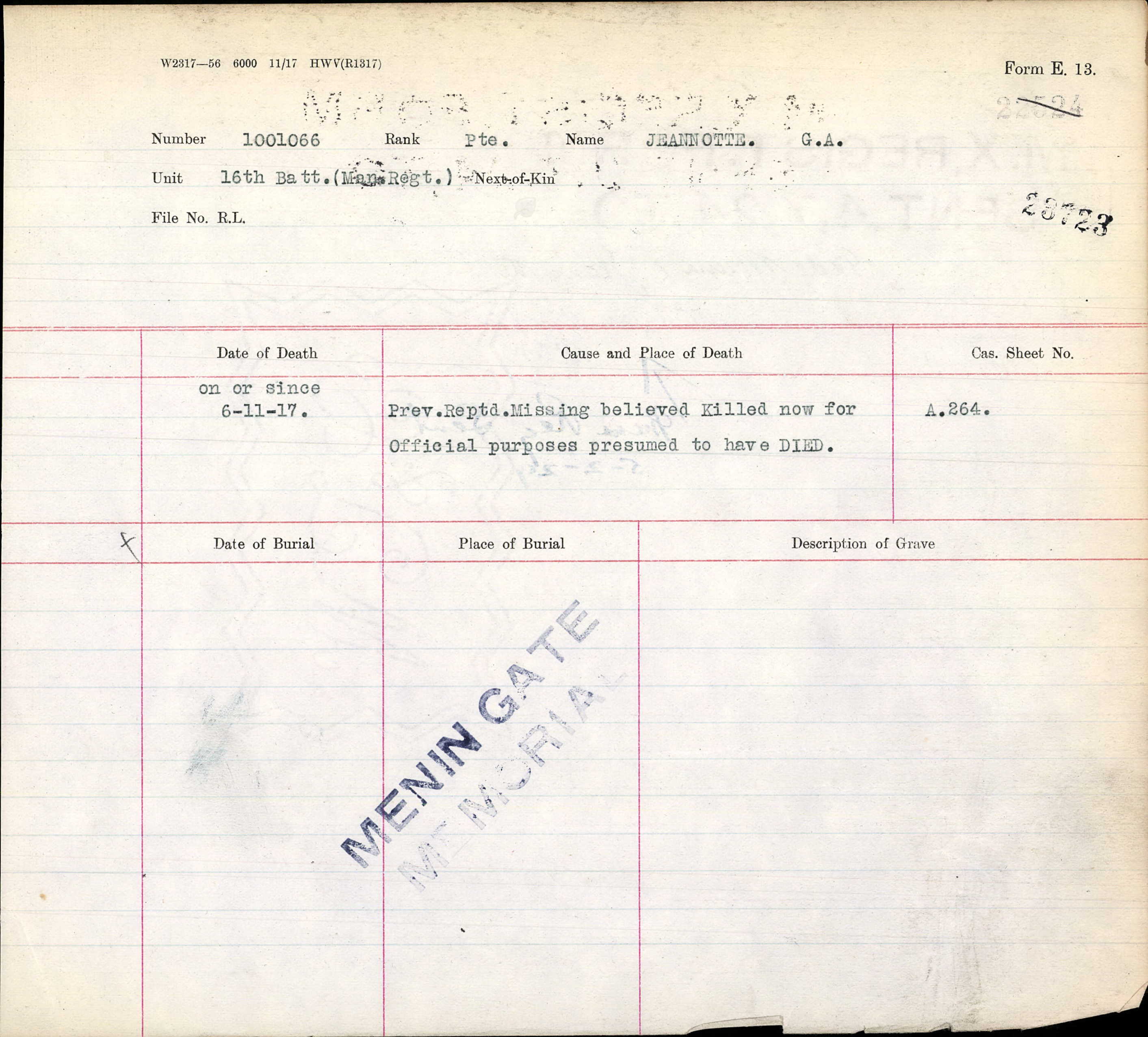
Circumstances of death registers
Le corps du Soldat Jeanotte n'a pas été retrouvé quand il est décédé, et par conséquent son nom a été gravé sur la Porte de Ménin, un monument pour les soldats disparus. Un rapport a été soumis au Commonwealth War Graves Commission dans le but d'enlever son nom du monument et de remplacer la pierre tombale situé au Cimetière Track 'X' (tombe A.4), où son corps est enterré actuellement. -
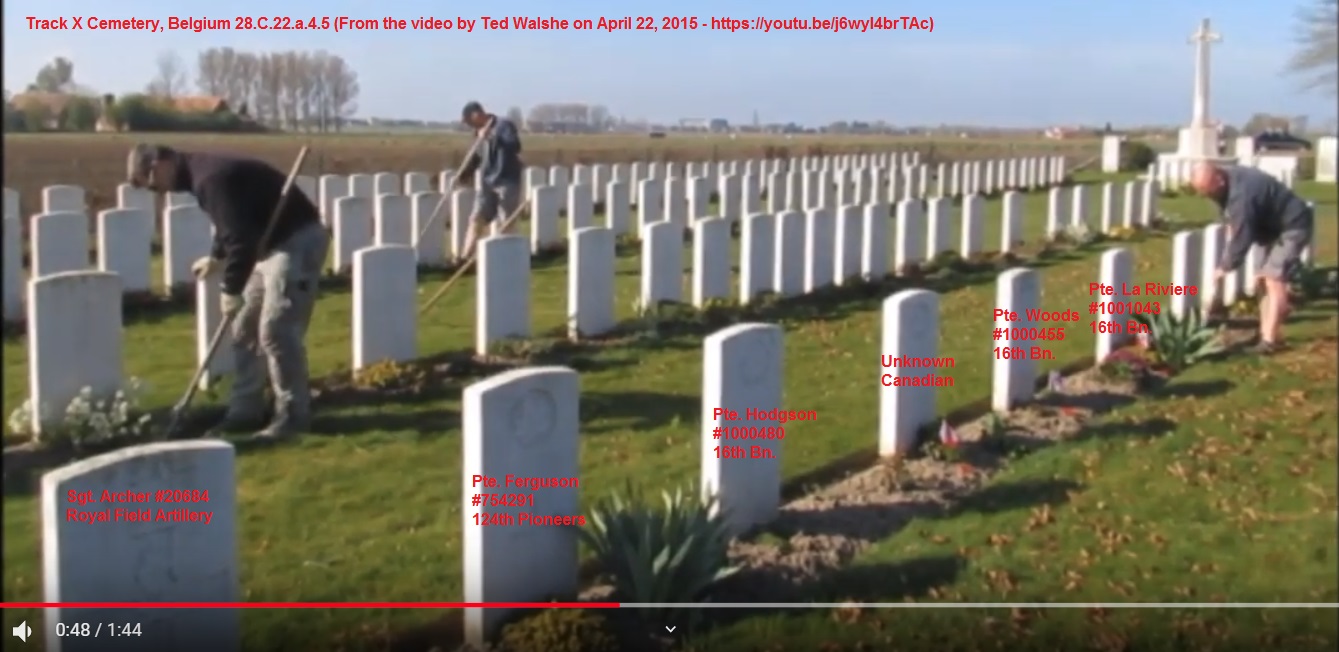
Grave marker
Une photo des tombes du rang 'A' au Cimetière Track 'X'. La pierre tombale marqué 'Canadian Inconnu' est la tombe de Soldat Jeanotte du 16th Infantry Battalion -
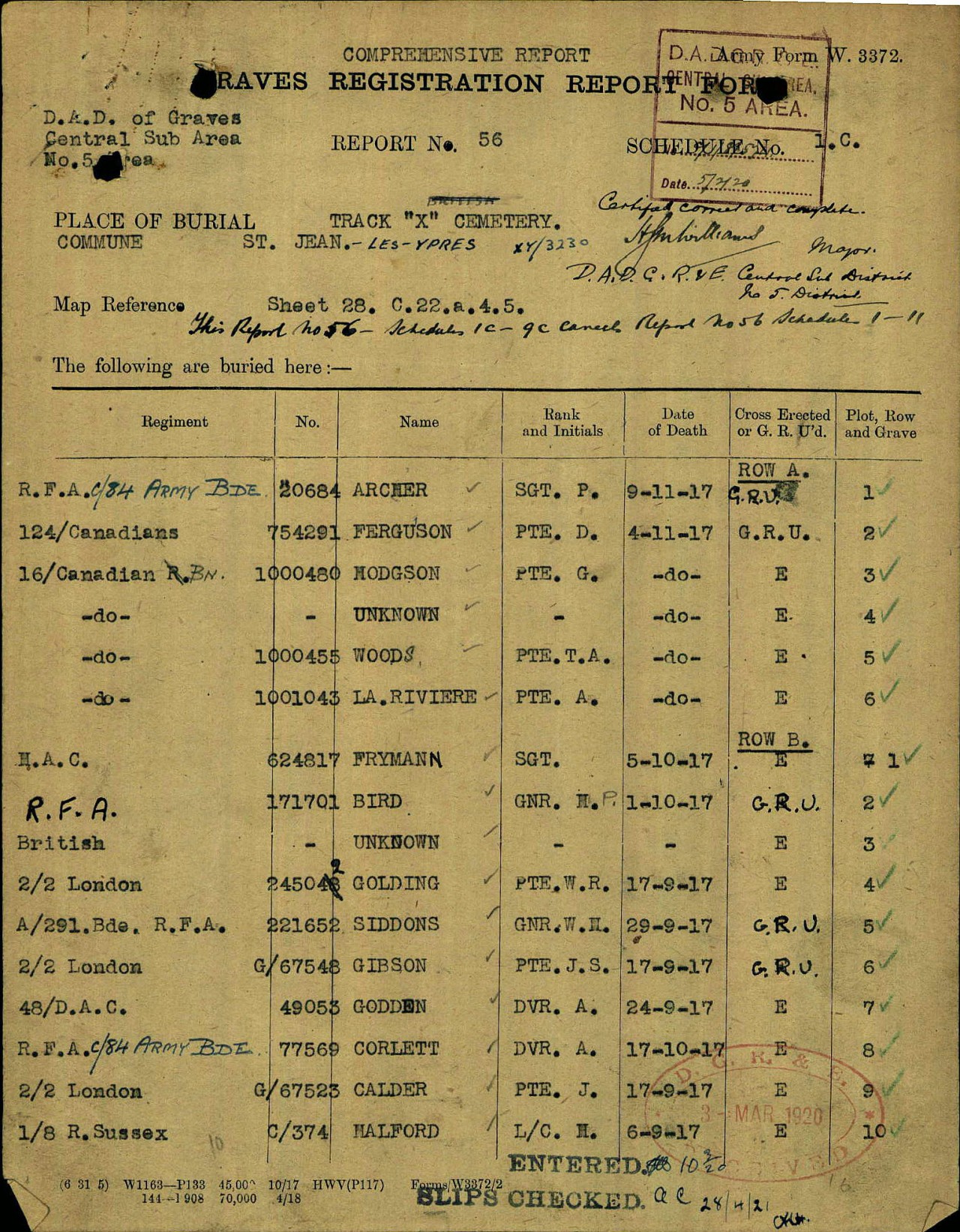
Graves registration form
Le rapport d'enregistrement des tombes 1832748 fait mention d'un soldat inconnu du 16e bataillon, mort le 4 novembre 1917, ainsi que 4 autres hommes de la même unité. 4 hommes du bataillon sont morts ce jour-là, donc on peut conclure que le quatrième homme était le soldat George Alexander Jeannotte. Une cinquième homme, le soldat Omey Ferguson #754291, du 124th Pioneer Battalion, est aussi mort cette journée-là, en travaillant sur le même projet. -
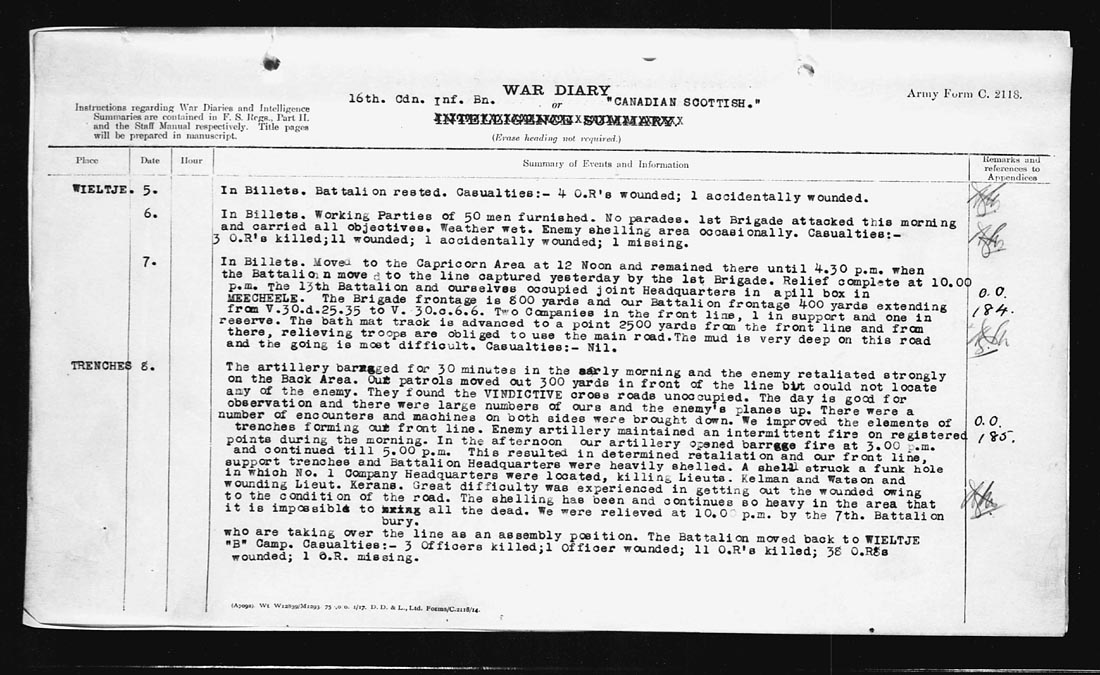
Wartime diary
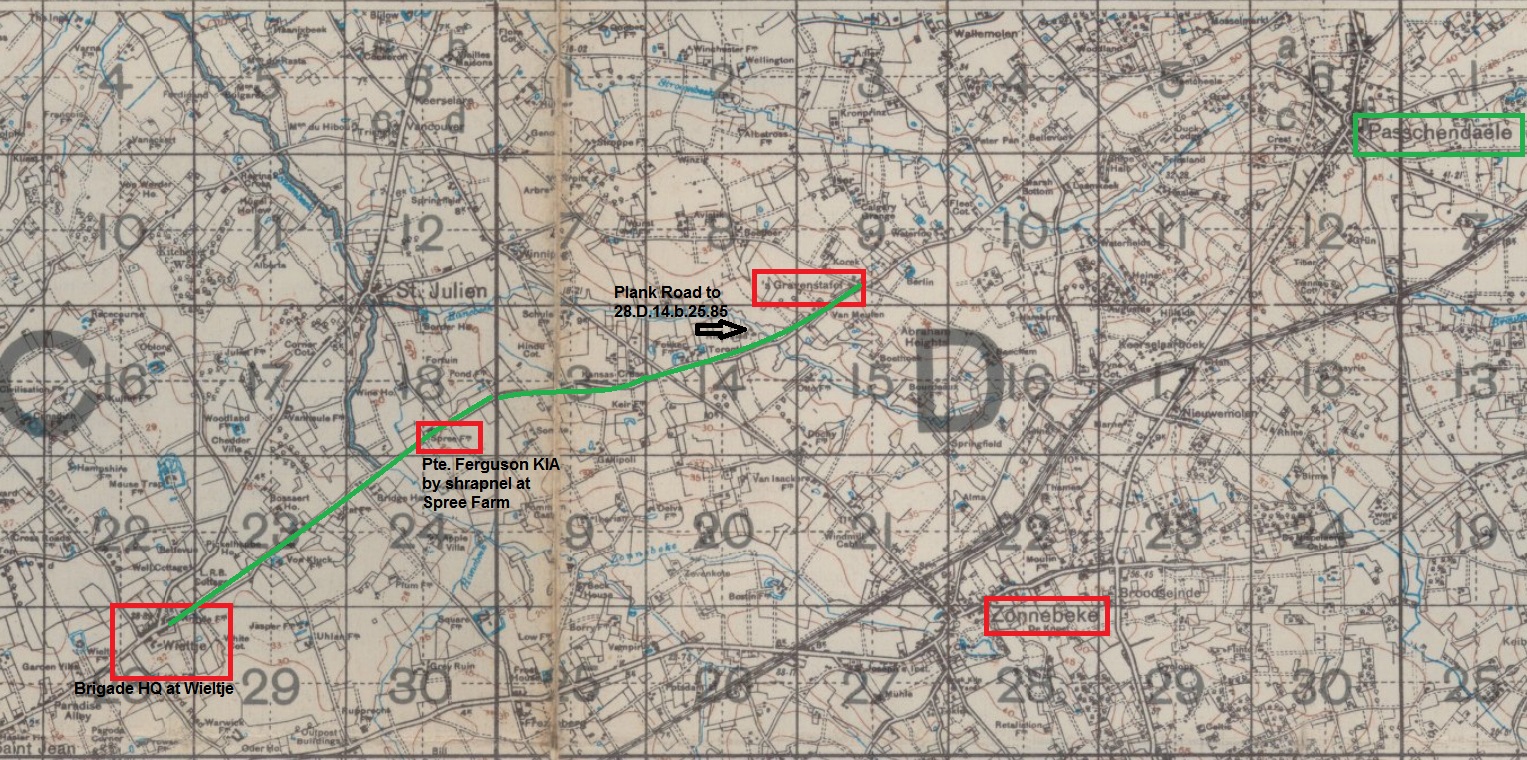
Le journal de guerre de 16th Infantry Battalion fait mention de trois hommes du bataillon qui sont morts le 6 novembre 1917 tandis qu'il travaillaient dans un groupe de travail. Il y a également un homme porté disparu, cet homme étant le soldat Jeanotte. Ils travaillaient à l'est de Wieltje, en Belgique (section 28.C.28.b sur la carte des trenchées), sur la route qui menait vers Passchendaele quand ils furent tués près de Spree Farm -
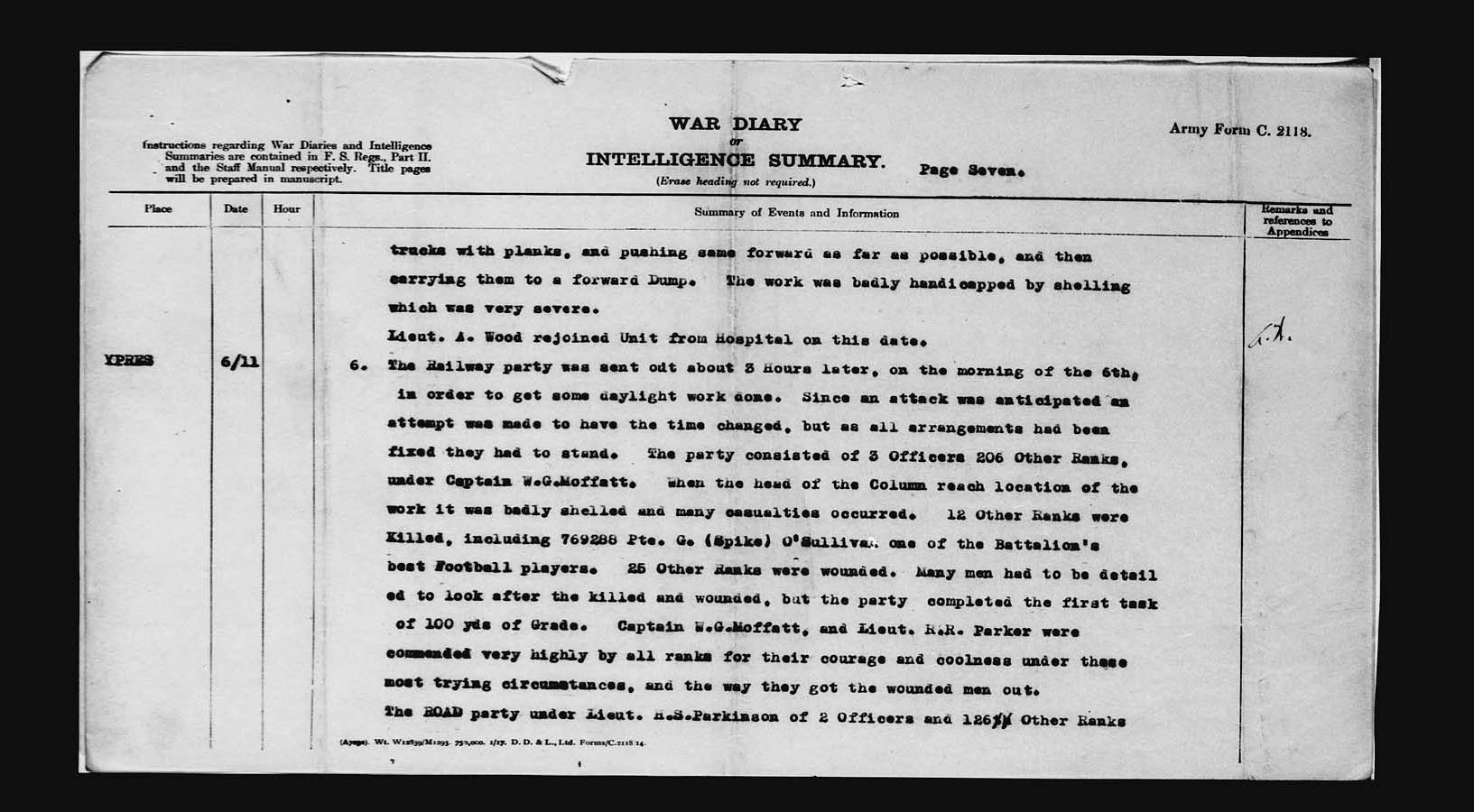
Wartime diary
Journal de guerre du 124th Pioneer Battalion, qui travaillait avec le 16th Battalion sur la route, raconte le bombardement qui a eu lieu, faisant de nombreuses victimes. Une de ces victimes était le soldat Ferguson, enterré près du Soldat Jeanotte -
Map
Un extrait de la carte des trenchée de la collection de l'Université McMaster. La carte indique l'endroit où les soldats travaillaient sur le Chemin Plank (coordonnées: 28.D.14.b.25.85), entre Spree Farm et Gravenstafel. On peut aussi retrouver les villages de Wieltje, Zonnebeke et Passchendaele.
Galerie numérique de
Soldat George Alexandre Jeannotte
Galerie numérique de
Soldat George Alexandre Jeannotte
Galerie numérique de
Soldat George Alexandre Jeannotte
Galerie numérique de
Soldat George Alexandre Jeannotte
Galerie numérique de
Soldat George Alexandre Jeannotte
Galerie numérique de
Soldat George Alexandre Jeannotte
Galerie numérique de
Soldat George Alexandre Jeannotte
Galerie numérique de
Soldat George Alexandre Jeannotte
Dans les livres du souvenir
Inscription commémorative sur la :
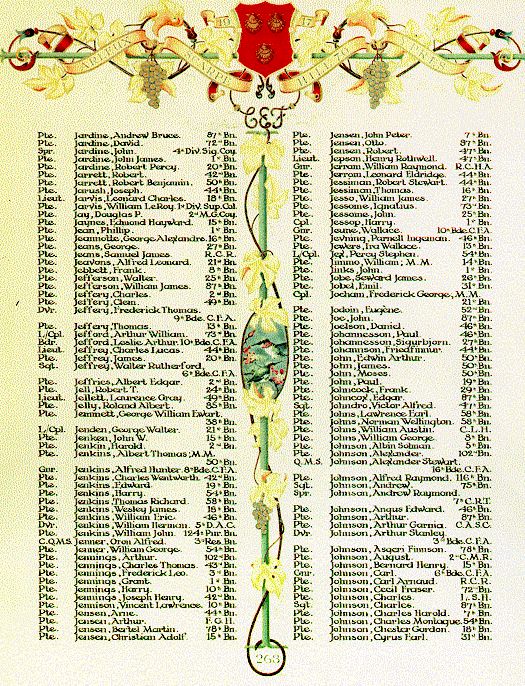
Page 263 du Livre du Souvenir de la Première Guerre mondiale.
Commander cette page
Télécharger cette page
L’image du coquelicot est une marque déposée de la Légion royale canadienne (Direction nationale) et est utilisée avec sa permission. Cliquez ici pour en savoir plus sur le coquelicot.
Avons-nous oublié quelque chose ?
Contribuer à cette page commémorative
Avez-vous des photos, des informations ou une correction concernant la page commémorative de cet individu? Apprenez-en plus sur le MVGC et les informations que nous collectons.