Service militaire
Lieu de l’enterrement/commemoration
Fils de Thomas H. Kelly.
Galerie numérique de Soldat Thomas Kelly
- Onglets 1
- Onglets 2
- Onglets 3
- Onglets 4
- Onglets 5
- Onglets 6
- Onglets 7
- Onglets 8
- Onglets 9
- Onglets 10
- Onglets 11
- Onglets 12
- Onglets 13
- Onglets 14
Galerie numérique de
Soldat Thomas Kelly
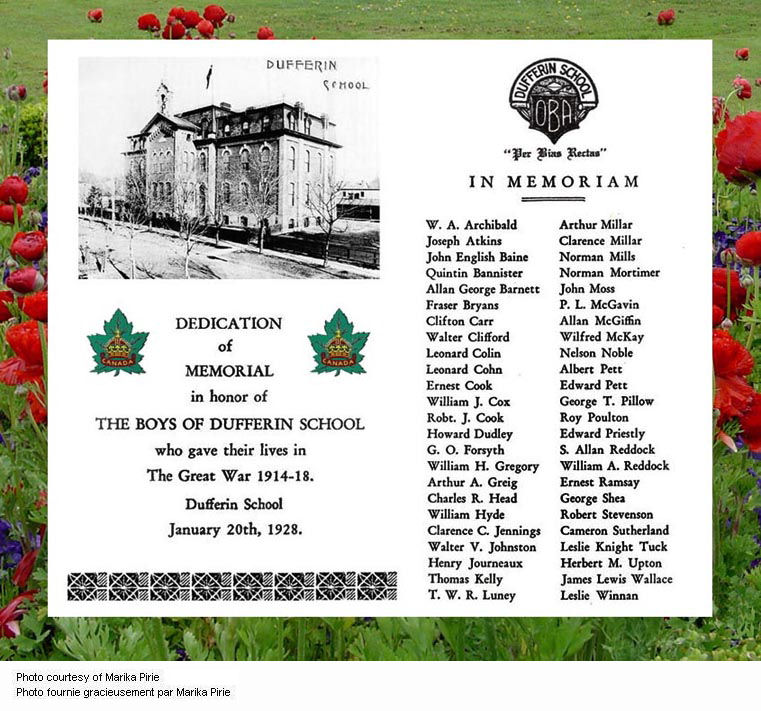
Dufferin School, Toronto, Ontario. A memorial plaque listing 48 former students who died during the first World War was dedicated at Dufferin School on January 20th, 1928. The memorial was unveiled by Thomas J. Bragg, President Dufferin School Old Boys, and dedicated by Rev. E. A. Henry, D.D., Chaplain Dufferin School Old Boys. The original 1876 school building faced Berkeley Street. It was torn down in 1925 and replaced with a structure on Parliament Street, and renamed as Lord Dufferin School. In honoured memory of the boys of Dufferin School.
Galerie numérique de
Soldat Thomas Kelly
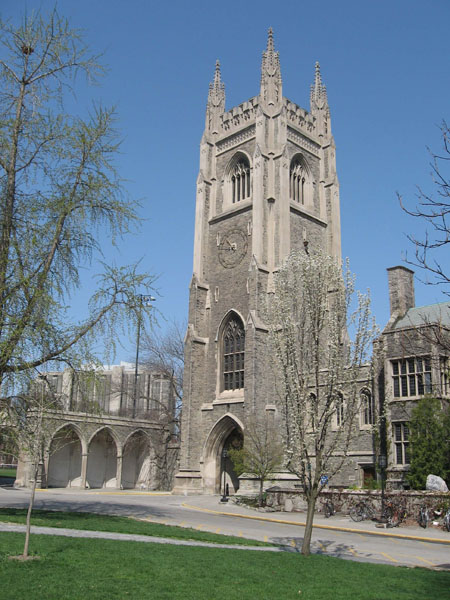
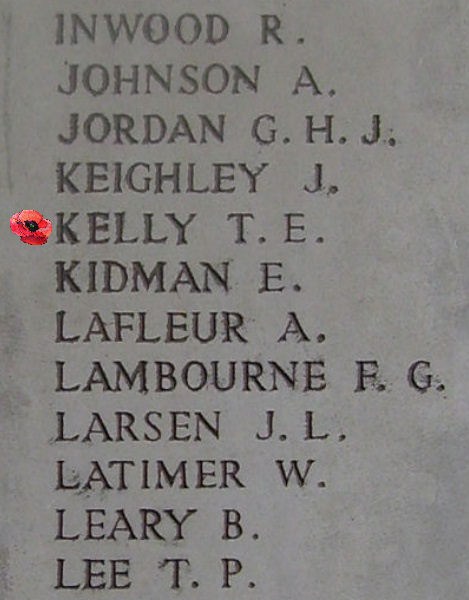
The Soldiers' Tower was built at University of Toronto between 1919-1924 in memory of those lost to the University in the Great War. Funds were raised by the Alumni Federation, now called the University of Toronto Alumni Association. The name of "Pte T. E. KELLY 4th Bn" is among the 628 names carved on the Memorial Screen, seen at photo left. Photo: K. Parks, Alumni Relations.
Galerie numérique de
Soldat Thomas Kelly
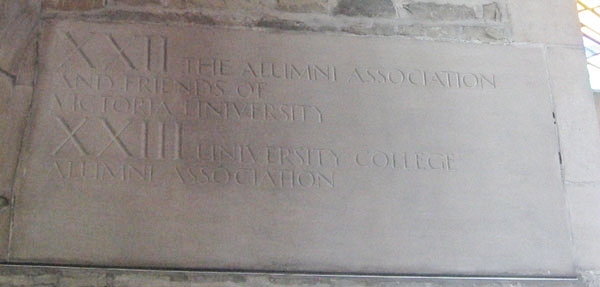
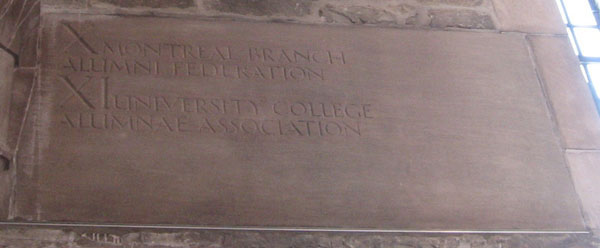
Inscription in Memorial Room, Soldiers' Tower. The carillon was installed and dedicated in 1927. Originally there were 23 bells. Alumni and friends donated funds for specific bells in memory of those who fell in the Great War. Dedications are carved high on the walls of the Memorial Room, and several of the dedications pertain to University College. Here we see the dedication for bell XXIII: "University College Alumni Assocation."
Galerie numérique de
Soldat Thomas Kelly
Inscription in Memorial Room, Soldiers' Tower. The carillon was installed and dedicated in 1927. Originally there were 23 bells. Alumni and friends donated funds for specific bells in memory of those who fell in the Great War. Dedications are carved high on the walls of the Memorial Room, and several of the dedications pertain to University College. Here we see the dedication for bell XI: "University College Alumnae Assocation."
Galerie d'images
-
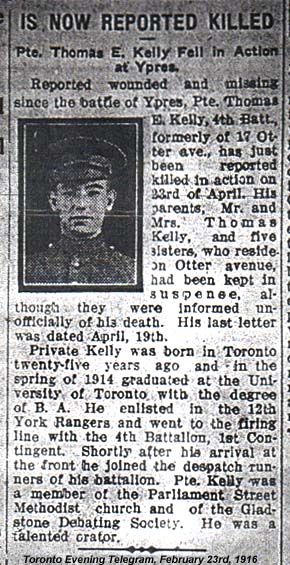
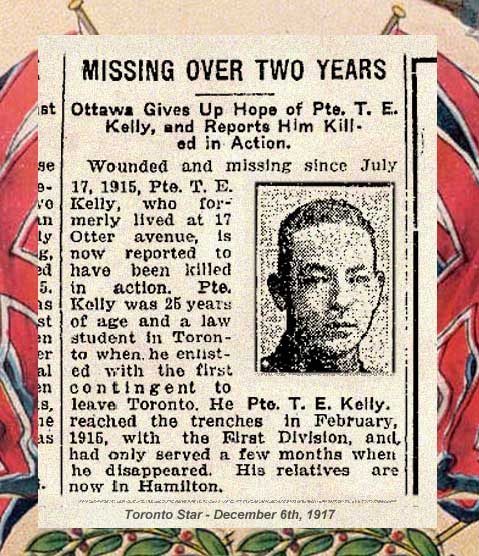
From the Toronto Star. Submitted for the project, Operation: Picture Me
-
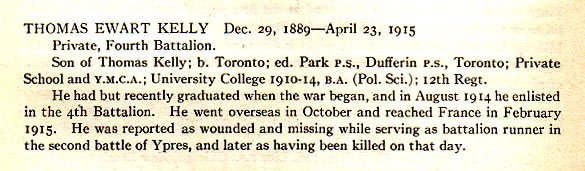
From the "University of Toronto / Roll of Service 1914-1918", published in 1921.
-
-
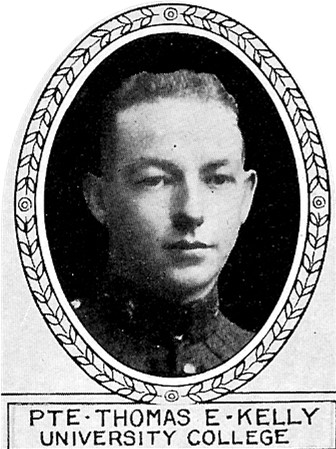
From: The Varsity Magazine Supplement published by The Students Administrative Council, University of Toronto 1916. Submitted for the Soldiers' Tower Committee, University of Toronto, by Operation Picture Me.
-
From: The Varsity Magazine Supplement Fourth Edition 1918 published by The Students Administrative Council, University of Toronto. Submitted for the Soldiers' Tower Committee, University of Toronto, by Operation Picture Me.
-
Dufferin School, Toronto, Ontario. A memorial plaque listing 48 former students who died during the first World War was dedicated at Dufferin School on January 20th, 1928. The memorial was unveiled by Thomas J. Bragg, President Dufferin School Old Boys, and dedicated by Rev. E. A. Henry, D.D., Chaplain Dufferin School Old Boys. The original 1876 school building faced Berkeley Street. It was torn down in 1925 and replaced with a structure on Parliament Street, and renamed as Lord Dufferin School. In honoured memory of the boys of Dufferin School.
-
In honoured memory.
-
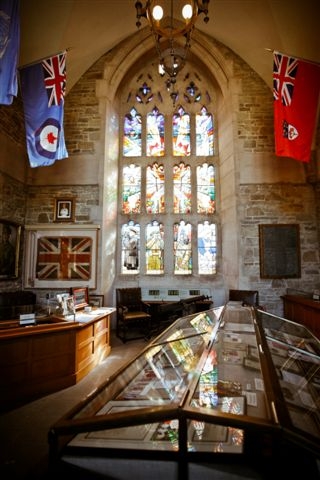
Memorial Room, Soldiers' Tower, University of Toronto. Photo by David Pike, 2010; courtesy of Alumni Relations.
-
The Soldiers' Tower was built at University of Toronto between 1919-1924 in memory of those lost to the University in the Great War. Funds were raised by the Alumni Federation, now called the University of Toronto Alumni Association. The name of "Pte T. E. KELLY 4th Bn" is among the 628 names carved on the Memorial Screen, seen at photo left. Photo: K. Parks, Alumni Relations.
-
Inscription in Memorial Room, Soldiers' Tower. The carillon was installed and dedicated in 1927. Originally there were 23 bells. Alumni and friends donated funds for specific bells in memory of those who fell in the Great War. Dedications are carved high on the walls of the Memorial Room, and several of the dedications pertain to University College. Here we see the dedication for bell XXIII: "University College Alumni Assocation."
-
Inscription in Memorial Room, Soldiers' Tower. The carillon was installed and dedicated in 1927. Originally there were 23 bells. Alumni and friends donated funds for specific bells in memory of those who fell in the Great War. Dedications are carved high on the walls of the Memorial Room, and several of the dedications pertain to University College. Here we see the dedication for bell XI: "University College Alumnae Assocation."
-
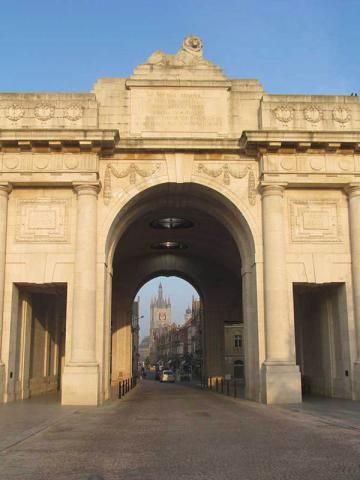
Inscription on the Menin Gate … photo courtesy of Marg Liessens
-
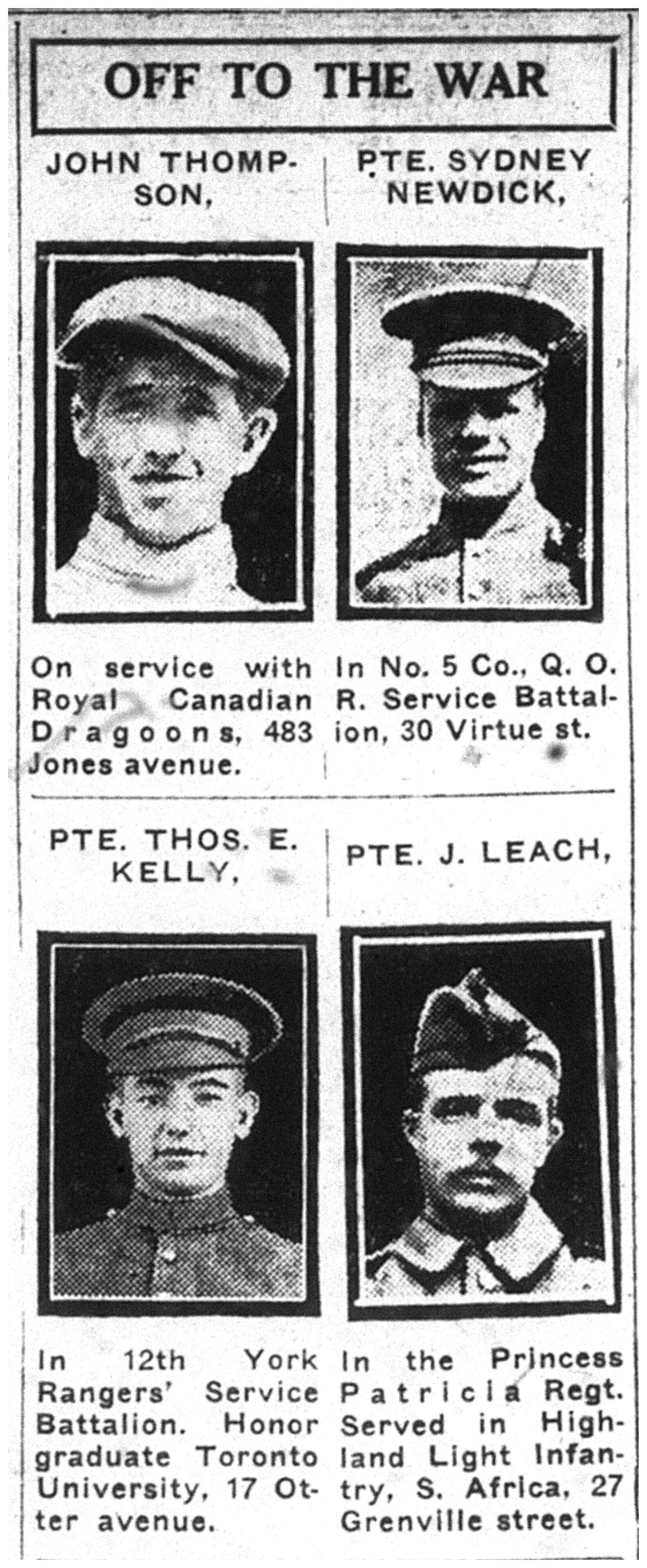
From the Toronto Telegram June 1915. Submitted for the project Operation Picture Me
-
From the Toronto Telegram September 1914. Submitted for the project Operation Picture Me
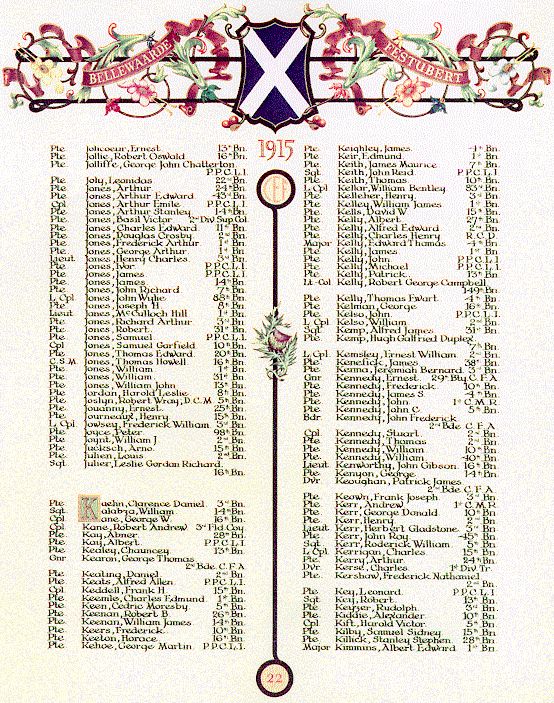
Dans les livres du souvenir
Inscription commémorative sur la :
Page 22 du Livre du Souvenir de la Première Guerre mondiale.
Commander cette page
Télécharger cette page
MÉMORIAL DE LA PORTE DE MENIN (YPRES) Belgique
Le Mémorial de la Porte de Menin (Ypres) est situé dans la partie est de la ville de Ypres (maintenant Ieper) dans la province de la Flandre-Occidentale, sur la route de Menin et de Courtrai. Il porte les noms de 55 000 hommes disparus sans laisser de traces lors de la défense du saillant d'Ypres durant la Première Guerre mondiale.
Dessiné par Sir Reginald Blomfield et érigé par la Commission des sépultures de guerre de l'Empire (maintenant du Commonwealth), ce Mémorial comprend une salle du Souvenir " longue de 36,6 mètres et large de 20,1 mètres. Au centre se trouve un large escalier conduisant aux remparts qui surplombent les douves et les loggias sur colonnes qui entourent le monument. Sur les murs intérieurs de la salle, du côté de l'escalier, ainsi que sur les murs des loggias, les noms des morts sont inscrits par régiments et par corps sur des panneaux en pierre de Portland.
Au-dessus de l'arche centrale on peut lire en anglais une inscription dont voici la traduction:
AUX ARMÉES DE L'EMPIRE BRITANNIQUE QUI COMBATTIRENT ICI DE 1914 À 1918 ET À LEURS MORTS DONT LA TOMBE EST INCONNUE.
Et, au-dessus de l'escalier qui conduit à la salle principale, on peut lire en anglais une inscription dont voici la traduction :
À LA PLUS GRANDE GLOIRE DE DIEU ICI SONT INSCRITS LES NOMS DES SOLDATS QUI SONT TOMBÉS DANS LE SAILLANT D'YPRES, MAIS QUE LES HASARDS DE LA GUERRE ONT EMPÊCHÉS D'AVOIR UNE IDENTITÉ ET UNE SÉPULTURE HONORABLE COMME LEURS CAMARADES DANS LA MORT.
Chaque jour à 20 h, une cérémonie toute simple rappelle encore aujourd'hui le souvenir des morts. Alors que la circulation est arrêtée à la barrière, deux clairons (quatre dans les grandes occasions) sonnent l'appel aux morts. Les deux trompettes d'argent utilisées durant la cérémonie ont été données au Comité de l'appel aux morts par un officier de l'Artillerie royale canadienne, qui servait dans la 10e batterie de St. Catharines (Ontario), à Ypres, en avril 1915."
Pour plus d’informations, visitez la Commission des sépultures de guerre du Commonwealth (site disponible en anglais seulement).
L’image du coquelicot est une marque déposée de la Légion royale canadienne (Direction nationale) et est utilisée avec sa permission. Cliquez ici pour en savoir plus sur le coquelicot.
Avons-nous oublié quelque chose ?
Contribuer à cette page commémorative
Avez-vous des photos, des informations ou une correction concernant la page commémorative de cet individu? Apprenez-en plus sur le MVGC et les informations que nous collectons.