Service militaire
Lieu de l’enterrement/commemoration
Fils de Philip et Alexetra Sodero, de Sydney, Nouvelle-Écosse, Canada.
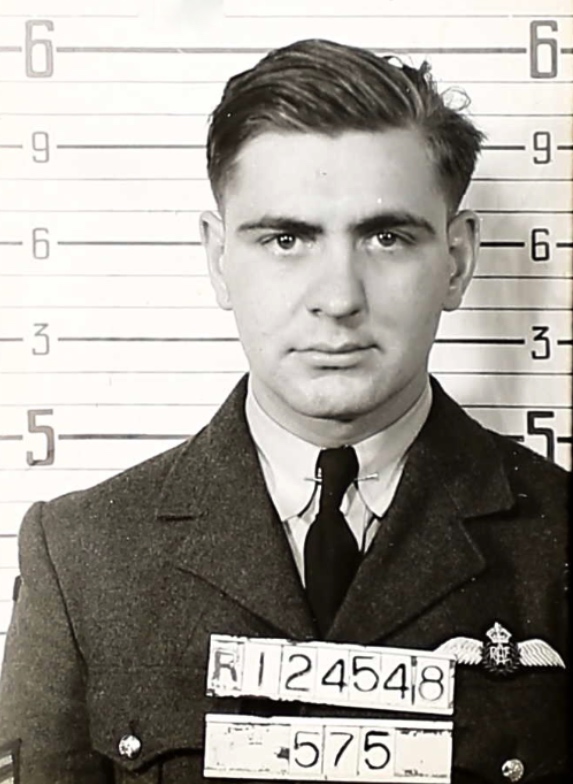
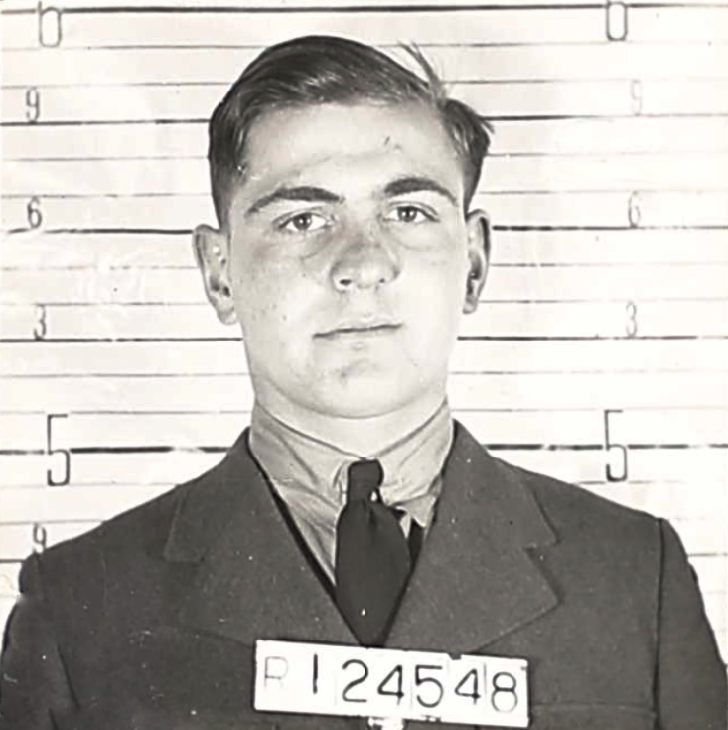
Galerie numérique de Flight Sergeant Alexander Theodore Sodero
- Onglets 1
- Onglets 2
- Onglets 3
- Onglets 4
- Onglets 5
- Onglets 6
- Onglets 7
- Onglets 8
- Onglets 9
- Onglets 10
Galerie numérique de
Flight Sergeant Alexander Theodore Sodero
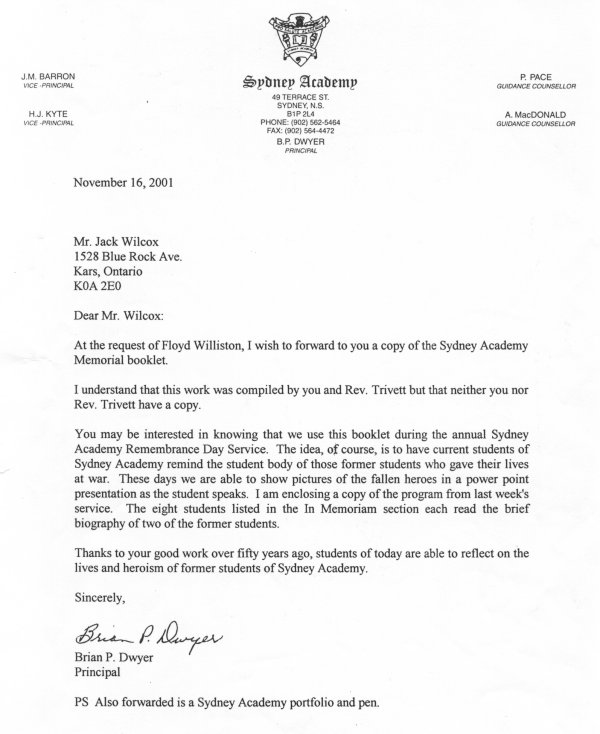
From the Sydney Academy Memorial booklet, published by the Student's Assembly in memory of former students who served during the Second World War. The original pictures were supplied by the Sydney Post-Record and the booklet was compiled by Jack Wilcox, class of 1946 and Donald Trivett, class of 1947.<p>
Additional Information courtesy of Floyd Williston:<br>
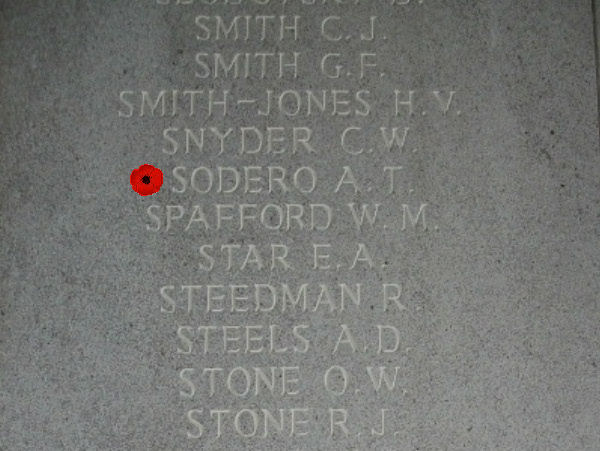
F/Sgt. Alexander Theodore Sodero, age 21, was killed while ferrying his 420 (Snowy Owl) Squadron Wellington (HE 568) from Portreath, England, to Ras el Ma, North Africa, on June 1, 1943. There were no survivors. F/Sgt. Sodero's name, and that of his crew, are inscribed on the Runnymede War Memorial, in Surrey, England.
Galerie numérique de
Flight Sergeant Alexander Theodore Sodero
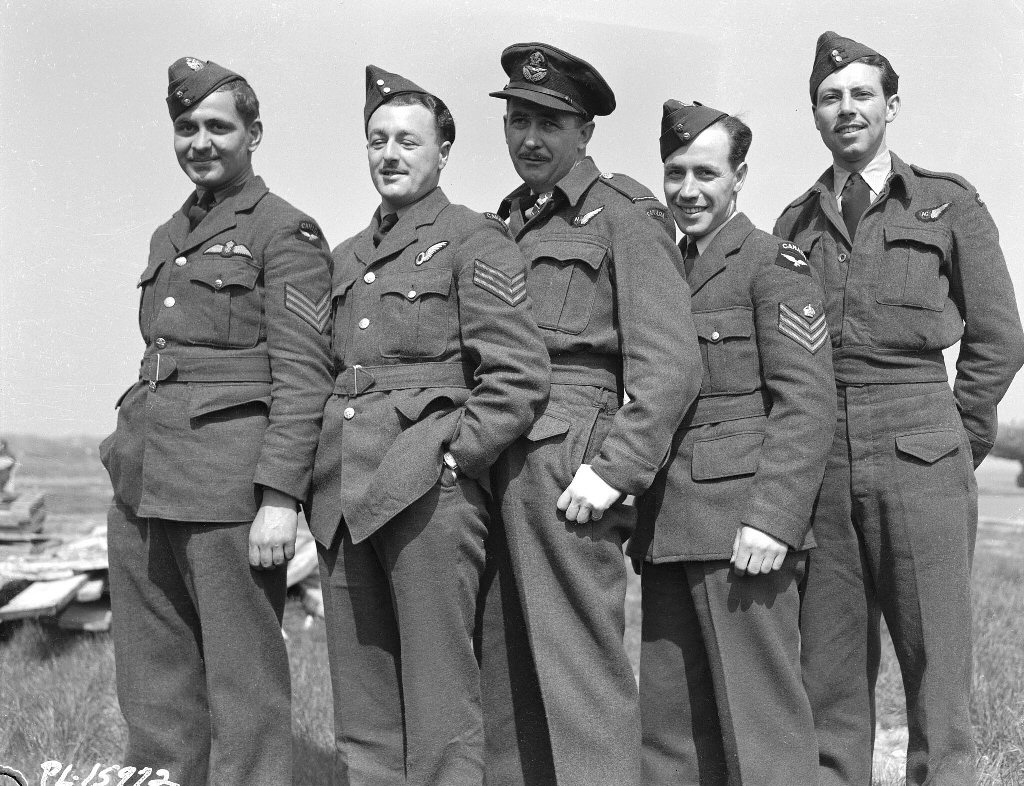
21 May 1943 RAF Station Middleton St-George. The crew of an R.C.A.F. Wellington bomber from 420 Squadron, Left to right, Pilot Sgt Alexander Theodore Sodero; Bomb Aimer Sgt William Robert King, Navigator F/O George Henry Hubbell; Air Gunner F/Sgt Harry Llewellyn Davis; Wireless Operator/Air Gunner Sgt Robert Spencer Hollowell. They will all be lost on 1 June 1943 while transiting from the United Kingdom to North Africa. (RCAF photo PL-15972)
Galerie d'images
-
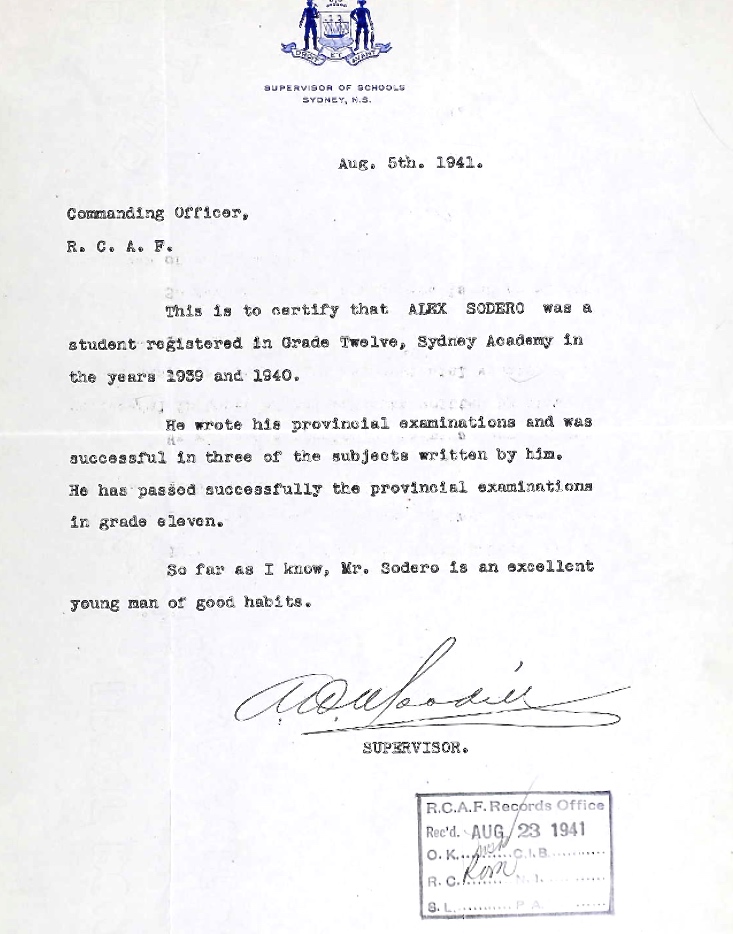
From the Sydney Academy Memorial booklet, published by the Student's Assembly in memory of former students who served during the Second World War. The original pictures were supplied by the Sydney Post-Record and the booklet was compiled by Jack Wilcox, class of 1946 and Donald Trivett, class of 1947.<p> Additional Information courtesy of Floyd Williston:<br> F/Sgt. Alexander Theodore Sodero, age 21, was killed while ferrying his 420 (Snowy Owl) Squadron Wellington (HE 568) from Portreath, England, to Ras el Ma, North Africa, on June 1, 1943. There were no survivors. F/Sgt. Sodero's name, and that of his crew, are inscribed on the Runnymede War Memorial, in Surrey, England.
-
-
Inscription - Runnymede Memorial - April 2017 … photo courtesy of Marg Liessens
-
Submitted for the project, Operation Picture Me
-
Submitted for the project, Operation Picture Me
-
Submitted for the project, Operation Picture Me
-
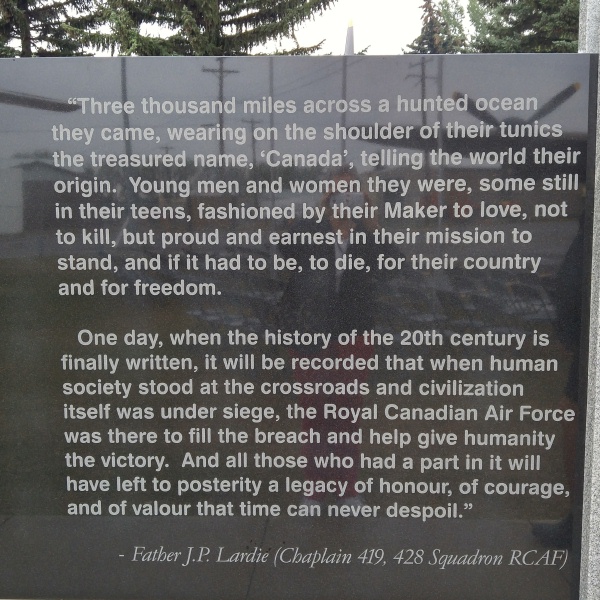
Father J P Lardie's comments as inscribed on the Bomber Command Memorial Wall in Nanton, AB … photo courtesy of Marg Liessens
-
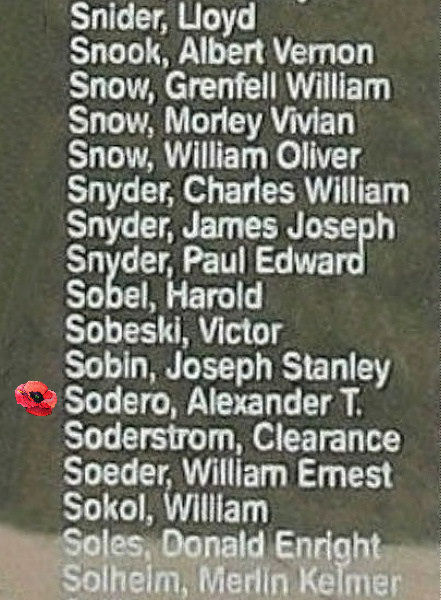
Flight Sergeant Alexander Theodore Sodero is commemorated on the Bomber Command Memorial Wall in Nanton, AB … photo courtesy of Marg Liessens
-
Flight Sergeant Alexander Theodore Sodero is commemorated on the Bomber Command Memorial Wall in Nanton, AB … photo courtesy of Marg Liessens
-
21 May 1943 RAF Station Middleton St-George. The crew of an R.C.A.F. Wellington bomber from 420 Squadron, Left to right, Pilot Sgt Alexander Theodore Sodero; Bomb Aimer Sgt William Robert King, Navigator F/O George Henry Hubbell; Air Gunner F/Sgt Harry Llewellyn Davis; Wireless Operator/Air Gunner Sgt Robert Spencer Hollowell. They will all be lost on 1 June 1943 while transiting from the United Kingdom to North Africa. (RCAF photo PL-15972)
Dans les livres du souvenir
Inscription commémorative sur la :
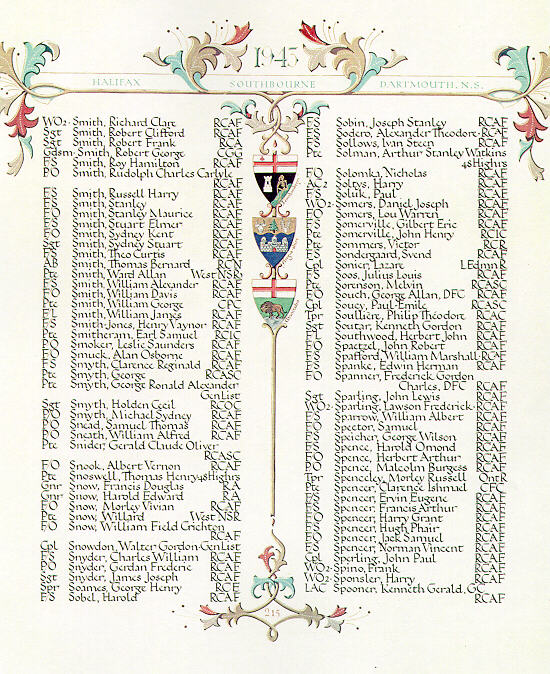
Page 215 du Livre du Souvenir de la Seconde Guerre mondiale.
Commander cette page
Télécharger cette page
MÉMORIAL DE RUNNYMEDE Surrey, Royaume-Uni
Au cours de la Seconde Guerre mondiale, plus de cent seize mille hommes et femmes des forces aériennes du Commonwealth britannique sont morts au champ d'honneur. Plus de dix-sept mille d'entre eux étaient membres de l'Aviation royale canadienne ou des Canadiens qui servaient dans la Royal Air Force. Presque un tiers des morts n'ont pas de sépulture connue. De ce total, vingt mille quatre cent cinquante sont commémorés par nom au Mémorial de Runnymede situé à Englefield Green, près d'Egham, à trente-deux kilomètres à l'ouest de Londres.
L'architecture du Mémorial de Runnymede est originale et impressionnante. La pierre du Souvenir repose au centre d'un cloître qui domine une tour carrée perchée sur le sommet de la colline de Cooper qui surplombe la Tamise. Les allées du cloître aboutissent à deux observatoires, l'un donnant sur Windsor, l'autre sur l'aéroport de Londres à Heathrow. Les trois mille cinquante aviateurs canadiens tués au combat sont parmi ceux dont les noms sont gravés sur les revers de pierre des fenêtres étroites des allées cloîtrées et des observatoires.
Au-dessus de l'entrée à trois arches qui conduit au cloître, trône un aigle de pierre surmonté de la devise de la Royal Air Force «Per Ardua ad Astra». De chaque côté, figure une inscription en anglais dont voici la traduction :
« CE CLOÎTRE HONORE LES NOMS DE 20 000 AVIATEURS SANS SÉPULTURE CONNUE QUI SONT MORTS POUR LA LIBERTÉ LORS DES OPÉRATIONS AÉRIENNES AU-DESSUS DES ÎLES BRITANNIQUES, ET DES TERRES ET MERS DU NORD ET DE L'OUEST DE L'EUROPE. »
Dans la tour se trouve un sanctuaire voûté, paisible et propice à la méditation. On peut y lire, orné d'enluminures, un extrait d'un poème anglais de Paul H. Scott.
Pour plus d’informations, visitez la Commission des sépultures de guerre du Commonwealth (site disponible en anglais seulement).
L’image du coquelicot est une marque déposée de la Légion royale canadienne (Direction nationale) et est utilisée avec sa permission. Cliquez ici pour en savoir plus sur le coquelicot.
Avons-nous oublié quelque chose ?
Contribuer à cette page commémorative
Avez-vous des photos, des informations ou une correction concernant la page commémorative de cet individu? Apprenez-en plus sur le MVGC et les informations que nous collectons.