
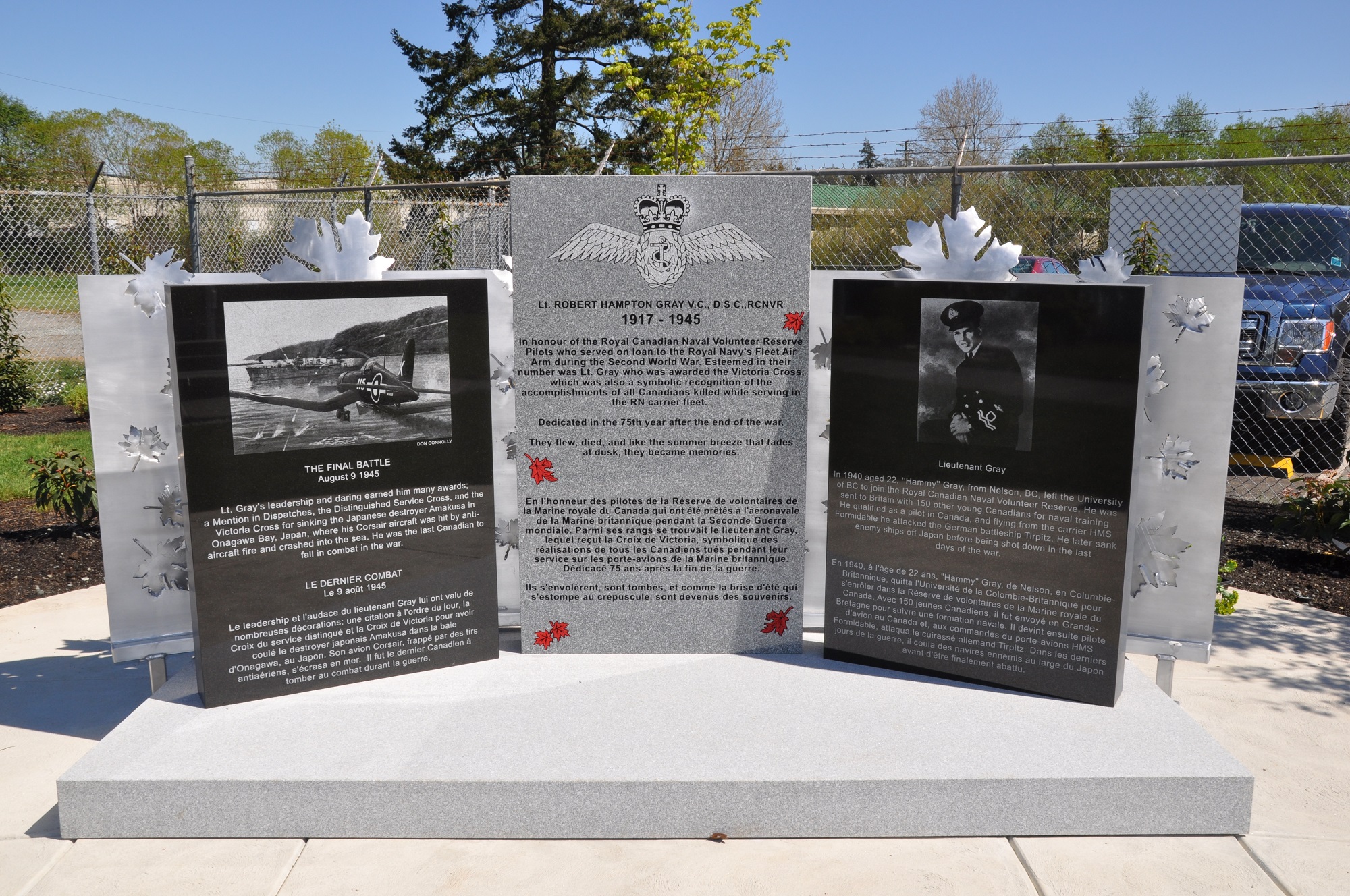
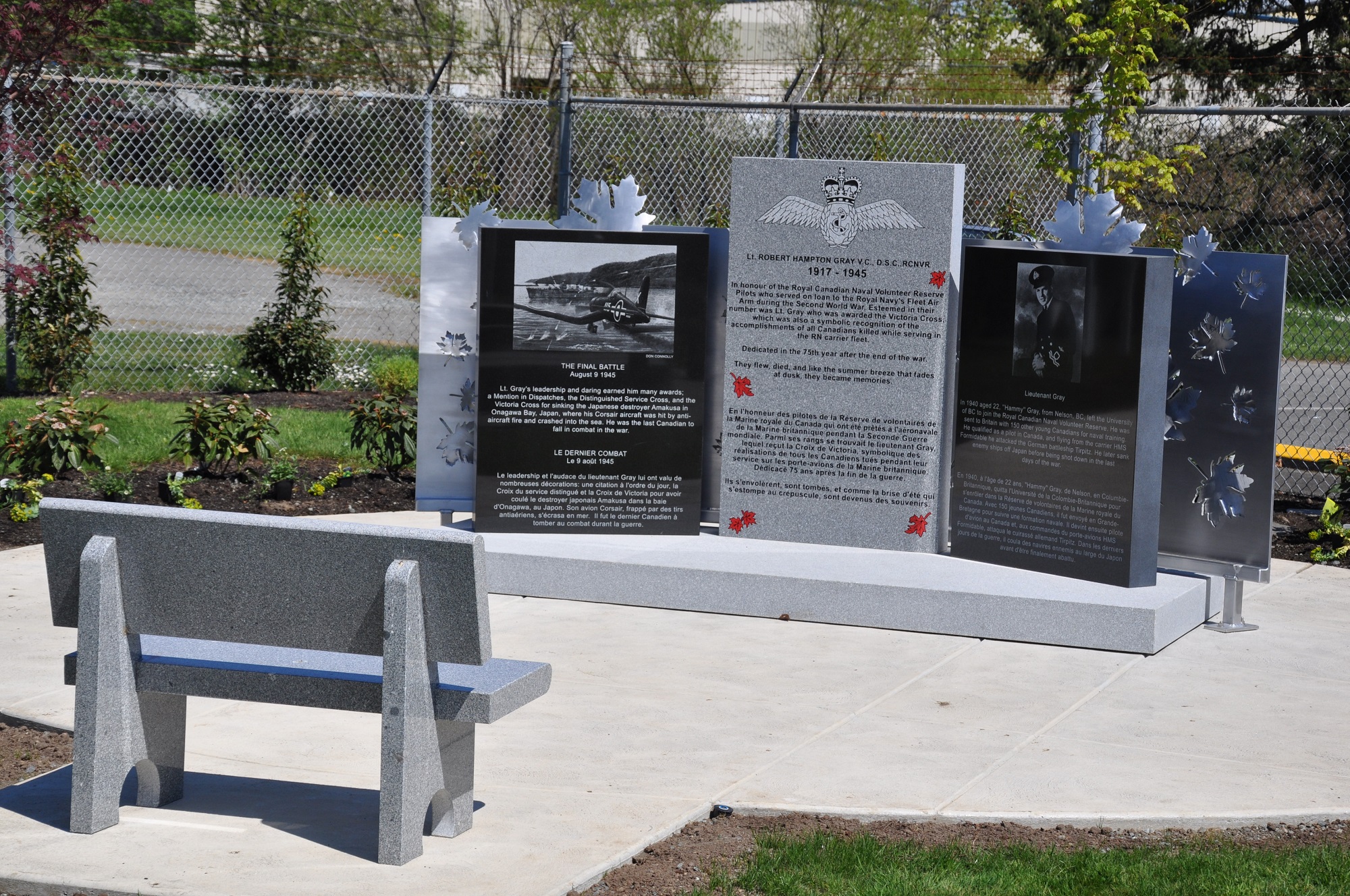
The Lieutenant Robert Hampton Gray Memorial was erected on January 5, 2021, and dedicated on August 8, 2021. Dozens of Veterans, dignitaries, and high-ranking military personnel attended the dedication. Representatives of the Gray family included Dr. Anne George, Robert Hampton Gray’s niece; Marcia and Mary George, his great nieces, and his great great nieces Nyah, Niobe, and Nahla Clarke. Six vintage aircraft flew overhead during the ceremony.
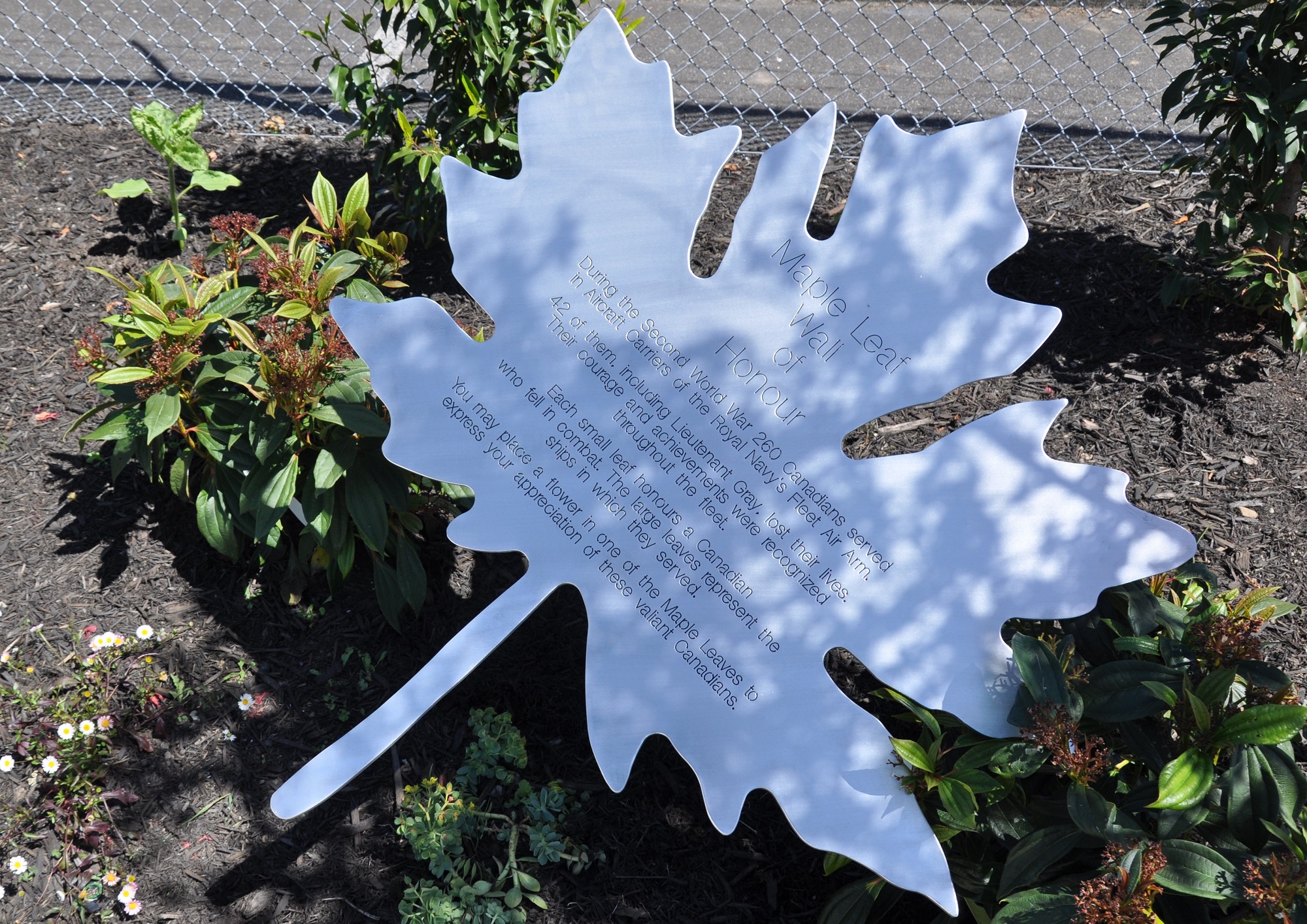
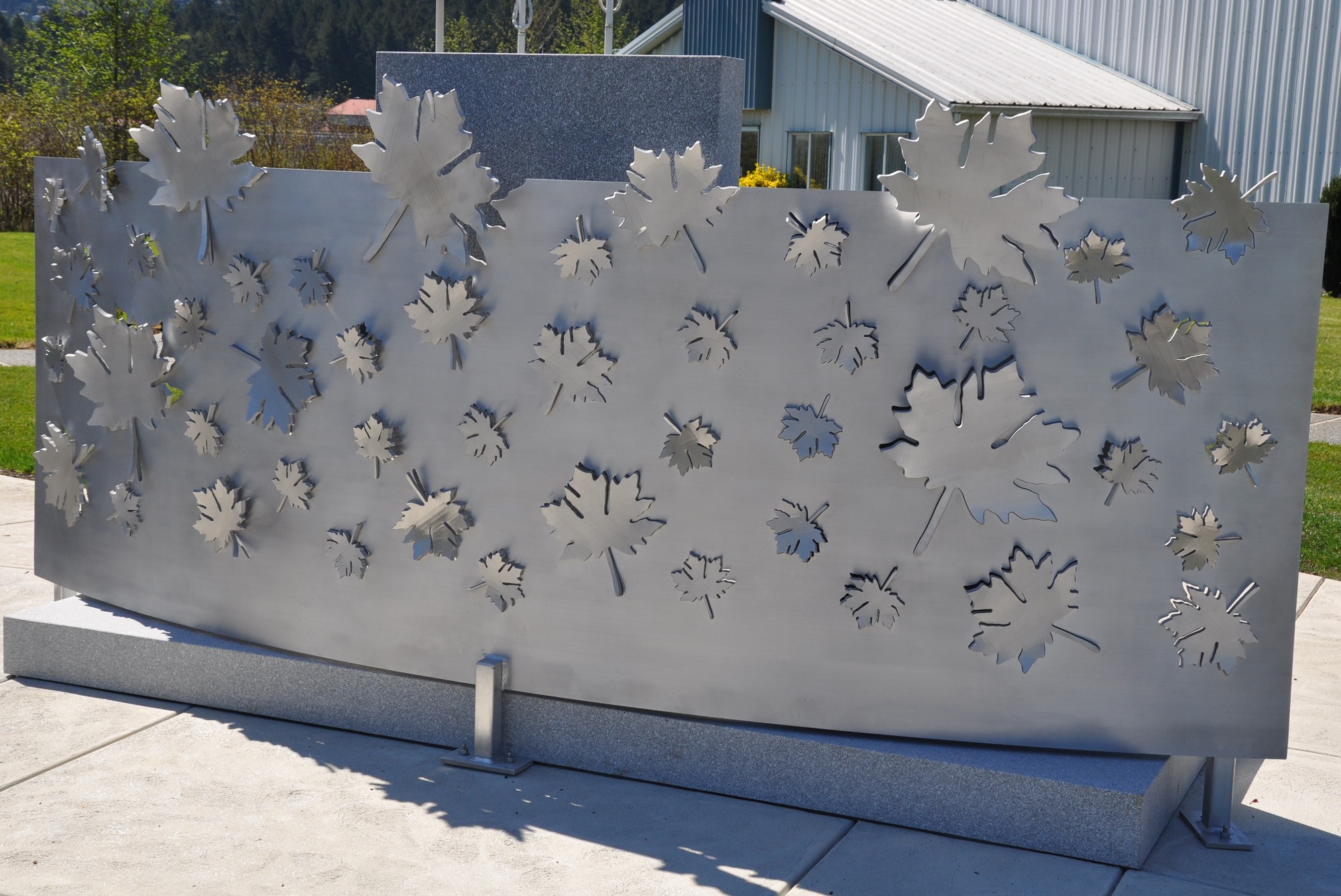
The three pillars show Gray in uniform with a full list of his titles, awards, and citations. It includes a grayscale painting of Gray’s final battle, painted by renowned Canadian aviation artist Don Connolly. The five large stele maple leaves on the wall behind the monument represent the five aircraft carriers present during Lieutenant Gray's service, and the 42 smaller leaves represent Gray and his fellow Canadians who were killed while serving with the Royal Navy's Fleet Air Arm. The stone bench lists names of committee members and key donors.
Twyla Rusnak and Illarion Gallant of Rusnak Gallant Design Ltd. created the garden and backdrop for the memorial. The back is called the rose wall and is a place for people place roses in memory of their loved ones who served.
Robert Hampton Gray was born in Trail, British Columbia on 2 November 1917. Joining the Royal Canadian Naval Volunteer Reserve in July 1940, he was assigned to the Royal Navy’s Fleet Air Arm in which he trained as a fighter pilot and remained for the rest of the Second World War. Gray served in Britain, East Africa and finally with the British Pacific Fleet which, in the final weeks of the war, was operating against the Japanese home islands with the United States Navy’s Third Fleet. He received the Distinguished Service Cross for sinking a Japanese destroyer on 28 July 1945.
Lieutenant Gray was awarded the Victoria Cross posthumously for his actions on 9 August 1945. On that day, he led eight Corsair fighters from HMS Formidable on a mission to bomb enemy shipping in Onagawa Wan; each aircraft carried two 500-pound bombs. As Gray commenced his attack, he met very heavy anti-aircraft fire and his fighter was hit almost immediately, which dislodged one of his bombs and caused the aircraft to catch fire. Despite the damage, Lieutenant Gray pressed home his attack with great determination, and scored a direct hit with his remaining bomb on the Japanese escort vessel Amakusa, which subsequently sank. Instead of taking evasive action to avoid enemy fire, his aircraft then turned slowly to starboard, rolled onto its back and dived into the bay, leading to speculation that Gray may have been wounded during his run in to the target. He did not survive.
The Project Team for the memorial consisted of former members of the Royal Canadian Navy: Colonel Stanley Brygadyr (ret’d), Captain Terry Milne (ret’d), Lieutenant-Commander Gerry Pash (ret’d), and Master Seaman Joe Buczkowski (ret’d).