
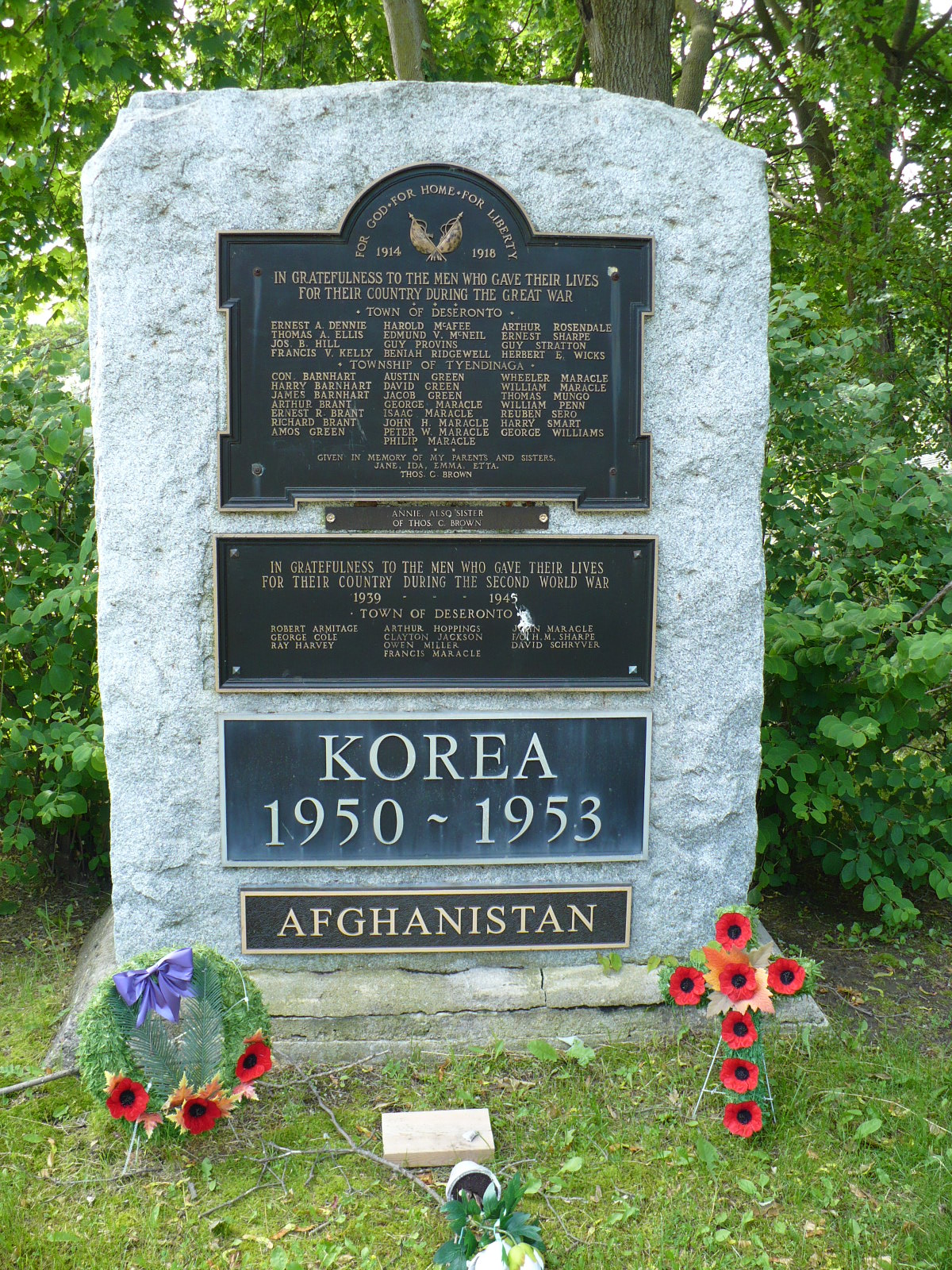
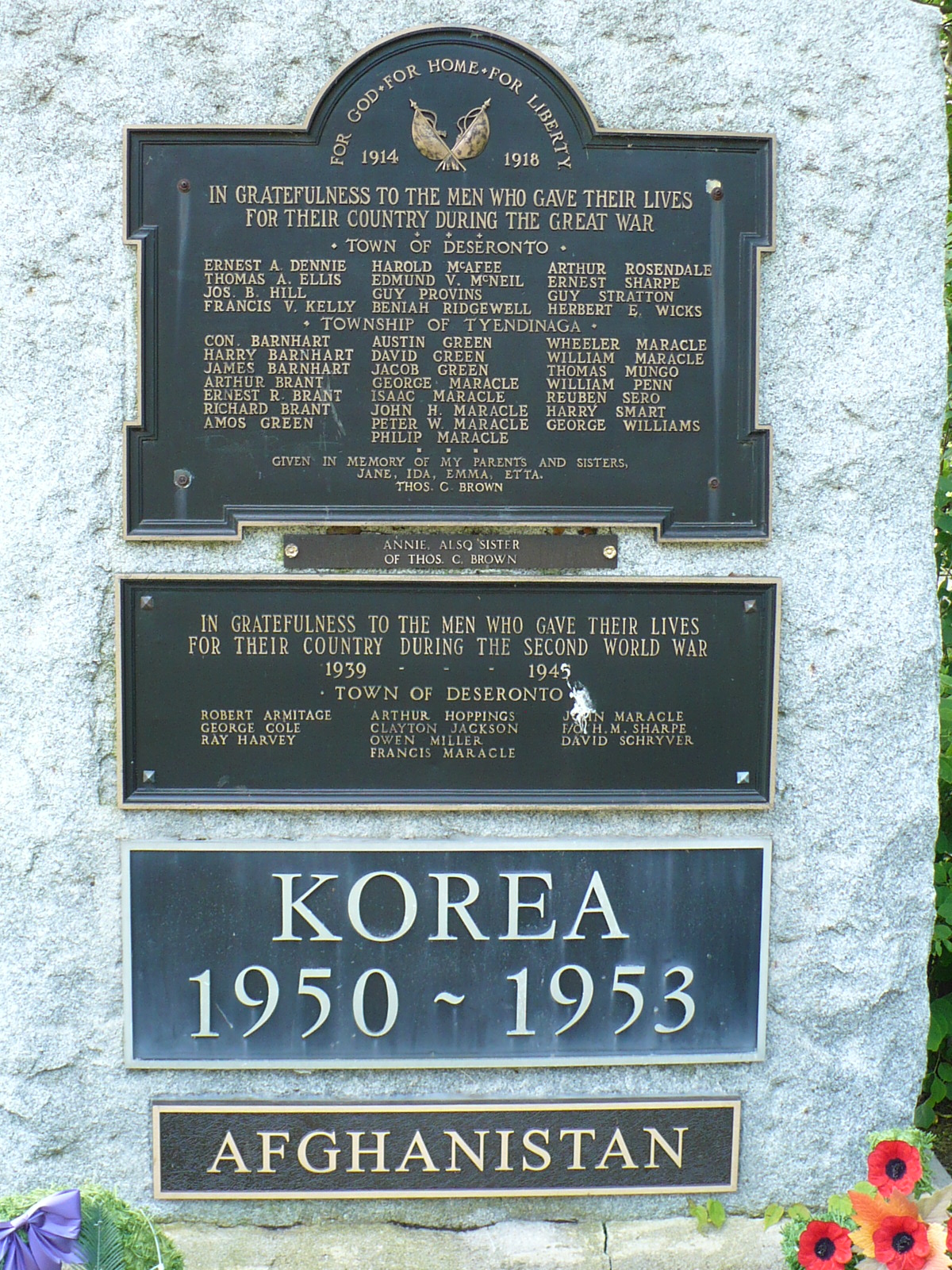
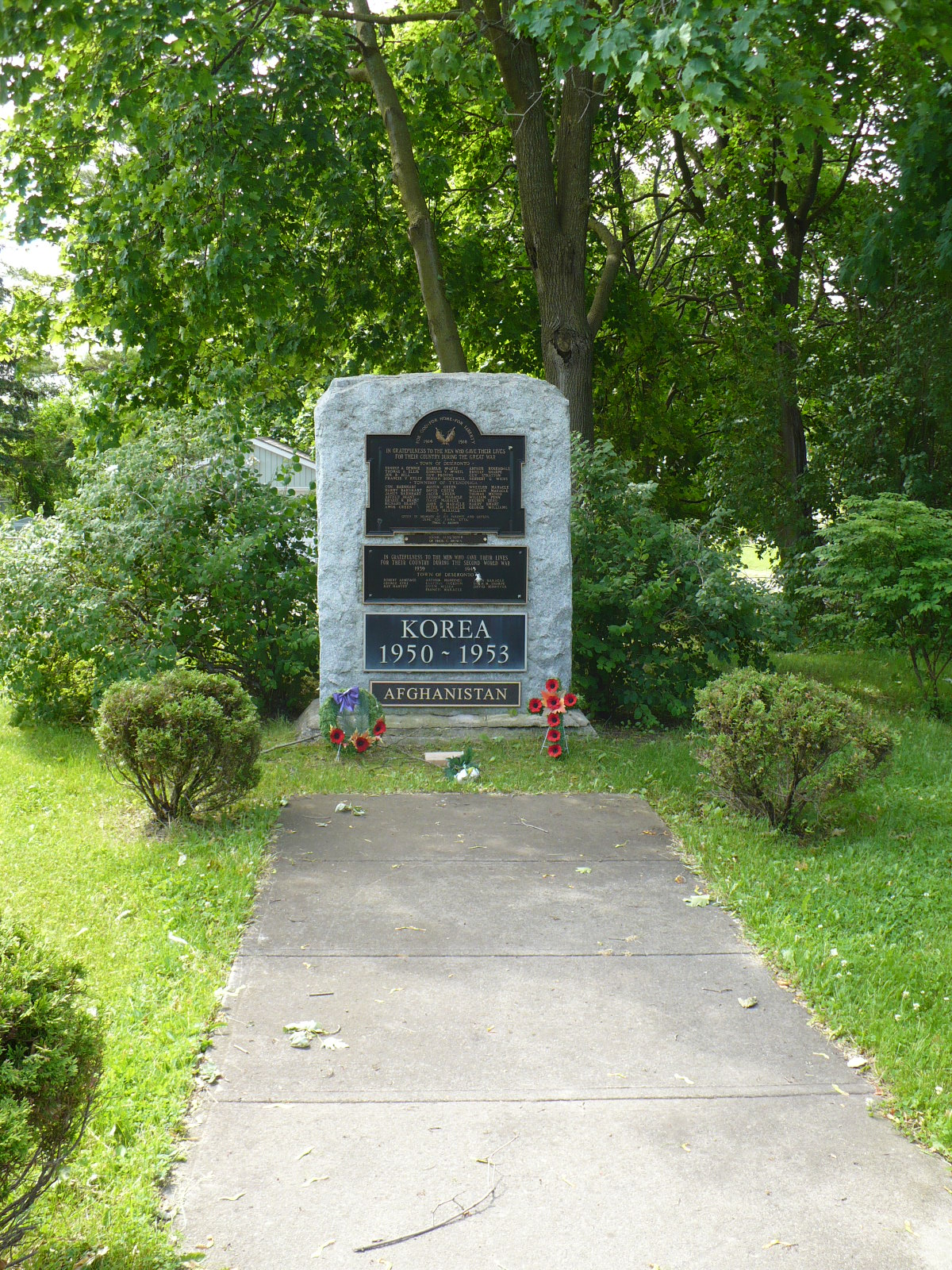
The Deseronto Cenotaph was unveiled in a ceremony on September 3, 1923 and attended by many of the townspeople. A piece of land for the cenotaph, forty feet square, was purchased by the Town of Deseronto from the Rathbun Company, at a cost of $100.
The memorial was donated by former Deseronto resident, Thomas Carson Brown. Thomas was born on 21 April 1870, the son of Thomas Brown and Emily Varty. He had nine siblings and lived in Lennox and Addington County where the family had a farm. His mother died in childbirth when Thomas was seven years old. By 1881, the family had moved to Mill Point (Deseronto). In the 1891 census, when he was 21, Thomas’s trade is given as bricklayer. His father died just six weeks after the census was taken.
It was through the bricklaying trade that Thomas C. Brown would go on to earn his fortune in New York State, where his firm constructed a number of public buildings, including the Plattsburgh Normal School, and a large section of the Clinton Correctional Facility at Dannemora. Deseronto’s newspaper, The Tribune, reported Brown’s marriage in August 1899 to Hattie B. Humphrey, noting that “the groom is well and favourably known in Deseronto, where he passed his boyhood days. He is now engaged in the contracting business in Little Falls. He is a brother of Mrs. Jas. Sexsmith.” Thomas’s sister, Jane Brown, married James Sexsmith in Deseronto in January 1884. She died of pneumonia in 1910.
Brown went on to serve as a Senator in the New York Senate between 1925 and 1930, where he took a keen interest in prison reform issues. He clearly never forgot his home town of Deseronto, as the generous gift of a war memorial demonstrates. It is not just a war memorial, however, as Thomas C. Brown ensured that his parents and five of his sisters (Jane, Ida, Etta, Emma and Annie) were also commemorated on the structure.
(Courtesy of Community Archives of Belleville and Hastings County)