
Introduction
On a warm spring afternoon in April 1994, 16-year-old Pascal Kanyemera heard classical music drifting in the windows of his boarding school in Western Rwanda.
“In Rwanda, if someone dies, they always played classical music,” he remembers.
When the music stopped, a voice on the loudspeakers announced the plane carrying President Juvénal Habyarimana, a member of the Hutu majority, had been shot down while preparing to land in Rwanda’s capital, Kigali.
“I assumed everything would be OK—I didn’t know what was coming.”
What was coming was the worst genocide since the Holocaust and the murder of many of his family members as Hutus slaughtered 800,000 Tutsis in about 100 days.
Remembering those lost
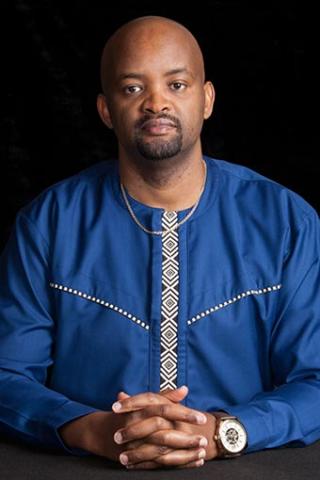
Kanyemera, 45, is now the president of the Humura Association, a Canadian non-for-profit created in 2001 by genocide survivors who live in the Ottawa-Gatineau Region.
The vision of the group is to contribute to building a world free of genocide and other crimes against humanity through memory keeping, education, awareness raising and advocacy. One of the ways he supports that is by telling his own story.
Kanyemera was born in a “good and loving” Tutsi family in 1979. He lived a happy childhood in Western Rwanda with five siblings. They were pretty well off, went to church on Sundays, and both his parents taught high school. He never felt different than anyone else.
That was until the day everything began to change in October 1990, when a military Jeep pulled up and took his father from the high school where he was teaching.
The Jeep carrying government soldiers then searched the Kanyemera family home to see if his father had a gun. He bribed them to leave without him.
Neighbours began whispering that he was involved in some type of criminal activity. Because they feared for their safety, the family moved to a different school.
Singled out
Two years later, his teacher asked the Tutsis to stand up in class. When six or seven of them did, everyone laughed.
“I went home and asked Mom, why? she said ‘don’t worry about it, those kids are stupid.’ But I started to think about it. I started to see that I was different,” Kanyemera said.
When the genocide began, Kanyemera and his classmates locked themselves in the cafeteria as Hutu militia surrounded the school, rounding up and killing Tutsis.
“The headmaster tried to calm the kids down,” he remembers.
Outside the school, his father, brothers, uncles, cousins and friends were being killed.
Kanyemera remained unaware as he was protected inside the school for a month and a half until he reunited with his mother and three sisters at a refugee camp run by French soldiers.
Although the reunion with his female family members was a relief, the living conditions were difficult and the news of the death of many others was devastating.
“It was very difficult, there were 8,000 Tutsis in the camp,” he said, adding he later learned the Hutu extremist plan was to kill all of them. In mid-September the Canadian United Nations mission soldiers took them to Kigali where he found his two surviving aunties.
“It was a comfort. I felt assured on the way to Kigali nothing would happen to us,” he said. “This is the end of this horror.”
From Kigali, he and his surviving family members were supported by UN peacekeepers and were able to leave the country.
A new beginning
Kanyemera emigrated to Canada in 1998 and enrolled in university in Montreal. His mother came two years later.
“There was no future in Rwanda, I am thankful to be in Canada,” he said.
“I knew I had to go to school and build my life.”
After studying English in Edmonton he moved to Ottawa in 2015 and became involved with survivor organizations.
Thirty years later, the pain of the genocide is still acute for Kanyemera, as it is with many survivors. They support each other to get professional help to deal with the lasting impacts and to help remember those they lost.
“A genocide takes everything that is dear to you,” he said.
“I feel obligation to make sure the memory of those who were killed is never forgotten.
“You try to move on but that wound is there.”
Today he says he finds positive things in life to hold on to so he can move on.
He says some survivors have rebuilt their lives. But some struggle with mental health and addictions. His group works to advocate for and support them.
He said living in Canada offers peace of mind and a way for survivors to live a safe and full life.
The Canadian Armed Forces (CAF) in Rwanda
Between 1993 and 1996, approximately 1,300 members of the Canadian Armed Forces served in Rwanda. The duties of Canadian and other UN peacekeepers in Rwanda were extremely challenging. At first, Canada had only two senior officers—Major-General Romeo Dallaire and his principal aid Major Brent Beardsley. Once the genocide began, more CAF members became involved.
The Canadians were some of the first peacekeepers to arrive after the genocide. Their duties often meant they had to deploy in small groups to isolated areas. They saw the horrific after-effects of the genocide, with countless bodies everywhere. The strict rules of engagement still limited the Canadian soldiers from getting involved when they saw new violence. Sometimes they would also encounter armed gangs and have to diffuse the standoff.
In the words of Major-General Dallaire, these CAF contributions to the people of Rwanda were “...nothing less than a godsend.” Canada recognized the great efforts of the generals who commanded the UN peacekeeping missions in Rwanda. Major-General Dallaire and Major-General Guy Tousignant both earned the Meritorious Service Cross for their leadership in the face of some of the worst conditions imaginable.
If you are a Veteran, family member or caregiver, the support of a mental health professional is available to you anytime at no cost. Call 1-800-268-7708.