
Section 1: Institutional GBA Plus Governance and Capacity
Governance
The Policy and Research Division at Veterans Affairs Canada (VAC) holds functional responsibility for GBA Plus and supports implementation of the departmental GBA Plus Strategy. The Division promotes the integration of GBA Plus across the Department to support equitable outcomes for diverse Veteran populations through training, tools and resources for our employees, disaggregated data initiatives, and the application of an intersectional lens to program, policy, and service design.
VAC maintains a senior executive GBA Plus Champion who provides leadership, promotes awareness, supports departmental initiatives, and helps advance the integration of GBA Plus across the organization. VAC also maintains a network of champions supporting accessibility, inclusion, Indigenous Peoples, women, Two-Spirit, Lesbian, Gay, Bisexual, Transgender, Queer or Questioning, Intersex and other sexual and gender diverse communities (2SLGBTQI+) communities, racialized employees, mental health and well-being, and values and ethics, helping to reinforce a culture of inclusion across the Department. The GBA Plus Network includes members from each branch as well as representatives from the Veterans Review and Appeal Board, the Office of the Veterans Ombud, and the Union of Veterans Affairs Employees. The Network meets quarterly, or as needed, to share knowledge, leverage best practices, build capacity, and serve as organizational points of contact for GBA Plus within their respective areas.
The Policy and Research Division also maintains two departmental representatives (GBA Plus Focal Points) who participate on the Women and Gender Equality Canada (WAGE) GBA Plus Interdepartmental Committee, supporting collaboration and the exchange of best practices across the federal government.
Capacity
Strategy, Policy and Training
GBA Plus analysis has been included in all Budget proposals, Memoranda to Cabinet, Treasury Board submissions, and regulatory packages since 2016.
VAC continued implementation of its GBA Plus Strategy and GBA Plus Policy during 2025-26. Together, these provide the framework for integrating GBA Plus considerations throughout departmental decision-making, program and policy development, service delivery, research, audit and evaluation activities. They reinforce shared responsibility for GBA Plus across all levels of the organization and support the ongoing application of an intersectional approach to the design and delivery of programs and services. Supporting GBA Plus training for employees continues to be a key component of departmental capacity building. VAC provided GBA Plus competency training and maintained a suite of resources, including the Applying VAC's GBA Plus Step Guide, a VAC-specific GBA Plus Job Aid, and other guidance materials available through the Department's internal GBA Plus information hub.
Engagement and Advisory Mechanisms
VAC continued targeted engagement activities to better understand the experiences of underrepresented and equity-deserving groups and to identify systemic barriers, inequities, and gaps in policies, programs, and services. During 2025-26, engagement activities included continued collaboration with the Women Veterans Council and the delivery of a 2SLGBTQI+ Veterans Forum in November 2025. These activities, along with ongoing engagement with Women Veterans, Indigenous Veterans, Black and other racialized Veterans, and Veterans with disabilities, helped inform departmental policies, programs, and services and strengthen the application of GBA Plus.
Data and Evidence
VAC continued to strengthen its use of disaggregated data to support GBA Plus implementation. Through its Data Strategy, reporting tools, and ongoing partnership with Statistics Canada under the Disaggregated Data Action Plan, the Department continued to enhance its ability to analyze programs and outcomes across diverse Veteran populations. Work continued with Statistics Canada to link departmental program data with Census and survey data to support more robust intersectional analysis of Veteran populations.
The VAC National Client Survey (VNCS) continued to collect information on gender, Indigenous identity, and racial identity, enabling disaggregated analysis of Veteran experiences and outcomes. Results support service improvements and future research, including enhanced analysis of the experiences of Women Veterans. In September 2025, VAC implemented chosen name and pronoun fields across key service delivery systems and My VAC Account to better support gender-diverse Veterans and other clients.
VAC also continued implementation of the Government of Canada's policy on the Modernization of Sex and Gender Information Practices to support the appropriate collection and use of sex and gender information
Research
VAC continued to strengthen research capacity through the application of Sex and Gender Equity in Research principles, helping to ensure fair representation of Women Veterans and other underrepresented populations in research activities. During 2025-26, the Department continued development of the Women Veteran Research Plan through environmental scanning, literature reviews, and consultations with Women Veterans, helping identify research priorities and gaps.
Funding and Support for Diverse Veteran Populations
The Veteran and Family Well-being Fund continued to support innovative projects and research addressing the needs of diverse Veteran populations, including Women, Indigenous, homeless, and 2SLGBTQI+ Veterans. In 2025-26, 38% of the $17 million in additional funding awarded through the Fund supported projects focused on Women, Indigenous, and 2SLGBTQI+ Veterans. Through the Joint Federal Research Funding Program, VAC allocated $155,000 to support research examining employment programs through a gender-responsive lens to better understand transition experiences and outcomes for Women Veterans.
Evaluation, Performance Measurement and Policy Reviews
Program evaluations conducted during the reporting period considered how GBA Plus principles were incorporated into program activities and operations.
VAC continued to strengthen its capacity to conduct intersectional analysis through improvements to data collection, performance measurement, and evaluation practices. During 2025-26, enhancements to performance measurement for the Income Replacement Benefit and the Canadian Forces Income Support benefit improved the Department's ability to assess outcomes across diverse Veteran populations using GBA Plus identity factors.
VAC continued to apply a GBA Plus lens to policy reviews and modernization activities during 2025-26. As part of VAC's Regulatory Stock Review process, GBA Plus reviews were undertaken for published program policies to assess inclusivity, accessibility, gendered language, and potential barriers affecting diverse Veteran populations. During the reporting period, reviews of Eligibility for Health Care Programs Policies and Rates Payable for Treatment Benefits Policy informed improvements to policy guidance and accessibility, while updates to the Orphans Policy supported the use of more inclusive language.
Commemoration
The Commemoration Division continued to strengthen the application of GBA Plus in learning, outreach, and commemorative programming. Activities included multilingual and Indigenous-language content, learning resources highlighting the experiences of underrepresented Veterans, and initiatives to improve accessibility and inclusion across commemorative activities.
The Commemoration Division is actively reviewing its current programming to ensure it is inclusive and responsive to the needs of groups that reported below-average outcomes. We are exploring opportunities to strengthen existing initiatives that address barriers experienced by racialized and younger Veterans and are working to expand our digital presence to better engage a broader and more diverse audience.
Human resources (full-time equivalents) dedicated to GBA Plus
4.75 FTEs were dedicated to working on GBA Plus during the 2025–26 fiscal year.
Section 2: Gender and Diversity Impacts, by Program
Veterans Affairs continues to advance its GBA Plus initiative by enhancing data collection, analysis, and assessment of program impacts on gender and diversity. These efforts enable further analysis of Veteran program participation by 2SLGBTQI+, Indigenous, and racialized Veterans as well as by gender identity, allowing us to continually improve service delivery.
The following is a focused snapshot on data collection by program.
Core Responsibility 1: Benefits, Services and Support
Caregiver Recognition Benefit
Target Population: Veterans, Families
Program goals: The Caregiver Recognition Benefit provides a monthly tax-free payment (indexed annually) to the informal caregivers of a qualified Veterans to recognize the contribution that caregivers make to the health and well-being of seriously injured Veterans.
The Caregiver Recognition Benefit program continues to collect sufficient data to enable it to monitor and/or report program impacts by gender and diversity (GBA Plus).
| Predominantly men (e.g. 80 per cent or more men) | 60 per cent - 79 per cent men | Broadly gender-balanced | 60 per cent - 79 per cent women | Predominantly women (e.g. 80 per cent or more women) | |||
|---|---|---|---|---|---|---|---|
| Program: Caregiver Recognition Benefit | Men | ●Selected category | Women |
| Primarily benefits youth, children and/or future generations |
No significant inter-generational impacts or impacts generation between youth and seniors |
Primarily benefits seniors or the baby boom generation | |||
|---|---|---|---|---|---|
| Program: Caregiver Recognition Benefit | Youth | ●Selected category | Senior |
Specific demographic groups to be monitored
The following groups may benefit from this program (directly or indirectly), face barriers to access or participation, and/or experience impacts for various reasons. We continually work to identify and address these barriers:
Groups that may be impacted directly by the program (includes positive and/or negative impacts):
- Veterans
- Persons with disabilities or health issues or their caregivers
- Seniors
- Women
- Families
Groups that may be impacted indirectly by the program (includes positive, negative and/or neutral impacts):
- Families
Groups that may face barriers:
- Black or other racialized / visible minority communities
- Indigenous Peoples
- 2SLGBTQI+
- Individuals of particular socio-economic status, educational level and/or particular familial characteristics (e.g., marital status, family status)
Key program impacts on gender and diversity
Key program impact statistics
Based on the 2025 Caregiver Recognition Benefit survey, Male and English-speaking caregivers reported results above the overall average (75%), while French-speaking caregivers reported results below average.
Efforts are underway to better understand and address gender and equity disparities in program outcomes.
Indicator: % of CRB recipients that report "The Caregiver Recognition Benefit meaningfully recognizes my role in supporting the Veteran I care for."
Target: 70%
Overall Result: 75%
| Demographic group | Result (percentage) |
|---|---|
| Men | 76% |
| Women | 75% |
| English | 76% |
| French | 67% |
Source: 2025 Caregiver Recognition Benefit Survey
GBA Plus Data Collection Details:
We are working on improving data collection for this program, while maintaining privacy compliance. We currently collect and use several data points that enable GBA Plus, including sex at birth (male/female), age, official language, and geography, and is exploring the addition of other intersectional identity factors.
It is important to note that the Caregiver Recognition Benefit validated dataset does not identify VAC Community Members by gender. Instead, individuals are categorized by sex at birth. While the terms "sex" and "gender" are sometimes used interchangeably in everyday language, it is important to recognize that they are distinct concepts. For the purposes of data collection and reporting, the term "sex" has been consistently applied across the data set.
Disability Benefits
Target Population: Veterans, Families
Program goals: The Disability Benefits Program recognizes the impact of a service-related injury or disease in the form of a tax-free financial compensation. The Disability Benefits Program produces weekly internal reports that include data related to language and biological sex to continue its commitment to gender parity in claims processing and to adjust workloads as required. Currently, there is sufficient data to administer and monitor the program but not to report program impacts through a full GBA Plus lens.
| Predominantly men (e.g. 80 per cent or more men) | 60 per cent - 79 per cent men | Broadly gender-balanced | 60 per cent - 79 per cent women | Predominantly women (e.g. 80 per cent or more women) | |||
|---|---|---|---|---|---|---|---|
| Program: Disability Pensions | Men | ●Selected category | Women | ||||
| Program: Pain and Suffering Compensation | Men | ●Selected category | Women | ||||
| Primarily benefits youth, children and/or future generations | No significant inter-generational impacts or impacts on generations between youth and seniors | Primarily benefits seniors or the baby boom generation | |||
|---|---|---|---|---|---|
| Program: Disability Pensions | Youth | ●Selected category | Senior | ||
| Program: Pain and Suffering Compensation | Youth | ●Selected category | Senior | ||
Specific demographic groups to be monitored
The following groups may benefit from this program (directly or indirectly), face barriers to access or participation, and/or experience impacts for various reasons. We continually work to identify and address these barriers.
Groups that may be impacted directly by the program (includes positive and/or negative impacts):
- Veterans
- Persons with disabilities or health issues
- Seniors
- Families
Groups that may be impacted indirectly by the program (includes positive, negative and/or neutral impacts):
- Families
Groups that may face barriers:
- Black or other racialized / visible minority communities
- Indigenous Peoples
- 2SLGBTQI+
- Individuals of particular socio-economic status, educational level and/or particular familial characteristics (e.g., marital status, family status)
Key program impacts on gender and diversity
We continue to work on a multi-year plan to modernize the Entitlement Eligibility Guidelines (EEG) and the Table of Disabilities (TOD), two key tools that support the disability benefits decision-making process by guiding entitlement decisions and assessing the severity of entitled medical conditions.
As of March 31, 2026, updates to 22 of VAC’s EEGs, which are for high‑volume and complex medical conditions, have been completed and released. Eleven new EEGs have been developed and released using GBA Plus as an integral component of the development process. A GBA Plus review has also been completed on the remaining 20 EEGs for lower‑volume, non‑complex conditions, with full review and updates to proceed under an ongoing maintenance plan.
The full review of the TOD has now concluded. Implementation planning is scheduled to begin in fiscal year 2026–2027, ensuring alignment with current medical evidence and a Veteran‑centric, GBA Plus‑informed approach.
We remain focused on initiatives to reduce the backlog of disability benefit applications and improve the percentage of applications processed within the service standard. We will continue to monitor processing times across demographic groups, recognizing that results may fluctuate over time, and take action as needed to address any disparities. Tracking the proportion of applications completed within service standards allows VAC to assess the efficiency of application processing across different demographic groups and identify potential gaps in service delivery. Comparing these results is crucial to supporting equitable access to programs, benefits, and services for all clients.
Key program impact statistics
Disability Benefits processing times for female applicants:
Reducing the processing times for disability benefits remains a priority for us. The service standard target for disability benefits is for 80% of decisions to be made within 16 weeks for first applications.
Over the last ten years, we experienced a 90% increase in the number of applications received for disability benefits. In 2025-2026, we received 85,600 disability benefits applications, averaging 7,100 per month. The increase in applications over the years caused us to get behind in processing applications, including applications from female Veterans.
Despite these challenges, we have improved processing times and continue to make improvement to the process. Over the past four years, the average processing time for first applications has decreased by 44%, from 39.7 weeks to 22.4 weeks. We have successfully reduced the processing time gap between male and female applicants. In the 2025-2026 fiscal year, the average processing times for first applications were 23.0 weeks for female applicants and 22.2 weeks for male applicants. This shows progress towards more equitable service.
Disability Benefits processing times for francophone applicants:
We remain committed to meeting our service standards for disability benefits, which is to complete 80% of first applications decisions within 16 weeks. Over the past four years, the average processing time for first applications has decreased by 44%, from 39.7 weeks to 22.4 weeks.
Over the last ten years, we experienced a 90% increase in the number of applications received for disability benefits. This growth has created processing pressure affecting both Francophone and Anglophone applicants.
Despite these challenges, we have addressed the gap in processing times for applications between Francophone and Anglophone Veterans. Our capacity to process French applications has been strengthened through staff that includes bilingual and Francophone decision-makers. Currently, approximately 30% of our staff that make disability benefit decisions are either French-speaking or bilingual.
These efforts have helped reduce processing times for French applications. In the 2025-2026 fiscal year, the average processing times for first applications were 22.4 weeks for both French and English applications. This shows that we are processing applications in both languages at a similar rate.
Indicator: % of Disability Pension / Pain and Suffering Compensation applications for which a decision is made within 16 weeks.
Target: 80%
Overall Result: 41%
| Demographic group | Result (percentage) |
|---|---|
| Age Under 30 | 41% |
| Age 30-39 | 37% |
| Age 40-49 | 35% |
| Age 50-59 | 38% |
| Age 60-69 | 44% |
| Age 70-79 | 53% |
| Age 80-89 | 96% |
| Age 89+ | 94% |
| Men | 41% |
| Women | 40% |
| English | 40% |
| French | 44% |
Source: VAC Reporting Database
Indicator: % of Veterans Affairs Canada clients who report the disability benefits they receive from VAC recognize their service-related disability.
Target: 75%
Overall Result: 79%
| Demographic group | Result (percentage) |
|---|---|
| Age 19-39 | 74% |
| Age 40-49 | 71% |
| Age 50-59 | 76% |
| Age 60-69 | 81% |
| Age 70-79 | 84% |
| Age 80-89 | 88% |
| Age 90+ | 90% |
| Men | 78% |
| Women | 81% |
| English | 78% |
| French | 81% |
| Racialized population | 80% |
| Indigenous Person | 76% |
Source: 2024 VAC National Client Survey
Supplementary information sources
2024 VAC National Client Survey
GBA Plus Data Collection Details:
This year we performed an in-depth secondary analysis of the 2024 VNCS for GBA Plus analysis of VAC Service Delivery programs and services. Intersectional variables used in the analysis included age, sex, gender, Indigenous identity, racial identity, language, and geography.
We are analyzing data tables provided by Statistics Canada through the linkage of VAC program data with the 2021 Census, enabling point-in-time insights into programs such as Disability Benefits, Rehabilitation, the Income Replacement Benefit, Case Management, the Veterans Independence Program, and Treatment Benefits (including Cannabis for Medical Purposes), while allowing comparisons of demographic, social, and income characteristics not available in VAC administrative data; this analysis will continue into 2026–2027 as we further examine the linked data, prepare findings for departmental reporting, and advance planned work linking VAC program data with the Canadian Survey on Disability, which will support more detailed and disaggregated analysis through direct access to Statistics Canada’s virtual data lab.
Health Care Benefits
Target Population: Veterans
Program goals: The Health Care Benefits (HCB) Program provides eligible Veterans and other qualified individuals with financial support to access health care benefits (treatment benefits) to meet their identified needs. Treatment benefits include medical, surgical or dental examinations or treatment; surgical or prosthetic devices and aids and their maintenance; home adaptations to accommodate the use of devices or aids; preventive health care; pharmaceuticals; cannabis for medical purposes; mental health benefits; and travel and other expenses incurred to access these benefits. Since 1 April 2022, Veterans applying for certain mental health conditions can receive prompt access to coverage for mental health related services and benefits, while they await their disability decision.
Currently the HCB Program collects sufficient data to determine program eligibility and benefit entitlement. Existing client demographic data is captured at the departmental level and can be accessed for monitoring and reporting purposes. This departmental-level data includes age, sex, marital status, geographical location (derived from postal code), language, and a homelessness indicator. HCB Program Management can access client demographic data, working closely with enterprise data, corporate statistics and business intelligence within our Department, to inform our work and support the GBA Plus analysis of current recipients of health care benefits. In addition, third-party service providers who administer treatment benefits on our behalf, collect and report on usage data for enhanced reporting capability where additional data elements are deemed necessary for the effective administration of the program.
| Predominantly men (e.g. 80 per cent or more men) | 60 per cent - 79 per cent men | Broadly gender-balanced | 60 per cent - 79 per cent women | Predominantly women (e.g. 80 per cent or more women) | |||
|---|---|---|---|---|---|---|---|
| Program: Treatment Benefits | Men | ●Selected category | Women | ||||
| Primarily benefits youth, children and/or future generations | No significant inter-generational impacts or impacts on generations between youth and seniors | Primarily benefits seniors or the baby boom generation | |||
|---|---|---|---|---|---|
| Program: Treatment Benefits | Youth | ●Selected category | Senior | ||
Specific demographic groups to be monitored
The following groups may benefit from this program (directly or indirectly), face barriers to access or participation, and/or experience impacts for various reasons. We continually work to identify and address these barriers:
Groups that may be impacted directly by the program (includes positive and/or negative impacts):
- Veterans
- Persons with disabilities or health issues
- Seniors
Groups that may be impacted indirectly by the program (includes positive, negative and/or neutral impacts):
- Families
Groups that may face barriers:
- Black or other racialized / visible minority communities
- Indigenous Peoples
- 2SLGBTQI+
- Individuals of particular socio-economic status, educational level and/or particular familial characteristics (e.g., marital status, family status)
Key program impacts on gender and diversity
A review of the 2024 VNCS results was undertaken to better understand the differences observed among respondents. This included examining sample sizes and reviewing responses to individual survey questions to identify potential patterns or trends. Results will continue to be monitored in future survey cycles to determine whether further analysis is required.
Key program impact statistics
Overall, 78% of Veterans and clients reported that the Health Care Benefits Program met their needs. Satisfaction was generally higher among older Veterans, increasing from 64% among those aged 19-39 to 88% among those aged 90+, while women (74%), Indigenous persons (72%), and racialized respondents (75%) reported lower levels of satisfaction than the overall average.
These findings suggest that, while most participants reported satisfaction with the program, responses varied across demographic groups. These differences highlight opportunities to further examine and address the factors that may influence participants' experiences and perceptions of program outcomes.
Indicator: % of Veterans and clients who report that overall, the Health Care Benefits Program meets their needs.
Target: 85%
Overall Result: 78%
| Demographic group | Result (percentage) |
|---|---|
| Age 19-39 | 64% |
| Age 40-49 | 68% |
| Age 50-59 | 76% |
| Age 60-69 | 82% |
| Age 70-79 | 83% |
| Age 80-89 | 85% |
| Age 90+ | 88% |
| Men | 79% |
| Women | 74% |
| English | 78% |
| French | 78% |
| Racialized population | 75% |
| Indigenous Person | 72% |
Source: VAC National Client Survey
Supplementary information sources
2024 VAC National Client Survey
GBA Plus Data Collection Details:
Service Delivery and Program Management (SDPM) continued to advance reporting capabilities to enhance analysis through work undertaken in support of the Federal Health Claims Processing Services (FHCPS) contract implementation, including defining reporting requirements and identifying opportunities for new reports.
This year SDPM performed an in-depth secondary analysis of the 2024 VNCS for GBA Plus analysis of VAC Service Delivery programs and services. Intersectional variables used in the analysis included age, sex, gender, Indigenous identity, racial identity, language, and geography.
We are analyzing data tables provided by Statistics Canada that result from the linkage of VAC program data and 2021 Statistics Canada census data. The resulting analysis will enable us to look at point in time data for insights into programs including Disability Benefits, Rehabilitation, Income Replacement Benefit, Case Management, Veterans Independence Program, Treatment Benefits including Cannabis for Medical Purposes. The data tables allow us to look at these programs and compare demographic, social, and income characteristics that are not available in VAC’s administrative data. The analysis will continue into 2026-2027.
Future efforts will focus on continuing to enhance reporting capabilities, including the development of validated datasets and activities supporting FHCPS contract implementation. Results from the 2026 VNCS will be monitored to inform ongoing analysis and identify emerging trends.
We will continue with our analysis of the program data tables and will prepare to report the findings to the Department. We are also planning analysis of VAC program data linked to the Canadian Survey on Disability. For this analysis we will be able to look at the data with more detailed, disaggregated methods, by working directly in the Statistics Canada virtual data lab.
Income Support
Target Population: Veterans, Families
Program goals: The Income Replacement Benefit (IRB) is a taxable, monthly benefit that ensures Veterans’ total income will be at least 90 percent of their gross pre-release military salary, while they are participating in the Rehabilitation Services and Vocational Assistance Program.
The Canadian Forces Income Support (CFIS) is a tax-free monthly financial benefit for low-income Canadian Armed Forces Veterans who no longer qualify for the Income Replacement Benefit. The program provides financial support for those who have completed the rehabilitation program but are unable to find a post-military career or job or whose income is too low for them to meet their basic needs. It is also available to the survivors and dependent children of those Veterans.
Income Replacement Benefit and Canadian Forces Income Support programs use existing client demographic data captured at the departmental level for monitoring and reporting purposes, along with supporting the GBA Plus analysis of current recipients.
| Predominantly men (e.g. 80 per cent or more men) | 60 per cent - 79 per cent men | Broadly gender-balanced | 60 per cent - 79 per cent women | Predominantly women (e.g. 80 per cent or more women) | |||
|---|---|---|---|---|---|---|---|
| Program: Income Replacement Benefit | Men | ●Selected category | Women | ||||
| Program: Canadian Forces Income Support | Men | ●Selected category | Women | ||||
| Primarily benefits youth, children and/or future generations | No significant inter-generational impacts or impacts on generations between youth and seniors | Primarily benefits seniors or the baby boom generation | |||
|---|---|---|---|---|---|
| Program: Income Replacement Benefit | Youth | ●Selected category | Senior | ||
| Program: Canadian Forces Income Support | Youth | ●Selected category | Senior | ||
Specific demographic groups to be monitored
The following groups may benefit from this program (directly or indirectly), face barriers to access or participation, and/or experience impacts for various reasons. We continually work to identify and address these barriers:
Groups that may be impacted directly by the program (includes positive and/or negative impacts):
- Veterans
- Persons with disabilities or health issues
- Families
- Individuals of particular socio-economic status, educational level, and/or particular familial characteristics (e.g., marital status, family status)
Groups that may be impacted indirectly by the program (includes positive, negative, and/or neutral impacts):
- Families
Groups that may face barriers:
- Black or other racialized / visible minority communities
- Indigenous Peoples
- 2SLGBTQI+
Key program impacts on gender and diversity
Tracking the proportion of applications completed within service standards allows VAC to assess the efficiency of application processing across different demographic groups. Comparing this information is crucial as VAC strives for equity in the delivery of its programs, benefits, and services and to identify any disparities in outcomes among diverse client populations. We also use existing client demographic data through a GBA Plus lens to monitor outcomes for Income Replacement Benefit recipients.
Key program impact statistics
Overall, 82% of Income Replacement Benefit decisions were made within established service standards, exceeding the target of 80%. While service standard performance was generally consistent across most demographic groups, satisfaction with financial situation among Income Replacement Benefit recipients was 69% overall and was lower among younger recipients (56% for ages 19-39), racialized respondents (57%), and Indigenous respondents (58%), while women (70%) reported similar levels of satisfaction to the overall population.
Indicator: % of time Veterans receive a decision within established service standards for Income Replacement Benefit
Target: 80%
Overall Result: 82%
| Demographic group | Result (percentage) |
|---|---|
| Age 20-29 | 88% |
| Age 30-39 | 83% |
| Age 40-49 | 84% |
| Age 50-59 | 82% |
| Age 60-69 | 78% |
| Age 70-79 | 33% |
| Age 80-89 | 100% |
| Men | 83% |
| Women | 82% |
| English | 81% |
| French | 89% |
Source: VAC Reporting Database
Indicator: % of Veterans Affairs Canada clients receiving Income Replacement Benefit who are satisfied with their financial situation.
Target: TBD in 2026-27
Overall Result: 69%
| Demographic group | Result (percentage) |
|---|---|
| Age 19-39 | 56% |
| Age 40-49 | 59% |
| Age 50-59 | 69% |
| Age 60-69 | 79% |
| Age 70-79 | 63% |
| Age 80-89 | *Data suppressed due to small counts |
| Age 90+ | *Data suppressed due to small counts |
| Men | 67% |
| Women | 70% |
| English | 65% |
| French | 73% |
| Racialized population | 57% |
| Indigenous Person | 58% |
*Data suppressed due to small counts
Source: 2024 VAC National Client Survey
Supplementary information sources
2024 VAC National Client Survey
GBA Plus Data Collection Details:
An Income Replacement Benefit dataset has been developed and validated. We are in the process of developing a dashboard for the Income Replacement Benefit. This dashboard will aid us in monitoring impacts of Income Replacement Benefit decisions and identify trends. This will allow for effective review, monitoring and reporting program impacts using readily available, up-to-date, and validated data.
We continued to review and update our Financial Benefit data collection with a GBA Plus lens to ensure they meet the diverse needs of Veterans and their families and are aligned with VAC’s GBA Plus Strategy and Framework. By considering various factors (i.e., sex, gender, age, family status, language, etc.), we are making data collection more inclusive and more effective. This helps ensure all Veterans receive the support they need to stay financially secure.
GBA Plus reviews of existing policies and data collection will continue in 2026-27, including policies relating to VAC’s Financial Benefits.
For 2026-2027 we will be conducting the 2026 VNCS. This year, we have added questions related to the Income Replacement Benefit which will allow GBA Plus analysis of that program in addition to all other Service Delivery programs.
Long term care (LTC)
Target Population: Veterans, Seniors
Program goals: The Long-term Care (LTC) Program supports eligible Veterans who require nursing home type care to meet their needs, by providing financial support to Veterans towards the cost of their accommodation and meals for long term care. It also provides financial support to some establishments for an increased level of services and benefits.
The LTC Program collects sufficient data on application to determine program eligibility and benefit entitlement. Existing client demographic data is captured at the departmental level and can be accessed for monitoring and reporting purposes. This departmental-level data includes age, sex, marital status, geographical location (derived from postal codes), language, and a homelessness indicator. LTC Program Management, working closely with enterprise data, corporate statistics and business intelligence within our Department can use this demographic data to inform their work and support the GBA Plus analysis of current recipients of long-term care. Additionally, because LTC is a program that pays for access to services for eligible Veterans from independent service providers, the type of services offered will vary across facilities and provinces based on their own specific operating guidelines. Through the administration of these third-party service contracts, collection and reporting on disaggregated data is limited to the data elements that are available and deemed necessary for the effective administration of the program.
| Predominantly men (e.g. 80 per cent or more men) | 60 per cent - 79 per cent men | Broadly gender-balanced | 60 per cent - 79 per cent women | Predominantly women (e.g. 80 per cent or more women) | |||
|---|---|---|---|---|---|---|---|
| Program: Long term care | Men | ●Selected category | Women | ||||
| Primarily benefits youth, children and/or future generations | No significant inter-generational impacts or impacts on generations between youth and seniors | Primarily benefits seniors or the baby boom generation | |||
|---|---|---|---|---|---|
| Program: Long term care | Youth | ●Selected category | Senior | ||
Specific demographic groups to be monitored
The following groups may benefit from this program (directly or indirectly), face barriers to access or participation, and/or experience impacts for various reasons. We continually work to identify and address these barriers:
Groups that may be impacted directly by the program (includes positive and/or negative impacts):
- Veterans
- Persons with disabilities or health issues
- Seniors
Groups that may be impacted indirectly by the program (includes positive, negative and/or neutral impacts):
- Families
Groups that may face barriers:
- Black or other racialized / visible minority communities
- Indigenous Peoples
- 2SLGBTQI+
- Individuals of particular socio-economic status, educational level and/or particular familial characteristics (e.g., marital status, family status)
- Veterans in rural/remote areas
Key program impacts on gender and diversity
Tracking the proportion of applications completed within service standards allows VAC to assess the efficiency of application processing across different demographic groups. Comparing this information is crucial as VAC strives for equity in the delivery of its programs, benefits, and services and to identify any disparities in outcomes among diverse client populations.
Key program impact statistics
The program exceeded its service standard target, with 83% of eligibility decisions rendered within 10 weeks against a target of 80%. Service standard performance was generally similar across gender groups (80% for women and 83% for men), indicating comparable access to timely decisions. Variations were observed by official language and age, with French-speaking applicants (77%) and applicants aged 60–69 (73%) experiencing lower rates of timely decisions than the overall program result.
These findings demonstrate that most demographic groups received timely access to program decisions while also highlighting areas where further analysis may be warranted to better understand and address potential barriers to equitable service delivery.
Indicator: % of eligibility decisions rendered within 10 weeks
Target: 80%
Overall Result: 83%
| Demographic group | Result (percentage) |
|---|---|
| Age 50-59 | 100% |
| Age 60-69 | 73% |
| Age 70-79 | 86% |
| Age 80-89 | 81% |
| Women | 80% |
| Men | 83% |
| English | 84% |
| French | 77% |
Source: VAC Reporting Database
GBA Plus Data Collection Details:
Service Delivery and Program Management continued to advance reporting capabilities to enhance analysis through work undertaken in support of the Federal Health Claims Processing Services contract implementation, including defining reporting requirements and identifying opportunities for new reports.
We use existing client demographic data captured at the departmental level for monitoring and reporting purposes, along with supporting the GBA Plus analysis of current recipients of Long-Term Care. Future efforts will focus on continuing to enhance reporting capabilities, including supporting the development of validated datasets and activities supporting FHCPS contract implementation.
Research and Innovation
Target Population: Veterans, Families
Program goals: There are two Centres of Excellence: the Chronic Pain Centre of Excellence which is part of the Research and Innovation Program, and the Atlas Institute for Veterans and Families. The Chronic Pain Centre of Excellence for Canadian Veterans was established to enhance the understanding of Veteran-specific chronic pain and its management. The Atlas Institute focuses on building knowledge networks with researchers across Canada to expand expertise in military and Veteran mental health, suicide prevention and substance use disorders.
VAC provides annual funding through a Contribution Agreement to each Centres of Excellence, which operate at arm’s length from the Department. Both submit an annual GBA Plus report on activities specifically targeted to the needs of the diverse Veteran population. They also collect data to monitor and report on program impacts by gender and diversity, in compliance with federal GBA Plus guidelines. This includes submitting an annual GBA Plus report and using a GBA Plus Research Checklist with disaggregated data to identify potential differences due to multiple aspects of identity. The data collection helps identify gaps and set future priorities for GBA Plus implementation within both Centres.
The Joint Federal Research Funding Program aims to enhance the well-being of Canadian Armed Forces members, Veterans, and their families by supporting Canadian research focused on these populations. This program includes operational funding for the Canadian Institute for Military and Veteran Health Research.
The Veteran and Family Well-Being Fund (VFWF) provides grants and contributions to private, public, academic and Indigenous organizations across the country to implement community-based initiatives that support the well-being of Veterans and their families.
Distribution of Benefits: GBA Plus data is not yet available for this program due to the nature of third-party data via the Chronic Pain Centre of Excellence and the Atlas Institute for Veterans and Families. Similarly, the Research Funding Program and the Veteran and Family Well-being Fund do not measure benefits in terms of distribution across specific groups of Veterans. Rather, these programs establish criteria for how funding recipients interact with and represent under-represented communities in their work.
Other Data:
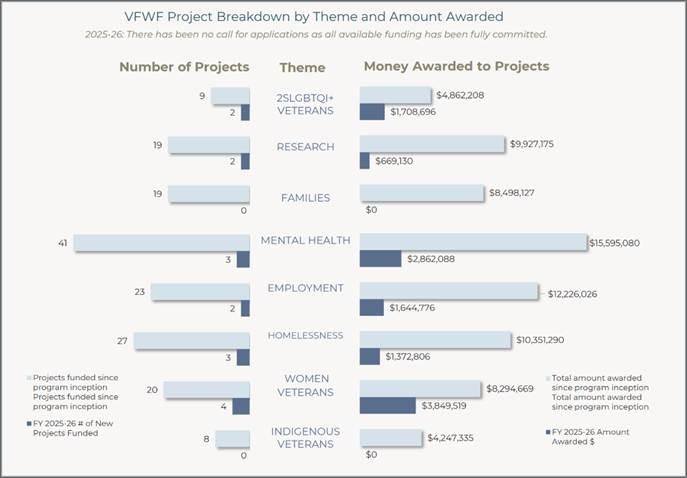
Text version of Graph
| Theme | Projects Funded Since Program Inception | FY 2025-26 New Projects Funded | Total Amount Awarded Since Program Inception | FY 2025-26 Amount Awarded |
|---|---|---|---|---|
| 2SLGBTQI+ | 9 | 2 | $4,862,208 | $1,708,696 |
| Research | 19 | 2 | $9,927,175 | $699,130 |
| Families | 19 | 0 | $8,498,127 | $0 |
| Mental Health | 41 | 3 | $15,595,080 | $2,862,088 |
| Employment | 23 | 2 | $12,226,026 | $1,644,776 |
| Homelessness | 27 | 3 | $10,351,290 | $1,372,806 |
| Women Veterans | 20 | 4 | $8,294,669 | $3,849,519 |
| Indigenous Veterans | 8 | 0 | $4,247,335 | $0 |
Specific demographic groups to be monitored
The following groups may benefit from this program (directly or indirectly), face barriers to access or participation, and/or experience impacts for various reasons. We continually work to identify and address these barriers:
Groups that may be impacted directly by the program (includes positive and/or negative impacts):
- Veterans
- Persons with disabilities or health issues
- Women
Groups that may be impacted indirectly by the program (includes positive, negative and/or neutral impacts):
- All Canadians
Groups that may face barriers:
- Black or other racialized / visible minority communities
- Indigenous Peoples
- 2SLGBTQI+
- Individuals of particular socio-economic status, educational level and/or particular familial characteristics (e.g., marital status, family status)
Key program impact statistics
Not available at this time. We are continuing to strengthen our capacity to assess and report on gender and diversity impacts through, where possible, enhanced collection and analysis of disaggregated data, expanded GBA Plus reporting and performance measurement capabilities, and ongoing engagement with equity-deserving Veteran populations. This work is helping to improve our ability to conduct intersectional analysis and better understand the diverse experiences of Veterans, while supporting future efforts to report on validated gender and diversity impacts, where feasible and appropriate.
GBA Plus Data Collection Details:
All initiatives undertaken through both Centres of Excellence (Chronic Pain Centre of Excellence and the Atlas Institute for Veterans and Families)—including the development of knowledge products, research studies, webinars, workshops, blogs, podcasts, etc.—ensure equitable representation of under-represented groups, such as women, Indigenous Veterans, and members of the 2SLGBTQI+ community.
VAC has established five-year Contribution Agreements with the Chronic Pain Centre of Excellence (2023-2028) and the Atlas Institute for Veterans and Families (2022-2027). As part of these agreements, research proposals must conform to the Sex and Gender Equity in Research (SAGER) guidelines, ensuring research is designed, conducted, and reported to identify knowledge gaps and ensure equitable representation of under-represented groups, including women and 2SLGBTQI+ Veterans. The Centres are expanding data collection on chronic pain and mental health. Through research and partnerships, they will continue to identify knowledge gaps related to sex and gender differences in the experiences of chronic pain and mental health, while developing tools and services to enhance the well-being of under-represented Veterans and their families.
Through the Joint Federal Research Funding Program, we funded a study titled Experiences of LGBT Purge Survivors with VAC Programs and Services. The study, which was completed in March 2026, was led by researchers at the MacDonald Franklin Operational Stress Injury (OSI) Research & Innovation Centre. Its goal was to enhance our understanding of LGBT Purge survivors’ experiences in accessing our programs and services. It focused on identifying how factors such as sex, gender, age, 2SLGBTQI+ identity, and military service history act as barriers or facilitators for this group. The findings informed recommendations to strengthen intersectional considerations, including sex, gender, age, sexual orientation, and military characteristics, in our policies, programs, and service development. The final report was submitted on March 24, 2026. Though there was no Veteran and Family Well-being Fund call for applications in 2025-2026, there were 16 new projects funded, drawn from the 2024-2025 round of applications. As part of that application process, organizations were required to demonstrate how their proposed projects support equity-deserving groups, incorporate GBA Plus considerations, and, in the case of research projects, adhere to SAGER guidelines. In addition, funding recipients are required to report quarterly on how GBA Plus has been integrated into the design and delivery of their initiatives.
We will be adopting Government of Canada standard reporting forms for both the Veteran and Family Well-being Fund and Joint Federal Research Funding Program to support greater consistency, comparability, and alignment with reporting requirements aimed at strengthening our data collection and analysis approach.
Transition Services
Target Population: Veterans, Families
Program goals: The Education and Training Benefit (ETB) is a taxable benefit that exists to provide funding to Veterans to help them achieve their education and post-military employment goals, better position themselves to be more competitive in the civilian workforce, and pursue activities that give them a sense of purpose. Veterans who have honourably released from the Canadian Armed Forces (Regular or Reserve Force), or members of the Supplementary Reserve, who have at least 6 years (2,191 paid days) of service may be eligible to receive up to $50,569.97 (indexed annually by the Consumer Price Index).Veterans and members of the Supplementary Reserve who have at least 12 years (4,382 paid days) of service may be eligible to receive up to $101,139.94 (indexed annually by the Consumer Price Index). Eligible clients can access ETB funding for up to 10 years from their release/transfer date. ETB funding is paid directly to Veterans, who are then responsible for paying tuition and expense costs to the educational institution when needed. The amount of funding provided to an eligible Veteran depends on the cost and length of the approved program.
The current contract for Career Transition Services (CTS) became operational in January 2023 and includes updated language to support all Government of Canada reporting requirements, including those for gender and diversity. Working with the national service provider also allows us to gain valuable knowledge of best practices in private industry around equity, diversity, and inclusion.
CTS supports approximately 1,000–1,200 new candidates annually in achieving employment, education or other post-service related goals. We receive monthly reports and analytics which include GBA Plus related data to best understand and appreciate the diversity of our clientele to tailor community-based services if needed or desired. This range of information supports our program management decision making and program enhancements.
The Rehabilitation Services and Vocational Assistance Program (RSVP) provides medical, psycho-social, and vocational rehabilitation services to eligible Veterans who experience health problem(s) that result primarily from service in the Canadian Armed Forces and are causing a barrier to re-establishment in life after service. It may also provide vocational assistance services to spouses and survivors. As of November 2022, these services are delivered through one national contractor, Partners in Canadian Veterans Rehabilitation Services (PCVRS).
The Veteran Family Program offers medically-releasing CAF members and their families with continued access to the Military Family Resource Centres and to a suite of transition-support programs and services. Through this program, a Veteran Family Telemedicine Service is being piloted. This pilot provides Medically released Veterans of the Canadian Armed Forces and their families, one year access to virtual care service, ensuring timely access to a primary care provider during the first year of transition.
| Predominantly men (e.g. 80 per cent or more men) | 60 per cent - 79 per cent men | Broadly gender-balanced | 60 per cent - 79 per cent women | Predominantly women (e.g. 80 per cent or more women) | |||
|---|---|---|---|---|---|---|---|
| Program: Career Transition Benefits | Men | ●Selected category | Women | ||||
| Program: Education and Training Benefits | Men | ●Selected category | Women | ||||
| Program: Rehabilitation | Men | ●Selected category | Women | ||||
| Primarily benefits youth, children and/or future generations | No significant inter-generational impacts or impacts on generations between youth and seniors | Primarily benefits seniors or the baby boom generation | |||
|---|---|---|---|---|---|
| Program: Career Transition Benefits | Youth | ●Selected category | Senior | ||
| Program: Education and Training Benefits | Youth | ●Selected category | Senior | ||
| Program: Rehabilitation | Youth | ●Selected category | Senior | ||
Specific demographic groups to be monitored
The following groups may benefit from this program (directly or indirectly), face barriers to access or participation, and/or experience impacts for various reasons. We continually work to identify and address these barriers:
Groups that may be impacted directly by the program (includes positive and/or negative impacts):
- Veterans
- Persons with disabilities or health issues
- Students
Groups that may be impacted indirectly by the program (includes positive, negative and/or neutral impacts):
- Families
Groups that may face barriers:
- Black or other racialized / visible minority communities
- Indigenous Peoples
- 2SLGBTQI+
- Individuals of particular socio-economic status, educational level and/or particular familial characteristics (e.g., marital status, family status)
- Women
- Persons with disabilities or health issues
Key program impacts on gender and diversity
This year we performed an in-depth secondary analysis of the 2024 VNCS for GBA Plus analysis of VAC Service Delivery programs and services. Intersectional variables used in the analysis included age, sex, gender, Indigenous identity, racial identity, language, and geography.
Key program impact statistics
Overall, 52% of VAC clients who released from military service since 2014 reported that they had transitioned well to life after service. Positive transition outcomes were reported more frequently among older Veterans, women, and French-speaking respondents, while lower rates were reported among younger Veterans, racialized respondents, and Indigenous respondents, indicating differences in transition experiences across demographic groups.
Indicator: % of Veterans Affairs Canada Veteran clients who released since 2014 that reported "I have transitioned well from military service to life after service."
Target: TBD in 2026-27
Overall Result: 52%
| Demographic group | Result (percentage) |
|---|---|
| Age 19-39 | 41% |
| Age 40-49 | 42% |
| Age 50-59 | 58% |
| Age 60-69 | 72% |
| Age 70-79 | *Data suppressed due to small counts |
| Age 80-89 | *Data suppressed due to small counts |
| Age 90+ | 0% |
| Men | 52% |
| Women | 56% |
| English | 50% |
| French | 58% |
| Racialized population | 44% |
| Indigenous Person | 33% |
*Data suppressed due to small counts
Source: 2024 VAC National Client Survey
Supplementary information sources
2024 VAC National Client Survey
GBA Plus Data Collection Details:
We are analyzing data tables provided by Statistics Canada that result from the linkage of VAC program data and 2021 Statistics Canada census data. The resulting analysis will enable us to look at point in time data for insights into programs including Disability Benefits, Rehabilitation, Income Replacement Benefit, Case Management, Veterans Independence Program, Treatment Benefits including Cannabis for Medical Purposes. The data tables allow us to look at these programs and compare demographic, social, and income characteristics that are not available in VAC’s administrative data. The analysis will continue into 2026-2027.
As well, an Education and Training Benefit dashboard allows users to query program data using numerous factors. We are working on improving data collection for ETB, while maintaining privacy compliance. We currently collect and use several data points that enable GBA Plus, including sex at birth (male/female), age, official language, and geography, and are exploring the addition of other intersectional identity factors.
It is important to note that the ETB validated dataset and dashboard do not identify VAC Community Members by gender. Instead, individuals are categorized by sex at birth. While the terms "sex" and "gender" are sometimes used interchangeably in everyday language, it is important to recognize that they are distinct concepts. For the purposes of data collection and reporting, the term "sex" has been consistently applied across the data set.
A dashboard for CTS data has been in use since 2021–22, enabling users to query CTS data using numerous factors, including GBA Plus data. Over the past year, CTS has implemented better data collection to identify male/female distribution of referrals as well as systematic age-based analytics to help guide program development and job development support. Additionally, through Power Business Intelligence (BI) analytics, improved data collection was implemented related to geographic service distribution across all provinces and territories to ensure national coverage is provided that is consistent with regional labour market trends. In working with coaches, individuals are provided with information on various employment resources available to persons who identify as women, transgender, non-binary, black or indigenous and based on self-identification coaches are able to provide specific guided support to additional labour market resources.
RSVP has made significant strides in operationalizing its enhanced Performance Measurement and Reporting Framework. This framework, designed to measure meaningful outcomes for every participant, including improvements of overall health and well-being, functional capacity and satisfaction with rehabilitation services is now actively informing the program’s service delivery. We are also addressing the best methods to enhance data collection for this program while respecting privacy regulations. As our Information and Data Strategy evolves, further improvements in data analysis will follow.
To better understand and address the differences in gender and diversity results, RSVP has launched a Participant Experience Survey. This survey is designed to gather feedback on various aspects of program service delivery and participants’ perceptions of their outcomes. The data collected can be disaggregated by factors such as age and geographic location, enabling analysis of where disparities may exist and informing targeted actions to improve equity in program delivery.
We are updating the Performance Measurement and Reporting Framework for the Veteran Family Program to provide a more accurate picture of participants and their outcomes.
We will continue with our analysis of the program data tables and will prepare to report the findings to the Department. We are also planning analysis of VAC program data link to the Canadian Survey on Disability. For this analysis we will be able to look at the data with more detailed, disaggregated methods, by working directly in the Statistics Canada virtual data lab.
Veterans Emergency Fund
Target Population: Veterans, Families, Low-income individuals and/or families
Program goals: The Veterans Emergency Fund (VEF) is a fund that exists to provide tax-free payments to Veterans and their families who are facing a financial emergency that is threatening their health and well-being. VEF is provided to cover essential needs such as food, shelter, clothing, and uninsured essential one-time medical needs. Eligible Veterans and their families can be approved for up to a maximum of $2,500 per fiscal year (or up to $10,000 in exceptional circumstances). VEF applicants will also be referred to other internal and external resources to assist them in the longer-term.
VEF uses existing client demographic data captured at the departmental level for monitoring and reporting purposes, along with supporting the GBA Plus analysis of current recipients.
| Predominantly men (e.g. 80 per cent or more men) | 60 per cent - 79 per cent men | Broadly gender-balanced | 60 per cent - 79 per cent women | Predominantly women (e.g. 80 per cent or more women) | |||
|---|---|---|---|---|---|---|---|
| Program: Veterans Emergency Fund | Men | ●Selected category | Women | ||||
| Primarily benefits youth, children and/or future generations | No significant inter-generational impacts or impacts on generations between youth and seniors | Primarily benefits seniors or the baby boom generation | |||
|---|---|---|---|---|---|
| Program: Veterans Emergency Fund | Youth | ●Selected category | Senior | ||
Other data:
Indicator: % of Veterans Emergency Fund program clients by age, gender (Male/Female) and language (English/French).
| Age Group | Men | Women | English | French |
|---|---|---|---|---|
| Under 30 | 84% | 16% | 87% | 13% |
| 30–49 | 82% | 18% | 85% | 15% |
| 50–69 | 83% | 16% | 9% | 9% |
| 70+ | 88% | 12% | 94% | 6% |
Note: VEF Clients represents the number of VAC Community Members that have received VEF payments for the period April 1st 2025 to March 31st, 2026.
Specific demographic groups to be monitored
The following groups may benefit from this program (directly or indirectly), face barriers to access or participation, and/or experience impacts for various reasons. We continually work to identify and address these barriers:
Groups that may be impacted directly by the program (includes positive and/or negative impacts):
- Veterans
- Families
- Individuals of particular socio-economic status, educational level and/or particular familial characteristics(e.g., marital status, family status)
Groups that may be impacted indirectly by the program (includes positive, negative and/or neutral impacts):
- Families
Groups that may face barriers:
- Black or other racialized / visible minority communities
- Indigenous Peoples
- 2SLGBTQI+
Key program impact statistics
Not available at this time. We are currently undertaking a GBA Plus review of Program Indicators and plans to include key program impact statistics in future Departmental Results Reports.
GBA Plus Data Collection Details:
A Veterans Emergency Fund dashboard now exists to allow users to query program data using numerous factors.
We are working on improving data collection for this program, while maintaining privacy compliance. We currently collect and use several data points that enable GBA Plus, including sex at birth (male/female), age, official language, and geography, and is exploring the addition of other intersectional identity factors.
It is important to note that the VEF validated dataset and dashboard do not identify VAC Community Members by gender. Instead, individuals are categorized by sex at birth. While the terms "sex" and "gender" are sometimes used interchangeably in everyday language, it is important to recognize that they are distinct concepts. For the purposes of data collection and reporting, the term "sex" has been consistently applied across the data set.
Veterans Independence Program
Target Population: Veterans, Families
Program goals: The Veterans Independence Program (VIP) helps eligible Veterans, their primary caregivers, and survivors remain in their homes and communities for as long as possible by providing funding towards the cost of services that support their independence. Services supported include: housekeeping, grounds maintenance, personal care, ambulatory care, access to nutrition, and professional health and support services. When remaining at home is no longer practical, the service can provide support with care in a community facility (nursing home care).
The VIP collects sufficient data on application to determine program eligibility and benefit entitlement. Existing client demographic data is captured at the departmental level and can be accessed for monitoring and reporting purposes. This departmental-level data includes age, sex, marital status, geographical location (derived from postal codes), language, and a homelessness indicator. VIP Program Management, working closely with enterprise data, corporate statistics and business intelligence within our Department, can use this demographic data to inform their work and support the GBA Plus analysis of current recipients of VIP services.
| Predominantly men (e.g. 80 per cent or more men) | 60 per cent - 79 per cent men | Broadly gender-balanced | 60 per cent - 79 per cent women | Predominantly women (e.g. 80 per cent or more women) | |||
|---|---|---|---|---|---|---|---|
| Program: Veterans Independence Program | Men | ●Selected category | Women | ||||
| Primarily benefits youth, children and/or future generations | No significant inter-generational impacts or impacts on generations between youth and seniors | Primarily benefits seniors or the baby boom generation | |||
|---|---|---|---|---|---|
| Program: Veterans Independence Program | Youth | ●Selected category | Senior | ||
Specific demographic groups to be monitored
The following groups may benefit from this program (directly or indirectly), face barriers to access or participation, and/or experience impacts for various reasons. We continually work to identify and address these barriers:
Groups that may be impacted directly by the program (includes positive and/or negative impacts):
- Veterans
- Persons with disabilities or health issues or their caregivers
- Seniors
- Families
Groups that may be impacted indirectly by the program (includes positive, negative and/or neutral impacts):
- Families
Groups that may face barriers:
- Black or other racialized / visible minority communities
- Indigenous Peoples
- 2SLGBTQI+
- Individuals of particular socio-economic status, educational level and/or particular familial characteristics (e.g., marital status, family status)
- Veterans in rural/remote areas
- Persons with disabilities or health issues or their caregivers
Key program impacts on gender and diversity
This year we performed an in-depth secondary analysis of the 2024 VNCS for GBA Plus analysis of VAC Service Delivery programs and services. Intersectional variables used in the analysis included age, sex, gender, Indigenous identity, racial identity, language, and geography.
Key program impact statistics
Overall, 94% of Veterans Independence Program recipients reported that they rely on the program to remain in their homes and communities, closely aligning with the target of 95%. Results were consistently high across demographic groups, suggesting that the program supports independent living for a broad range of recipients, including women, racialized individuals, and Indigenous individuals.
Indicator: % of Veterans Independence Program (VIP) recipients who report they rely on VIP in order to remain in their homes and communities.
Target: 95%
Overall Result: 94%
| Demographic group | Result (percentage) |
|---|---|
| Age 19-39 | 88% |
| Age 40-49 | 90% |
| Age 50-59 | 91% |
| Age 60-69 | 95% |
| Age 70-79 | 94% |
| Age 80-89 | 98% |
| Age 90+ | 95% |
| Men | 94% |
| Women | 94% |
| English | 94% |
| French | 93% |
| Racialized population | 96% |
| Indigenous Person | 95% |
Source: 2024 VAC National Client Survey
Supplementary information sources
2024 VAC National Client Survey
GBA Plus Data Collection Details:
We are analyzing data tables provided by Statistics Canada that result from the linkage of VAC program data and 2021 Statistics Canada Census data. The resulting analysis will enable us to look at point in time data for insights into programs including Disability Benefits, Rehabilitation, Income Replacement Benefit, Case Management, Veterans Independence Program, Treatment Benefits including Cannabis for Medical Purposes. The data tables allow us to look at these programs and compare demographic, social, and income characteristics that are not available in VAC’s administrative data. The analysis will continue into 2026-2027.
Future efforts will focus on enhancing reporting capabilities through dedicated efforts to identify gaps and further refine validated datasets, while continuing activities that support FHCPS contract implementation.
Results from the 2026 VNCS will be monitored to inform ongoing analysis and identify emerging trends.
We will continue with our analysis of the program data tables and will prepare to report the findings to the Department. We are also planning analysis of VAC program data linked to the Canadian Survey on Disability. For this analysis we will be able to look at the data with more detailed, disaggregated methods, by working directly in the Statistics Canada virtual data lab.
War Veterans Allowance
Target Population: Veterans, Families
Program goals: War Veterans Allowance (WVA) is a tax free, monthly financial benefit for low-income Veterans of the Second World War and/or the Korean War and their survivors/orphans. It also provides important access to some of our other programs such as Health Care Benefits (Treatment Benefits), the Veterans Independence Program, the Long-Term Care Program, and the VAC Assistance Fund. The War Veterans Allowance collects sufficient data to monitor and report program impacts by gender and diversity (GBA Plus).
| Predominantly men (e.g. 80 per cent or more men) | 60 per cent - 79 per cent men | Broadly gender-balanced | 60 per cent - 79 per cent women | Predominantly women (e.g. 80 per cent or more women) | |||
|---|---|---|---|---|---|---|---|
| Program: War Veterans Allowance | Men | ●Selected category | Women | ||||
| Primarily benefits youth, children and/or future generations | No significant inter-generational impacts or impacts on generations between youth and seniors | Primarily benefits seniors or the baby boom generation | |||
|---|---|---|---|---|---|
| Program: War Veterans Allowance | Youth | ●Selected category | Senior | ||
Specific demographic groups to be monitored
The following groups may benefit from this program (directly or indirectly), face barriers to access or participation, and/or experience impacts for various reasons. We continually work to identify and address these barriers:
Groups that may be impacted directly by the program (includes positive and/or negative impacts):
- Veterans
- Persons with disabilities or health issues
- Seniors
- Families
- Individuals of particular socio-economic status, educational level and/or particular familial characteristics(e.g., marital status, family status)
Groups that may be impacted indirectly by the program (includes positive, negative and/or neutral impacts):
- Families
Groups that may face barriers:
- Black or other racialized / visible minority communities
- Indigenous Peoples
- 2SLGBTQI+
Key program impacts on gender and diversity
Tracking the proportion of applications completed within service standards allows VAC to assess the efficiency of application processing across different demographic groups. Comparing this information is crucial as VAC strives for equity in the delivery of its programs, benefits, and services and to identify any disparities in outcomes among diverse client populations.
Key program impact statistics
The program rendered 69% of War Veterans Allowance decisions within four weeks, below the target of 80%. Results were consistent between men and women (69%), while differences were observed by age and official language, with French-speaking applicants achieving a higher rate of timely decisions (100%) than English-speaking applicants (67%). To note, short-term operational changes coupled with low application volume in 2025–26 impacted service standard results.
Indicator: % of War Veterans Allowance decisions rendered within 4 weeks
Target: 80%
Overall Result: 69%
| Demographic group | Result (percentage) |
|---|---|
| Age 51–60 | 100% |
| Age 81–90 | 75% |
| Age 90+ | 67% |
| Men | 69% |
| Women | 69% |
| English | 67% |
| French | 100% |
Source: VAC Reporting Database
GBA Plus Data Collection Details:
We are currently exploring the best methods for increasing data collection for this program while maintaining privacy boundaries. As our Information and Data Strategy is implemented, further improvements in data analysis will be incorporated.
We continued to review and update our Financial Benefit data collection with a GBA Plus lens to ensure they meet the diverse needs of Veterans and their families and are aligned with VAC’s GBA Plus Strategy and Framework. By considering various factors (i.e., sex, gender, age, family status, language, etc.), we are making data collection more inclusive and more effective. This helps ensure all Veterans receive the support they need to stay financially secure.
GBA Plus reviews of existing policies and data collection will continue in 2026-27, including policies relating to VAC’s Financial Benefits.
Core Responsibility 2: Commemoration
Canada Remembers Program
Target Population: Veterans, General Public, Youth
Program goals: Canada Remembers Program initiatives ensure that those who served in Canada’s military efforts are honoured and that the memory of their sacrifices and achievements is preserved. GBA Plus, including gender and other identifying factors (e.g. Indigenous identity), are considered to help inform the development and review of programming.
Distribution of Benefits: Although this program doesn’t deliver benefits in a traditional sense, we do have data available based on surveys conducted with Canadians.
Specific demographic groups to be monitored
The following groups may benefit from this program (directly or indirectly), face barriers to access or participation, and/or experience impacts for various reasons. We continually work to identify and address these barriers:
Groups that may be impacted directly by the program (includes positive and/or negative impacts):
- All Canadians
- Veterans
- Youth and Children
Groups that may be impacted indirectly by the program (includes positive, negative and/or neutral impacts):
- Students
Groups that may face barriers:
- Black or other racialized / visible minority communities
- Indigenous Peoples
- Newcomers or immigrants
- Rural or remote communities
Key program impacts on gender and diversity
Key program impact statistics
Overall, 74% of VAC clients reported satisfaction with the way VAC's commemorative initiatives honour Veterans and those who died in service. Results varied across demographic groups, with higher satisfaction reported by older respondents, women, French-speaking respondents, and Indigenous respondents, and lower satisfaction reported by younger respondents.
Indicator: % of Veterans Affairs Canada clients who are satisfied with the way Veterans Affairs Canada’s commemorative initiatives honour Veterans and those who died in service.
Target: 80%
Overall Result: 74%
| Demographic group | Result (percentage) |
|---|---|
| Age 19-39 | 56% |
| Age 40-49 | 62% |
| Age 50-59 | 67% |
| Age 60-69 | 74% |
| Age 70-79 | 86% |
| Age 80-89 | 89% |
| Age 90+ | 95% |
| Men | 72% |
| Women | 80% |
| English | 72% |
| French | 81% |
| Racialized population | 71% |
| Indigenous Person | 77% |
Source: 2024 VAC National Client Survey
Supplementary information sources
2024 VAC National Client Survey
GBA Plus Data Collection Details:
In 2025–26, the Commemoration Division improved how it tracks and analyzes data by introducing a new internal indicator based on projects funded through the Commemorative Partnership Program. This indicator measures the percentage of approved projects that aim to commemorate underrepresented groups.
Going forward, this will help the Division more consistently track how funded projects reflect the diversity of Veteran experiences. It will also make it easier to identify trends, better understand where gaps exist, and support more informed decisions to improve inclusivity in commemorative programming.
The Commemoration Division is taking targeted steps to address differences observed in gender and diversity results while improving its understanding of underlying factors. This includes ongoing engagement with diverse Veteran communities and applying inclusive approaches throughout the planning and delivery of commemorative activities.
Specific actions include increasing representation in ceremonies and programming by involving individuals from diverse Veteran groups in key roles and official delegations for major commemorative events. Programming and educational initiatives have been enhanced using a GBA Plus lens to highlight the contributions of women, Indigenous, Black, racialized, 2SLGBTQI+, and modern Veterans through exhibits, learning products, and Veterans’ Week materials.
Efforts to reduce barriers and improve inclusivity include incorporating Indigenous languages and cultural practices, expanding multilingual initiatives such as One Poem, Many Voices, and encouraging stakeholders to adopt inclusive practices. Targeted initiatives such as Indigenous-led ceremonies, recognition of 2SLGBTQI+ Veterans, and programming that highlights modern service also help address specific gaps identified in survey results.
Collectively, these actions strengthen representation, improve accessibility, and provide ongoing insights to better understand and address differences in outcomes across diverse Veteran groups.
Funeral and Burial Program
Target Population: Veterans
Program goals: Funeral and burial assistance is provided through the Last Post Fund (LPF)– a non-profit organization – to help pay for funeral and burial services, including a military gravestone, for eligible Veterans.
| Predominantly men (e.g. 80 per cent or more men) | 60 per cent - 79 per cent men | Broadly gender-balanced | 60 per cent - 79 per cent women | Predominantly women (e.g. 80 per cent or more women) | |||
|---|---|---|---|---|---|---|---|
| Program: Funeral and Burial Program | Men | ●Selected category | Women | ||||
| Primarily benefits youth, children and/or future generations | No significant inter-generational impacts or impacts on generations between youth and seniors | Primarily benefits seniors or the baby boom generation | |||
|---|---|---|---|---|---|
| Program: Funeral and Burial Program | Youth | ●Selected category | Senior | ||
Specific demographic groups to be monitored
The following groups may benefit from this program (directly or indirectly), face barriers to access or participation, and/or experience impacts for various reasons. We continually work to identify and address these barriers:
Groups that may be impacted directly by the program (includes positive and/or negative impacts):
- Veterans
- Seniors
Groups that may be impacted indirectly by the program (includes positive, negative and/or neutral impacts):
- Families
Groups that may face barriers:
- Indigenous Peoples
- Individuals of particular socio-economic status, educational level and/or particular familial characteristics (e.g., marital status, family status)
Key program impacts on gender and diversity
Key program impact statistics
Overall, 81% of VAC clients reported satisfaction that the estates of Veterans have access to financial assistance through the Funeral and Burial Program, exceeding the target of 70%. Satisfaction levels were consistently high across demographic groups, with particularly high levels reported among older respondents and French-speaking clients, indicating broad confidence in the program's support for Veterans' estates.
Indicator: % of Veterans Affairs Canada clients who are satisfied that the estates of Veterans have access to financial assistance through the Funeral and Burial Program
Target: 70%
Overall Result: 81%
| Demographic group | Result (percentage) |
|---|---|
| Age 19-39 | 75% |
| Age 40-49 | 74% |
| Age 50-59 | 77% |
| Age 60-69 | 79% |
| Age 70-79 | 84% |
| Age 80-89 | 91% |
| Age 90+ | 89% |
| Men | 80% |
| Women | 83% |
| English | 77% |
| French | 92% |
| Racialized population | 83% |
| Indigenous Person | 79% |
Source: 2024 VAC National Client Survey
Supplementary information sources
2024 VAC National Client Survey
GBA Plus Data Collection Details:
The Last Post Fund delivers the Funeral and Burial Program. In 2025–26, GBA Plus data collection and analysis were supported through the extraction of all accepted cases from the program portal into a database at year-end. The data was validated for integrity and accuracy and analyzed using key variables, including gender (male, female, other), marital status, and age. At this time, there are no planned enhancements to data collection or analysis tools. Improvements, such as the ability to generate automated reports, would require programming changes to the existing case management portal and the engagement of an external professional firm. Current budget limitations do not allow for this work to proceed.
Core Responsibility 3: Veterans Ombudsperson
Veterans Ombudsperson
Target Population: Veterans, Families, Military Personnel
Program goals: The Office of the Veterans Ombud (OVO) reviews complaints and challenges the policies and decisions of Veterans Affairs Canada where individual or systemic unfairness are identified. The OVO strives to be an independent and respected voice for fairness and a champion for the well-being of Veterans and their families.
Distribution of Benefits: Although this program doesn’t deliver benefits in a traditional sense, data is available based on client inquiries and complaints.
Other data:
| Type | Men | Women | Preferred Not to Say | Another Gender | Unknown (unidentified) | Total |
|---|---|---|---|---|---|---|
| Complaint | 1,469 | 386 | - | 9 | 184 | 2,048 |
| Information Inquiry | 109 | 47 | - | 0 | 53 | 209 |
| Type | English | French | Total |
|---|---|---|---|
| Complaint | 1,654 | 394 | 2,048 |
| Information Inquiry | 179 | 30 | 209 |
| Type | RCMP/Former RCMP | RCMP Civilian | Former Regular/Reserve Force | CAF Still Serving | Merchant Marine | Police – Peace Keeping Missions | Traditional Veteran | Survivor/Family | Civilian | Allied Veteran | Not Identified | Total |
|---|---|---|---|---|---|---|---|---|---|---|---|---|
| Complaint | 98 | 6 | 1,404 | 100 | 2 | 1 | 7 | 50 | 26 | 4 | 350 | 2,048 |
| Information inquiry | 12 | 1 | 81 | 1 | - | - | - | 14 | 11 | 1 | 88 | 209 |
Specific demographic groups to be monitored
The following groups may benefit from this program (directly or indirectly), face barriers to access or participation, and/or experience impacts for various reasons. OVO continually work to identify and address these barriers:
Groups that may be impacted directly by the program (includes positive and/or negative impacts):
- Veterans
- Families/Survivors
Groups that may be impacted indirectly by the program (includes positive, negative and/or neutral impacts):
- Families/Survivors
Groups that may face barriers:
- Black or other racialized / visible minority communities
- Indigenous Peoples
- 2SLGBTQI+
- Individuals of particular socio-economic status, educational level and/or particular familial characteristics (e.g., marital status, family status)
- Persons with disabilities or health issues or their caregivers
- Seniors
- Children or Youth
Key program impact statistics
Not available at this time. The OVO is currently undertaking a GBA Plus review of Program Indicators and plans to include key program impact statistics in future Departmental Results Reports.
GBA Plus Data Collection Details:
OVO will continue to collaborate with counterparts within VAC to align with VAC's work on GBA Plus data. OVO partnered with VAC IT services to develop a dashboard that allows for more timely monitoring, analysis, and reporting of GBA Plus data.