
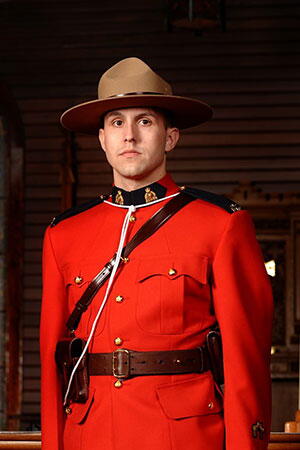

Joined
- 2009

Postings
- 2009-2014: Chilliwack, BC (General Duty, General Investigative Section, Drug Section)
- 2014-2018: Yellowknife, NWT (General Duty, Crime Reduction Unit, Federal Investigations Unit – G Division)
- 2018-2019: Sipekne’katik (Indian Brook) Detachment
- 2019-2025: Halifax, NS (Southeast Traffic Services, Strategic Communications Unit – H Division)
Warning: This story includes discussion of PTSD, trauma, and violence that may be distressing to some readers. Discretion is advised.
Joining the RCMP
Growing up in the Spryfield neighbourhood of Halifax, Nova Scotia, Bryan Martell had an ideal childhood. He played hockey, excelled as a team captain, and had dreams of becoming a teacher.
But midway through his education program, he changed his mind. He enjoyed being a leader but wanted a career that was more dynamic and exciting. That’s when he decided to apply to join the Royal Canadian Mounted Police (RCMP).
"It just seemed like a good way to have an exciting career and see the country."
Working in the RCMP
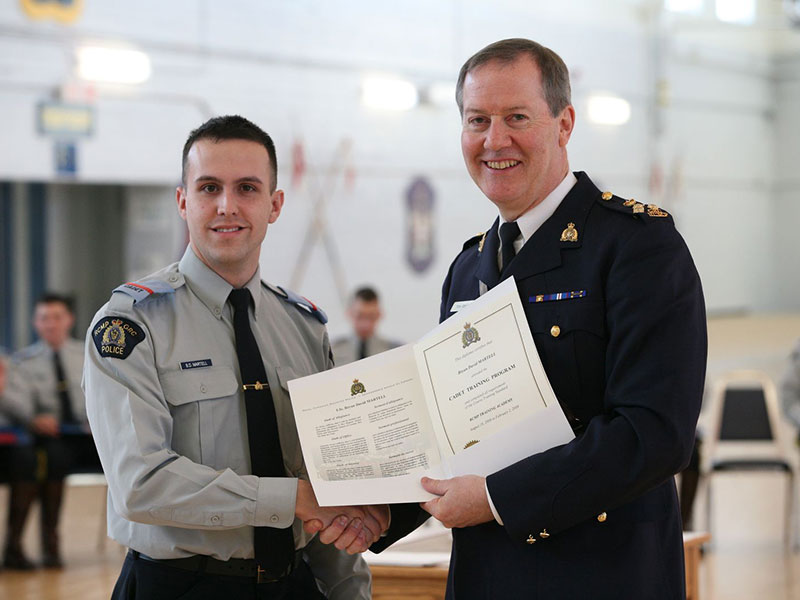
After graduating from depot in 2009, Bryan Martell began a nearly two-decade career in the RCMP, starting in Chilliwack, BC.
In August 2008, Martell arrived at depot in Regina, Saskatchewan, and immediately knew he was in the right place.
Early into his training, he attended a police officer memorial parade. It emphasized the risks of his job, and reinforced brotherhood among his fellow recruits.
"I got to work with them all in different parts of the country and still see them regularly."
After graduating from depot in February 2009, Martell began his RCMP career in Chilliwack, British Columbia. Every day involved a race to stop an incident, with sirens blaring and guns drawn.
Despite the danger, it was everything he hoped for.
"It was just constant running to stuff and exciting things. It was what I had envisioned policing to be."
The toll of the job
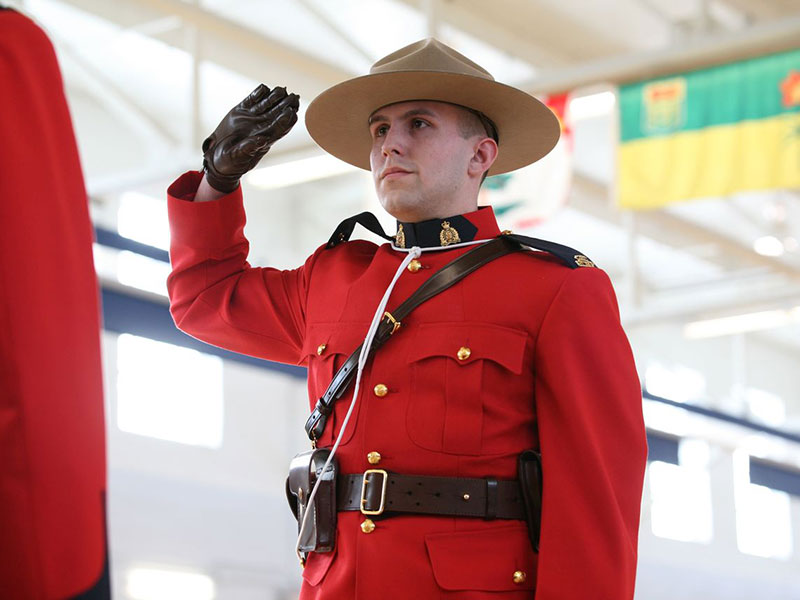
Initially, the RCMP was everything Bryan Martell hoped it would be. But a few years into his career, a workplace trauma changed everything.
A few years into his career, the job began to take its toll.
During a routine surveillance in Chilliwack, Martell and his partner were called to stop an assault taking place at a residence. When they arrived, he was horrified to see a minor being assaulted by her stepfather.
Though they stopped the assault, the incident was traumatizing for him.
"You know those things happen in the world, but it was a first-hand encounter, and it was a different ball game."
As Martell moved from one post to another throughout Canada, he carried his trauma with him. Working as a police officer became difficult as he faced more stressful situations at work.
His family life also became strained. He did not talk about his struggles with his wife and could not read bedtime stories to his daughters at night.
He set up appointments with a psychologist, who diagnosed him with Post Traumatic Stress Disorder (PTSD), depression, and anxiety. He said he wanted to get better for his family, but his work made it feel impossible.
"I never wanted to go to work, because I just worried about what was going to happen that day that was going to make that process more difficult."
Finding help
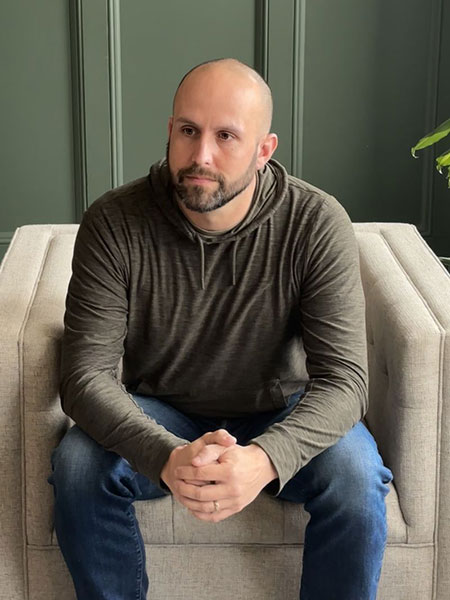
A colleague advised Bryan Martell to contact VAC for health benefits for his PTSD. He says this was a life-changing decision for him and his family.
In 2022, a colleague asked Martell if he had a file with Veterans Affairs Canada (VAC). He asked what he meant and was told to call to learn more about benefits that could help him.
Eager to turn his life around, Martell made the call to VAC. He was given the opportunity to go to the Newly Institute, a mental health clinic providing medically enhanced psychotherapy for patients with mental health struggles, addiction and pain, in Fredericton, New Brunswick. There, he attended a PTSD treatment program, spending two months with a group of other RCMP members and Veterans, and sharing his experiences.
For the first time in his career, he said he did not feel alone.
"That experience with meeting other people that were dealing with the same stuff... was a big change in things for me."
He began opening up more, sharing his experiences with his wife and others. He started a tradition with his daughters, asking them a question every night before bed.
Through this, he coped with his trauma and started feeling more like the father figure he always wanted to be.
"It allowed me to get back and connect with the kids, in a way that seemed impossible before."
Life after service
After 17 years of service, Martell decided to retire from the RCMP in 2026, following a short period of medical leave.
He is now focused on his recovery and family, keeping busy as a full-time, stay-at-home dad to his daughters. He coaches one of his girls’ ringette teams, takes the other to horseback riding lessons, and enjoys family trips to their cottage in Cape Breton, NS.
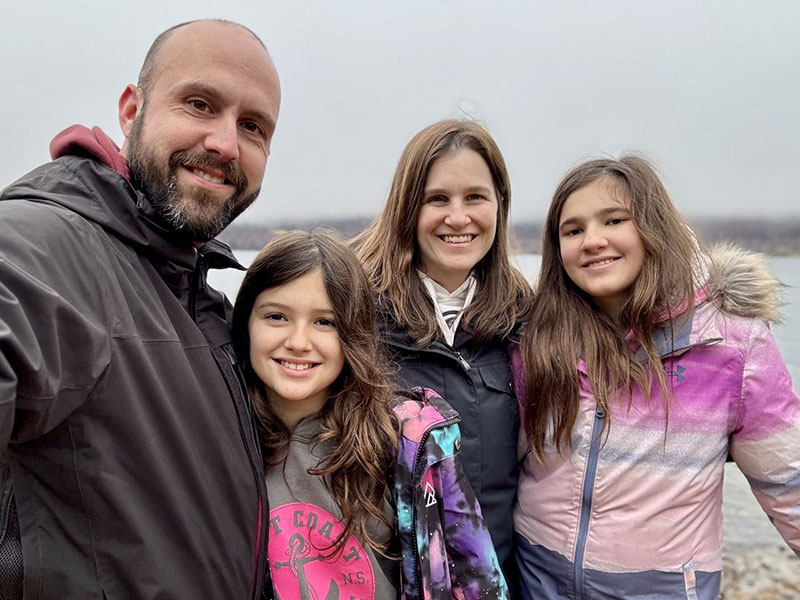
Bryan Martell is now focused on his family and recovery after retiring from the RCMP in 2026. Despite his struggles, he still has fond memories of his time serving fellow Canadians.
He intends to apply for jobs when he is ready.
"At some point, I’ll…try to do a job that’s a little more behind-the-scenes somewhere, but for now, [I’m] just parenting."
He stays involved in his community, serving on the board of the ringette association, and takes part in annual Remembrance Day commemorations at his daughters’ school.
He also goes on regular golf trips with RCMP colleagues. Many of them deal with similar trauma as Martell. Through golf, they bond and heal together.
"It affects all of us, so golf is kind of our therapy together for ourselves after that."
Martell continues to use VAC benefits today to aid his mental and physical recovery from the demands of his RCMP work.
Despite his struggles, he looks back fondly on his service, and is optimistic for the well-being of other RCMP members, thanks to the care provided through VAC.
"It is life-changing to have that to fall back onto."
With courage, integrity, and loyalty, Bryan Martell is leaving his mark. He is one of our Canadian Veterans. Discover more stories.
The well-being of Canadian Veterans is at the heart of everything we do. As part of this, we recognize, honour and commemorate the service of all Canadian Veterans. Learn more about the services and benefits that we offer.
If you are a Veteran, family member or caregiver, the support of a mental health professional is available anytime at no cost to you. Call 1-800-268-7708.