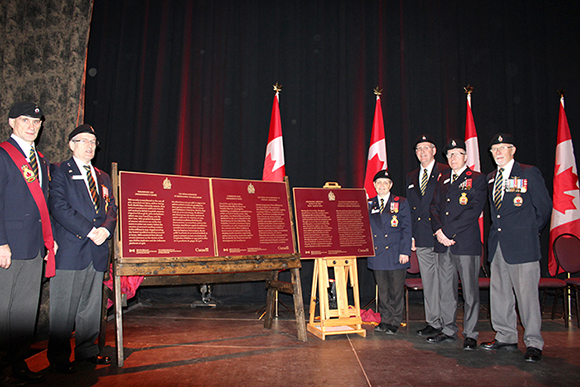
Aboriginal Military Service in the First World War
Between 1914 and 1918, Aboriginal men from all regions of Canada and the Dominion of Newfoundland fought with the Canadian military in the First World War. These men volunteered to serve, even though for many this meant fighting for a government that considered them "wards" of the state and denied their right to vote. Serving side-by-side with other Canadian men, Aboriginal soldiers gained acceptance and respect at levels that contradicted their treatment and status back home, and challenged the racist sentiment that one could not be both Aboriginal and a responsible citizen. At war’s end, Aboriginal veterans and members of Aboriginal communities were inspired to improve the status of Aboriginal peoples in Canada. This was the active force behind the first pan-Canadian Aboriginal organization, the League of Indians of Canada, which gave a national voice to Aboriginal concerns and set the stage for future activism in the fight for Aboriginal rights.
When war broke out, Aboriginal men were among the first to enlist for the Canadian Expeditionary Force (CEF) and were part of the first contingent of Canadians to be sent overseas. During the war, the number of Aboriginal men that volunteered left some reserves nearly depleted of young men. Aboriginal women were also active participants, and raised money, formed committees, and sent comforts from home to the troops at the front. While many Aboriginal men were eager to enlist, not all shared this enthusiasm and some Aboriginal communities discouraged their young men from signing up.
Once overseas, Aboriginal men served throughout the army in the infantry, railway troops, forestry, pioneer, and labour battalions, the veterinary corps, and also the Royal Flying Corps. Some Aboriginal men were recognized for their skills as snipers and scouts, using abilities they had acquired through their civilian roles as hunters and trappers, and Aboriginal men won medals for bravery and honour throughout the CEF. More than 300 Aboriginal men were killed at war, and many others were wounded or died upon their return.
Many Aboriginal veterans felt that little distinction existed between Aboriginal and non-Aboriginal soldiers on the front. Upon their demobilization, however, veterans returned to the same discriminatory environment that had existed prior to the war, and many felt that their status in society did not reflect their wartime achievement and sacrifice. Military service had provided an opportunity for Aboriginal soldiers from different parts of the country to meet and exchange ideas, and this created a sense of shared experience. The League of Indians of Canada was founded in 1919 by a veteran of the war and attracted members from across Canada to lobby for Aboriginal rights until its demise in the 1920s.