
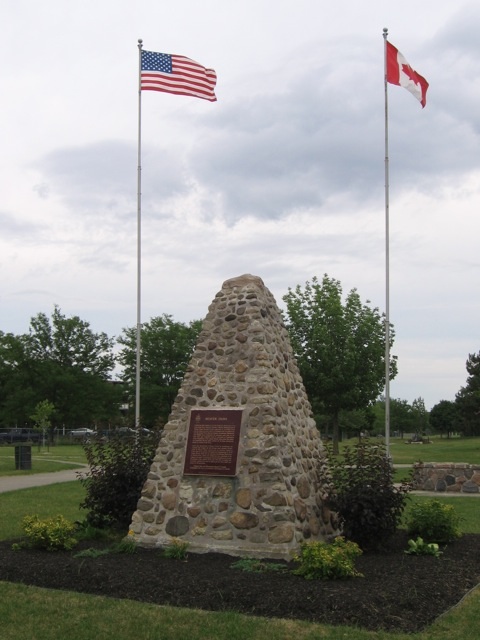
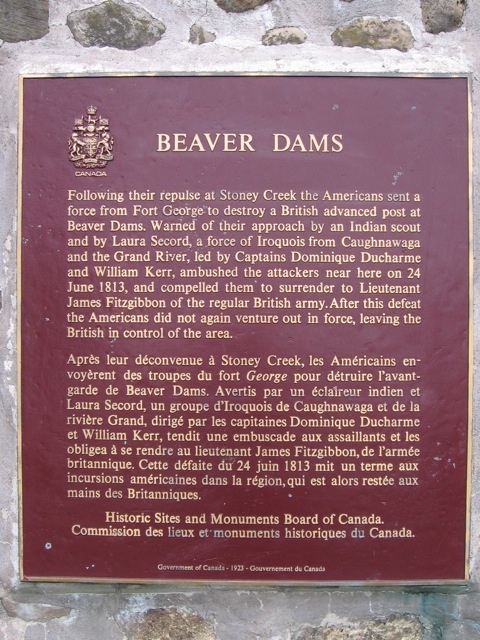
In 1923, the Historic Sites and Monuments Board of Canada placed a cairn at the crossroads of Old Thorold Stone Road and Davis Road. The Battle of Beaver Dams was designated a National Historic Site of Canada in 1921 because - warned by Laura Secord and Iroquois scouts, a force of Iroquois from Caughnawaga and Mohwaks of Grand River defeated an attacking American force near Beaver Dams on 24 June 1813. The American defeat left the British in control of the Niagara area for the remainder of 1813.
The victory was entirely due to the Indigenous, who were deprived of the reward they had been promised, and of the honour and glory which they had won. There were 15 Indigenous killed and 25 wounded. Two Caughnawagas chiefs killed in the battle were Deyahokethe and Aheatagea. A General Order was issued on July 6, 1813, giving the Indigenous detachments credit for their role and conduct in the battle, and compensation to the wounded and families of the fallen.
In 1975, the Battle of Beaver Dams Memorial was moved to the newly created Battle of Beaver Dams Park.