

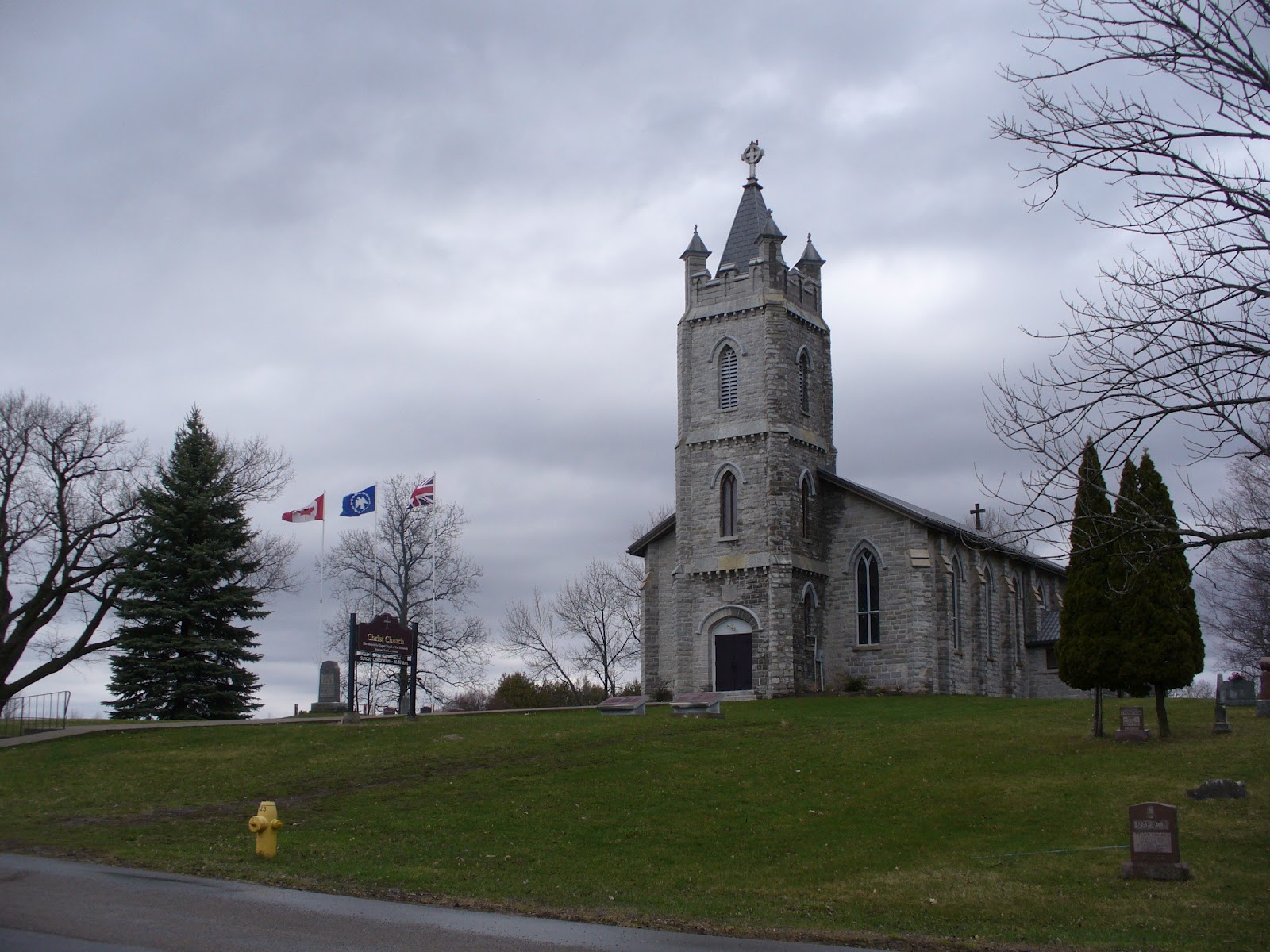
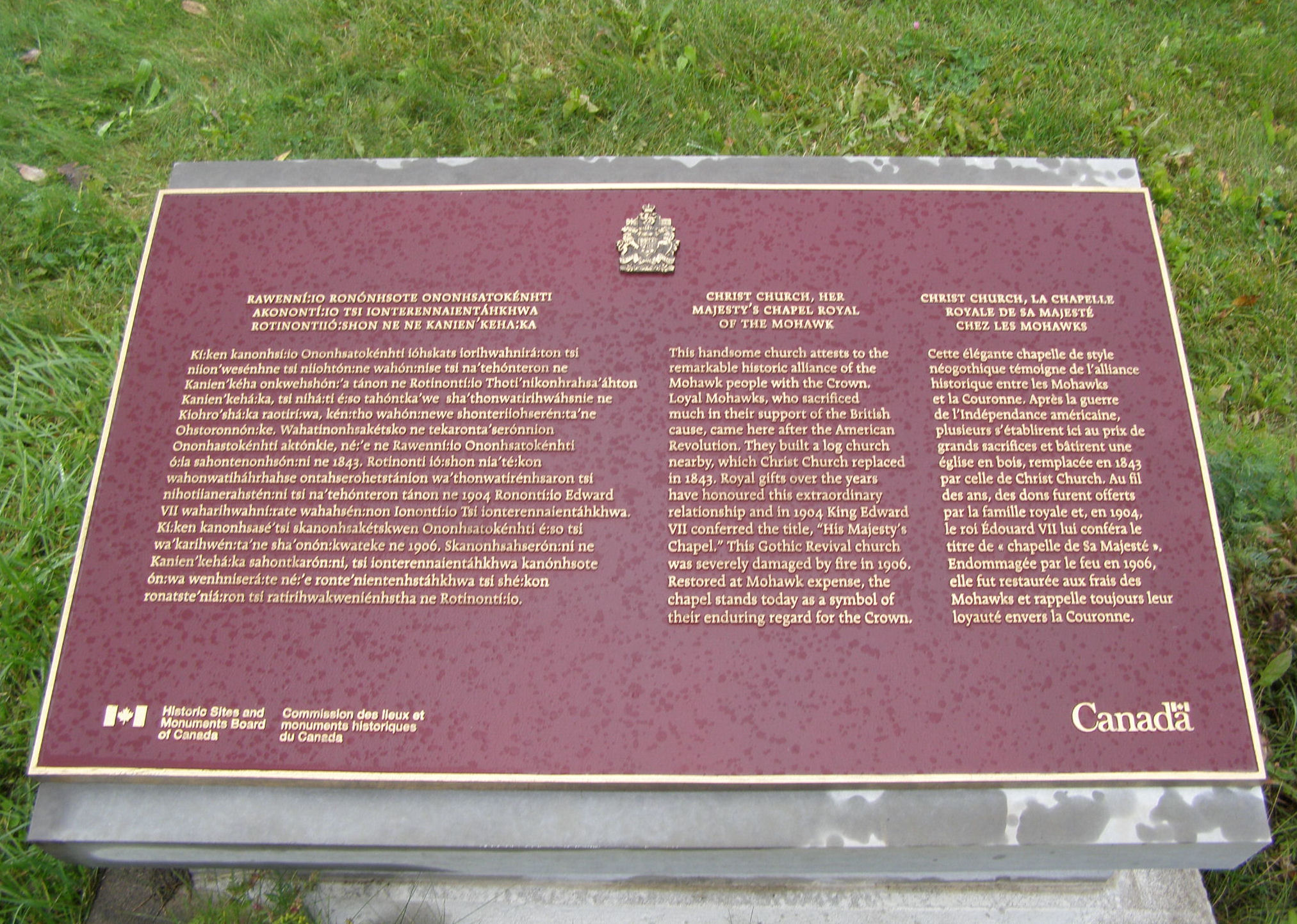
Christ Church, Her Majesty’s Chapel Royal of the Mohawk was designated a national historic site of Canada in 1995 because it represents the historic alliance between the British Crown and the Mohawk peoples as well as their historic and ongoing contribution to Canada.
After the American Revolution, Mohawks loyal to the British Crown came to Tyendinaga in the Bay of Quinte to settle land promised to them by the British for their loyalty and allegiance. They built a log church nearby, which Christ Church replaced in 1843.
The church was designed by John Howard and funded by the Mohawk people. It was designated a Royal Chapel in 1906, meaning it is set aside for the use of the reigning monarch. The spire and most of the interior were destroyed in a 1906 fire, but the stone walls survived and the remainder of the church was reconstructed by the Mohawks. It continues to house artefacts which symbolize both Mohawk history and the alliance between the Mohawk peoples and the British Crown.
Its exterior walls were made of local limestone, dating to 1843. The memorial windows, include one on the south wall, installed in 1984 to commemorate the 200th anniversary of the landing of the Mohawks, a small window in the vestry, representing the 100th anniversary of the church and a memorial window presented to the church in 1907 by the family of prominent community member Dr. Oronhyatekha.
The beacons on the church spire were installed for the military aircraft landing field at nearby Camp Mohawk in the 1940s, evidence of the Mohawk tradition of voluntary military service. There are also memorial plaques on the interior walls.
The church continues to house artefacts which symbolize both Mohawk history and the alliance between the Mohawk peoples and the British Crown.