
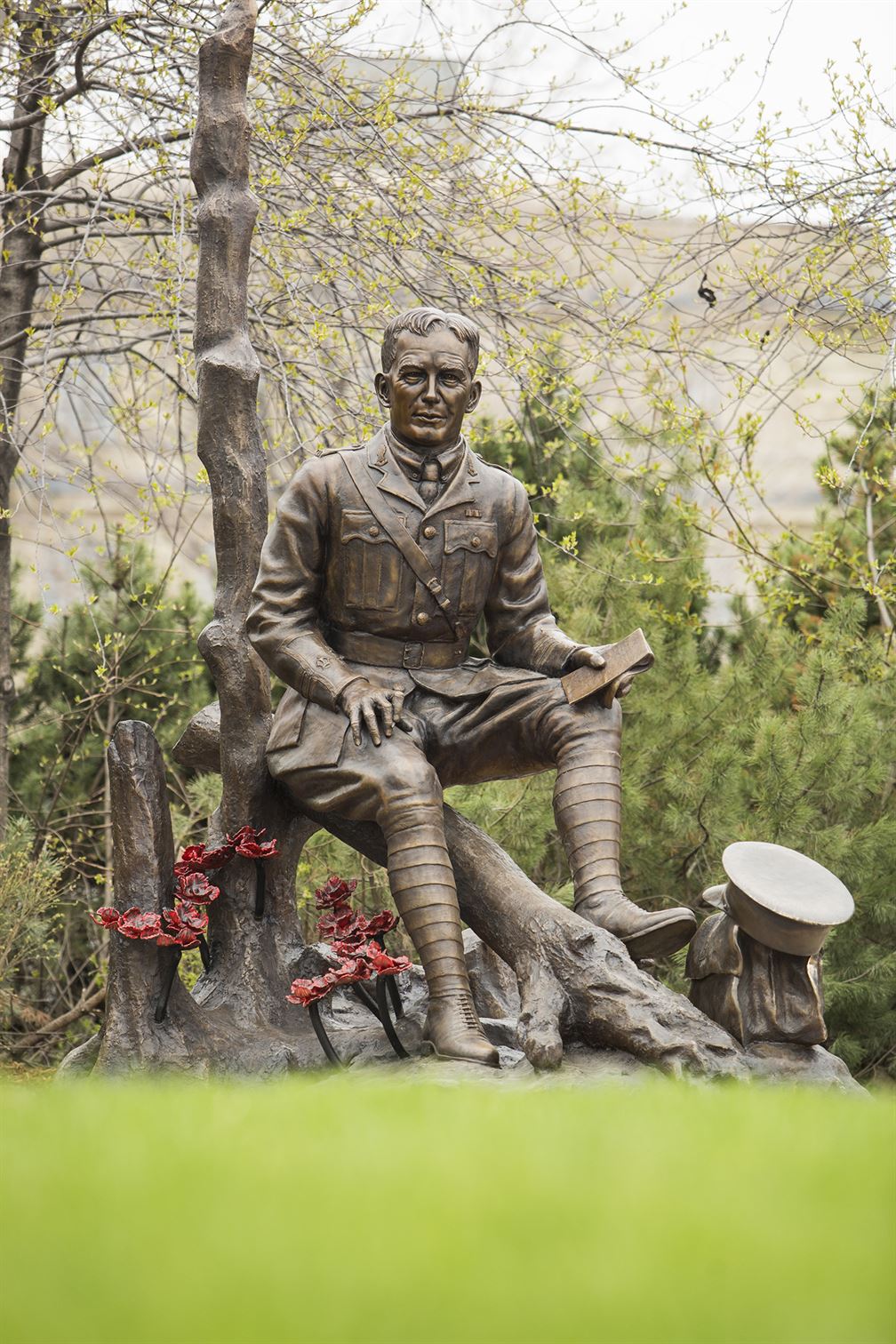
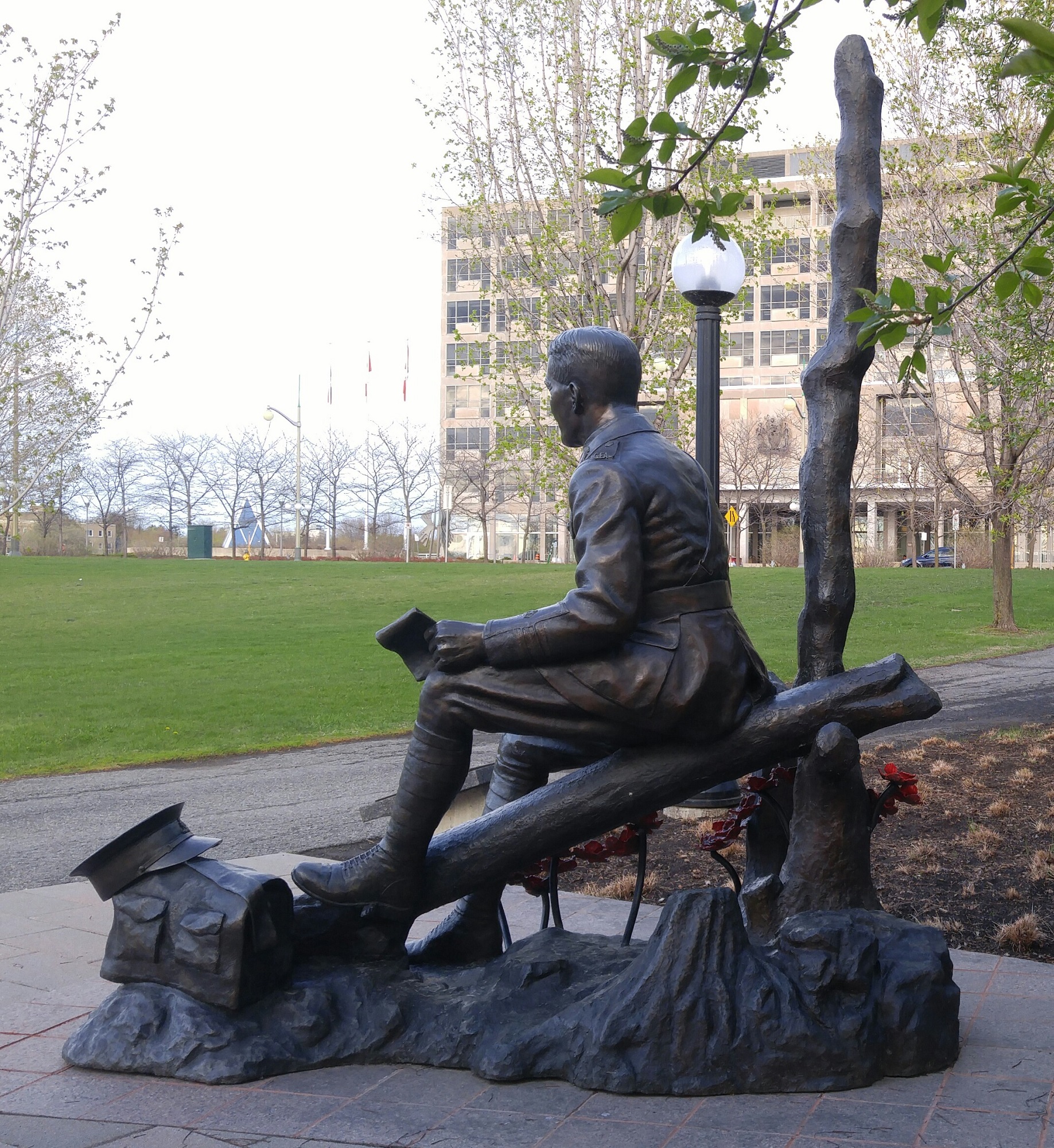
The Remember Flanders memorial in Ottawa (and Guelph) was designed by Canadian sculptor Ruth Abernethy. The hand-sculpted figure and the log on which McCrae is seated were sculpted as one piece. The two ends of the log and the base of rock and dirt were sculpted in another studio. Ruth was assisted by Cassie Koch and Lynette Schlichting who worked on the trees and base.
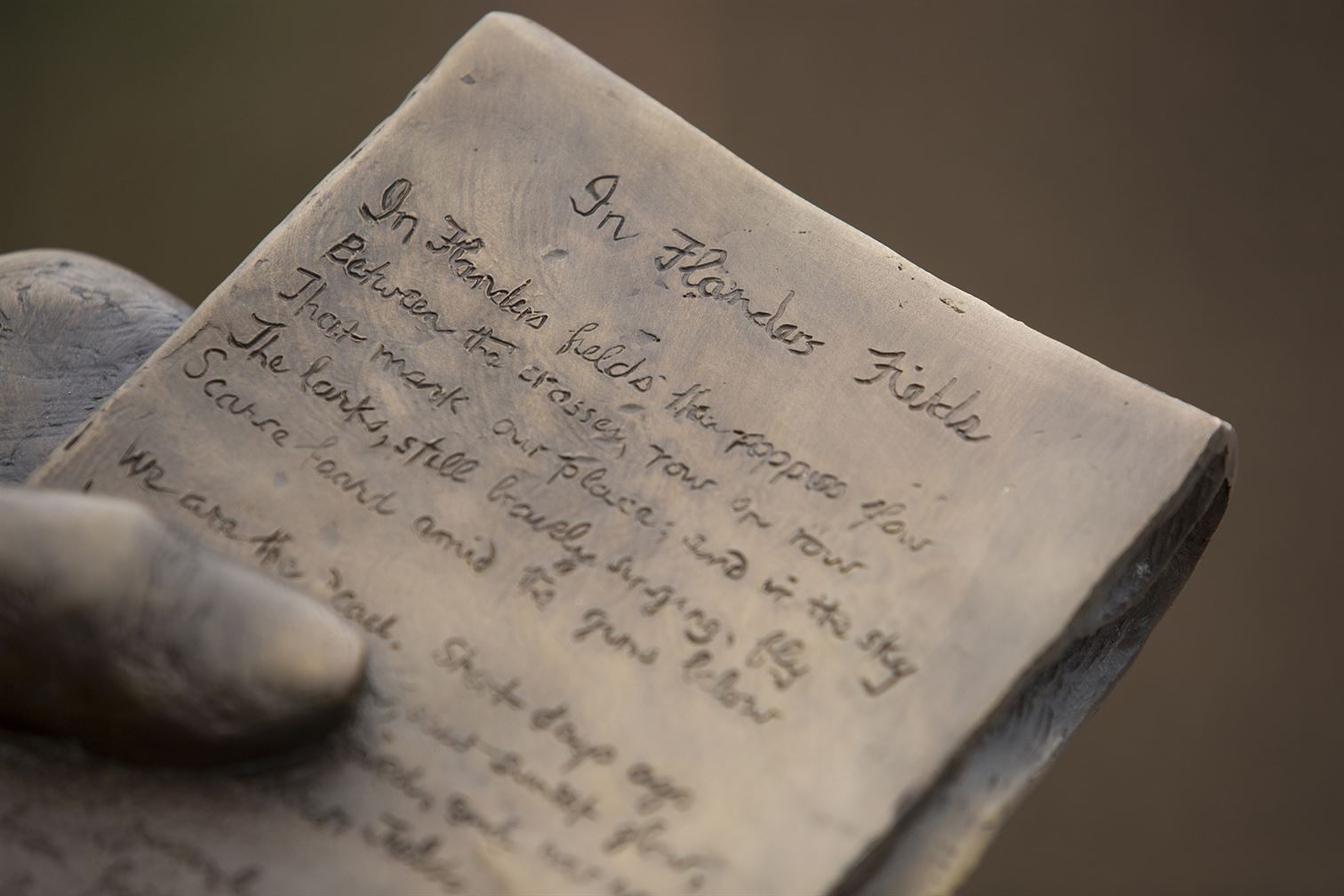
The crested buttons, the cap badge and uniform details are specific to John McCrae, 1915. On his uniform, his Major’s rank is visible and the Gunner badge on his cap and the grenades on his lapels represent his service with the Canadian Field Artillery. As he writes with a notepad in hand, his medical bag is nearby and at his feet are poppies. In part because of the poem's popularity, the poppy was adopted as the Flower of Remembrance for the war dead of Britain, France, the United States, Canada and other Commonwealth countries.
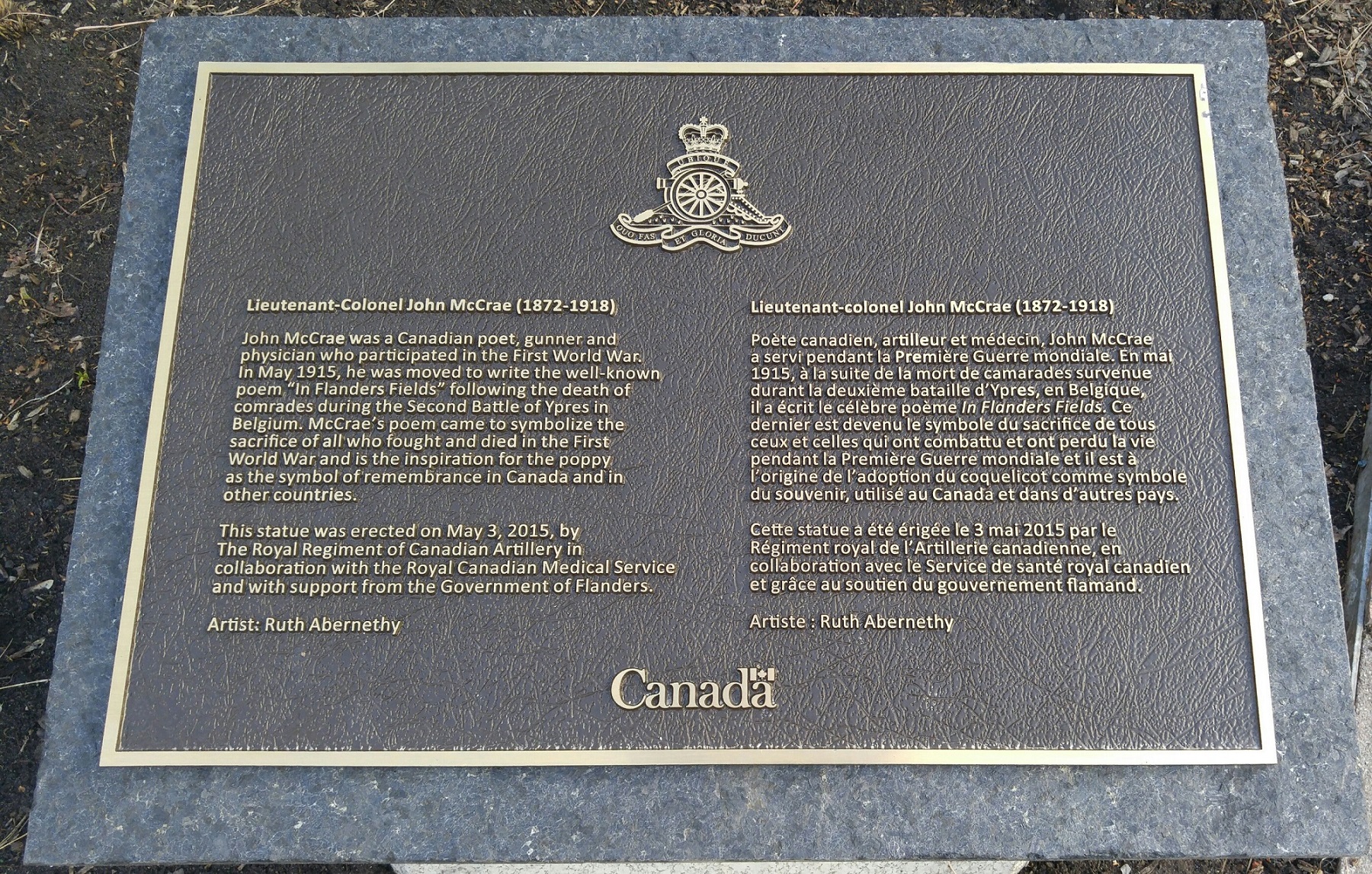
It was erected by the Royal Regiment of Canadian Artillery in collaboration with the Royal Canadian Medical Service. This beautiful statue stands beside the National Artillery Memorial and was unveiled on May 3, 2015 – the 100th anniversary of the writing of his renowned poem.
Lieutenant-Colonel John McCrae was the Canadian soldier, a doctor and teacher, who wrote In Flanders Fields during the First World War. Born in Guelph, Ontario in 1872, he served with an artillery battery in the South African War and had a successful civilian medical career. When the First World War broke out in 1914, the patriotic 41-year-old enlisted again and would be appointed as a medical officer with the First Brigade of the Canadian Field Artillery.
During the Second Battle of Ypres in the spring of 1915, McCrae was tending to the wounded in a part of Belgium traditionally called Flanders. On May 2, a close friend was killed in action and this painful loss inspired McCrae to write In Flanders Fields the next day. It would be published in Britain’s Punch magazine and quickly became one of the best-known poems of the war, helping make the poppy an international symbol of remembrance. Sadly, Lieutenant-Colonel McCrae would not survive the conflict, dying of illness in January 1918.
Remember Flanders videos available.