

Early life
In 1913, when he was 14, he joined the local militia unit, the 34th Fort Garry Horse. When the First World War began in August 1914, McLeod was too young to remain in the militia. In 1916, he tried to join the cadet wing of the Royal Flying Corps Canada, but was told he had to wait until he was 18. He returned in April 1917 and was accepted for pilot training.
Joins the flying corps
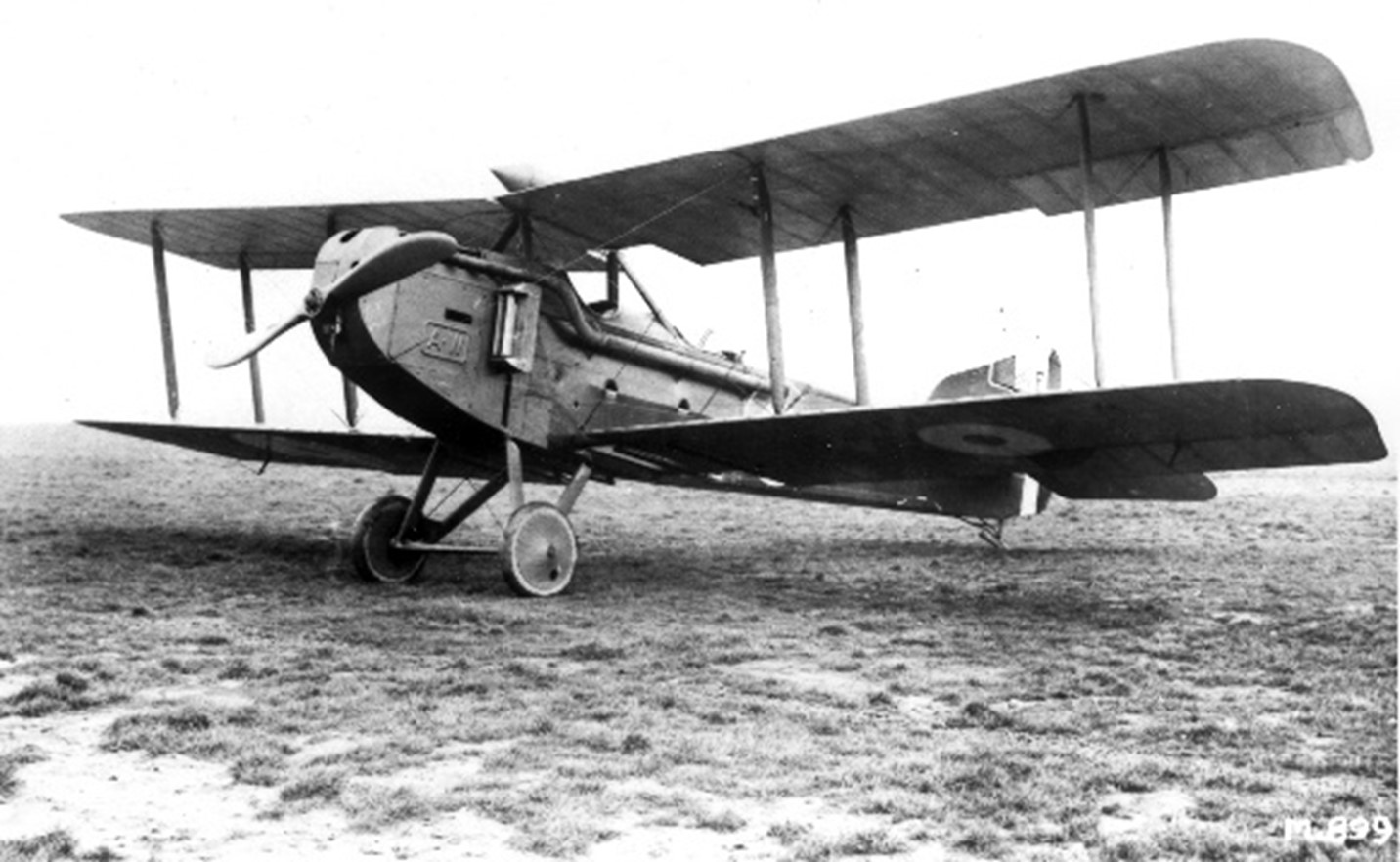
McLeod qualified as a pilot in July and then attended the School of Aerial Gunnery. On 14 September, McLeod was posted to No. 82 Squadron at Waddington. The squadron flew the Armstrong Whitworth FK8, nicknamed the “Big Ack,” a large, lumbering two-seater aircraft (pilot and observer) used overseas and for home defence.
After two months, No. 82 Squadron was due to be sent to France, but McLeod still was not old enough to go. (Pilots had to be at least 19 to serve in combat).
He was transferred to No. 51 Squadron at Marham, Norfolk. The squadron flew the FE2b, a two-seat fighter, mainly on night patrols over London, searching for German Zeppelins and Gotha bombers. McLeod served with this squadron for two months before being posted to France. A shortage of pilots may have been the reason for this decision, since McLeod was still underage.
Arrival in France
On 29 November 1917, Alan McLeod arrived at No. 2 Squadron, stationed at Hesdigneul-lès-Béthune in northeast France. The squadron was equipped with the Big Ack and flew army cooperation missions such as artillery spotting and photographing enemy lines. It was also used on day and night bombing sorties.
McLeod decided to use his bomber as a fighter whenever he could. On several missions behind enemy lines, he and his observer engaged and shot down German aircraft. He received a Mention in Dispatches for his actions.
Heroics in the air
On 27 March 1918, Alan McLeod and his observer, Lieutenant Arthur Hammond, were on a bombing mission behind enemy lines. Suddenly, a Fokker fighter appeared out of the clouds slightly below them and only 200 metres away. McLeod manoeuvred his bomber so Hammond could fire at it. After three short bursts from the Lewis gun, the enemy aircraft plummeted to the ground.
As McLeod and Hammond were congratulating each other, eight more Fokkers attacked from different directions. An extract from The London Gazette, 1 May 1918, records the following events that led to his Victoria Cross:
Whilst flying with his observer (Lt. A. W. Hammond, M.C.), attacking hostile formations by bombs and machine-gun fire, he was assailed at a height of 5,000 feet by eight enemy triplanes, which dived at him from all directions, firing from their front guns. By skillful manoeuvering he enabled his observer to fire bursts at each machine in turn, shooting three of them down out of control. By this time Lt. McLeod had received five wounds, and whilst continuing the engagement a bullet penetrated his petrol tank and set the machine on fire.
He then climbed out on to the left bottom plane, controlling his machine from the side of the fuselage, and by side-slipping steeply kept the flames to one side, thus enabling the observer to continue firing until the ground was reached. The observer had been wounded six times when the machine crashed in "No Man's Land," and 2nd Lt. McLeod, notwithstanding his own wounds, dragged him away from the burning wreckage at great personal risk from heavy machine-gun fire from the enemy's lines. This very gallant pilot was again wounded by a bomb whilst engaged in this act of rescue, but he persevered until he had placed Lt. Hammond in comparative safety, before falling himself from exhaustion and loss of blood.
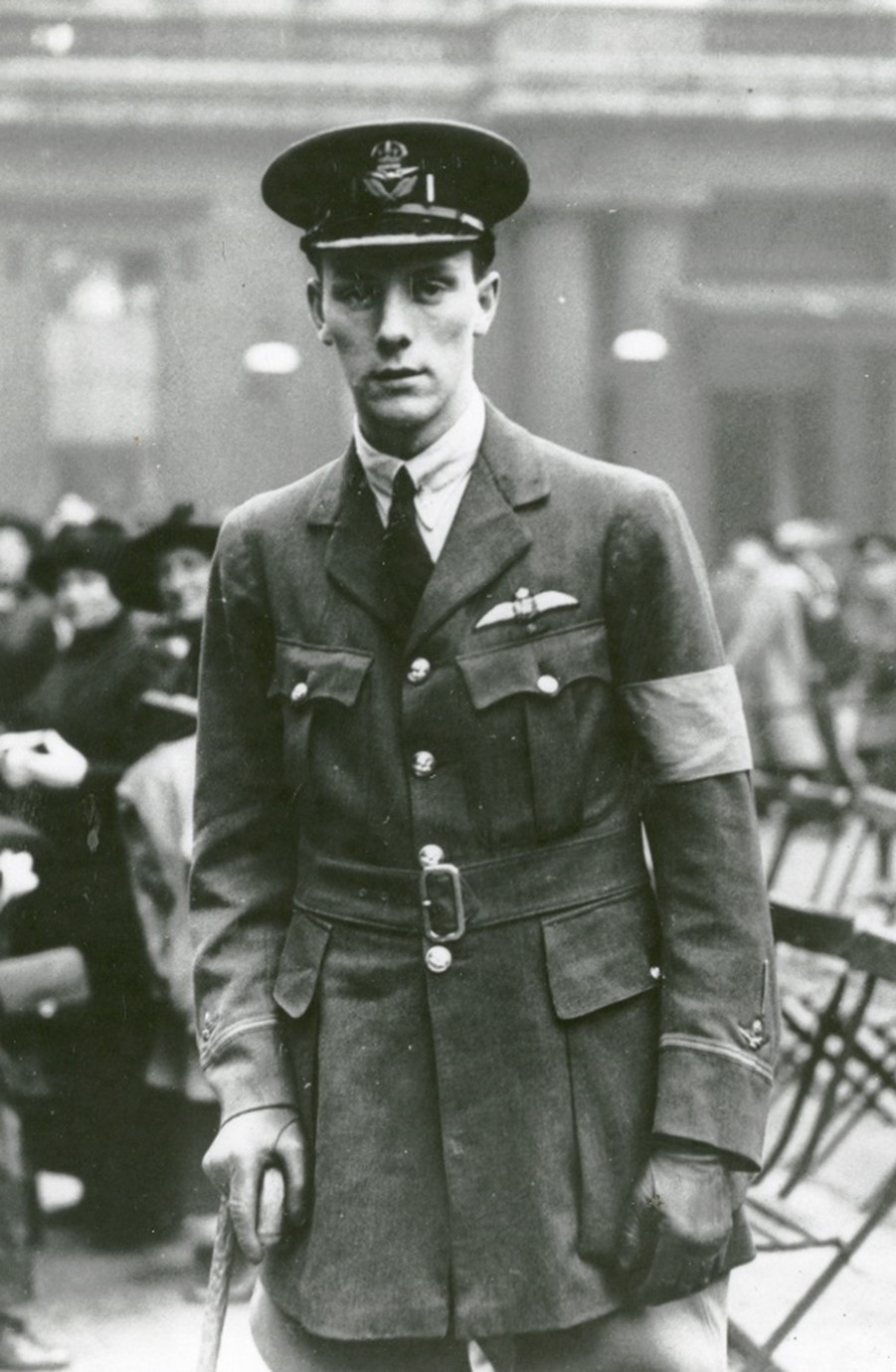
On 4 September, McLeod received the Victoria Cross from King George V at Buckingham Palace. His father travelled from Canada to attend the investiture. Hammond also received a bar to his Military Cross.
Returns to Canada
After his VC presentation, Alan McLeod returned to Canada with his father. He was officially welcomed home in a ceremony at the Winnipeg train station on 30 September 1918, followed by a public reception in Stonewall. He told crowds at both events that he would return to the front. McLeod was still weak from his ordeal, however, and contracted the Spanish flu, a strain of influenza then sweeping the world. Approximately 50,000 Canadians died during the pandemic, which claimed the lives of millions worldwide.
He died in the Winnipeg General Hospital on 6 November and was buried in the Old Kildonan Presbyterian cemetery in his hometown.
Related information
Portrait of Courage: Alan Arnett McLeod, VC – The Maple Leaf