
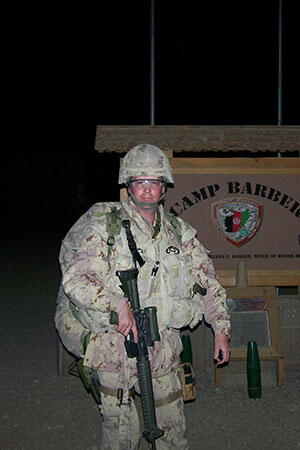

Joined
- 1983

Postings
- Suffield, AB. Kandahar Afghanistan

Medals/Awards
- CD 3 clasp
SW Asia Medal (Afghanistan) - Queens Platinum Medal (Provincial)
Warning: This article includes descriptions of combat experiences that may be upsetting to some readers.
Memories of 9/11
Doug MacDonald was watching the September 11 attacks on a small television in the office of his Charlottetown, Prince Edward Island flight school. As he watched, he wondered if his military gear was packed and ready.
He and his wife, who own a flight school, had been waiting for inspectors from Transport Canada that day. A small crowd started to gather around the television in the office.
"The first thing I could think of is 'maybe I should go home and make sure I know where all my gear is,'" he remembered.
Seven years later, MacDonald deployed to Afghanistan.
The reservist spent six months working at a multinational headquarters in Kandahar. His job was helping the team with "information activities" - basically letting the Afghan people know what was happening all around them.
An unexpected career
MacDonald was 19 when he and a buddy went to speak to military recruiters in his hometown. The friend decided against it, but MacDonald signed up.
"Forty-three years later, I'm still in."
In the summer of 1983, he completed basic training in Charlottetown and became a trooper with the Prince Edward Island Regiment. He chose armoured reconnaissance as his trade and worked in light vehicles to gather information and report back to base.
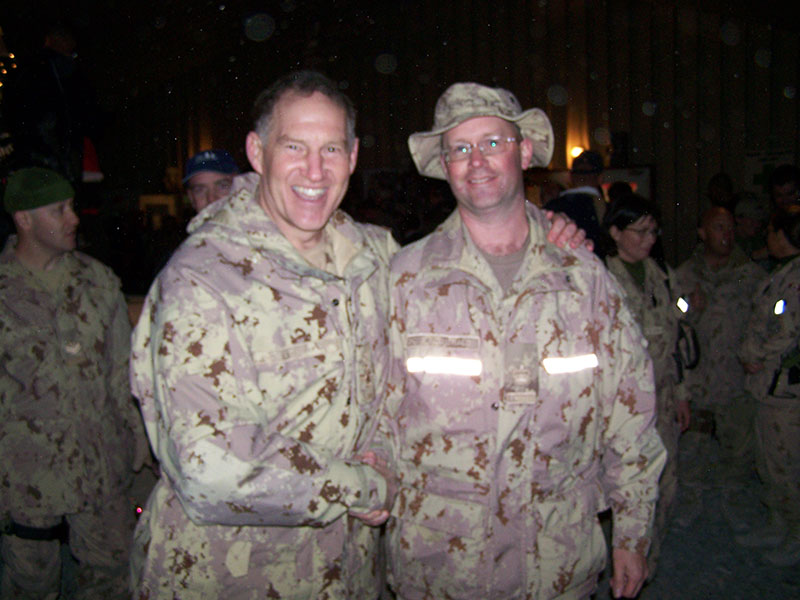
He had to balance civilian work with military training which slowed his progression. He was determined to stick with it, eventually becoming the regimental sergeant major.
Later, he became an officer and continues to serve as a captain. He had been training for decades by the time he deployed to Afghanistan.
"A lot of the times as a reservist, you train, train, train, but don't actually get to use your trade every single day," he explained.
Reaching people through the war
MacDonald landed at a noisy, dusty, smelly Kandahar airfield in late November 2008. As a lifelong lover of all things aviation, being on a base with the busiest airport in the world at the time was a thrill.
Though he deployed alone, he quickly met and made friends with others living in converted shipping containers. MacDonald's team supported six provinces in southern Afghanistan. They created leaflets, pamphlets and radio messages for troops working in the field.
"Really what it is – it's changing somebody's perception," he said.
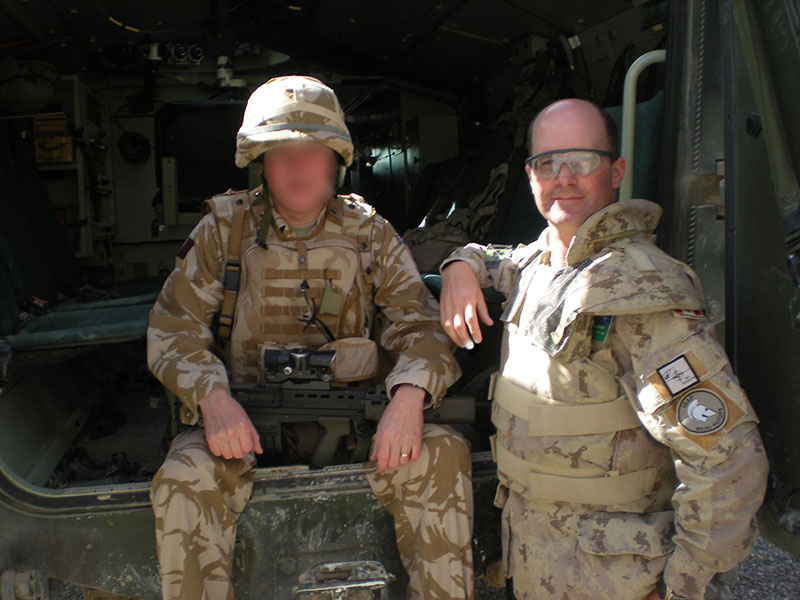
They airdropped information to people living in remote desert communities troops couldn't reach. MacDonald recalls a drop of half a million leaflets with pictures depicting what to expect for people unable to read.
Some advised residents to stay safe indoors because forces were approaching their area. Others warned insurgents to leave before an attack. Cultural advisors helped choose the images and wording. Political and legal advisors also reviewed the materials before they were used.
Radio offered another way to get the message out. Teams established a portable station, distributed radios and broadcast news with local music and cultural programming.
"You would go to an area, and we had a radio in a box, and you would set this up, and you'd be broadcasting to the local people. We'd pass out radios, and we would try to get messages out through there and give them news, give them their own culture, play their music." he said.
"The message every step of the way was we are helping the Afghanistan National Police. We're helping the Afghanistan National Army. We're there to help the country."
MacDonald felt it was important to explain what was happening because local people would be most affected by the events around them.
"Well, it's their property. It's their land. It's their way of life," he said.
He felt the mission was to support the Afghan people and the organizations that served them.
"You're not there to take over anything. You're there to help the locals."
He really enjoyed getting to know the locals and started to understand the poverty and lack of education many of them were living with. They didn't have ill intent, even when they were planting roadside bombs. The locals who did plant the bombs recognized that these devices caused devastating casualties among coalition forces and Afghan civilians; but felt they had no other options. They were not the enemy, they were just trying to survive.
"A lot of them were farmers," he explained.
"Even some of the people that were planting roadside bombs, they were doing it because they might get $50. And with this $50, they're going to go home and feed their family."
Many injured Afghans would show up at the main base with wounds from bombs that had exploded while they were planting them.
"The bad thing is, a lot of the children got caught up in that as well, so there'd be children with injuries that would show up."
A shared purpose
Life on the Kandahar airbase was non-stop. Even a quiet workday could mean 12 hours in the office, seven days a week. The work ranged from making graphics to making sure voice recordings were in the right dialect.
Even though rocket attacks became an expected part of his workday, he personally felt relatively safe on the base. But outside the base, he understood the risks and uncertainty soldiers in the field faced every day.
In Kandahar, everyone was focused on the tasks at hand. Nobody was too worried about nationality, military trade or status, he said.
"Everybody was working as a team, and countries as well."
Even though he was so far from home, he started to realize what a small world we live in. At a sunset ramp ceremony he stood beside a Canadian sergeant major who started his military career at Charlottetown's Brighton Compound, just a few kilometres from the Prince Edward Island Regiment. He met another officer from Summerside.
Remembering the fallen
Some of MacDonald's most unforgettable memories of his time in Afghanistan were the ramp ceremonies – watching, while those killed in action were carried in flag draped coffins aboard aircraft for the journey home. Soldiers stood with civilian staff who operated the kitchens, gyms and Tim Hortons.
As the bodies were loaded, everyone saluted.
"Well, obviously, it's very sad, but it's also pride as well," he explained.
The ceremonies brought everyone on the base together in grief and respect.
"It was just everybody on the base, all for the same purpose.
"During the ramp ceremonies, I always said, there's no place else I would have wanted to be."
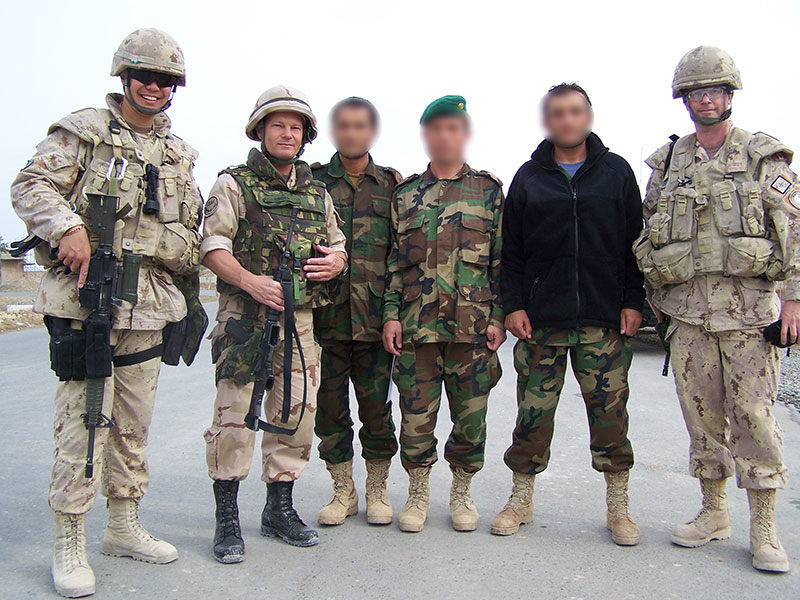
From his immediate instinct to serve as he stood watching that tiny television on 9/11, to Kandahar – the friendships and memories remain important to him to this day.
Members of his multinational team still have a weekly group chat. A former American colleague has visited him on PEI. He also still keeps in touch with an Afghan language advisor who moved to Las Vegas, Nevada.
When his own tour ended, he left on a Hercules aircraft. The mood on board changed as soon as the crew announced they had cleared Afghan airspace. There were shouts and cheers as the passengers were finally going home.
"It was almost like a party on board. You basically knew that you're pretty much safe from there on."
MacDonald returned to his civilian life and his work with FedEx, which had given him a year away for the deployment. He continues his military service.
He says Canada's new Afghanistan monument in Ottawa feels "surreal."
"Many times I have visited memorials and tried to put myself in the shoes of those persons and how they must have felt leaving home for a tasking," he said.
"This will give anyone travelling to Ottawa another way to connect and remember those injured or killed while serving in Afghanistan."
With courage, integrity and loyalty, Doug MacDonald is leaving his mark. He is a Canadian Armed Forces Veteran. Discover more stories.
The well-being of Canadian Veterans is at the heart of everything we do. As part of this, we recognize, honour and commemorate the service of all Canadian Veterans. Learn more about the services and benefits that we offer.
If you are a Veteran, family member or caregiver, the support of a mental health professional is available anytime at no cost to you. Call 1-800-268-7708.