
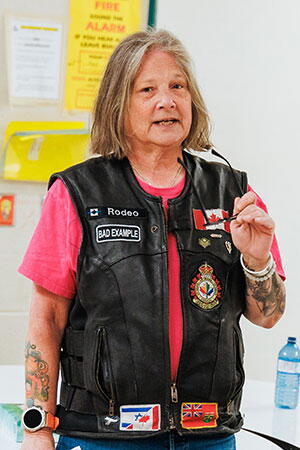

Joined
- 1982 - 1989

Postings
- CFB Downsview, Toronto ON
Very early success
In 1989, Sharon McLeod was one of the youngest sergeants in Canada when her military career came to a screeching halt.
McLeod joined the Canadian Armed Forces as a teenager and had built a reputation as a capable leader and instructor. She imagined herself staying in the military her whole working life.
Then, an anonymous letter arrived at her regiment, outing her as a lesbian.
In the following weeks, she was surveilled, interrogated, isolated and forced to leave her regiment.
McLeod was part of what is now known as the LGBT Purge. For decades, 2SLGBTQI+ people in the military, RCMP and federal public service were discriminated against, with many facing penalties or being fired.
More than 30 years later, McLeod is ready to talk about the injustice and its lasting impact.
But she also wants to talk about what has changed because brave people fought back.
"There’s a lot of bitterness in the Purge community," she says. "But I like to think of all the great things that have happened because of it. People can now serve and be their authentic selves."
A teenager ready to serve
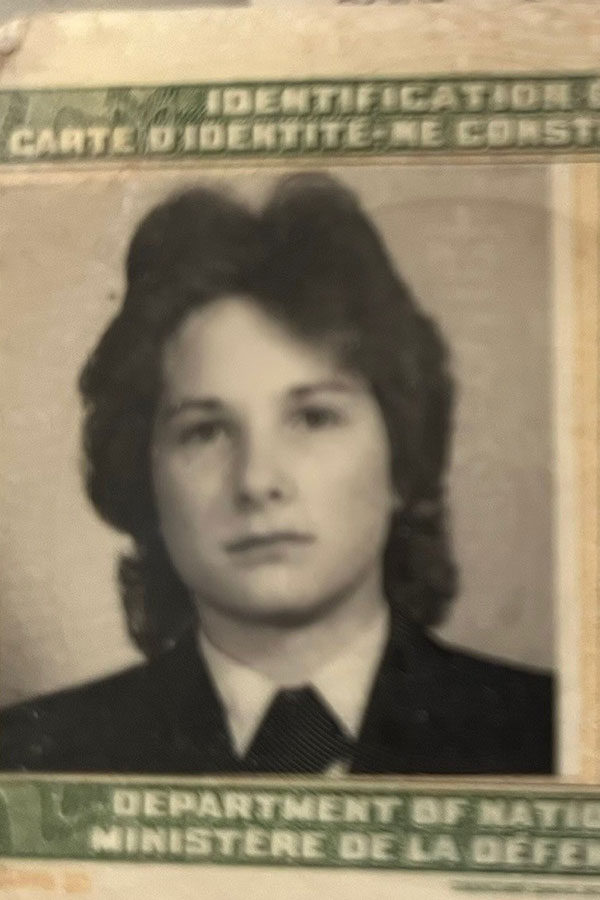
McLeod grew up in Stouffville, Ontario, north of Toronto, with an older brother who helped spark her interest in military service.
There was always a healthy competition between the siblings, she says. If her brother could do something, she wanted to prove she could too.
But there was something deeper behind her decision to enlist in 1982, at just 17.
"I had a lot of patriotism for my country, and I was willing to write that blank cheque," she says. "I will lay down my life for Canadians."
She completed basic training at Canadian Forces Base (CFB) Borden before training to become a signals officer at CFB Kingston.
At the time, she says, signals was one of the areas where women had opportunities to work beside men on relatively equal footing.
That didn’t mean she didn’t face sexism. But with her strong work ethic, she also quickly earned the confidence of male colleagues and senior staff.
"I think it’s because I had initiative and good problem-solving, and I was willing to go that extra mile without being asked," she says. "I set a high bar for myself."
She was very good at her trade—and she could shoot.
On the range, McLeod remembers putting rounds into tight groupings. She learned marksmanship using pellet guns as a child.
"Aim, breathe, squeeze," she says.
"I think sometimes when people use weapons for the first time, it can shock them. But it wasn’t a shock for me."
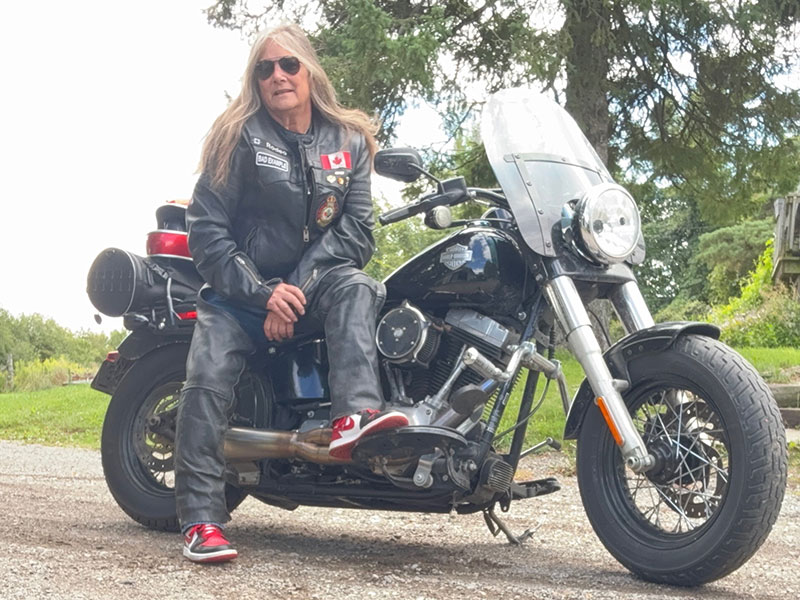
Her stubborn streak also helped her succeed.
"I was going to do what I wanted to do, regardless of what anybody said to me," she said with a laugh.
McLeod was posted to Canadian Forces Base (CFB) Toronto and spent time working at CFB Kingston, Petawawa and Borden.
During the Cold War years, training was a constant part of military life, and she taught recruits skills including radio and teletype communications.
She especially loved teaching.
Then, the anonymous letters started arriving.
"Don’t tell them anything"
McLeod was serving at Toronto’s Fort York Armoury when she, and three other non-commissioned officers in her regiment were outed in letters sent to their commanding officer.
Some of them talked about quitting.
But McLeod slammed the letters on the commanding officer’s desk. "What the heck is this?" she remembers asking.
Her decision to stick up for these individuals led to consequences for McLeod. Over the next few months, her telephone was tapped and her friends were interviewed.
She endured a six-hour interrogation about her private life.
"They asked me the same questions over and over and over," she says. "They were trying to make me slip, but they couldn’t prove anything."
McLeod understood that an admission of homosexuality could end her military career.
Afterward, she warned the other 2SLGBTQI+ women.
"Don’t tell them anything," she said.
She advised them to be extra careful who they were seen with, not to hold their partner’s hand or discuss certain things on the phone. She told them to stay away from certain bars or other places investigators might be watching.
The investigation into McLeod came up empty—they could not prove anything.
But the atmosphere in her regiment had changed.
"I’d walk into the senior mess. I was shunned."
She remembers a warrant officer criticizing her within earshot of colleagues—deliberately, she believes, making sure she heard every word.
"I was standing right beside the guy."
Eventually, she took a 30-day leave to deal with what was happening. When she returned, she says she saw a note posted on a whiteboard in the common room saying she had been absent without properly submitting her paperwork, something she disputes.
By the end of October 1989, she had had enough.
"I left the military after that," she says. "I was done."
The investigation didn’t end
Leaving did not immediately end McLeod’s contact with military investigators.
About a year later, she says members of the Special Investigation Unit came to her door asking for her help in what they described as a national-security matter. They showed her a photo of a man they were looking for. She was wired and sent into the restaurant so she could get information from him. An armed investigator was in a nearby van, waiting with instructions for what McLeod should do if something went wrong. They were using her for her connections to the 2SLGBTQI+ community.
The experience left her frightened long after it ended.
"For 20 years, I lived in fear that somebody was going to shoot me."
She says investigators continued contacting her for several years after her military service ended.
At one point, she says, she was asked to travel to Ottawa and become involved with a woman serving in the military to obtain information.
McLeod refused, telling them she was in a committed relationship.
She remembers speaking to her mother on the telephone and hearing clicking on the line.
"I knew the phone was tapped."
She told investigators she considered their continued contact harassment and would take legal action if it did not stop.
Within days of confronting them, she says, the noises stopped.
The cost of losing a career
At age 30, she returned to university and completed an honours bachelor’s degree in psychology, including a thesis on social cognition.
She spent six years working at York University before beginning work in community and social services, managing group homes.
McLeod also worked as a program manager of operations with the Salvation Army.
Now at 61, she is enjoying retirement.
But the consequences of what happened during and after her service followed her for decades. She was eventually diagnosed with chronic post-traumatic stress disorder (PTSD), anxiety and depression.
For years, she also did not realize how much support might be available to her as a Veteran.
It took her two years, she says, to finally submit an application for benefits through Veterans Affairs Canada. She now has access to treatment, including psychiatric care.
Five years ago, she says, things looked very different.
Today, she is doing much better.
Coming home
McLeod has found her way back to the military community.
She credits the Veterans who championed survivors of the LGBT Purge with helping reconnect her to a part of herself she had lost.
"I go to as many events now as I can," she says. "They brought me back into the military community, and I’m grateful for them."
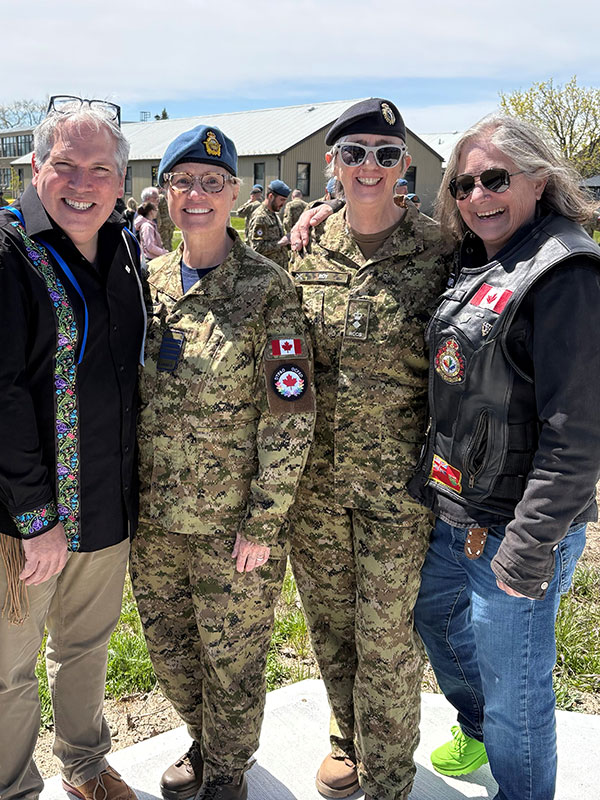
The experience has also given McLeod perspective on what Canada lost during the LGBT Purge. So many talented military members were pushed out or had their careers stalled because of their sexuality or gender identity.
"They’re all bright people. They know their trades and perform them with precision," she says. "What a huge cost this was to the Canadian military—all the people power and all the money that was lost."
She thinks about the military members who can now arrive at work without hiding their partners, monitoring every conversation or fearing their careers could be destroyed. She was so proud to see the LGBT Purge monument in Ottawa and the recognition that once seemed unimaginable.
Her message to young women beginning their military careers is optimistic for someone whose own service ended so painfully.
"I would tell them 'it’s going to be amazing—the experience of your life,’" she says. "I don’t think you can experience it anywhere else. The camaraderie there, it’s so tight."
"It feels like I’m coming home when I’m with my military people. It’s like a family."
She says she wouldn’t change a thing.
"I would do the whole thing again for the same outcome."
Telling people what happened, and remembering those who lived through it, helped make change possible.
"That is how we learn—through stories."
With courage, integrity and loyalty, Sharon McLeod is leaving her mark. She is a Canadian Armed Forces Veteran. Discover more stories.
The well-being of Canadian Veterans is at the heart of everything we do. As part of this, we recognize, honour and commemorate the service of all Canadian Veterans. Learn more about the services and benefits that we offer.
If you are a Veteran, family member or caregiver, the support of a mental health professional is available anytime at no cost to you. Call 1-800-268-7708.