

Joined
1967

Postings
- Vancouver Island
- Ottawa
- Toronto
Introduction
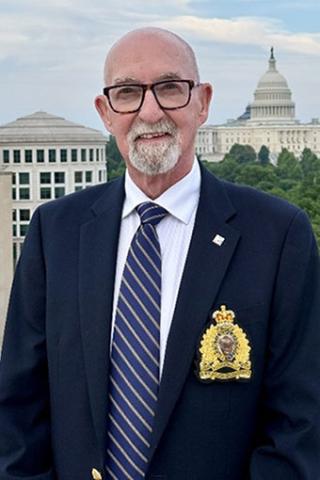
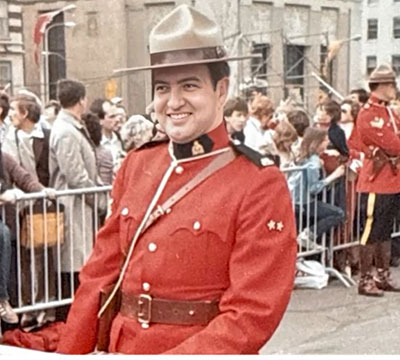
Wayne Davis joined the Mounties in 1967 at the age of 20, with no family ties to policing—just a guy looking for a respectable career and to be of service. For nearly two decades, he did just that.
A former Royal Canadian Mounted Police (RCMP) officer, his life was profoundly shaped by the LGBT Purge—a dark chapter in Canadian history where thousands of 2SLGBTQI+ individuals in the Canadian Armed Forces (CAF) and the RCMP were systematically discriminated against, dismissed, or harassed because of their sexuality.
Small town
Davis’ story began in Drumheller, Alberta. He’s the first to admit that he was a “late bloomer.” A high-school dropout, he says he was just a “lazy dude,” working in a supermarket and wondering about the possibility of something more meaningful. All he needed was a spark.
Small towns like Drumheller often develop intense social and community ties with the RCMP either as friends or foes. One such friendship with a young RCMP officer—new in town and looking to hang out with people his own age—opened Davis’ eyes to what might be possible for himself.
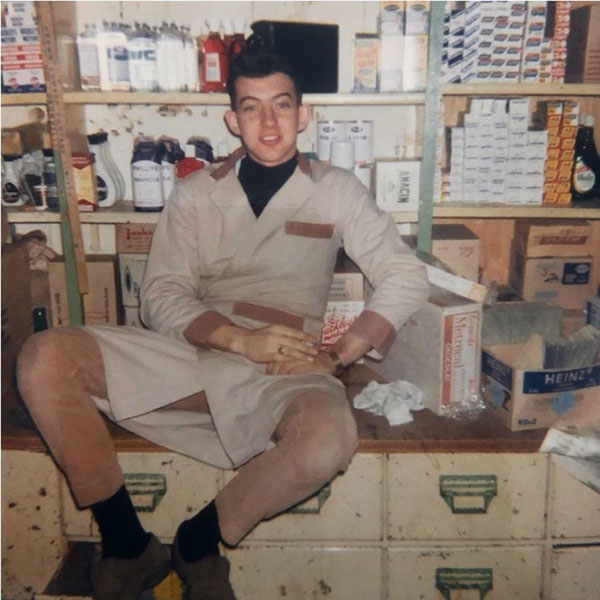
Wayne Davis as a young man working at a local grocery store in Drumheller, Alberta.
But “the clincher,” Davis says, was when a couple of his childhood buddies said they were following in their fathers’ footsteps towards the RCMP. And the little cartoon light bulb above Davis’s head went off.
“I think I’ll just tag along with them … so we all went down and signed, filled out the paperwork, and about three months later I went off to the depot to train for the RCMP.”
A star on the rise
Davis’ years in the force took him to various places across Canada, from Vancouver Island to Ottawa, to Toronto, earning several promotions along the way.
“I had an administrative bent, as they say. So, I worked in the field for about seven or eight years. And then they decided that I was good for administration.”
He moved into finance and did so well that the RCMP sent him to university for three years.
“I was kind of one of their little stars,” he says. “The youngest sergeant in Ottawa, the youngest corporal in B.C., the youngest staff sergeant in Toronto.”
With well-earned career success—and those early hopes of a meaningful career now all but assured—Davis was carrying a secret. A secret which, if exposed, could bring it all crashing down around him.
Coming out
Growing up in a small town during the 1960s and 70s, coming out as gay was nearly unthinkable for most young men. Davis was no exception.
"I didn't identify as gay until I was about 20 or 25," he says, thinking back to those internal struggles.
All of his career advancement hit a brick wall in 1985 when Davis was called into his boss’s office for a chat—an unscheduled, life-altering chat.
“He said, ‘Wayne, you were seen in a gay bar on the weekend. Why were you in the gay bar?’” he remembers.
His social life was deeply intertwined with the gay community, but he was forced to keep that part of himself deeply hidden. To admit to being gay in the RCMP was a career death knell in 1985.
“So, I thought, ‘well, that's an interesting question … I'll just give you the answer.’ And I guess I wasn’t really thinking, but I think it was just that fatigue of being in the closet.”
That one admission—that honest answer—led to his immediate dismissal.
I was told, “you'll have to be out of here by four in the afternoon. You can leave voluntarily, or we'll have to terminate your employment.”
The LGBT Purge
Davis’ firing was not an isolated incident. It was part of a broader Purge, one that wasn’t being carried out in hushed tones, behind closed doors. This was done out in the open for all to see. Officially, the RCMP acknowledges ending such policies in 1988, but by that point, the damage to countless lives had already been done.
"What they were doing back then is a form of systematic erasure," Davis explains. "It’s hard to describe the trauma of losing your job, your livelihood, all because of who you are."
Looking back all these years later, Davis now believes that his case in particular may have been a tipping point of sorts. His firing may have sparked conversations at the highest levels about the treatment of 2SLGBTQI+ members—an early sign of institutional discrimination.
Despite all of this, Davis proved to be remarkably resilient. Within months of his dismissal, even though he says he went through some pretty rough times, he eventually made it back into the light.
"I bounced back," he says plainly.
Fortunate
He started working for the Public Service Commission as an openly gay man. Even though his life was forever changed by the Purge, Davis counts himself among the fortunate. Others, he says, have not fared as well.
“Some of these poor people, you know, the military kids couldn't go home, right? It's like they couldn't even explain to their families why they weren't in the military anymore.
“I know many, many survivors of the Purge who haven't bounced back to this day. They went through grueling interrogations and put in psychiatric wards and harassed and followed and harangued. Then, my story … I guess it's a happy ending.”
Today, Davis is living what he calls “a blessed retirement.”
He’s actively involved with Veterans Affairs Canada and the Purge Fund, working to educate others and ensure this history is not forgotten. He is a board member, an advocate, and proof of the importance of remembrance and learning.
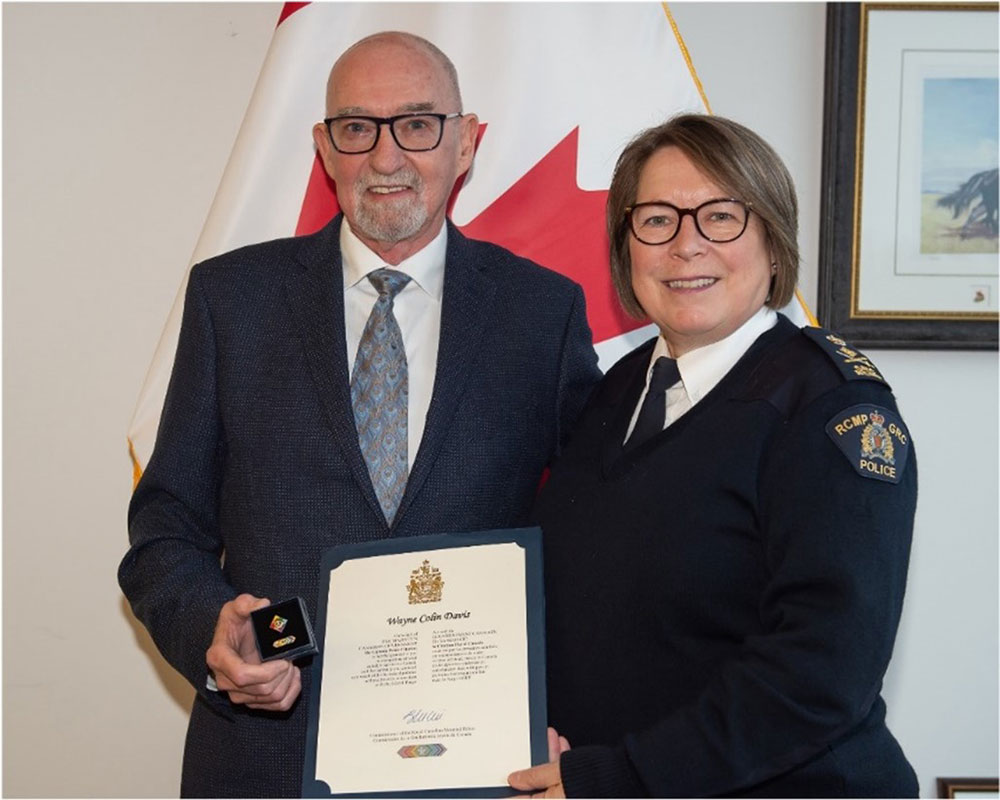
Wayne Davis was the only member to have the RCMP Pride Citation presented directly by Commissioner Brenda Lucki.
Davis knows the fight isn’t over. Discrimination persists in many forms—against trans people, people of color, and marginalized groups. “It’s human nature to fear the different,” Wayne says. “But education is the key. Once you teach acceptance, people can change.”
He hopes that by sharing his experiences, he can inspire others to confront discrimination and work for change. “I love my community, my work, and the fact that I can help tell this story,” he says, eyes shining with conviction.
Video: Wayne Davis
From now until early 2026, The Canadian Museum for Human Rights will have the Love in a Dangerous Time: Canada’s LGBT Purge exhibit on display to bring light to more stories from survivors of the LGBT Purge. There is also a travelling pop-up exhibition.
With courage, integrity, and loyalty, Wayne Davis is leaving his mark. He is a Canadian Armed Forces Veteran. Discover more stories.
The well-being of Veterans is at the heart of everything we do. As part of this, we recognize, honour and commemorate the service of all Veterans. Learn more about the services and benefits that are available to Veterans and their families.
If you are a Veteran, family member or caregiver, the support of a mental health professional is available anytime at no cost to you. Call 1-800-268-7708.