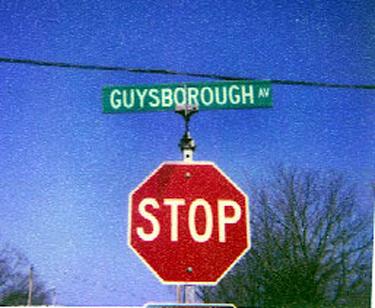
To commemorate HMCS Guysborough, sunk during the Second World War.
Guysborough Avenue
GUYSBOROUGH AV
Sign in to My VAC Account
Sign in to My VAC AccountGUYSBOROUGH AV
To commemorate HMCS Guysborough, sunk during the Second World War.
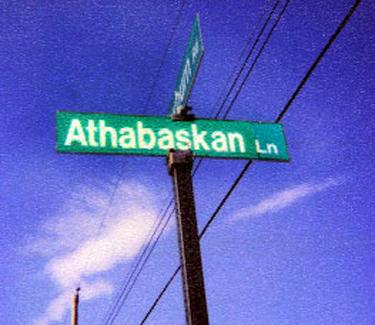
Athabaskan Ln
To commemorate HMCS Athabaskan, sunk during the Second World War.
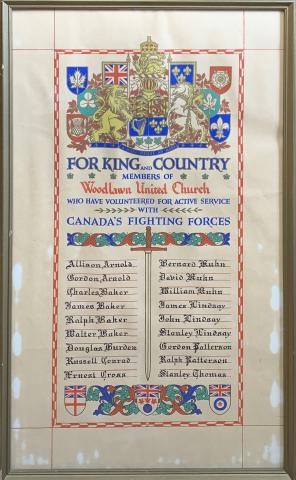
FOR KING AND COUNTRY
MEMBERS OF
WOODLAWN UNITED CHURCH
WHO HAVE VOLUNTEERED FOR ACTIVE SERVICE
WITH
CANADA'S FIGHTING FORCES
The Woodlawn United Church Honour Roll is on a pre-printed paper form with hand written names. The document is protected by frame and glass.
[front/devant]
WORLD WAR II
1939 - 1945
[cross/croix]
(4 names/4 noms)
THOSE THAT PRAY HERE
PRAY FOR THEM
[middle/centre]
TO THE GLORY OF GOD
AND IN LOVING MEMORY
OF THE MEMBERS
OF THE PARISH
WHO GAVE THEIR LIVES
FOR THEIR COUNTRY
IN THE WAR 1914-1918
BE THOU FAITHFUL AND DEVOTED
AND I WILL OWE THEE A CRUMB
OF LIFE
[left/à gauche]
[cross/croix]
[top/en haut]
(5 names/5 noms)
[middle/au centre]
(12 names/12 noms)
(bottom/en bas)
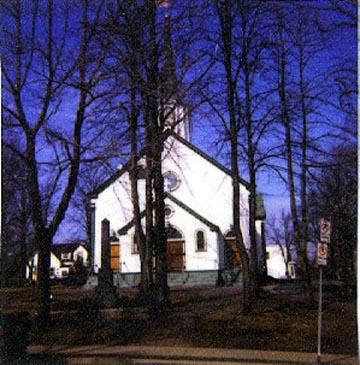
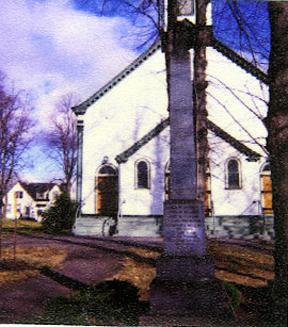
THIS STONE WAS LAID BY MACCALLUM GRANT
LIEUT GOVERNOR OF NOVA SCOTIA
AND DEDICATED BY CLARENDON L WORRELL
ARCHBISHOP OF NOVA SCOTIA
JULY 8, 1917
BEING THE ONE HUNDRETH ANNIVERSARY OF THE ERECTION OF CHRIST CHURCH
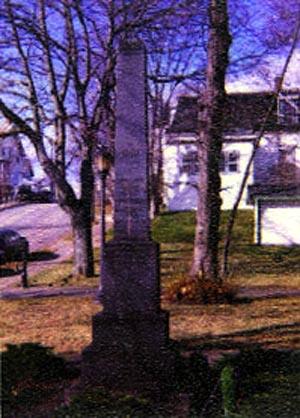
It appears that this was a First World War monument that was adjusted to include the Second World War.
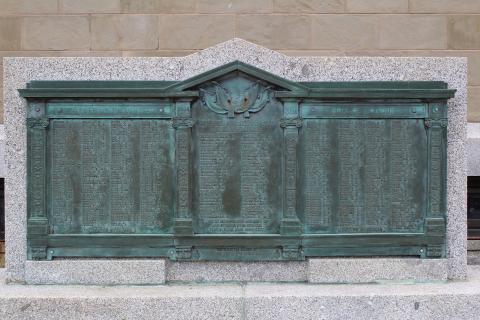
[left/gauche]
• ROLL OF HONOUR •
HILL 70
PASSCHEN
DAELE
ARRAS
DROUCOURT
QUEANT
AMIENS
SERVED OVERSEAS
[centre/au centre]
1914 1920
IN MEMORY OF THOSE WHO FELL
IN THE GREAT WAR
AND IN HONOUR AND MEMORY OF
ALL OTHERS WHO SERVED
THEIR KING AND COUNTRY
YPRES
ST. JULIEN
ST. ELOI
FESTUBERT
HOOGE
[right/droit]
• ROLL OF HONOUR •
SERVED OVERSEAS
CAMBRAI
BOURLON
WOOD
CANAL
DU-NORD
VALENCI
ENNES
MONS
THIS TABLET WAS ERECTED BY
THE IMPERIAL ORDER DAUGHTERS OF THE EMPIRE OF, DARTMOUTH N.S.
The War Memorial is dedicated to those who served and those who died in the First World War. It was erected by the Imperial Order of Daughters of the Empire of Dartmouth in April of 1922.
In May 2024, the bronze plaque and granite stones were removed and placed in storage for the restoration of the old post office. The restoration will take approximately two years, then the memorial will be reinstalled.
[front/devant]
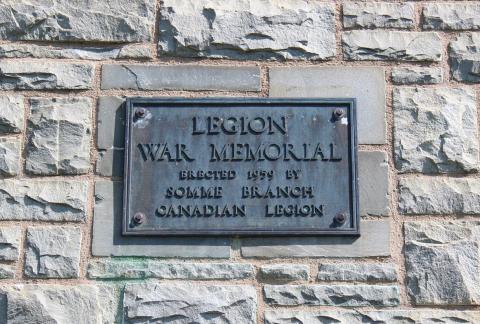
LEGION
WAR MEMORIAL
ERECTED 1959 BY
SOMME BRANCH
CANADIAN LEGION
[left side/côté gauche]
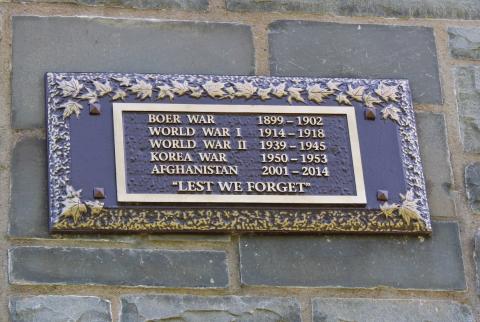
BOER WAR 1899 - 1902
WORLD WAR I 1914 - 1918
WORLD WAR II 1939 - 1945
KOREA WAR 1950 - 1953
AFGHANISTAN 2001 - 2014
"LEST WE FORGET"
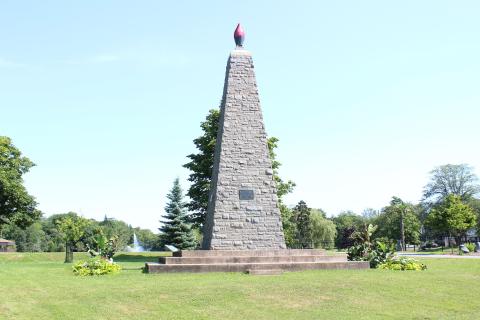
The Legion War Memorial was constructed in 1959 in memory of those who died in the First and Second World Wars. It was dedicated on Sunday, November 11, 1959, during the first Remembrance Day service in front of the memorial. The memorial also pays tribute to those who died in the Boer War, Korean War and Afghanistan. It was erected by the Somme Branch, Royal Canadian Legion.
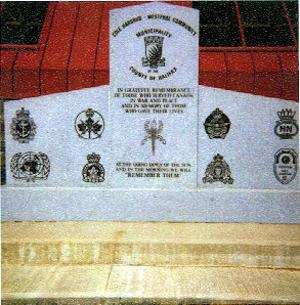
COLE HARBOUR - WESTPHAL COMMUNITY
MUNICIPALITY
COUNTY OF HALIFAX
IN GRATEFUL REMEMBRANCE
OF THOSE WHO SERVED CANADA
IN WAR AND PEACE
AND IN MEMORY OF THOSE
WHO GAVE THEIR LIVES
AT THE GOING DOWN OF THE SUN
AND IN THE MORNING WE WILL
"REMEMBER THEM"
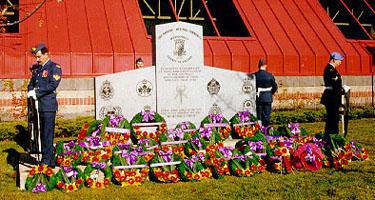
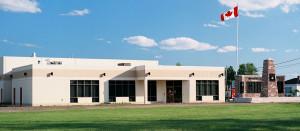
In 1993, Harold J. Northrup, who was already serving on the Board of Cole Harbour Place, was asked to raise money to have a memorial built. He selected a site next to Cole Harbour Place which houses two ice rinks, a swimming pool and other community operations. The County of Halifax donated to the cause as well as residents of the area. Some of the contractors donated some of the work. The crests of all the services are engraved on the face of the monument. A flag pole was erected a few years later with fundraising efforts. This memorial is the site of Remembrance Day services every November 11th. These services are well attended.
Brookfield cenotaph
The Brookfield cenotaph was erected in front of the fire hall in 2006.
[front/devant]
WWI
WWII
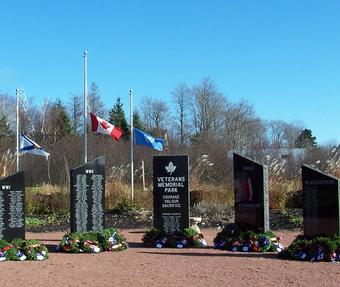
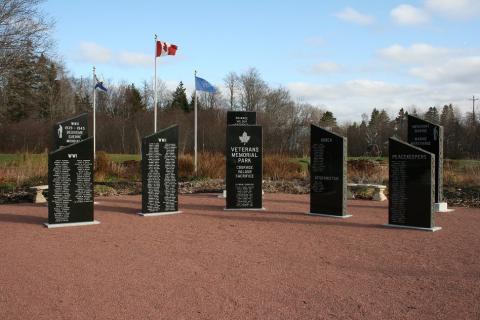
Veterans Memorial Park Courage, Valour, Sacrifice
Korea
Afghanistan
Merchant Marine
Peacekeepers
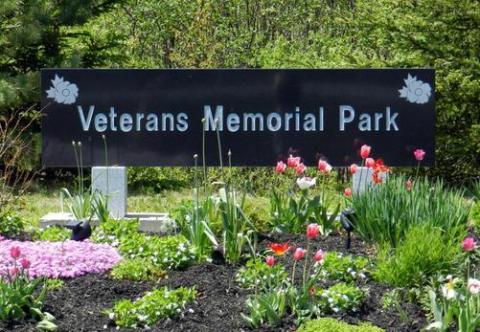
When local doctor Karen Ewing returned home after seeing WWI and WWII battlefields and memorials in Europe, she felt strongly that, since many people would not be travelling to Europe, there should be a memorial in Bass River. Dr. Ewing began with a letter campaign to all levels of government, as well as companies, organizations, and individuals that might be willing to donate funds or materials for such a park. She then approached Dominion Chair Co, a local company to ask for a piece of land that had remained vacant for years in the heart of Bass River. The memorial park is dedicated to remembering, honouring, and celebrating all men and women who served of are serving in Canada's military in conflicts past and present.
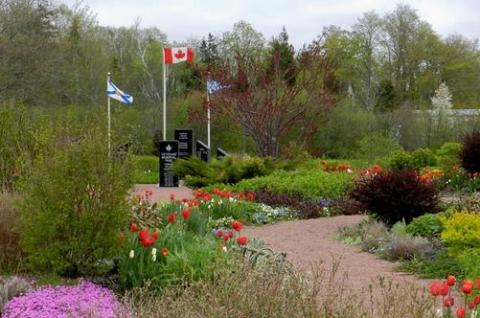
The Veterans Memorial Park (VMP) was designed by Dr. Karen Ewing in the form of a Celtic flower. The three gardens enfold eight black granite monuments set on red gravel. On the left is the Garden of Sorrows, formed as a mock WWI trench with no flowers and only black mulch and white sandbags. Behind the monuments is the Garden of Remembrance, with old-fashioned white and green shrubs, bulbs, perennials, and grasses. To the right is the Garden of Hope, in full colour, again filled with shrubs, bulbs and perennials from all around the world to inspire the visitors to look forward to the day when we will all live in peace with each other. The park is ringed by native trees with lawns and red gravel paths.
In addition to the black granite monuments, there are three stone benches dedicated to the families, the parents and the children who give so much when a family member goes away to serve. Behind the garden sits a sculpture, created and donated by a local welder, of the world surrounded by barbed wire. As the wire circles upward, it changes to olive branches and, at the tip, a peace dove takes flight. It is a symbol of our continued hope for peace.
Finally, there is a Forgotten Heroes monument, conceived of and donated by a local student. It is dedicated to the sacrifice of all the animals that have been used during war time and peace time.
[front/devant]
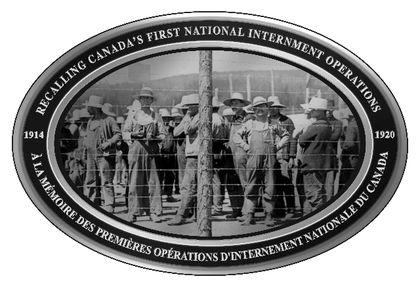
Recalling Canada's First National Internment Operations 1914-1920
A la mémoire des premières opérations d’internement nationale du Canada 1914-1920
This memorial recalls a historic injustice Canadians should pause to remember, as we recall the First World War and the valour of all those Canadian men, and some women, who served. It is a tribute to mark the memory of the thousands of "enemy aliens" who had their civil rights stripped, and were subsequently imprisoned during Canada's first national internment operations of 1914-1920, following the implementation of the War Measures Act. 2014 marks the 100th anniversary of the War Measures Act - adopted on August 22, 1914 during the First World War. It was used to imprison Ukrainian-Canadians, and other ethnic groups, including German, Hungarian, Serbian, Croatian, and Armenian communities, into one of Canada's 24 internment camps.
Dr. Lubomyr Luciuk, a professor at the Royal Military College of Canada and former chair of the Ukrainian Canadian Civil Liberties Association (UCCLA), had taken it upon himself to lead the way and organize the memorial. In the CTO ("One Hundred") project, 100 aluminum plaques were simultaneously unveiled at 100 different locations across the country at 11:00am local time on August 22, 2014. The first plaque was unveiled in Amherst, Nova Scotia, followed by a wave of plaque unveilings moved west, from province to province, culminating in Nanaimo, British Columbia. The plaques, which cost $1,000 to make, were funded by the generosity of the Endowment Council of the Canadian First World War Interment Recognition Fund.
Each plaque features a photo of internment prisoners confined behind a wire fence at the Castle Mountain Internment Camp in Banff, Alberta. The Castle Camp, which was built in 1915 at the base of Castle Mountain, was a Canadian internment camp which held immigrant prisoners of Ukrainian, Austrian, Hungarian, and German descent.