Other

City/Municipality
Saskatoon
Memorial Number
47010-052
Type
Address
3021 Louise Street
Location
Royal Canadian Legion, Nutana Branch 362
in Canada
Yes
GPS Coordinates
52.1018804, -106.60664
Inscription

M R Knutson

L S Anderson

A E Andreem

C A Boden

J F Booth

C C Boughmer

O C Bridgeman

W L Cassidy

P Cayford

A J Coles

P W Dawson

E Diefenbaker

V Dumbar

E C Dunlop

J St C Nation

G Macdonald

W H Elliot

P A Mainstock

W Ibbotson

J Macdonald

P M Maguire

A Mahaffy

D J Mitchell

R C Moir

M C Moss

T Stevenson

M L Turner

W E Walker

T J Williams

W T Wesley-Long

Image
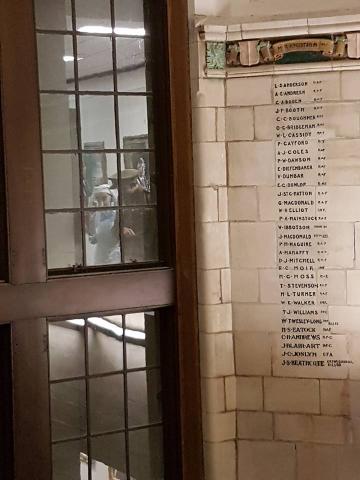
Photo Credit
Victoria Edwards
Caption
Mural Honour Roll Legion 362
Province
!4v1621269564767!6m8!1m7!1stIMZkKc-C2a1We0kP-zfcw!2m2!1d52.10188036673807!2d-106.6066399674136!3f260.0135993399213!4f0.2252729449892712!5f1.8662309360095128"
Body Content

The Royal Canadian Legion Branch 362 has a memorial honour roll mural painted in the stairwell dedicated to locals who served Canada.

City
Saskatoon
Country
Type Description
Mural
Memorial CF Legacy ID
9604
City/Municipality
Saskatoon
Memorial Number
47010-051
Type
Address
3021 Louise Street
Location
Royal Canadian Legion, Nutana Branch 362
in Canada
Yes
GPS Coordinates
52.1018804, -106.60664
Inscription

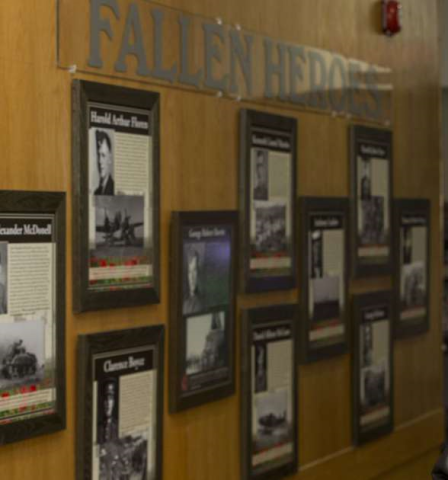
Fallen Heroes

Image
Photo Credit
Victoria Edwards
Caption
Fallen Heroes Legion 362
Province
!4v1621269457275!6m8!1m7!1stIMZkKc-C2a1We0kP-zfcw!2m2!1d52.10188036673807!2d-106.6066399674136!3f260.0135993399213!4f0.2252729449892712!5f1.8662309360095128"
Body Content

Canadian Fallen Heroes Foundation is working to build a 19-by-23-inch framed memorial for each casualty from the province of Saskatchewan. The Saskatchewan branch of the Canadian Fallen Heroes Foundation is seeking biographical details from the public on more than 10,000 Saskatchewan-born soldiers, sailors and aircrew who have been killed in action since the beginning of the First World War. Ten of those memorials are on display at Royal Canadian Legion Branch 362. About a dozen more memorials are in Legion halls and schools around the province.

City
Saskatoon
Country
Type Description
Framed memorial
Memorial CF Legacy ID
9603
City/Municipality
Saskatoon
Memorial Number
47010-050
Type
Address
Trans-Canada Hwy 60, Saskatoon
Location
Saskatchewan Railway Museum
in Canada
Yes
GPS Coordinates
52.078668795057, -106.81500536442
Image
Photo Credit
Victoria Edwards
Caption
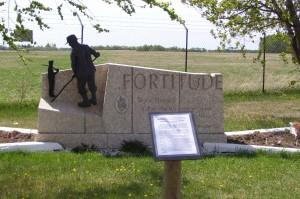
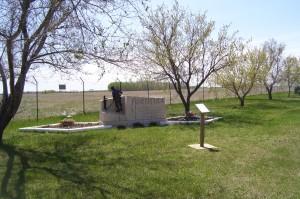
Fortitude
1 of 3 images
Image
Caption
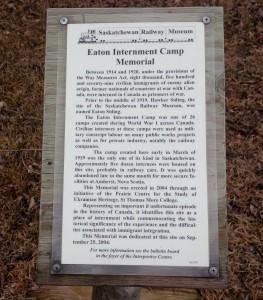
Plaque: Eaton Internment Camp
1 of 3 images
Image
Caption
Fortitude by John Van Boxtel
1 of 3 images
Province
!4v1621269260058!6m8!1m7!1s9zIifene3-bmywhf31ojJw!2m2!1d52.07933348126618!2d-106.8130491382696!3f254.5438581522264!4f2.452763045296493!5f1.6720419752958753"
Body Content

Fortitude sculpture by John Van Boxtel installed in 2004, funded by the Ukrainian Canadian Committee. The sculpture was to the memory of those who were interned at the Eaton Internment Camp near this site during the Great War.

City
Saskatoon
Country
Type Description
Sculpture
Memorial CF Legacy ID
9525
City/Municipality
Saskatoon
Memorial Number
47010-049
Type
Address
Rockingham Avenue
Location
Montgomery Place
in Canada
Yes
GPS Coordinates
52.1110606, -106.7311032
Inscription

[street sign/plaque de rue]

ROCKINGHAM AVE

[plaque]

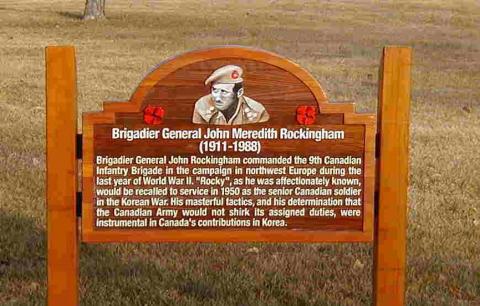
Brigadier General John Meredith Rockingham
(1911 – 1988)

Brigadier General John Rockingham commanded the 9th Canadian
Infantry Brigade in the campaign in Northwest Europe during the
last year of World War II. “Rocky”, as he was affectionately known,
would be recalled to service in 1950 as the senior Canadian soldier
in the Korean War. His masterful tactics, and his determination that
the Canadian Army would not shrink its assigned duties, were
instrumental in Canada’s contribution in Korea.

Image
Photo Credit
Montgomery Place Community Association
Caption
Rockingham Avenue Plaque
War or Conflict Term
Province
!4v1621268952706!6m8!1m7!1svc0HdLjxzpZWsCMn0akXiQ!2m2!1d52.11106352489002!2d-106.7311051425367!3f62.94517875225679!4f-6.34753868882342!5f3.325193203789971
Body Content

Rockingham Avenue is named in honour of Brigadier General John M. Rockingham, CB, CBE, DSO & bar, CD, LLD. It is located in Montgomery Place, an area developed in 1946 to house returning Second World War Veterans and their families. Most streets and parks in the area are named for prominent military members, famous battles, and military units.

In 2004, the Montgomery Place Community Association embarked on a project to explain the choice of names for Montgomery Place streets. The research and writing were undertaken by Kevin Gooding who was the Finance Director at the time, with help from President Jim Earle.

The signs were produced at Abe’s Sign Design Group of Saskatoon, with owner Gerry Tunicliffe giving the Association his whole-hearted support. Gerry even offered the Cassino Avenue sign free-of-charge, since his father had fought at the Battle of Monte Cassino. With interest and dedication, Gerry was also a great help to Kevin tracking down photos for the signs.

On September 22, 2007, Kevin, Jim and Vice-President Dave Price, along with Secretary Larry Rempel, Communications Director Gary Berg and resident Don Janzen, rented an auger and then dug, filled, tamped and installed the first 16 signs. Three more signs were installed later.

City
Saskatoon
Country
Type Description
Street, plaque
Memorial CF Legacy ID
9111
City/Municipality
Saskatoon
Memorial Number
47010-048
Type
Address
Ortona Street
Location
Montgomery Place
in Canada
Yes
GPS Coordinates
52.1129275, -106.7200397
Inscription

[street sign/plaque de rue]

ORTONA ST

[plaque]

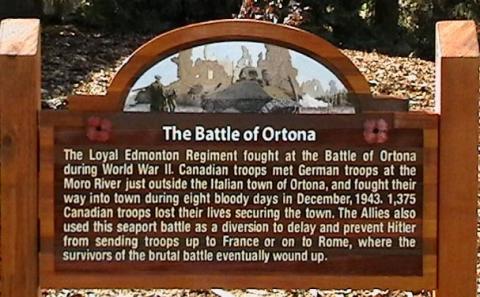
The Battle of Ortona

The Loyal Edmonton Regiment fought at the Battle of Ortona
during World War II. Canadian troops met German troops at the
Moro River just outside the town of Ortona, and fought their
way into town during eight bloody days in December 1943. 1,375
Canadian troops lost their lives securing the town. The Allies also
used this seaport battle as a diversion to delay and prevent Hitler
from sending troops up to France or on to Rome, where the
survivors of the brutal battle eventually wound up.

Image
Photo Credit
Montgomery Place Community Association
Caption
Ortona Street Plaque
War or Conflict Term
Province
!4v1621268854352!6m8!1m7!1s0RE2HZSMMEcHX0WuWQAqIg!2m2!1d52.11294179468634!2d-106.7200462154206!3f264.27283116571766!4f-6.532795866923664!5f3.325193203789971
Body Content

Ortona Street is named in honour of the Canadians who fought in the Battle of Ortona. It is located in Montgomery Place, an area developed in 1946 to house returning Second World War Veterans and their families. Most streets and parks in the area are named for prominent military members, famous battles, and military units.

In 2004, the Montgomery Place Community Association embarked on a project to explain the choice of names for Montgomery Place streets. The research and writing were undertaken by Kevin Gooding who was the Finance Director at the time, with help from President Jim Earle.

The signs were produced at Abe’s Sign Design Group of Saskatoon, with owner Gerry Tunicliffe giving the Association his whole-hearted support. Gerry even offered the Cassino Avenue sign free-of-charge, since his father had fought at the Battle of Monte Cassino. With interest and dedication, Gerry was also a great help to Kevin tracking down photos for the signs.

On September 22, 2007, Kevin, Jim and Vice-President Dave Price, along with Secretary Larry Rempel, Communications Director Gary Berg and resident Don Janzen, rented an auger and then dug, filled, tamped and installed the first 16 signs. Three more signs were installed later.

The mediaeval town of Ortona, with its castle and stone buildings, was situated on a ledge overlooking the Adriatic Sea. Its steep, rubble-filled streets limited the use of tanks and artillery and thus made this an infantryman's struggle. During several days of vicious street fighting, the Canadians smashed their way through walls and buildings—"mouseholing" as they called it. This was Christmas 1943. Meanwhile, a subsidiary attack had been launched to the northwest and the Germans, in danger of being cut off, withdrew from Ortona. The city officially fell on December 28.

City
Saskatoon
Country
Type Description
Street, plaque
Memorial CF Legacy ID
9110
City/Municipality
Saskatoon
Memorial Number
47010-047
Type
Address
Normandy Street
Location
Montgomery Place
in Canada
Yes
GPS Coordinates
52.1108199, -106.7363864
Inscription

[street sign/plaque de rue]

NORMANDY ST

[plaque]

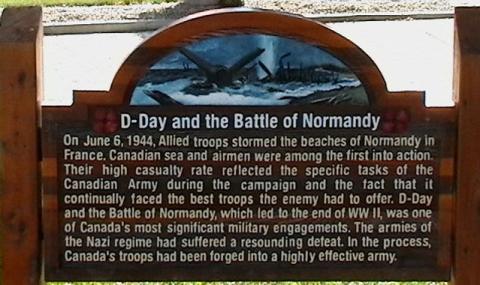
D-Day and the Battle of Normandy

On June 6, 1944, Allied troops stormed the beaches of Normandy in
France. Canadian sea and airmen were among the first into action.
Their high casualty rate reflected the specific tasks of the
Canadian Army during the campaign and the fact that it
continually faced the best troops the enemy had to offer. D-Day
and the Battle of Normandy, which led to the end of WWII, was one
of Canada’s most significant military engagements. The armies of
the Nazi regime had suffered a resounding defeat. In the process,
Canada’s troops had been forged into a highly effective army.

Image
Photo Credit
Montgomery Place Community Association
Caption
Normandy Street Plaque
War or Conflict Term
Province
!4v1621268737480!6m8!1m7!1sSo71l4JpWx86Oaf61UcU2Q!2m2!1d52.11079288849747!2d-106.7363818132268!3f247.46091800781488!4f-10.966027141863577!5f3.325193203789971
Body Content

Normandy Street is named in honour of the Canadians who fought in the D-Day invasion and the Battle of Normandy. It is located in Montgomery Place, an area developed in 1946 to house returning Second World War Veterans and their families. Most streets and parks in the area are named for prominent military members, famous battles, and military units.

In 2004, the Montgomery Place Community Association embarked on a project to explain the choice of names for Montgomery Place streets. The research and writing were undertaken by Kevin Gooding who was the Finance Director at the time, with help from President Jim Earle.

The signs were produced at Abe’s Sign Design Group of Saskatoon, with owner Gerry Tunicliffe giving the Association his whole-hearted support. Gerry even offered the Cassino Avenue sign free-of-charge, since his father had fought at the Battle of Monte Cassino. With interest and dedication, Gerry was also a great help to Kevin tracking down photos for the signs.

On September 22, 2007, Kevin, Jim and Vice-President Dave Price, along with Secretary Larry Rempel, Communications Director Gary Berg and resident Don Janzen, rented an auger and then dug, filled, tamped and installed the first 16 signs. Three more signs were installed later.

City
Saskatoon
Country
Type Description
Street, plaque
Memorial CF Legacy ID
9109
City/Municipality
Saskatoon
Memorial Number
47010-046
Type
Address
Mountbatten Street
Location
Montgomery Place
in Canada
Yes
GPS Coordinates
52.108061, -106.730974
Inscription

[street sign/plaque de rue]

MOUNTBATTEN ST

[plaque]

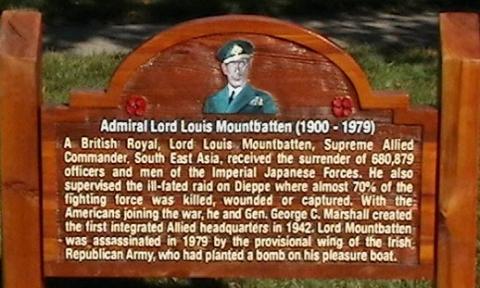
Admiral Lord Louis Mountbatten (1900 – 1979)

A British Royal, Lord Louis Mountbatten, Supreme Allied
Commander, South East Asia, received the surrender of 680,879
officers and men of the Imperial Japanese Forces. He also
supervised the ill-fated raid on Dieppe where almost 70% of the
fighting force was killed, wounded, or captured. With the
Americans joining the war, he and Gen. George C. Marshall created
the first integrated Allied headquarters in 1942. Lord Mountbatten
was assassinated in 1979 by the provisional wing of the Irish
Republican Army, who had planted a bomb on his pleasure boat.

Image
Photo Credit
Montgomery Place Community Association
Caption
Mountbatten Street Plaque
Province
!4v1621268621168!6m8!1m7!1svqvStmQdJBLJ23dNNCTuVQ!2m2!1d52.10806188871608!2d-106.7309774936059!3f345.36534660290755!4f-10.804624634641513!5f3.325193203789971
Body Content

Mountbatten Street is named in honour of Admiral of the Fleet Louis Mountbatten, 1st Earl Mountbatten of Burma, KG, GCB, OM, GCSI, GCIE, GCVO, DSO, PC, FRS. It is located in Montgomery Place, an area developed in 1946 to house returning Second World War Veterans and their families. Most streets and parks in the area are named for prominent military members, famous battles, and military units.

In 2004, the Montgomery Place Community Association embarked on a project to explain the choice of names for Montgomery Place streets. The research and writing were undertaken by Kevin Gooding who was the Finance Director at the time, with help from President Jim Earle.

The signs were produced at Abe’s Sign Design Group of Saskatoon, with owner Gerry Tunicliffe giving the Association his whole-hearted support. Gerry even offered the Cassino Avenue sign free-of-charge, since his father had fought at the Battle of Monte Cassino. With interest and dedication, Gerry was also a great help to Kevin tracking down photos for the signs.

On September 22, 2007, Kevin, Jim and Vice-President Dave Price, along with Secretary Larry Rempel, Communications Director Gary Berg and resident Don Janzen, rented an auger and then dug, filled, tamped and installed the first 16 signs. Three more signs were installed later.

City
Saskatoon
Country
Type Description
Street, plaque
Memorial CF Legacy ID
9108
City/Municipality
Saskatoon
Memorial Number
47010-045
Type
Address
Montgomery Place
Location
Montgomery Place
in Canada
Yes
GPS Coordinates
52.1147456, -106.7183012
Inscription

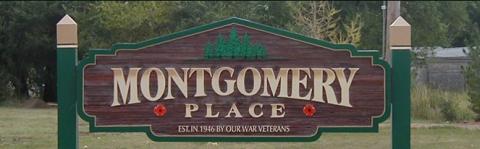
[sign/signe]

MONTGOMERY
PLACE

EST. IN 1946 BY OUR WAR VETERANS

Image
Photo Credit
Montgomery Place Community Association
Caption
Montgomery Place sign
Province
!4v1621268507456!6m8!1m7!1shtkmN2gVtwlk99GAu_nGog!2m2!1d52.11461398195996!2d-106.7184047190938!3f217.8015994499328!4f-3.3131766541981023!5f3.325193203789971
Body Content

Montgomery Place is named in honour of Field Marshall Bernard Law Montgomery, 1st Viscount Montgomery of Alamein, KG, GCB, DSO, PC. Montgomery Place is located in the south-west corner of Saskatoon and bounded by 11 Street W, Dundonald Avenue, CN Yards and Chappell Drive. Most of this neighbourhood was built after the Second World War in 1946 as a part of the Veterans’ Land Act settlement plan to house returning Second World War Veterans and their families. Ten years later, it became a neighbourhood of Saskatoon. Most streets and parks in the area are named for prominent military members, famous battles and military units.

City
Saskatoon
Country
Type Description
Neighbourhood
Memorial CF Legacy ID
9107
City/Municipality
Saskatoon
Memorial Number
47010-043
Type
Address
Merritt Street
Location
Montgomery Place
in Canada
Yes
GPS Coordinates
52.1118126, -106.731358
Inscription

[street sign/plaque de rue]

MERRITT ST

[plaque]

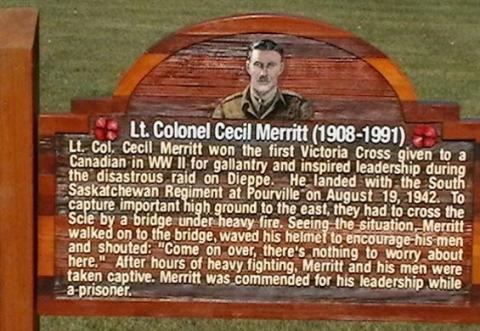
Lt. Colonel Cecil Merritt (1908 – 1991)

Lt. Col. Cecil Merritt won the first Victoria Cross given to a
Canadian in WWII for gallantry and inspired leadership during
the disastrous raid on Dieppe. He landed with the South
Saskatchewan Regiment at Pourville on August 19, 1942. To
capture important high ground to the east, they had to cross the
Scie by a bridge under heavy fire. Seeing the situation, Merritt
walked on to the bridge, waved his helmet to encourage his men
and shouted: “Come on over, there’s nothing to worry about
here”. After hours of heavy fighting, Merritt and his men were
taken captive. Merritt was commended for his leadership while
a prisoner.

Image
Photo Credit
Montgomery Place Community Association
Caption
Merritt Street Plaque
Province
!4v1621268312872!6m8!1m7!1sIc3JX5WDa3aF-ImYwebZEg!2m2!1d52.11181284239711!2d-106.7313585665641!3f345.9273751383577!4f-8.420916667583327!5f3.325193203789971
Body Content

Merritt Street is named in honour of Lieutenant-Colonel Cecil Merritt, VC. It is located in Montgomery Place, an area developed in 1946 to house returning Second World War Veterans and their families. Most streets and parks in the area are named for prominent military members, famous battles, and military units.

In 2004, the Montgomery Place Community Association embarked on a project to explain the choice of names for Montgomery Place streets. The research and writing were undertaken by Kevin Gooding who was the Finance Director at the time, with help from President Jim Earle.

The signs were produced at Abe’s Sign Design Group of Saskatoon, with owner Gerry Tunicliffe giving the Association his whole-hearted support. Gerry even offered the Cassino Avenue sign free-of-charge, since his father had fought at the Battle of Monte Cassino. With interest and dedication, Gerry was also a great help to Kevin tracking down photos for the signs.

On September 22, 2007, Kevin, Jim and Vice-President Dave Price, along with Secretary Larry Rempel, Communications Director Gary Berg and resident Don Janzen, rented an auger and then dug, filled, tamped and installed the first 16 signs. Three more signs were installed later.

Charles Cecil Ingersoll Merritt was born in Vancouver, British Columbia on 10 November 1908. In 1929 he graduated from the Royal Military College in Kingston, Ontario, and eventually enrolled in the Militia. When the Second World War began, Merritt was serving as an officer in The Seaforth Highlanders of Canada. In 1942 he became the commanding officer of The South Saskatchewan Regiment (SSR). On 19 August 1942, the SSR was one of the infantry battalions from the 2nd Canadian Infantry Division that participated in the raid on the French port of Dieppe. The battalion landed on Green Beach immediately in front of Pourville, a village just to the west of Dieppe. In order to reach its objectives east of the village, the Canadians were obliged to cross a bridge over the River Scie, which flowed through Pourville to the sea. The bridge and its approaches were swept by German artillery, machine gun and mortar fire coming from the heights dominating the eastern bank of the Scie, which brought the progress of the SSR to a halt. At this point, Lieutenant-Colonel Merritt came forward and took charge, walking calmly across the bridge at least four times under a storm of fire to conduct parties of his men to the eastern side. He then organized and led uphill assaults on several of the concrete “pillboxes” and other enemy positions that looked down on the bridge and the village, and succeeded in clearing them. Throughout the morning, Merritt energetically led his men, exposing himself recklessly to German fire. Although twice wounded, he organized the withdrawal of his battalion from the Pourville beaches, and mounted a rear guard that ensured that the greater part of the SSR and Queen’s Own The Cameron Highlanders of Canada were re-embarked for England. Merritt and the men of the rear guard could not be brought off, and were compelled to surrender.

For his exemplary leadership and valour, Lieutenant-Colonel Merritt was awarded the Victoria Cross. Merritt died in Vancouver, British Columbia on 12 July 2000.

City
Saskatoon
Country
Type Description
Street, plaque
Memorial CF Legacy ID
9104
City/Municipality
Saskatoon
Memorial Number
47010-042
Type
Address
McNaughton Avenue
Location
Montgomery Place
in Canada
Yes
GPS Coordinates
52.1146277, -106.7431376
Inscription

[street sign/plaque de rue]

McNAUGHTON AVE

[plaque]

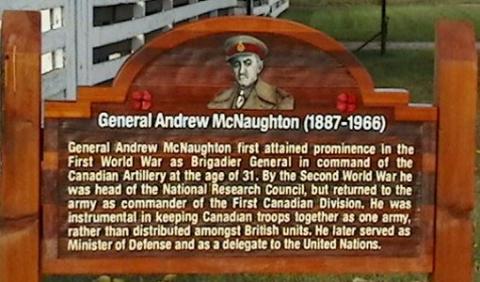
General Andrew McNaughton (1877 – 1966)

General Andrew McNaughton first attained prominence in the
First World War as Brigadier General in command of the
Canadian Artillery at the age of 31. By the Second World War he
was head of the National Research Council, but returned to the
army as commander of the First Canadian Division. He was
instrumental in keeping Canadian troops together as one army,
rather than distributed amongst British units. He later served as
Minister of Defence and as a delegate to the United Nations.

Image
Photo Credit
Montgomery Place Community Association
Caption
McNaughton Avenue Plaque
War or Conflict Term
Province
!4v1621268207215!6m8!1m7!1sPY9sUZScXeunq758xbsVNw!2m2!1d52.11462711594952!2d-106.7431386780087!3f276.5329591555489!4f-9.354469826911483!5f3.325193203789971
Body Content

McNaughton Avenue is named in honour of General Andrew McNaughton, CH, CB, CMG, DSO, CD, PC, Commander of the 1st Canadian Infantry Division in 1939, Commander of the 1st Canadian Corps upon its formation in 1940 and subsequently Commander of the 1st Canadian Army when the latter was created in 1942. It is located in Montgomery Place, an area developed in 1946 to house returning Second World War Veterans and their families. Most streets and parks in the area are named for prominent military members, famous battles, and military units. McNaughton Avenue was named by the City of Saskatoon in the mid to late 1960s.

In 2004, the Montgomery Place Community Association embarked on a project to explain the choice of names for Montgomery Place streets. The research and writing were undertaken by Kevin Gooding who was the Finance Director at the time, with help from President Jim Earle.

The signs were produced at Abe’s Sign Design Group of Saskatoon, with owner Gerry Tunicliffe giving the Association his whole-hearted support. Gerry even offered the Cassino Avenue sign free-of-charge, since his father had fought at the Battle of Monte Cassino. With interest and dedication, Gerry was also a great help to Kevin tracking down photos for the signs.

On September 22, 2007, Kevin, Jim and Vice-President Dave Price, along with Secretary Larry Rempel, Communications Director Gary Berg and resident Don Janzen, rented an auger and then dug, filled, tamped and installed the first 16 signs. Three more signs were installed later.

City
Saskatoon
Country
Type Description
Street, plaque
Memorial CF Legacy ID
9103