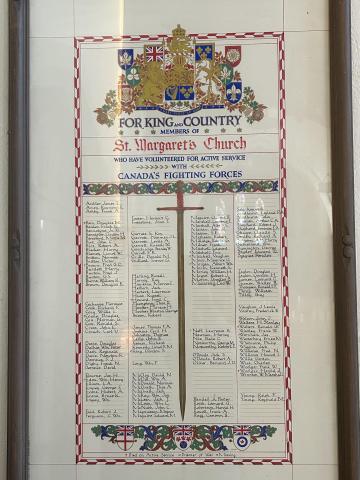
This Honour Roll was dedicated to members of St. Margaret's Church who served in the Second World War.
St. Margaret's Church Second World War Honour Roll
My VAC Account
My VAC Account
This Honour Roll was dedicated to members of St. Margaret's Church who served in the Second World War.
needs further research/recherche incomplète
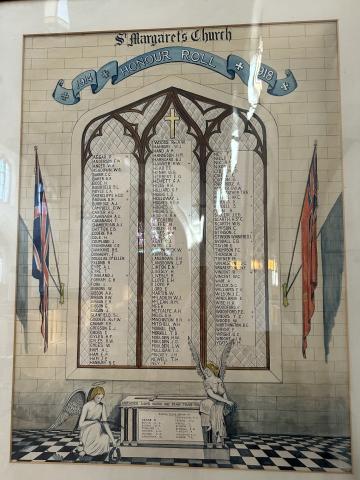
This Honour Roll was dedicated to members of St. Margaret's Church who served in the First World War.
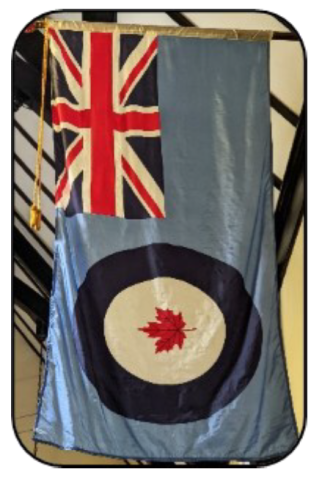
The first Royal Canadian Air Force Ensign was dedicated at All Saints Anglican Church in 1944, but due to deterioration, was replaced in 1982 by an ensign donated by the Wartime Pilots’ and Observers’ Association. The ensign will remain in place until it disintegrates. It is a Royal Air Force blue field with the Union Jack next to the staff and a roundel of blue and white, with a red maple leaf in the center. This ensign hangs above a memorial plaque erected in memory of those who gave their lives serving with the Royal Air Force, Royal Canadian Air Force, and the Air Forces of the Commonwealth during the Second World War. Due to All Saints Anglican Church's proximity to Fort Osborne, in their early years they were known as "the military church" and had many military personnel as parishioners.
An ensign is the flag that identifies a unit's or organization’s history. On 30 November 1921, the Canadian Air Force Ensign, identical to that of the Royal Air Force, was unfurled for the first time at Camp Borden, Ontario. In June 1940, the King approved the Royal Canadian Air Force Ensign, which replaced the roundel’s original red circle center with a red maple leaf. The ensign was retired upon the introduction of the National Flag of Canada in 1965 and the introduction of the Canadian Armed Forces Ensign.
In 1972, the Royal Canadian Air Force Association petitioned Her Majesty Queen Elizabeth II to decree that the ensign, (declared obsolete by the Department of National Defence Director of Ceremonial) should become a living symbol for the Association. In September 1973, the Association was advised that by Royal Decree the ensign was theirs and would henceforth be known as the Royal Canadian Air Force Association Ensign.
The Royal Canadian Air Force Association changed its name to Air Force Association of Canada in 1994, and on January 1, 1997 the ensign was officially trade-marked to be known as the Air Force Association Ensign. In 1984, an Air Command flag was authorized by the Department of National Defence. It resembles the Air Force Association Ensign with the Canadian flag replacing the Union Jack.
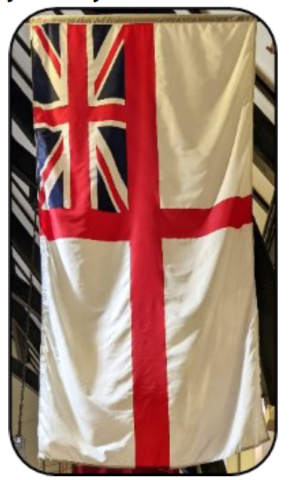
On 27 May 1945, the Royal Navy Ensign was presented to the All Saints Anglican Church, together with a memorial, to honour the officers and men of the Royal Canadian Navy and will remain in place until it disintegrates. It is a white field quartered with the red cross of St. George and the Union Jack in the upper corner next to the staff. Due to All Saints Anglican Church's proximity to Fort Osborne, in their early years they were known as "the military church" and had many military personnel as parishioners.
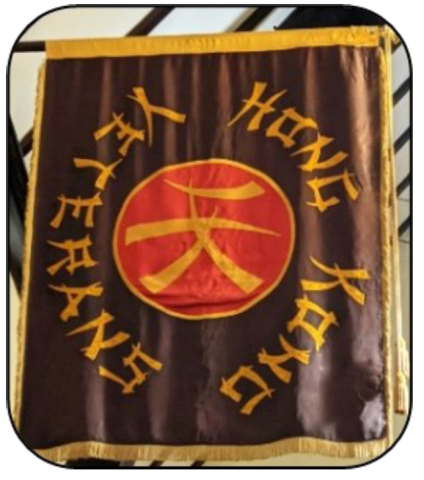
Hong Kong Veterans
The Manitoba Hong Kong Veterans Flag was laid up in All Saints Anglican Church on 14 August 1994 (the 49th anniversary of V-J Day) to honour Hong Kong Veterans and will remain in place until it disintegrates. The flag was designed by Hong Kong Veterans and has the insignia given to them by Canada in the center with the words “Hong Kong Veterans” around it. Due to All Saints Anglican Church's proximity to Fort Osborne, in their early years they were known as "the military church" and had many military personnel as parishioners.
The defence of Hong Kong was a brutal chapter in Canada's military history. Of the almost 2,000 Canadians who sailed to Hong Kong in late 1941, more than 550 would never see Canada again. Many would die in the fierce combat of December 1941. Others would perish in the grinding conditions of the Japanese prison camps throughout the rest of the war. Many of those who did survive would return home with their health broken and their lives shortened by their experiences, forever shaken by their experiences and the extreme hardships they endured.
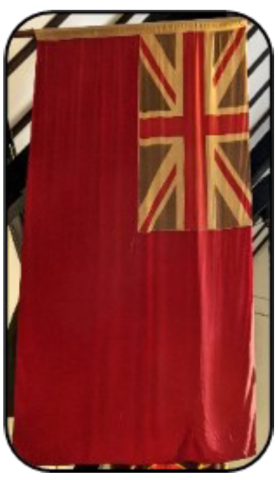
On 11 June 1944 the Merchant Navy Red Ensign was presented to the All Saints Anglican Church to honour men of the Merchant Navy and will remain in place until it disintegrates. It is a red field with a Union Jack at the staff. Due to All Saints Anglican Church's proximity to Fort Osborne, in their early years they were known as "the military church" and had many military personnel as parishioners.
In 1870, the Canadian Marine Service began wearing a Blue Ensign to show the special government status of its vessels. When the Naval Service of Canada began on May 4, 1910, this practice continued. At the Imperial Conference of 1911, Canada signed a naval agreement that Canadian warships would wear: the Royal Navy White (naval) Ensign at the stern and the flag of the Dominion (the Canadian Blue Ensign) at the jack-staff located at the bow. Canadian merchant vessels would continue to wear the familiar Red Ensign, showing their non-governmental status. The Merchant Navy Red Ensign was worn until the end of the Second World War.
The merchant fleet constructed in the First World War almost disappeared in the 1920s and the huge fleet of wartime-built ships of the Second World War was soon dispersed at war’s end. While Canadian-owned ships continued to sail the oceans, most did so under foreign registry. At the end of the war, there was a strong feeling in Canada that there should always be a Canadian flag merchant fleet that would provide employment to merchant seamen as well as to others in shipbuilding, and the repair infrastructure required to support it.
The government determined that Canadian flag ships would be costly to operate and, faced with the prospect of subsidizing the operation, allowed the ships to be sold off and transferred to foreign registry. The great Canadian fleet and shipbuilding industry rapidly declined. By 1950, with the outbreak of the Korean War, there were few merchant ships available to participate in that conflict. Twelve Canadian flag ships sailed into Korean waters during the war, fortunately there were no casualties.
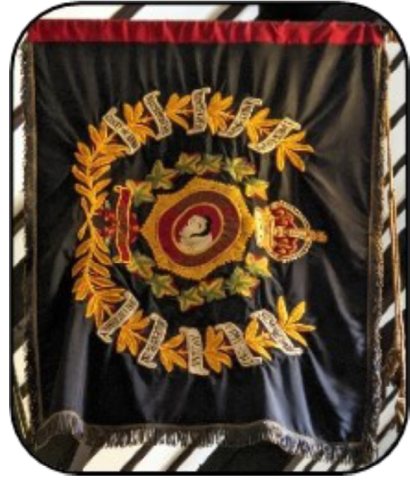
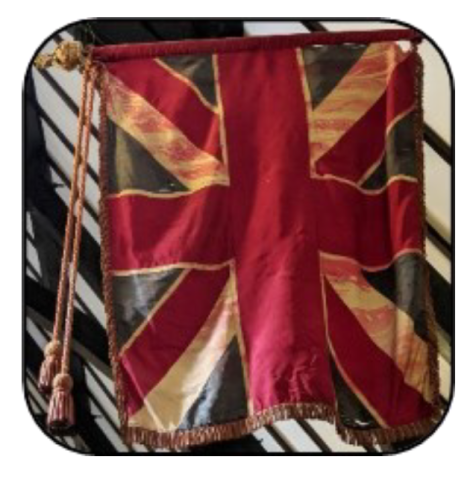
The Winnipeg Grenadiers Colours were laid up in All Saints Anglican Church on 7 June 1965 and will remain in place until they disintegrate. Due to All Saints Anglican Church's proximity to Fort Osborne, in their early years All Saints was known as "the military church" and had quite a few military personnel as parishioners. The Regimental Colour hangs on the left side of the church and the Queen's Colour hangs opposite to it on the right side.
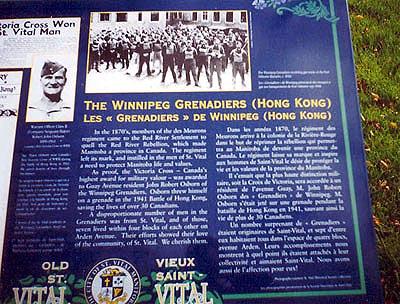
The Winnipeg Grenadiers originated in Morden, Manitoba on 1 April 1908. More than 7,000 men served with the Grenadiers in the First and Second World Wars and of these, three earned the Victoria Cross — two in the First World War and one in the Second World War. During the Defence of Hong Kong, soldiers from D Company of the Winnipeg Grenadiers became one of the first Canadian Army units to fight in the Second World War. Company Sergeant-Major John Robert Osborn of the Winnipeg Grenadiers earned a Victoria Cross at the Defence of Hong Kong where many Grenadiers became prisoners of war for more than three-and-a-half years, first in Hong Kong until early 1943, and then in Japan until their liberation in September 1945.
Following its destruction at Hong Kong, the 1st Battalion was reconstituted in Winnipeg in 1942 and participated in the attack on Kiska, Alaska in 1943. In 1944 the battalion deployed to Scotland for training and remained there until after the end of hostilities in Europe. Over the course of its history the regiment earned 22 battle honours, 20 for the First World War and two more for the Second World War.
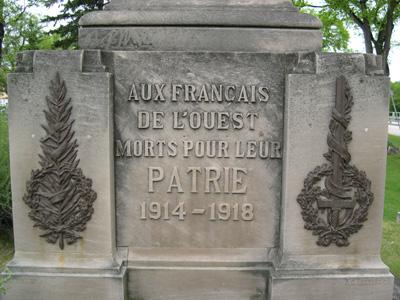
AUX FRANÇAIS
DE L’OUEST
MORTS POUR LEUR
PATRIE
1914-1918
BAGLIEN GEORGES
BABIN PILOMENE
BARRIERE AUGUSTE DE LA
BARRE JOSEPH
BAYLE PAUL
BAYARD HENRI
BEAUDRAP JEAN DE
BENOIT JEAN
BENOIT PIERRE
BERNICOT JEAN MARIE
BERNUY VICTOR
BERTRAND ALBERT
BERT FELIX
BILLARD HENRI
BLANDIN ANTOINE
BLANDIN ANTOINE
BLANCHARD AUGUSTIN
BLAS VICTOR
BOCANCOURT JEAN
BOELLE GEORGES
BOLEON CHARLES
BOSES JOSEPH ALBERT
BOUDERLIQUE BRAY ALBERT
BREGERAC DE
BUORS JEAN MARIE
CHAUVET ANDRE
CACHAT CLEMENT
CERVAL ROBERT DE LAVERGNE DE
CHARE FELIX
CHAUNY LOUIS DE
CHEVALIER A
CHIZALET PETRUS
COMMUNE ALFRED
CONAN JOSEPH MARIE PIERRE
CROIZIER REV PERE OMI
CONTANT EUGENE
CONTANT HENRI
COUSIN CHARLES
DELEGLISE REVE PERE OMI
DEMIANS DENIS
DUBOIS GASTON
DUGAL MARCEL
DUSEIGNE ARMANI
DURIEUX JEAN
ELIOT JOSEPH
ENGLER EUGENE
ESBRAYAT CHARLES
ESNAULT ALEXANDRE
EVEN PIERRE
FEULIERES CHARLES
FORISSIER JEAN
FORJONNEL JEAN
FOURNIER ANGUSTIN
FREDET FRANÇOIS
FRAIN PIERRE
FOURNIER JOSEPH
GAFFREY ARTHUR
GAFFREY SEVERE
GALES ALFRED
GASSOT JULIEN
GAUTIER CHARLES
GAUTHIER ROBERT
GERMAIN LEON
GICQUEL MATHURIN
GONIAT-DUC ALPHONSE
GONINAT-DUC EMILE
GRANGER ARMAND
GRIVEAU LOUIS
GUEZILLE EMMANUEL
GUYOT ALEX
GYHOULD YVES
HENCAULT PIERRE
HAMON PIERRE
HERBERT JOSEPH
HERNARY CELESTIN
JAHUAN AUGUSTE FMI
JACQUOT CHARLES
JENVRIN PIERRE LOUIS
JOUBERT MARCEL
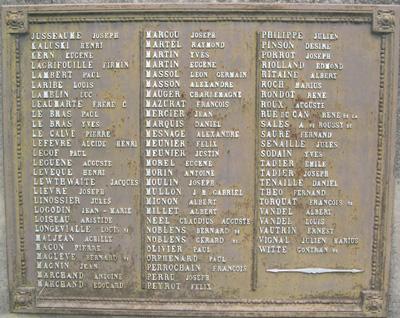
JUSSEAUME JOSEPH
KALUSKI HENRI
KERN EUGENE
LAGRIFOUILLE FIRMIN
LAMBERT PAUL
LARIBE LOUIS
LAMBLIN LUC
LEAUMARTE FRERE C
LE BRAS PAUL
LE BRAS YVES
LE CALVE PIERRE
LEFEVRE ALCIDE HENRI
LEGOF PAUL
LEGUENE AUGUSTE
LEVEQUE HENRI
LEWTHWAITE JACQUES
LIEVRE JOSEPH
LINOSSIER JULES
LOGODIN JEAN-MARIE
LOISEAU ARISTIDE
LONGEVIALLE LOUIS DE
MALJEAN ACHILLE
MACON PIERRE
MAGLEVE BERNARD DE
MAGNIN JEAN
MARCHAND ANTOINE
MARCHAND EDOUARD
MARCOU JOSEPH
MARTEL RAYMOND
MARTIN YVES
MARTIN EUGENE
MASSOL LEON GERMAIN
MASSON ALEXANDRE
MAUGER CHARLEMAGNE
MAZURAT FRANÇOIS
MERCIER JEAN
MARQUIS DANIEL
MESNAGE ALEXANDRE
MEUNIER FELIX
MEUNIER JUSTIN
MOREL EUGENE
MORIN ANTOINE
MOULIN JOSEPH
MULLON J.M. GABRIEL
MIGNON ALBERT
MILLET ALBERT
NEEL CLAUDIUS AUGUSTE
NOBLENS BERNARD DE
NOBLENS GERARD DE
OLIVIER PAUL
ORPHENARD PAUL
PERROCHAIN FRANÇOIS
PERRU JOSEPH
PEYROT FELIX
PHILIPPE JULIEN
PINSON DESIRE
PORROT JOSEPH
RIOLLAND EDMOND
RITAINE ALBERT
ROCH MARIUS
RONDOT RENE
ROUX AUGUSTE
RUE DU CAN RENE DE LA
SALES A DE ROUSSY DE
SAURE FERNAND
SENAILLE JULES
SODAIN YVES
TADIER EMILE
TADIER JOSEPH
TENAILLE DANIEL
THEO FERNAND
TORQUAT FRANÇOIS DE
VANDEL ALBERT
VANDEL LOUIS
VAUTRIN ERNEST
VIGNAL JULIEN MARIUS
WITTE GONTRAN DE
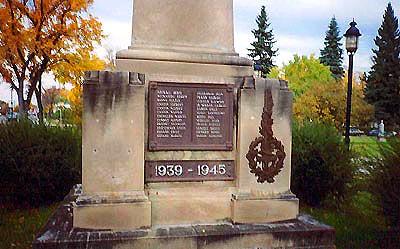
1939-1945
ABGRALL HERVE
ALEXANDRE ERNEST
BARRE AURÈLE
CANTIN CLÉMENT
CANTIN MAURICE
CANTIN WILFRID
CHEVALIER MARCEL
COMBAZ ALFRED
DENISET FRANCOIS
DESCOTEAUX LOUIS
DUNANT EMILE
DUNANT MARCEL
ESCARAVAGE JEAN
FRADIN GABRIEL
GORIEUX RAYMOND
LE VERRIER GABRIEL
MANDIN EMILE
MUSSO BARTHELEMY
MUSSO PAUL
NEDELLEC YVES
ORIEUX ACHILLE
RENAULT BASILE
RICHARD HENRI
WANLIN ALPHONSE
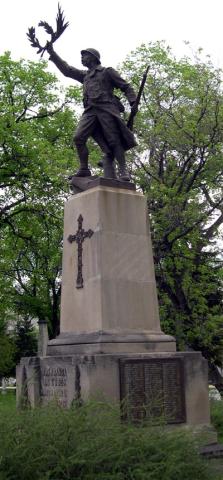
Erected by the people of St. Boniface, this memorial is dedicated to the French who died for their country during the First and Second World Wars.
[front/devant]
PRO HONORS ET JUSTITTA
1914
1918
BELGIUM
1939
1945
THE FALLEN SOLDIERS
AND COMRADES WHO
VALIANTLY SERVED
IN BOTH WORLD WARS
H. GARNIER SCULPTOR
[right side/côté droit]
BELGIQUE
1914 — 1918
1939 — 1945
1950 — 1953
[left side/côté gauche]
BELGIE
1914 — 1918
[plaque]
BELGIAN VETERANS ASSOCIATION
HISTORICAL WAR MEMORIAL
UNVEILED OCT. 1, 1938
RESTORED SEPT. 17, 1995
RESTORATION FUND DONORS
MANITOBA HERITAGE COUNCIL
RIEL COMMUNITY
BELGIAN CREDIT UNION
THE THOMAS STIL FOUNDATION INC.
ANONYMOUS DONORS
BELGIAN VETERANS ASSOCIATION, BRANCH 107, R.C.L.
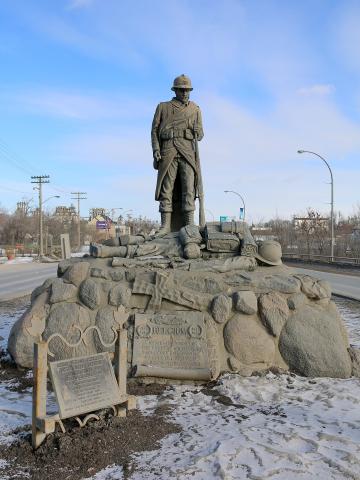
The Belgian Veterans War Memorial was unveiled on October 1, 1938, in memory of Belgian and allied service men and women who died in the First World War. The memorial was designed by local artist Hubert A. Granier and built by the Belgians of St. Boniface. Depicted on a stone base are a standing soldier in uniform, holding a gun by the top of the barrel and looking down at a fallen comrade face down before him. The fallen soldier is faceless, focusing attention on the sacrificing and loss of all those who gave their lives. The figures were sculpted out of Haddington Island stone and completed at the Gillies Quarries in Winnipeg.
Additions for the Second World War and Korean War were later added. Alfred Wilmer, restorer of heritage structures, restored the memorial in 1995 and the memorial was rededicated. The monument was declared a heritage structure by the City of Winnipeg Heritage Department on April 4, 1995. The memorial was rededicated again on July 24, 2022, after the Belgian Veterans Association fundraised for repairs.
The memorial is the focus of the annual Belgian Independence Day Parade and Wreath laying on July 21. The upkeep of the grounds is done by the City of Winnipeg Parks Board.
[front/devant]
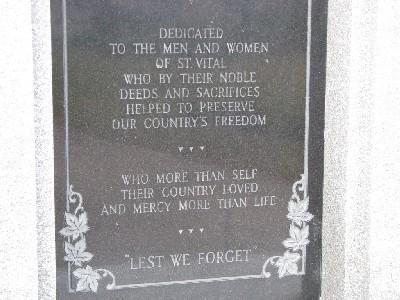
DEDICATED
TO THE MEN AND WOMEN
OF ST. VITAL
WHO BY THEIR NOBLE
DEEDS AND SACRIFICES
HELPED TO PRESERVE
OUR COUNTRY'S FREEDOM
WHO MORE THAN SELF
THEIR COUNTRY LOVED
AND MERCY MORE THAN LIFE
LEST WE FORGET
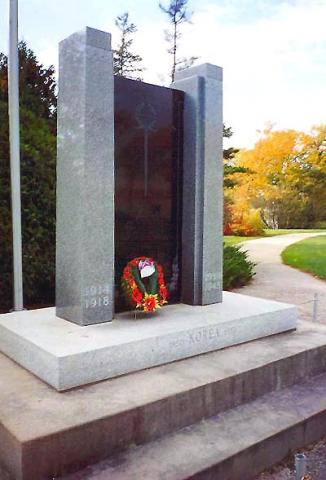
1914-1918
1939-1945
1950 KOREA 1953
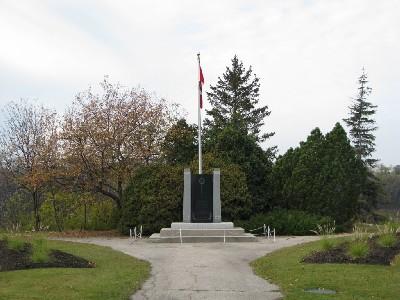
This memorial, which also incorporates a laminated placard with pictures and text, is dedicated to the local war dead and veterans of the First and Second World Wars and the Korean War. It was erected by the citizens of St. Vital.