Other

City/Municipality
Erickson
Memorial Number
46004-003
Type
Address
30 1st Street South-West R0J P0P
Location
Erickson Legion Branch No. 143
in Canada
Yes
GPS Coordinates
50.49732, -99.91647
Inscription

[front/devant]

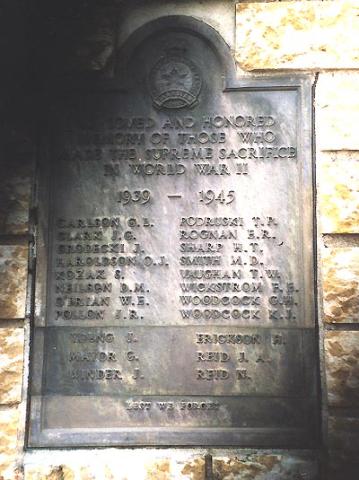
IN LOVE AND HONORED MEMORY OF THOSE WHO MADE THE SUPREME SACRIFICE IN WORLD WAR II

1939 - 1945

CARLSON, G.L.
CLARK J.G.
GRODECKI, J.
HARALSON, O.J.
KOZAK, S.
NEILSON, D.M.
O'BRIAN, W.E.
POLLON, J.R.
YOUNG, J.F.
MAYOR, G.
WINDER, J.
PODRUSKI, T.P.
ROGNAN, E.R.
SHARP, H.T.
SMITH, M.D.
VAUGHAN, T.W.
WICKSTROM, F.E.
WOODCOCK, G.H.
WOODCOCK, K.J.
ERICKSON, H.
REID, J.A.
REID, N.

LEST WE FORGET

Image
Photo Credit
Harriet A. Hodges, Victoria Edwards
Caption
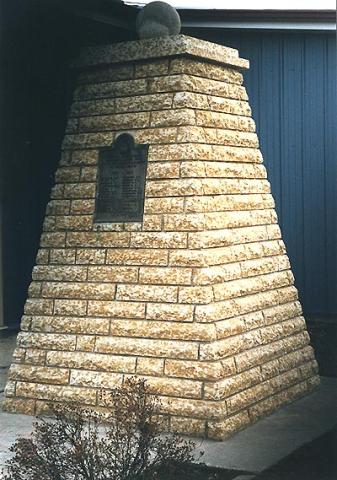
Cairn (front and right side)
1 of 3 images
Image
Caption
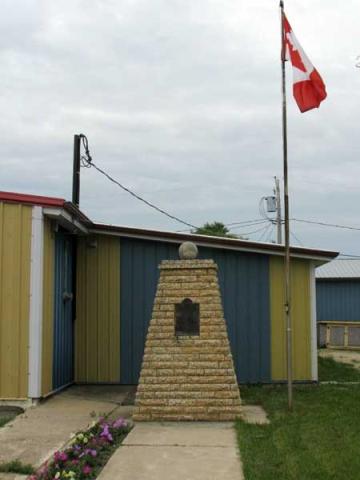
Cairn (with flagpole)
1 of 3 images
Image
Caption
Cairn in front of the Erickson Legion Branch No. 143
1 of 3 images
Province
!4v1619617871378!6m8!1m7!1sTb0uzTajJLCdMK-Bk9vmQQ!2m2!1d50.49744915092702!2d-99.9164210802753!3f187.57172677734326!4f-3.6219974787824185!5f3.188990980258218"
Body Content

In 1947, Peter K. Peterson of Erickson donated two lots to the Erickson Legion Branch No. 143 to build a Legion Hut and Cenotaph. The cenotaph was built by Ted Neilson, Wyman Miller, Enoch Ehlin and John Marcino.

For many years, a memorial service was held in August or September at the site. In 1964, the Legion purchased the Scandia Hall on First Street and the former location was sold to Parkwood Auto. The cenotaph could not be moved so its plaque was removed and stored in the Legion Hall. In 1979, a new cenotaph was built at a cost of $1,600.

In 1979, a new cenotaph was built at a cost of $1,600 in front of the Erickson Legion Branch No. 143. The brass plaque from the former cenotaph was moved to the new site.

The memorial commemorates Second World War personnel killed overseas.

City
Erickson
Country
Type Description
Brick cairn
Memorial CF Legacy ID
178
City/Municipality
Onanole
Memorial Number
46004-002
Type
Address
Circle Road
Location
Small grass patch
in Canada
Yes
GPS Coordinates
50.62348, -99.96801
Inscription

[front/devant]

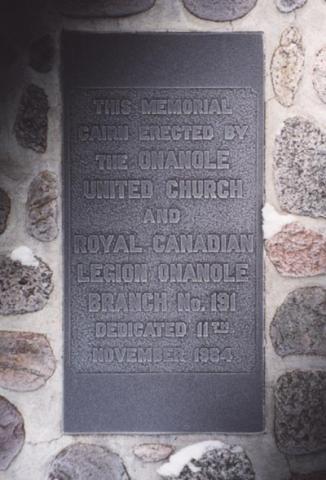
THIS CAIRN ERECTED BY THE ONANOLE UNITED CHURCH AND THE ONANOLE LEGION BRANCH #191, DEDICATED NOV 11, 1984

[right side/côté droit]

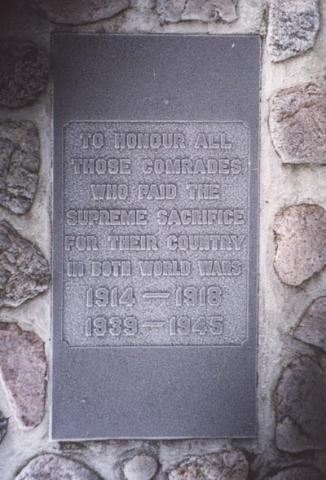
TO HONOR ALL THOSE COMRADES WHO PAID THE SUPREME SACRIFICE, IN BOTH WORLD WARS 1914-1918 AND 1939-1945

[left side/côté gauche]

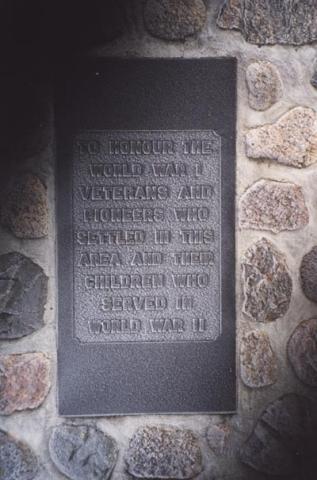
TO HONOR WORLD WAR I VETERANS AND PIONEERS WHO SETTLED IN THIS AREA, AND THEIR CHILDREN WHO SERVED IN WORLD WAR II

Image
Caption
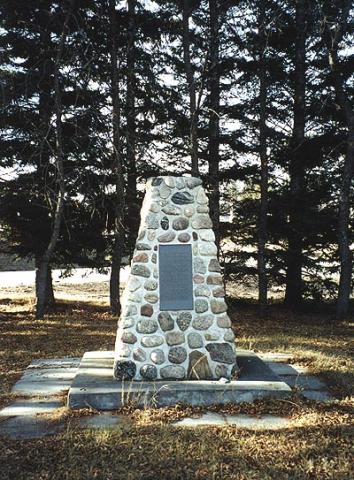
cairn (front)
1 of 4 images
Image
Caption
inscription
1 of 4 images
Image
Caption
inscription
1 of 4 images
Image
Caption
inscription
1 of 4 images
Province
!4v1619617659961!6m8!1m7!1sE5DjWnQTL5qyfLjdosieqg!2m2!1d50.62354773533087!2d-99.96777687568306!3f259.53755336651534!4f-5.556903376657118!5f3.325193203789971"
Body Content

This memorial was financed and constructed by the Onanole United Church and Royal Canadian Legion Branch No. 191 (Onanole). It is dedicated to local First and Second World War dead, veterans of those wars, and pioneers who settled in the area and was dedicated on 11 November 1984. This cairn, situated in the village of Onanole, was built at a cost of $3000.00. Tom Arkison built the base and Dave Proven provided the stone.

City
Onanole
Country
Type Description
Stone cairn
Memorial CF Legacy ID
1767
City/Municipality
Clanwilliam
Memorial Number
46004-001
Type
Address
2nd street and 1st avenue
in Canada
Yes
GPS Coordinates
50.3610087, -99.8154409
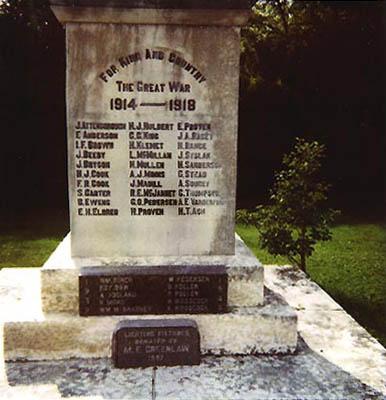
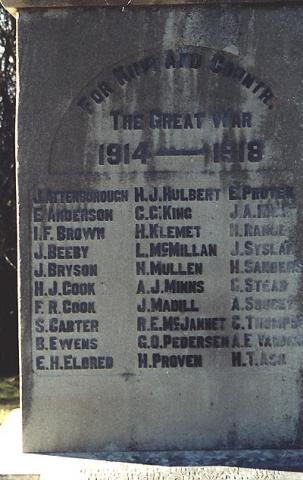
Inscription

[front/devant]

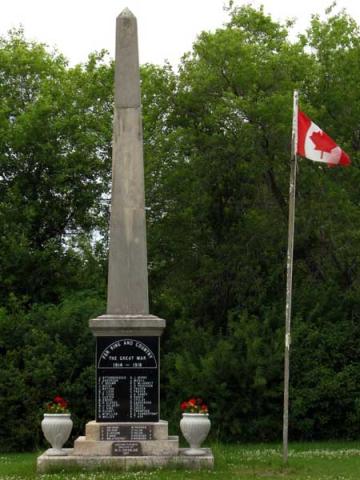
FOR KING AND COUNTRY

THE GREAT WAR
1914 - 1918

J. ATTENBOROUGH
E. ANDERSON
H.T. ASH
J.F. BROWN
J. BEEBY
J. BRYSON
H.J. COOK
S. CARTER
F.R. COOK
B. EWENS
E.H. ELDRED
H.J. HULBERT
C.C. KING
H. KLIMENT
L. MCMILLAN
H. MULLEN
A.J. MINNS
J. MADILL
R.E. MCJANNET
G.O. PEDERSON
H. PROVEN
E. PROVEN
J.A. RANEY
H. RANCE
J. SYSLAK
H. SANDERSON
G. STEAD
A. SOUCEY
C. THOMPSON
A.F. VANDERPUMP

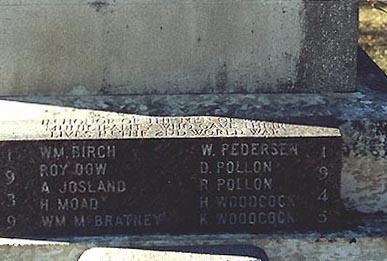
1939 1945

WM. BIRCH
RAY DOW
A. JOSTUND
H. MOAD
WM. MCBRATNEY
W. PEDERSEN
D. POLLON
R. POLLON
H. WOODCOCK
K. WOODCOCK

Image
Caption
obelisk (front)
1 of 6 images
Image
Caption
obelisk (details)
1 of 6 images
Image
Caption
obelisk (upper front)
1 of 6 images
Image
Caption
obelisk (lower front)
1 of 6 images
Image
1 of 6 images
Image
1 of 6 images
Province
!4v1619617448716!6m8!1m7!1snlcweE9hEcVClZ2JSU4rbA!2m2!1d50.36100866351966!2d-99.81544088910324!3f282.03330192069416!4f0.275225766594275!5f3.1690382672662167"
Body Content

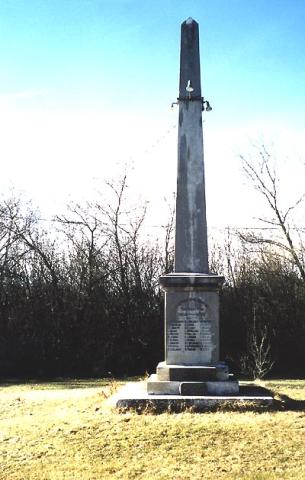
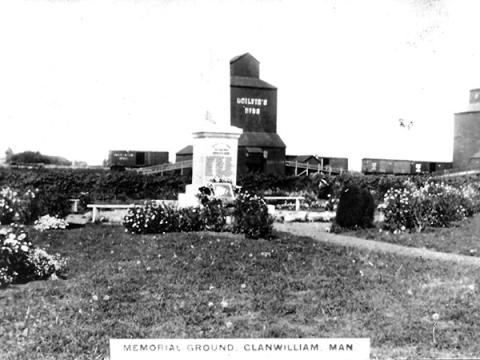
The Clanwilliam War Memorial was built in 1922 in memory of the First World War and the Second World War veterans who paid the supreme sacrifice. In 1922 the residents in and around the Village of Clanwilliam decided to have a cenotaph built in memory of the men who had lost their lives in the First World War. Lots 1 and 2 of plan 7391 were vacant, and that was the location chosen for the Cenotaph to be located. It is not known where it was built, but it was delivered on the train. A man by the name of Bill Lee, born in 1866 and died in 1964, spent most of his life in Clanwilliam, and was the volunteer caretaker for the cenotaph and surrounding grounds. He planted trees, beautiful flower gardens, and made walk ways, creating a park around the cenotaph. In 1948 he was no longer able to maintain it. A Veterans Association was organized to assume the care taking responsibilities of the cenotaph. In 1957 the light fixtures at the cenotaph were donated by M. E. Greenlaw.

City
Clanwilliam
Country
Type Description
Concrete obelisk
Memorial CF Legacy ID
165
City/Municipality
Magas Lake
Memorial Number
46003-046
Type
in Canada
Yes
GPS Coordinates
58.96301, -100.12896
Province
Body Content

In 1972, Magas Lake was named in honour of Rifleman Harry Magas. He was killed in action on 6 July 1944 at 21 years of age.

Magas Memorial Park was named in honour of Harry and his three brothers Fred, John and Tony.

City
Magas Lake
Country
Type Description
Lake
Memorial CF Legacy ID
11036
City/Municipality
Widlake
Memorial Number
46003-045
Type
in Canada
Yes
GPS Coordinates
59.88131, -100.57812
Province
Body Content

In 1972, Widlake Lake was named in honour of Trooper Tom Huntington Widlake. He enlisted and served overseas with C Squadron, 11th Armoured Regiment (Ontario Regiment), RCAC and was killed in action in Italy on 24 June 1944 at 26 years of age.

Widlake Street in Transcona was also named in commemoration of Trooper Tom Huntington Widlake. 

City
Widlake
Country
Type Description
Lake
Memorial CF Legacy ID
11031
City/Municipality
Hurst Lake
Memorial Number
46003-044
Type
in Canada
Yes
GPS Coordinates
57.44161, -99.76117
Province
Body Content

Hurst Lake was named in commemoration of Sergeant Leslie E. Hurst in 1963. He enlisted and served overseas with the Canadian Army. Hurst was killed in action during the Dieppe Raid on 19 August 1942 at 27 years of age. 

Ravenhurst Street in Transcona is named partly in honour of Sergeant Leslie E. Hurst. 

City
Hurst Lake
Country
Type Description
Lake
Memorial CF Legacy ID
11027
City/Municipality
Moroz Bay
Memorial Number
46003-043
Type
in Canada
Yes
GPS Coordinates
58.77893, -100.60995
Province
Body Content

Trooper Michael “Mike” Moroz enlisted in July of 1942 and trained as a wireless operator in Dundurn, Saskatchewan; Portage la Prairie and Camp Borden, Manitoba. He was sent overseas with the Canadian Army in June of 1943.  Moroz was killed in action in Normandy, France on 9 August 1944 at 28 years of age. 

Moroz Bay, which is situated southwest of Hunt Island and northeast of Moroz Hill, was named in commemoration of Trooper Michael “Mike” Moroz in 1979. In 2003, Moroz Street was named in honour of Mike and his brother Hryhory "Harry". 

City
Moroz Bay
Country
Type Description
Bay
Memorial CF Legacy ID
11017
City/Municipality
Geographical feature
Memorial Number
46003-042
Type
Address
Location
90 km southwest of the town of Lynn Lake.
in Canada
Yes
GPS Coordinates
56.106258761554, -101.73246569489
Inscription

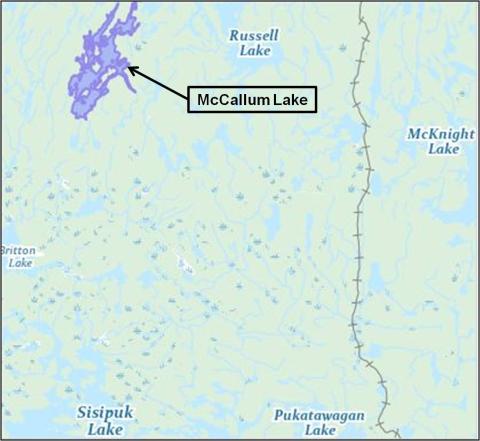
On Maps: McCallum Lake

Image
Caption
Map- Location of McCallum Lake (map by NR Can/ Government of Canada)
Province
Body Content

McCallum Lake is named in memory of Major Douglas Harvey McCallum, DSO, RCE.

Douglas Harvey McCallum was born on 21 October 1909 in Carberry, Manitoba. He was commissioned in the Militia as a 2nd Lieutenant with the Royal Canadian Engineers (N.P.A.M.) in December 1937. On 6 September 1939 he joined the Canadian Active Service Force and a few months later, was sent to England. In August 1940 he was promoted to Captain and in May 1943 was promoted to Major and appointed Commanding Officer of 31 Field Company, RCE. He was part of 21 Army Group that landed in France on 9 July 1944 and very quickly saw action at the River Orne crossing for which he received his DSO (see citation below). He was killed in action on 25 July 1944 by enemy mortar fire and is buried at the Bretteville-sur-Laize Canadian War Cemetery.


Citation: London Gazette 21 December 1944, Canada Gazette, 4 November 1944- “During the night 18-19 July 1944, 2 Canadian Corps made an assault crossing of the River Orne. This operation was one of the most important of the entire campaign, and its failure would have had a serious effect on the whole operation in Normandy. As part of the Corps plan, 31 Canadian Field Company, the Corps of Royal Canadian Engineers, had the task of constructing a bridge over the River Orne at Caen to allow the passage of the so necessary supporting arms. Failure, therefore, to complete construction of this bridge would have had serious effects on the army plan. Major McCallum was in command of this operation and though harassed by mortar and sniper fire and by enemy planes, carried on with the task and brought it to a very successful conclusion. His courage and ability were of the highest order and undoubtedly contributed to the success of the operation.”

City
Geographical feature
Country
Type Description
Geographic Location
Memorial CF Legacy ID
9657
City/Municipality
Geographical feature
Memorial Number
46003-041
Type
Address
Cruickshank Lake
Location
113 km east of Thompson
in Canada
Yes
GPS Coordinates
55.44472, -96.13056
Inscription

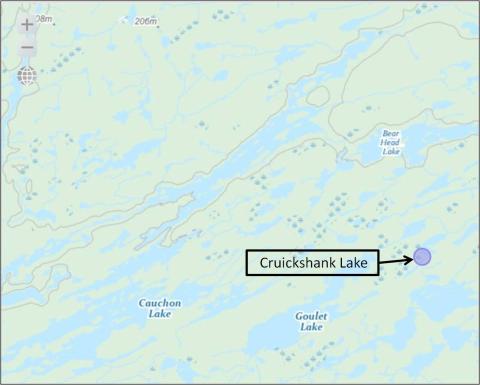
On maps: Cruickshank Lake

Image
Photo Credit
Richard Turcotte
Caption
Map – Location of Cruickshank Lake (map by NR Can)
Province
Body Content

Cruickshank Lake is named in honour of Major Robert Edward Cruickshank, VC.

Robert Edward Cruichshank was born in June 1888 in Winnipeg where his father worked for the Canadian Pacific Railway. Cruickshank emigrated to England with his family when he was 3 and completed his education in Woodford, Essex after which he became a salesman for the Lipton Tea Company and the Lever Company. He served in the Territorial Army with the City of London Yeomanry (Rough Riders) from 1908 to 1911, and as a young man, became involved in the Scouting movement as well as local politics. At the outbreak of World War I, he volunteered for the Royal Flying Corps but transferred to the London Scottish Regiment. He was wounded in the Battle of the Somme in France before being sent to serve in the Middle East. On 1 May 1918, Cruichshank earned the Victoria Cross near the Jordan River in Palestine when he volunteered to carry a critical message along the front line where he was hit several times by a sniper (see citation below). He survived and was evacuated back to England. After the war, he returned to his career in sales and when the Second World War erupted, he volunteered to serve in the Home Guard where he attained the rank of Major. Robert Edward Cruickshank died in August 1961.


Citation:

"The platoon to which Private Cruickshank belonged came under very heavy rifle and machine-gun fire at short range and was led down a steep bank into a wadi, most of the men being hit before they reached the bottom. Immediately after reaching the bottom of the wadi the officer in command was shot dead, and the sergeant who then took over command sent a runner back to Company Headquarters asking for support, but was mortally wounded almost immediately after; the corporal having in the meantime been killed, the only remaining N.C.O. (a lance-corporal), believing the first messenger to have been killed, called for a volunteer to take a second message back.

Private Cruickshank immediately responded and rushed up the slope, but was hit and rolled back into the wadi bottom. He again rose and rushed up the slope, but, being again wounded, rolled back into the wadi. After his wounds had been dressed he rushed a third time up the slope and again fell badly wounded. Being now unable to stand he rolled himself back amid a hail of bullets. His wounds were now of such a nature as to preclude him making any further attempt and he lay all day in a dangerous position, being sniped at and again wounded where he lay. He displayed the utmost valour and endurance, and was cheerful and uncomplaining throughout.”

- The London Gazette, June 21, 1918

City
Geographical feature
Country
Type Description
Geographic location
Memorial CF Legacy ID
9342
City/Municipality
Geographical feature
Memorial Number
46003-040
Type
Address
Harcus Strachan Lake
Location
105 km east of Thompson
in Canada
Yes
GPS Coordinates
55.66556, -96.205
Inscription

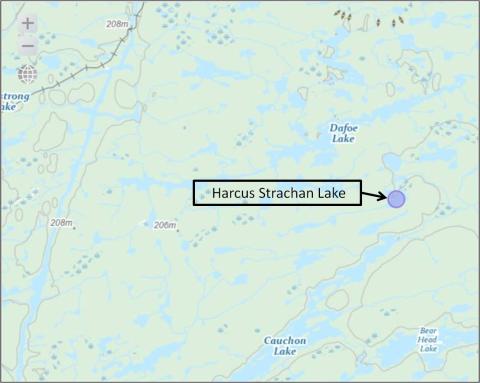
On maps: Harcus Strachan Lake

Image
Photo Credit
Richard Turcotte
Caption
Map – Location of Harcus Strachan Lake (map by NR Can)
Province
Body Content

Harcus Strachan Lake is named in honour of LCol Henry Mareus "Harcus" Strachan, VC, MC.

Henry Mareus "Harcus" Strachan VC, MC was born in Borrowstounness, Scotland, in November 1887. He attended the University of Edinburgh before emigrating to Canada in 1908. He enlisted in the Fort Garry Horse in July 1915 and was commissioned the following year. In May 1917 Strachan was awarded the Military Cross after a raid near St. Quentin. Six months later, on 20 November 1917 during the Battle of Cambrai, he earned the Victoria Cross near Masnières, France. See citation below. After the war, Strachan moved to Edmonton where he eventually entered the banking business. He also became Commanding Officer of the 1st Battalion, Edmonton Fusiliers during the Second World War. After WW II, he retired and moved to Vancouver. Strachan died on 1 May 1982, at the age of 97 years and 175 days, the record longest-lived recipient of the Victoria Cross.

Citation:

“For most conspicuous bravery and leadership during operations.

He took command of the squadron of his regiment when the squadron leader, approaching the enemy front line at a gallop, was killed. Lt. Strachan led the squadron through the enemy line of machine-gun posts, and then, with the surviving men, led the charge on the enemy battery, killing seven of the gunners with his sword. All the gunners having been killed and the battery silenced, he rallied his men and fought his way back at night through the enemy’s line, bringing all unwounded men safely in, together with 15 prisoners.

The operation – which resulted in the silencing of an enemy battery, the killing of the whole battery personnel and many infantry, and the cutting of three main lines of telephone communication two miles in rear of the enemy’s front line – was only rendered possible by the outstanding gallantry and fearless leading of this officer.”

(London Gazette, no.30433, 18 December 1917)

City
Geographical feature
Country
Type Description
Geographic location
Memorial CF Legacy ID
9341