Other

City/Municipality
Moroz Bay
Memorial Number
46003-043
Type
in Canada
Yes
GPS Coordinates
58.77893, -100.60995
Province
Body Content

Trooper Michael “Mike” Moroz enlisted in July of 1942 and trained as a wireless operator in Dundurn, Saskatchewan; Portage la Prairie and Camp Borden, Manitoba. He was sent overseas with the Canadian Army in June of 1943.  Moroz was killed in action in Normandy, France on 9 August 1944 at 28 years of age. 

Moroz Bay, which is situated southwest of Hunt Island and northeast of Moroz Hill, was named in commemoration of Trooper Michael “Mike” Moroz in 1979. In 2003, Moroz Street was named in honour of Mike and his brother Hryhory "Harry". 

City
Moroz Bay
Country
Type Description
Bay
Memorial CF Legacy ID
11017
City/Municipality
Geographical feature
Memorial Number
46003-042
Type
Address
Location
90 km southwest of the town of Lynn Lake.
in Canada
Yes
GPS Coordinates
56.106258761554, -101.73246569489
Inscription

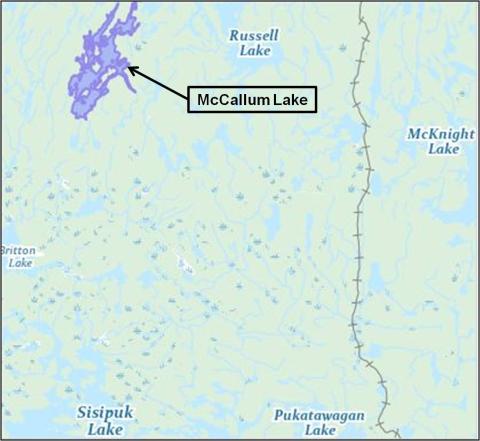
On Maps: McCallum Lake

Image
Caption
Map- Location of McCallum Lake (map by NR Can/ Government of Canada)
Province
Body Content

McCallum Lake is named in memory of Major Douglas Harvey McCallum, DSO, RCE.

Douglas Harvey McCallum was born on 21 October 1909 in Carberry, Manitoba. He was commissioned in the Militia as a 2nd Lieutenant with the Royal Canadian Engineers (N.P.A.M.) in December 1937. On 6 September 1939 he joined the Canadian Active Service Force and a few months later, was sent to England. In August 1940 he was promoted to Captain and in May 1943 was promoted to Major and appointed Commanding Officer of 31 Field Company, RCE. He was part of 21 Army Group that landed in France on 9 July 1944 and very quickly saw action at the River Orne crossing for which he received his DSO (see citation below). He was killed in action on 25 July 1944 by enemy mortar fire and is buried at the Bretteville-sur-Laize Canadian War Cemetery.


Citation: London Gazette 21 December 1944, Canada Gazette, 4 November 1944- “During the night 18-19 July 1944, 2 Canadian Corps made an assault crossing of the River Orne. This operation was one of the most important of the entire campaign, and its failure would have had a serious effect on the whole operation in Normandy. As part of the Corps plan, 31 Canadian Field Company, the Corps of Royal Canadian Engineers, had the task of constructing a bridge over the River Orne at Caen to allow the passage of the so necessary supporting arms. Failure, therefore, to complete construction of this bridge would have had serious effects on the army plan. Major McCallum was in command of this operation and though harassed by mortar and sniper fire and by enemy planes, carried on with the task and brought it to a very successful conclusion. His courage and ability were of the highest order and undoubtedly contributed to the success of the operation.”

City
Geographical feature
Country
Type Description
Geographic Location
Memorial CF Legacy ID
9657
City/Municipality
Geographical feature
Memorial Number
46003-041
Type
Address
Cruickshank Lake
Location
113 km east of Thompson
in Canada
Yes
GPS Coordinates
55.44472, -96.13056
Inscription

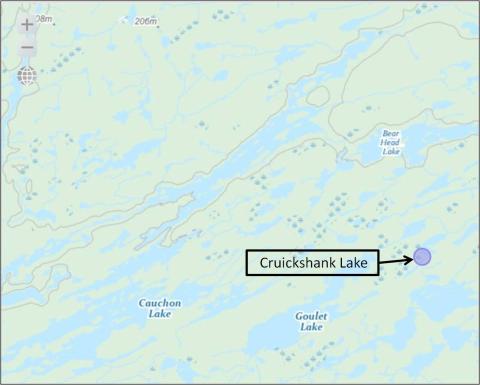
On maps: Cruickshank Lake

Image
Photo Credit
Richard Turcotte
Caption
Map – Location of Cruickshank Lake (map by NR Can)
Province
Body Content

Cruickshank Lake is named in honour of Major Robert Edward Cruickshank, VC.

Robert Edward Cruichshank was born in June 1888 in Winnipeg where his father worked for the Canadian Pacific Railway. Cruickshank emigrated to England with his family when he was 3 and completed his education in Woodford, Essex after which he became a salesman for the Lipton Tea Company and the Lever Company. He served in the Territorial Army with the City of London Yeomanry (Rough Riders) from 1908 to 1911, and as a young man, became involved in the Scouting movement as well as local politics. At the outbreak of World War I, he volunteered for the Royal Flying Corps but transferred to the London Scottish Regiment. He was wounded in the Battle of the Somme in France before being sent to serve in the Middle East. On 1 May 1918, Cruichshank earned the Victoria Cross near the Jordan River in Palestine when he volunteered to carry a critical message along the front line where he was hit several times by a sniper (see citation below). He survived and was evacuated back to England. After the war, he returned to his career in sales and when the Second World War erupted, he volunteered to serve in the Home Guard where he attained the rank of Major. Robert Edward Cruickshank died in August 1961.


Citation:

"The platoon to which Private Cruickshank belonged came under very heavy rifle and machine-gun fire at short range and was led down a steep bank into a wadi, most of the men being hit before they reached the bottom. Immediately after reaching the bottom of the wadi the officer in command was shot dead, and the sergeant who then took over command sent a runner back to Company Headquarters asking for support, but was mortally wounded almost immediately after; the corporal having in the meantime been killed, the only remaining N.C.O. (a lance-corporal), believing the first messenger to have been killed, called for a volunteer to take a second message back.

Private Cruickshank immediately responded and rushed up the slope, but was hit and rolled back into the wadi bottom. He again rose and rushed up the slope, but, being again wounded, rolled back into the wadi. After his wounds had been dressed he rushed a third time up the slope and again fell badly wounded. Being now unable to stand he rolled himself back amid a hail of bullets. His wounds were now of such a nature as to preclude him making any further attempt and he lay all day in a dangerous position, being sniped at and again wounded where he lay. He displayed the utmost valour and endurance, and was cheerful and uncomplaining throughout.”

- The London Gazette, June 21, 1918

City
Geographical feature
Country
Type Description
Geographic location
Memorial CF Legacy ID
9342
City/Municipality
Geographical feature
Memorial Number
46003-040
Type
Address
Harcus Strachan Lake
Location
105 km east of Thompson
in Canada
Yes
GPS Coordinates
55.66556, -96.205
Inscription

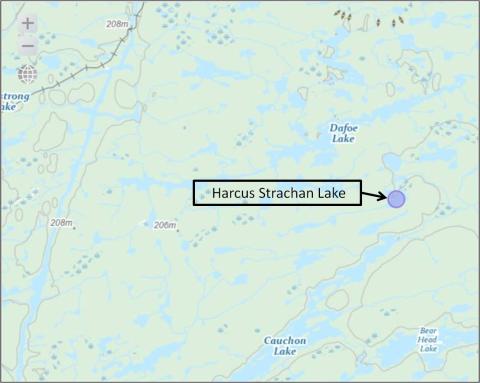
On maps: Harcus Strachan Lake

Image
Photo Credit
Richard Turcotte
Caption
Map – Location of Harcus Strachan Lake (map by NR Can)
Province
Body Content

Harcus Strachan Lake is named in honour of LCol Henry Mareus "Harcus" Strachan, VC, MC.

Henry Mareus "Harcus" Strachan VC, MC was born in Borrowstounness, Scotland, in November 1887. He attended the University of Edinburgh before emigrating to Canada in 1908. He enlisted in the Fort Garry Horse in July 1915 and was commissioned the following year. In May 1917 Strachan was awarded the Military Cross after a raid near St. Quentin. Six months later, on 20 November 1917 during the Battle of Cambrai, he earned the Victoria Cross near Masnières, France. See citation below. After the war, Strachan moved to Edmonton where he eventually entered the banking business. He also became Commanding Officer of the 1st Battalion, Edmonton Fusiliers during the Second World War. After WW II, he retired and moved to Vancouver. Strachan died on 1 May 1982, at the age of 97 years and 175 days, the record longest-lived recipient of the Victoria Cross.

Citation:

“For most conspicuous bravery and leadership during operations.

He took command of the squadron of his regiment when the squadron leader, approaching the enemy front line at a gallop, was killed. Lt. Strachan led the squadron through the enemy line of machine-gun posts, and then, with the surviving men, led the charge on the enemy battery, killing seven of the gunners with his sword. All the gunners having been killed and the battery silenced, he rallied his men and fought his way back at night through the enemy’s line, bringing all unwounded men safely in, together with 15 prisoners.

The operation – which resulted in the silencing of an enemy battery, the killing of the whole battery personnel and many infantry, and the cutting of three main lines of telephone communication two miles in rear of the enemy’s front line – was only rendered possible by the outstanding gallantry and fearless leading of this officer.”

(London Gazette, no.30433, 18 December 1917)

City
Geographical feature
Country
Type Description
Geographic location
Memorial CF Legacy ID
9341
City/Municipality
Geographical feature
Memorial Number
46003-039
Type
Address
Norman Mitchell Lake
Location
103 km east of Thompson
in Canada
Yes
GPS Coordinates
55.69667, -96.21222
Inscription

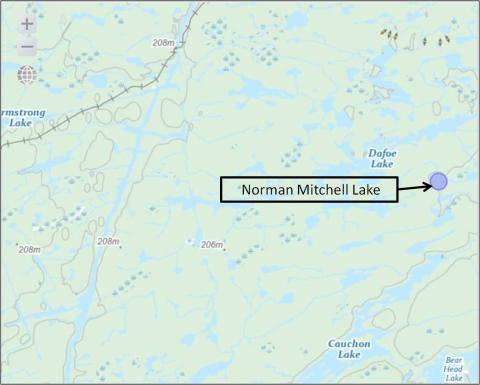
On maps: Norman Mitchell Lake

Image
Photo Credit
Richard Turcotte
Caption
Map – Location of Norman Mitchell Lake (map by NR Can)
Province
Body Content

Norman Mitchell Lake is named in honour of Lieutenant-Colonel Coulson "Norman" Mitchell, VC, MC, RCE.

Coulson “Norman” Mitchell was born in Winnipeg in December 1889. He graduated from the University of Manitoba in 1912 with a degree in civil engineering. He initially worked for a company with projects in Manitoba and BC but enlisted as a Sapper in November 1914 and embarked for overseas service shortly afterwards. He rose through the ranks and was promoted to Sergeant in November 1915 before being commissioned as a Second Lieutenant in April 1916. In December 1916, he was awarded the Military Cross for his actions at “The Bluff” in the Ypres Salient. On 8-9 October 1918, Captain Mitchell earned the Victoria Cross at the Canal de L’Escaut, France when he removed the explosive charges on a critical bridge that the enemy was about to detonate (see citation below). After the war, Mitchell returned to Winnipeg to practice civil engineering but re-joined the military with the outbreak of WW II. Assigned to the Royal Canadian Engineers at Camp Borden, he left for England in 1940, returning to Canada in 1943 and became Commandant of the Royal Canadian School of Military Engineering in Chilliwack, BC in 1944. After the war, Mitchell moved to Montreal where he died in November 1978. He is buried at the National Filed of Honour in Pointe-Claire, QC.


Citation:

“For most conspicuous bravery and devotion to duty on the night of 8th-9th October, 1918, at the Canal de L’Escaut, north-east of Cambrai.

He led a small party ahead of the first wave of infantry in order to examine the various bridges on the line of approach and, if possible, to prevent their demolition.

On reaching the canal he found the bridge already blown up. Under a heavy barrage he crossed to the next bridge, where he cut a number of ‘lead’ wires. Then in total darkness, and unaware of the position or strength of the enemy at the bridgehead, he dashed across the main bridge over the canal. This bridge was found to be heavily charged for demolition, and whilst Capt. Mitchell, assisted by his N.C.O., was cutting the wires, the enemy attempted to rush the bridge in order to blow the charges, whereupon he at once dashed to the assistance of his sentry, who had been wounded, killed three of the enemy, captured 12, and maintained the bridgehead until reinforced.

Then under heavy fire he continued his task of cutting wires and removing charges, which he well knew might at any moment have been fired by the enemy.

It was entirely due to his valour and decisive action that this important bridge across the canal was saved from destruction.”

(London Gazette, no.31155, 31 January 1919)

City
Geographical feature
Country
Type Description
Geographic location
Memorial CF Legacy ID
9340
City/Municipality
Geographical feature
Memorial Number
46003-038
Type
Address
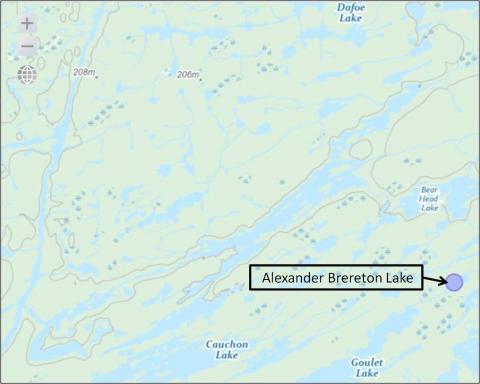
Alexander Brereton Lake
Location
112 km east of Thompson, MB
in Canada
Yes
GPS Coordinates
55.46833, -96.14778
Inscription

On maps: Alexander Brereton Lake

Image
Photo Credit
Richard Turcotte
Caption
Map – Location of Alexander Brereton Lake (map by NR Can)
Province
Body Content

Alexander Brereton Lake is named in honour of Company Quartermaster Sergeant Alexander Picton Brereton, VC.

Alexander Picton Brereton was born in November 1892 in Oak River, Manitoba. Following the completion of his education, he was employed as a barber in Winnipeg before enlisting in the Canadian Expeditionary Force in January 1916. Assigned to the 8th (Winnipeg Rifles) Battalion, he joined his Regiment overseas. On 9 August 1918 during the Battle of Amiens, Corporal Brereton earned the Victoria Cross near Aubercourt, France. See citation below. After World War I, he moved to Elnora Alberta and farmed a 640 acre parcel. He later served in the Second World War, rising to the rank of Company Quartermaster Sergeant. Alexander Brereton died at the age of 83 in January 1976 at Three Hills, Alberta and is buried at the Elnora Cemetery.

Citation:

“For most conspicuous bravery during an attack, when a line of hostile machine guns opened fire suddenly on his platoon, which was in an exposed position, and no cover available.  This gallant N.C.O. at once appreciated the critical situation and realised that unless something was done at once the platoon would be annihilated.  On his own initiative, without a moment’s delay, and alone, he sprang forward and reached one of the hostile machine-gun posts, where he shot the man operating the machine gun and bayoneted the next one who attempted to operate it, whereupon nine others surrendered to him.

Cpl. Brereton’s action was a splendid example of resource and bravery, and not only undoubtedly saved many of his comrades’ lives, but also inspired his platoon to charge and capture the fire remaining posts.”

(London Gazette, no.30922, 27 September 1918)

City
Geographical feature
Country
Type Description
Geographic location
Memorial CF Legacy ID
9339
Memorial Number
46003-037
Type
Location
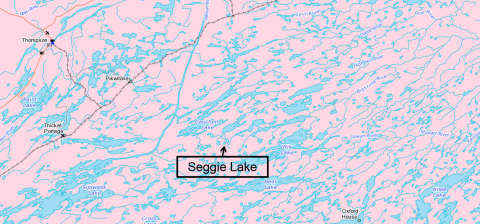
105 km southeast of Thompson, MB
in Canada
Yes
GPS Coordinates
55.30778, -96.37472
Inscription

[on map/sur la carte]

Seggie Lake

Image
Photo Credit
Map by Natural Resources Canada/ Government of Canada
Province
Body Content

Seggie Lake is named in memory of Corporal Michael James Alexander Seggie. It was named on November 4, 2010 by the Government of Manitoba.

Michael Seggie was born in November 1986 in Calgary, and moved to Winnipeg with his family as a young boy. Michael’s first exposure to military life was when he joined 191 Air Cadet Squadron in Kapyong Barracks, Winnipeg. He later joined the Royal Winnipeg Rifles in June of 2004 where he completed his Basic Military, Soldier, Basic Infantry and Infantry Platoon Support Weapons Qualifications prior to his joining the Regular Force in March of 2006. Mike trained in Wainwright prior to being posted to the 2nd Battalion, Princess Patricia’s Canadian Light Infantry in Shilo, Manitoba. He deployed on operations with his unit in February 2008 during which he was promoted to Corporal and received the Canadian Expeditionary Force Commander’s Commendation for his actions on March 27th, 2008. On September 3, 2008, in Zharey District, Corporal Michael James Alexander Seggie was killed during an attack on the armoured vehicle in which he was travelling.

Country
Type Description
Geographical feature
Memorial CF Legacy ID
9131
Memorial Number
46003-036
Type
Location
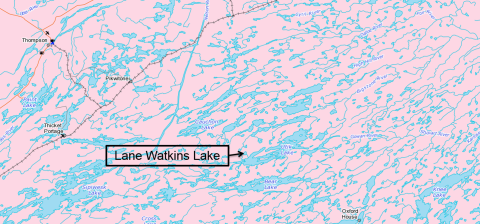
120 km southeast of Thompson, MB
in Canada
Yes
GPS Coordinates
55.26083, -96.19944
Inscription

[on map/sur la carte]

Lane Watkins Lake

Image
Photo Credit
Map by Natural Resources Canada/ Government of Canada
Province
Body Content

Lane Watkins Lake is named in memory of Private Lane William Thomas Watkins. It was named on November 4, 2010 by the Government of Manitoba.

Lane Watkins was born in June 1987 in Winnipeg but raise and educated in Clearwater, Manitoba. Always expressing a keen interest in a career with the military, he joined the Canadian Forces in July 2005 immediately following his high school graduation, and began his basic training in August 2005. Upon completion of his basic training course, he was posted to 3rd Battalion, Princess Patricia’s Canadian Light Infantry, based in Edmonton. He deployed to Afghanistan with his unit in February 2007. Private Lane William Thomas Watkins was killed on July 4, 2007, in Kandahar Province, at the age of 20 years, while serving in Afghanistan.

Country
Type Description
Geographical Feature
Memorial CF Legacy ID
9130
Memorial Number
46003-035
Type
Location
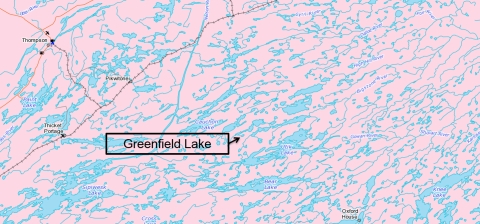
115 km southeast of Thompson, MB
in Canada
Yes
GPS Coordinates
55.34556, -96.22417
Inscription

[on map/sur la carte]

Greenfield Lake

Image
Photo Credit
Map by Natural Resources Canada/ Government of Canada
Province
Body Content

Greenfield Lake is named in memory of Sapper Sean David Greenfield. It was named on November 4, 2010 by the Government of Manitoba.

Sean Greenfield was born in March 1983 in Pinawa, Manitoba but moved to Petawawa, Ontario as a youngster, where he attended high school. Later he studied graphic arts at Fanshawe College in London, Ontario before joining the Canadian Forces in December 2005, as a Combat Engineer. Following the completion of his sapper training at the Canadian Forces School of Military Engineering in Gagetown, he was posted to 2 Combat Engineer Regiment in Petawawa and deployed to Afghanistan with 24 Field Engineer Squadron. Sapper Sean David Greenfield was killed on January 31, 2009 as he participated in a major operation to locate and dismantle Taliban bomb-making installations in the Zhari District, west of Kandahar City.

Country
Type Description
Geographical Feature (Lake)
Memorial CF Legacy ID
9129
Memorial Number
46003-034
Type
Location
115 km southeast of Thompson, MB
in Canada
Yes
GPS Coordinates
55.27444, -96.24972
Inscription

[on map/ sur la carte]

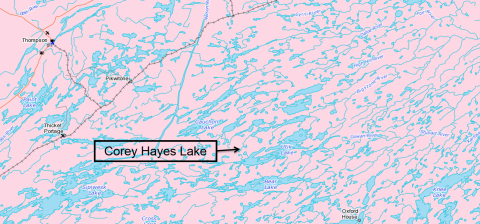
Corey Hayes Lake

Image
Photo Credit
Map by Natural Resources Canada/ Government of Canada
Province
Body Content

Corey Hayes Lake is named in memory of Trooper Corey Joseph Hayes. It was named on November 4, 2010 by the Government of Manitoba.

Corey Hayes was born in Ripples, New Brunswick in January 1987 but moved to Wawanesa, Manitoba during his high school years. Following high school, he joined the Canadian Forces in November 2006 and completed his crewman training at the Combat Training Centre in Gagetown after which he was posted to the Royal Canadian Dragoons in Petawawa. Deploying to Afghanistan as a member of his unit’s Reconnaissance Squadron, Trooper Corey Joseph Hayes was killed on March 20, 2009 when his armoured vehicle struck and Improvised Explosive Device (IED) in the Shah Wali Khot District, about 20 km northeast of Kandahar City.

Country
Type Description
Geographical Feature (Lake)
Memorial CF Legacy ID
9128